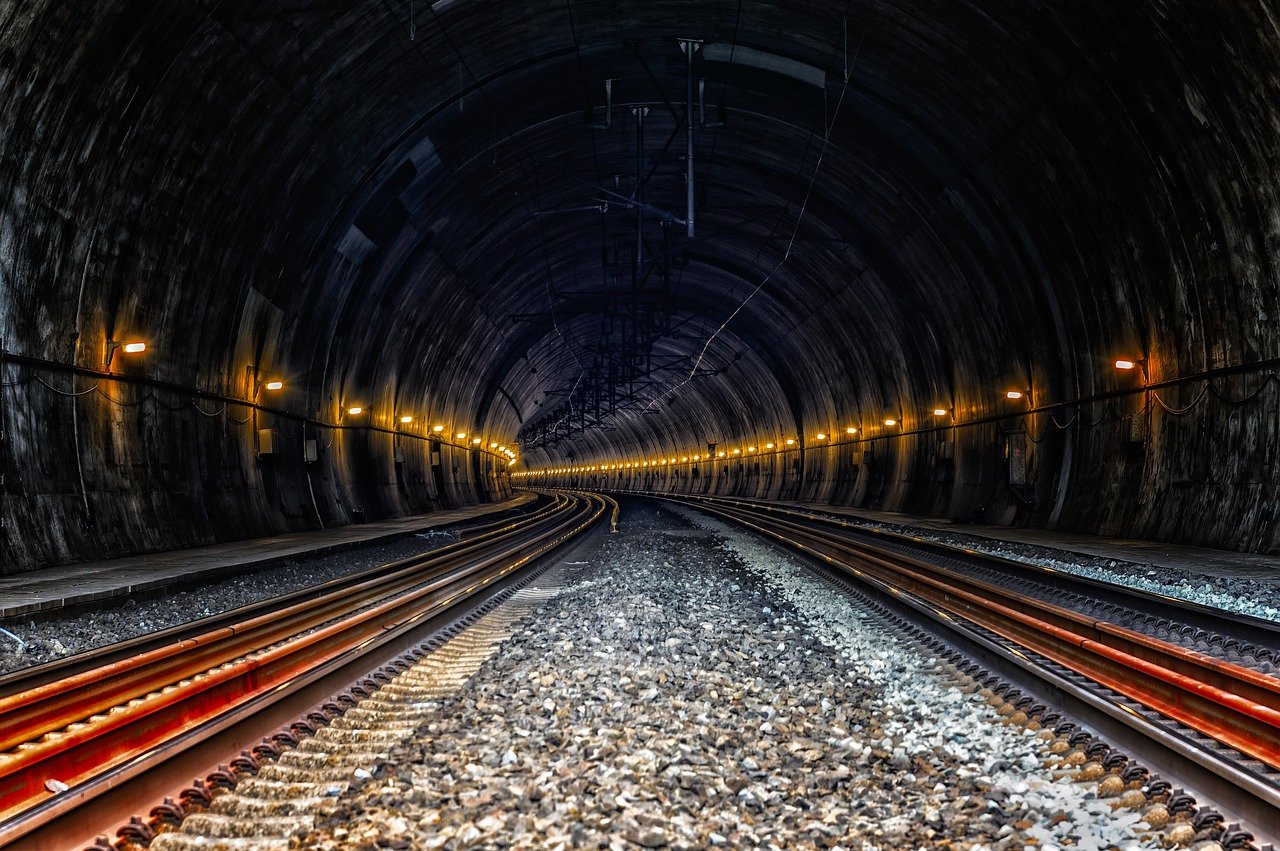
Underground tunnels are being considered as part of a new plan to improve transport across Greater Manchester, the council has revealed.
A comprehensive report compiled in 2017 by Transport for Greater Manchester (TfGM) concluded that by 2040, the city would require “significant additional cross-city capacity” – and one potential solution raised was the construction of new rail tunnels beneath the city centre.
TfGM said that an underground network would “deliver the excellent connectivity and faster journey times we need into and across the Regional Centre, without taking up valuable land or creating further severance by building new lines at street level.”
Three years later, tunnels remain on the table.
Since 2017, Manchester city centre has gotten increasingly busier and more populous – attracting hundreds of thousands of commuters on a daily basis.
ADVERTISEMENT
A fresh report – the Draft City Centre Transport Strategy 2020 – reveals that the council are all set to give the prospect of underground travel serious consideration in the coming months, whilst acquiring feedback from the wider public.
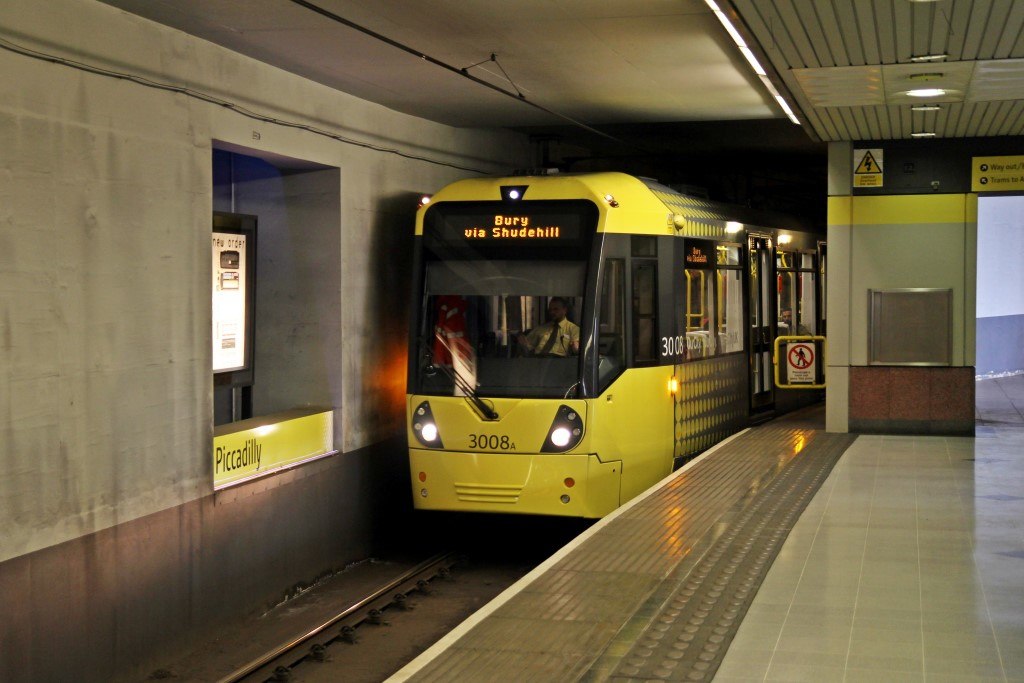
“We will look at the feasibility of further capacity expansions of the network through a Metro tunnel under the city centre,” the council states.
ADVERTISEMENT
“This solution would avoid taking scarce street level space to expand the network and to facilitate longer vehicles.
“We will also enhance connectivity between Metrolink and rail at key city centre stations, including Deansgate.”
Those in favour of an underground network might argue that the project is in fact forty years late.
ADVERTISEMENT
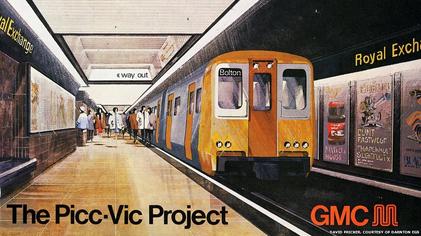
Manchester was planning a subterranean network as long ago as the seventies, with aims to assemble an ambitious Picc-Vic tunnel that linked the city from top to bottom.
Almost a decade’s worth of planning went into the exciting travel system. Only for the government to abruptly turn off the money tap.
When finances were stopped, everyone involved in the Picc-Vic tunnel simply had to walk away – leaving a gaping hole in the city where construction had already started.
Wikipedia
The first attempt might have ended in disappointment, but the council and TfGM appear to be contemplating modern Manchester tunnels with earnestness.
They’ve included underground travel as part of a prospective long-term strategy for the city. According to the report, this will initially involve creating more Metrolink connections between Salford and the city centre, before making a series of enhancements that prepare the network to dip below street level circa 2035-2040.
ADVERTISEMENT
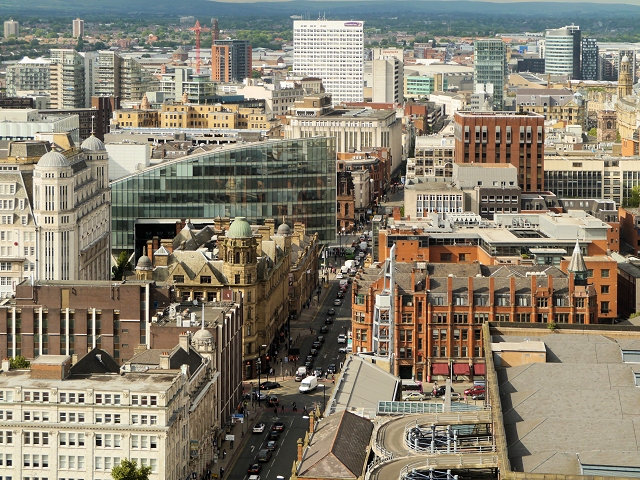
More immediate solutions presented in the plan include a completely pedestrianised Deansgate; a facelift for the permanently-busy Great Ancoats Street; an upgrade to Salford Central Railway Station; redevelopment of Albert Square and Piccadilly Gardens; and important improvements to Mancunian Way.
The council is also aiming to install new cycle routes for Northern Quarter and Chapel Street East, as well as Ancoats & New Islington.
David Dixon / Geograph
Despite the setbacks suffered from the onset of coronavirus, which has hit Greater Manchester particularly hard since the summer, the council remain committed to “recovery” and significant investment, whilst aiming to become entirely zero-carbon by 2038.
“In light of the COVID-19 pandemic, our plans focus on how the city centre can lead a strong, sustainable, healthy and inclusive recovery, taking the achievements made since 2010 to the next level,” the report states.
“By 2040, there is potential for 100,000 more jobs and 50,000 more homes in the city centre. Much of this is driven by planned growth accounted for in Greater Manchester’s plan for Homes, Jobs and the Environment, the Spatial Framework.
ADVERTISEMENT
“This includes providing the right locations for homes and creating jobs to ensure the future prosperity of the city-region, whilst prioritising development of brownfield sites and reducing unnecessary green belt release. Planning for the future city centre requires us to balance sometimes competing demands, as growth puts additional pressure on transport systems and streets.”
The report has been made available for public access and can be downloaded from the Manchester City Council website.
News
Manchester band Westside Cowboy release ‘thrilling’ debut album that critics are calling one of the year’s best
Emily Sergeant
One of the UK’s best rising bands have released their debut album today to glowing reviews from critics and fans alike.
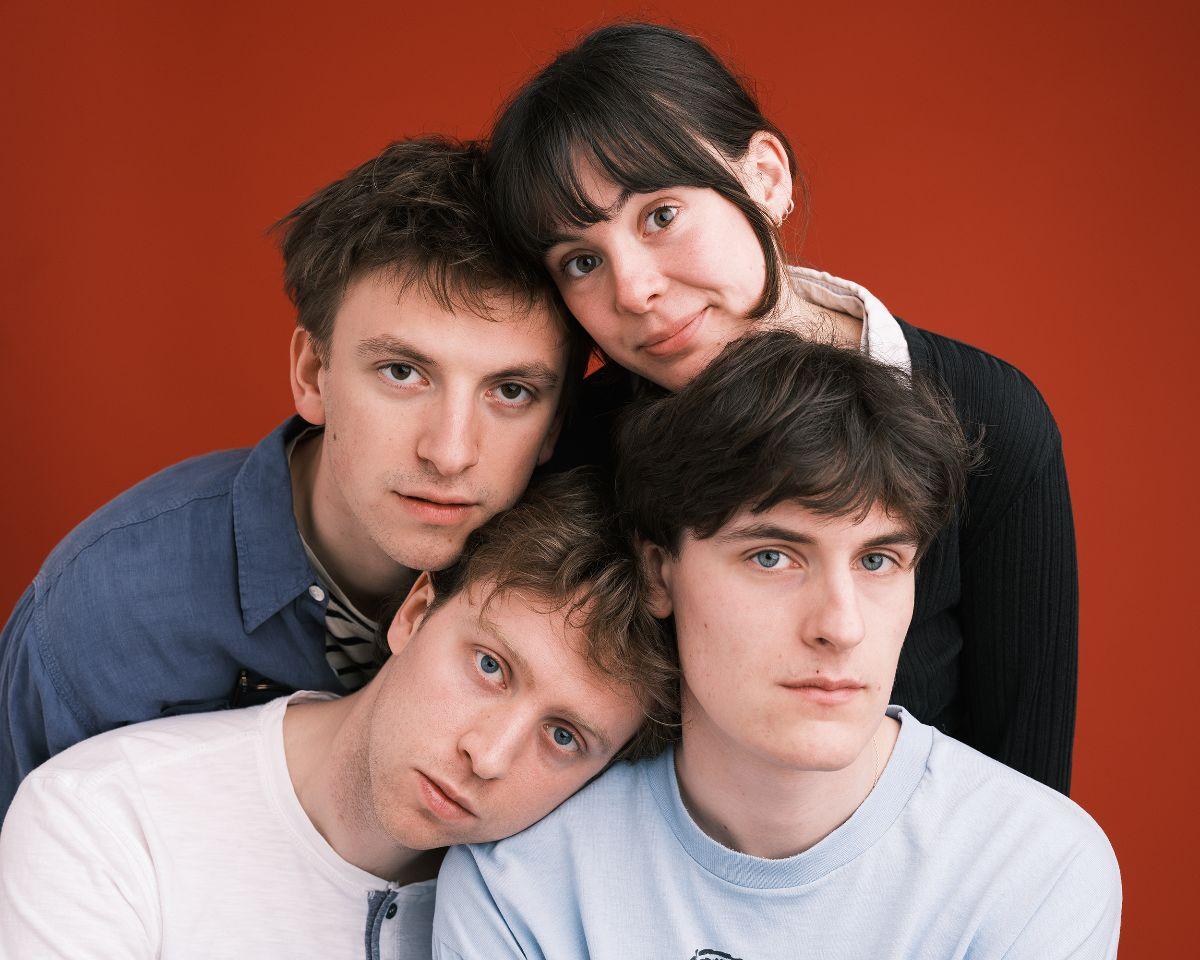
Jimmy Bradbury, Reuben Haycocks, Aoife Anson O’Connell, and Paddy Murphy – better known together as Westside Cowboy – formed back in 2023 when they were students at the Royal Northern College of Music, so while they may not all be from Manchester, they definitely have the spirit of our city at the heart of everything they do.
After playing in different bands across the city throughout their student years, the four-piece joined forces to create Westside Cowboy – an indie rock collective credited with self-coining the genre of ‘Britainicana’.
Put simply, Britainicana is a cultural concept that mixes the hazy, mythic feel of American country and folk, with the sound of raw British punk, indie rock, and small-town life.
Westside Cowboy have released their debut album, It Goes On / Credit: Clementine Schniedermann (Press Shots – Supplied)
If that sounds like your cup of tea, then you’ll be pleased to know that Westside Cowboy have released their debut album, It Goes On, to the world today (21 August).
And the reception from critics, arguably, couldn’t be better.
Prior to the release of their debut album, the band had released two EPs, including So Much Country ‘Till We Get There in January earlier this year, and had started to make a name for themselves with their popular debut single ‘I’ve Never Met Anyone I Thought I Could Really Love (Until I Met You)’ in 2024.
They went onto make even further waves when they supported equally-rising American rock band Geese on their UK and Irish tour back in March – with many fans calling it one of the best support and main act combinations in some time.
Three singles from their debut album were shared with the world ahead of its release – ‘Kick Stones (The Boys)’ came first, followed by ‘Pin Up Boys’ and ‘Dobro’.
So, it’s fair to say the anticipation for album was high… and if the reviews are anything to go by (which we think they are), it looks like the band has very much delivered what they set out to achieve.
Westside Cowboy’s debut album It Goes On is now available to stream, or you can purchase a physical copy in a range of formats from their website here.
Take a listen👇
Featured Image – Press Shot (Supplied)
News
UK set to be battered by storms as ‘unprecedented’ El Niño arrives this autumn
Emily Sergeant
The UK is being told to brace for a series of storms this autumn when the ‘unprecedented’ El Niño weather event arrives.
It’s already been a summer of extremes for the country, with multiple heatwaves over the past couple of months, but now it appears that autumn and winter are set to have some extremes of their own, as the Met Office is warning that this upcoming El Niño could be one of the most significant in recent memory.
El Niño is declared when sea temperatures in the tropical eastern Pacific rise 0.5°C above the long-term average, which therefore impacts global rainfall patterns and average temperatures.
The natural warming of sea temperatures is forecast to reach more than 3°C in the coming months, according to the Met Office, making this year’s weather event have the potential to be ‘the largest since the 19th century’.
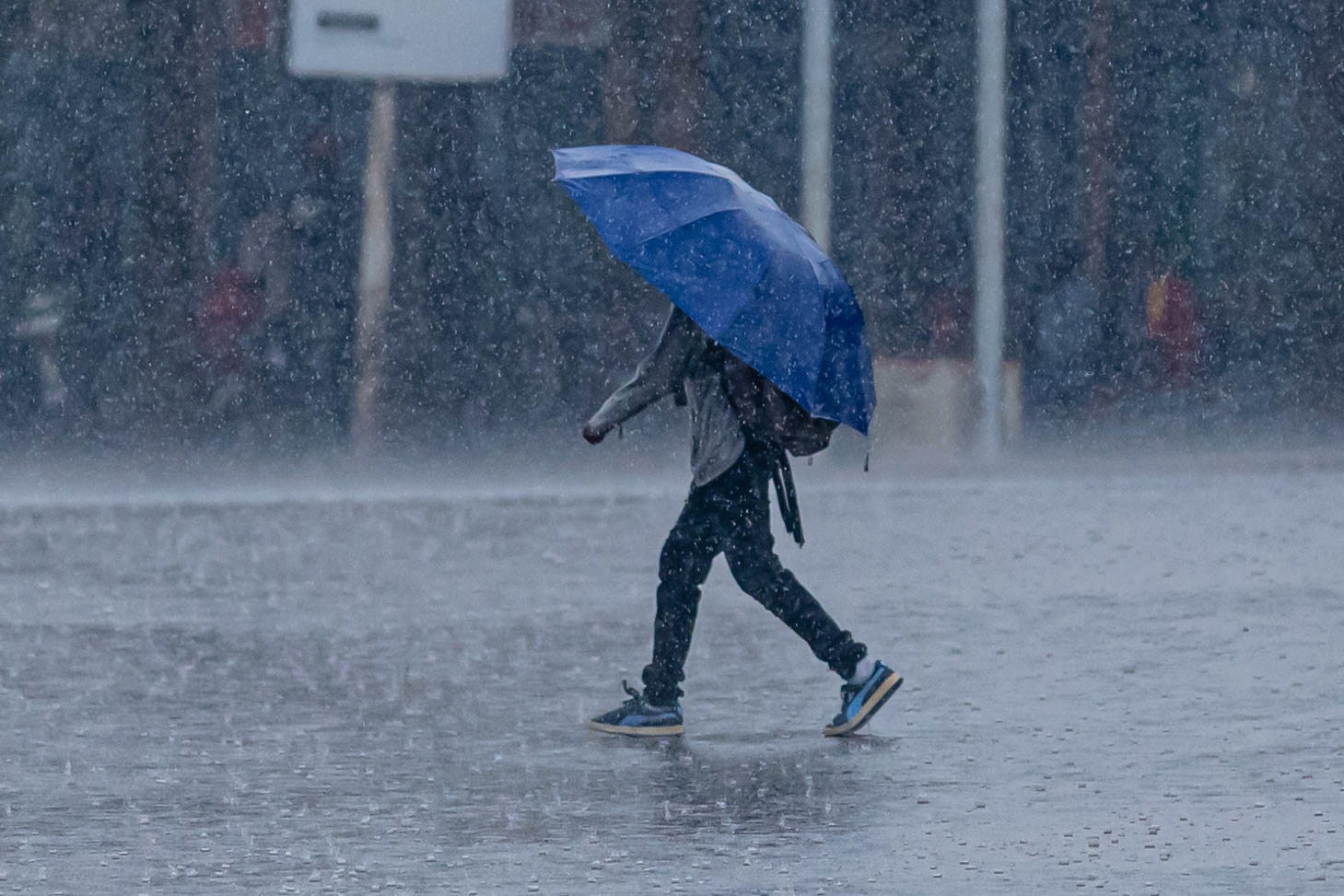
The UK is set to be battered by storms as ‘unprecedented’ El Niño arrives this autumn / Credit: Johannes Plenio (via Unsplash)
El Niño will create a heightened risk of drought in the tropics, southern Africa, and north eastern Australia, but over in north western Europe – including the UK – it means we are likely to experience wetter and stormier conditions.
The UK, and of course Greater Manchester, is absolutely no stranger to a storm around this time of year, but forecasters say this could be an entirely different beast.
“We should be clear that this is an unprecedented event,” warned Professor Adam Scaife, who is the Head of Long Range Forecasting at the Met Office.
“I have never seen an El Nino signal this intense in our forecasts.”
Professor Scaife concluded: “A typical El Nino leads to an equatorial Pacific sea-surface temperature rise of between one to 2°C, with 2°C being a really big event. This implies that, if the forecast is accurate, and other forecast systems show similar extreme values, then 2026 will far exceed our recent experience of El Niño and its worldwide climate influences.’
Forecasters and officials, however, have warned that it could take months of sustained rainfall before rivers, reservoirs, and groundwaters are ‘completely replenished’ – which is when a drought can officially be declared as over.
It also warned drought conditions could persist into the new year as, despite El Niño, as current forecasts do not suggest this autumn will have the amount of rainfall needed to drive recovery.

 The Manc -
25th September 2020
The Manc -
25th September 2020