University of Manchester ‘really sorry’ for earlier statement about student applicant’s death
'We will of course do everything we can to understand what has happened in this tragic case, including any lessons we can learn,' the university has said.
The University of Manchester has publicly apologised for a statement issued yesterday about the death of a student applicant.
The Russell Group university said it was ‘really sorry’ to have ’caused further upset’ when it addressed reports that a prospective Masters student had ‘died by suicide’.
A tweet posted earlier this week, which has been shared tens of thousands of times, claimed that the university ‘took an applicants £1k, rejected their application because they can’t make living costs, and didn’t give the money back’.
The tweet, from the account @HarbourSeal, then said: “This applicant, a friend, then dies by suicide because of his absolute hopelessness of his situation. It’s absolutely scandalous.”
It has now been confirmed that Rory Wood, 27, has died, with his family stating that ‘his battle with his brain sadly overcame him’.
ADVERTISEMENT
He had been missing since Sunday evening.
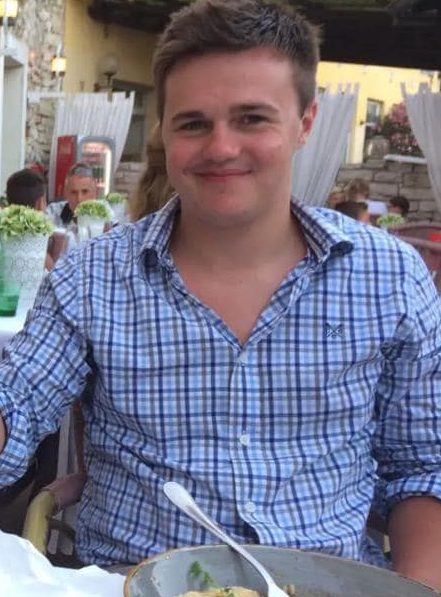
Rory Wood, 27, has died. Credit: Facebook
The University of Manchester yesterday issued a public statement addressing the reports of Rory’s death and the circumstances that led to it.
ADVERTISEMENT
They wrote: “We are very aware of the upsetting reports online about a student applicant and are looking into what has been said as a matter of urgency. Out of respect we are not commenting further as yet but, if confirmed, we extend our utmost sympathy.
“We can confirm that a place was successfully secured for a Master’s at the University. According to our records this application is still open and wasn’t withdrawn by the applicant and has not been rejected by the University.
“From our initial enquiries, we can find no record or email correspondence suggesting any request for a refund or further request for help.”
Today’s statement shared by the University of Manchester said: “The police have now confirmed that Rory has tragically passed away. This is deeply distressing and we are extending our heartfelt condolences to his family and friends.
“We are really sorry that our statement yesterday caused further upset, which was certainly not our intention. It was to try and help address intense interest while we were actively seeking further details.
“We will of course do everything we can to understand what has happened in this tragic case, including any lessons we can learn. We will continue to offer our support to Rory’s friends and family.”
ADVERTISEMENT
A message shared from Rory’s family stated: “Thank you for all of your love for our beautiful son, brother, nephew and cousin, Rory. We are completely humbled and overwhelmed by the messages of support on Twitter.
“We realise that there are people on here that truly loved him and the fact that he made your days just a little bit brighter brings a smile to our faces in these tragic times.
“Rory may not have mentioned it on here but he has always had loving and supportive friends and family that tried everything to help him but his battle with his brain sadly overcame him.
“We ask that Rory’s legacy is the increased awareness of mental illness -please all look after yourselves and always remember to speak out. Rory completing his bachelors degree in politics, philosophy and economics last week was one of the proudest moments of our lives. We will never stop loving you Rory x”
Featured image: Wikimedia Commons
News
Firefighters to now wear cameras after Manchester Arena Inquiry recommendations
Emily Sergeant
Firefighters in Greater Manchester are to now start using body-worn cameras following recommendations from the Manchester Arena Inquiry.
Greater Manchester Fire and Rescue Service (GMFRS) has says the Inquiry ‘highlighted the importance’ of capturing clear information and recording decision-making during major incidents, particularly when multiple emergency services are required to respond to ‘complex and fast-moving’ situations, as was, of course, the case with the Manchester Arena attack back in 2017.
The introduction of body-worn cameras will support this by providing a real-time record of what crews see, hear, and communicate while attending incidents.
A total of 233 cameras will be rolled out across the service, giving firefighters the ability to record high-definition video and audio while attending incidents.
We’re rolling out body‑worn video cameras across our Service following Manchester Arena Inquiry recommendations.
The technology will support operational learning, transparency and real‑time decision‑making – helping our firefighters and officers provide the best possible… pic.twitter.com/aoHezIXWEv
— Greater Manchester Fire and Rescue Service (@manchesterfire) April 11, 2026
The devices can also livestream footage in real time, so that senior officers can view incidents as they unfold and provide additional support when it’s needed most.
Frontline officers who attend incidents will be the first to receive the cameras, followed by prevention and protection teams, and then the incident command academy as the rollout continues.
Following a successful pilot trial back in May 2025, when the cameras were tested in real incident conditions, the cameras will now be used at a wide range of incidents – from house fires and road traffic collisions, to larger and more complex emergencies.
Firefighters to now wear cameras after Manchester Arena Inquiry recommendations / Credit: GMFRS
Footage will help crews to review how incidents were handled, improve training, and strengthen safety for both firefighters and the public.
“Introducing body worn cameras is a significant step forward for our service,” commented Deputy Chief Fire Officer, Carlos Meakin. “It’s about giving firefighters the tools they need to work safely and effectively at complex or fast-moving incidents, while also helping to protect our crews by providing a clear record of the challenges they face on the frontline.
“The ability to livestream footage and review it afterwards will strengthen how we support crews on the ground, improve training, and enhance how we respond to major emergencies.
“This investment reflects our commitment to learning from the Manchester Arena Inquiry and continuing to strengthen how we respond to incidents across Greater Manchester.”
Featured Image – GMFRS
News
Endangered baby giant otter triplets have been born at Chester Zoo
Emily Sergeant
This calls for celebration, as Chester Zoo has welcomed baby giant otter triplets in what is huge news for the endangered species.
It’s been a really exciting start to 2026 at Chester Zoo, as it was only a couple of days ago we got to see Dotty the baby Kirk’s dik-dik – which is one of the smallest antelopes in the world – take her first steps, and now it’s time to say hello to three new arrivals in the form of giant otter pups.
The trio are the first of their kind to be born at the zoo in several years, and arrive as part of an international conservation effort to boost numbers.
Arriving to first-time parents Bonita and Manu, up until now, the three giant otter pups have remained tucked away in their cosy holt with mum feeding them regularly until they more than tripled in size – but now, they’ve officially entered into the big wide world.
Following their first health check-up with the zoo’s veterinary team, conservationists have revealed the sex of the pups to be two males and a female
Their names are yet to be chosen, so keep your eyes peeled.
Endangered baby giant otter triplets have been born at Chester Zoo / Credit: Chester Zoo
Chester Zoo has described this triple birth as a ‘rare boost’ for one of the world’s most endangered species, as there are thought to be fewer than 5,000 giant otters surviving in the wild right now.
Giant otters are the world’s largest species of otter, with a powerful build, sharp teeth, and a highly social nature. As one of the apex predators in the waterways where they live, they play a crucial role in maintaining the health and balance of freshwater ecosystems.
But sadly, experts say the species faces ‘an uncertain future’, with their decline largely driven by deforestation, water pollution, and illegal hunting, leading them to be listed as endangered by the International Union for the Conservation of Nature (IUCN), meaning they face a very-high risk of extinction without urgent conservation action.
“The arrival of these three giant otter pups is a hugely special moment and marks the first time the species has been born here in seven years,” explained Rachael Boatwright, who is the Assistant Team Manager of carnivores at Chester Zoo.
“The pups recently had their very first health check-up at eight weeks old, where they were weighed and had their heart, teeth and overall condition assessed by the zoo’s vets. We’re delighted to confirm that all three are healthy and thriving – and that we have two males and one female pup.
“At eight weeks old, the pups will now start to venture outside alongside parents Bonita and Manu, who will start introducing them to the water and all of the essential skills they’ll need as they grow.”