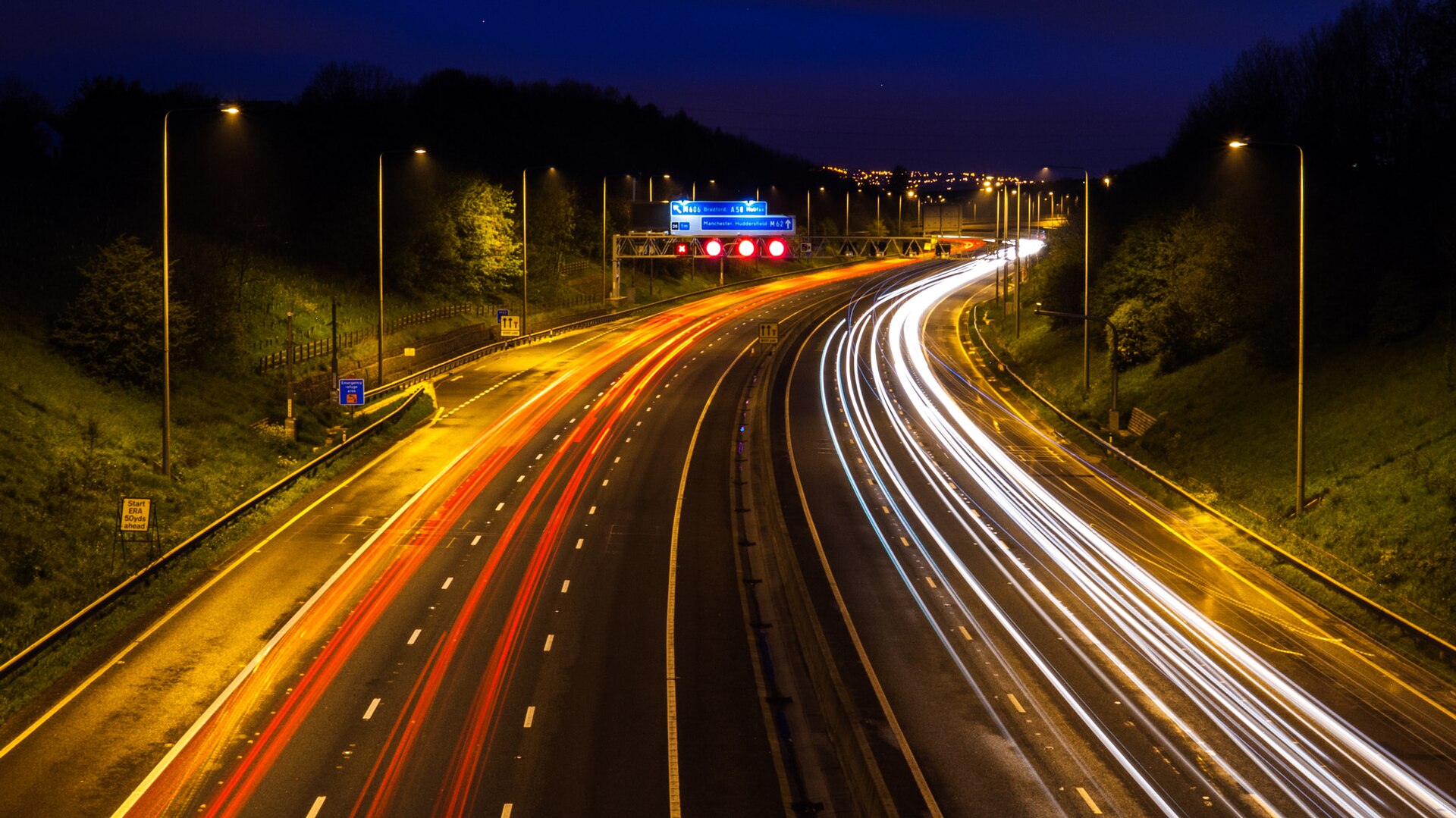
Passengers are being urged to ‘plan ahead’ as Manchester Piccadilly prepares to close for nine full days from next weekend.
In case you hadn’t heard, it was announced last November that Manchester Piccadilly train was going to have to shut in February 2026 for what is described as being a ‘once-in-a-generation upgrade’… and now, we are less than two weeks away before that officially becomes a reality and very few train services run in or out of the station.
Network Rail is investing £7.9m into the major upgrade at Manchester Piccadilly station – with the main points of action being to improve tracks, points, and signalling systems on the southern approach to Manchester Piccadilly station.
Teams are due to replace 11 sets of points, renew timber sleepers with modern, concrete equivalents, and alsobring lineside equipment ‘bang up to date’ across six lines to improve future journeys for passengers and freight.
Investment in this apparent ‘critical stretch’ of track has been long awaited, as any issues with the ageing infrastructure can disrupt all trains running in and out of Manchester.
ADVERTISEMENT
Passengers are being urged to ‘plan ahead’ as Manchester Piccadilly prepares to close for nine days next week / Credit: Network Rail
The nine-day closure, although expected to cause commuting chaos, is tipped to ultimately deliver ‘better and more reliable journeys’ for passengers in the long run.
The main work takes place over nine days during February half term, from Saturday 14 through to Sunday 22 February 2026.
ADVERTISEMENT
And what does this mean for anyone travelling exactly? Well, the scale of the work spanning all main lines means no trains from the south and east of the city will run into Manchester Piccadilly for the full nine days, while trains from the north will also be heavily impacted, as will direct connections to Manchester Airport station.
There will be a limited service westbound from Platforms 13 and 14.
⚠️ Major changes to services this February half term ⚠️
🛠️ We're upgrading the Piccadilly corridor.
📆 From 14-22 February there will be no trains from platforms 1-12. A limited service will terminate at platforms 13&14.
The train shed (Platforms 1-12) will also close for the full nine days, but Manchester Piccadilly station’s concourse will remain open to the public.
ADVERTISEMENT
“During this time, we are advising passengers to travel light, allow extra time for their journey, and be prepared to queue, as stations and rail replacement services are expected to be very busy,” National Rail said in its statement issued ahead of the closure next week.
“We have worked with train operators, Transport for Greater Manchester (TfGM) and Manchester City Council to develop an alternative travel plan during the closure, to keep passengers moving smoothly to their destination.”
You can plan your journey on the Northern Rail website here.
Featured Image – Network Rail
News
NHS to begin offering new one-minute jab to women with ‘aggressive’ form of cancer
Emily Sergeant
The NHS is set to begin offering new immunotherapy for hundreds of women with aggressive cervical cancer across the country.
Pembrolizumab – which experts have described as being able to ‘take the handbrake off’ the body’s immune system to target cancer – will now be presented as a new treatment option for women in England with locally-advanced cervical cancer, which means the cancer has grown beyond the cervix to regions such as the pelvic wall, but not yet spread further around the body.
Trials found that adding pembrolizumab to standard chemoradiotherapy helped keep cancer ‘at bay’ for longer, and improved survival rates overall.
Two years after starting the treatment, nearly seven in 10 patients (68%) were still living without their cancer progressing, compared with 57% for those receiving chemoradiotherapy alone, according to NHS figures.
The trial also found that 82.6% of patients were still alive three years after treatment with pembrolizumab and chemoradiotherapy, compared with 74.8% with chemoradiotherapy alone.
Hundreds of women with aggressive cervical cancer are to be offered a new immunotherapy treatment.
It marks one of the biggest improvements in treatment for the disease in years, and could help more women survive and stay cancer-free in the long term.
The drug is either given every three or siz weeks via an infusion, or as a ‘one-minute’ injection, alongside chemoradiotherapy.
The NHS estimates around 550 patients in England will be eligible for the treatment – which has been approved this week by the National Institute for Health and Care Excellence (NICE) – over the next two years.
Patients will now receive fast-tracked access, funded by NHS England’s Cancer Drugs Fund.
“This is great news for women facing a diagnosis of aggressive cervical cancer, and represents one of the biggest improvements in treatment for this disease in recent years,” commented Professor Peter Johnson, who is the NHS National Clinical Director for Cancer.
“Combining this immunotherapy with existing treatment has had very positive effect for patients in trials, helping the body’s immune system to target cancer more effectively.
“We’re delighted it will be available for patients on the NHS as it could help hundreds more women survive and stay cancer-free in the long-term.”
Featured Image – NappyStudio (via Unsplash)
News
Andy Burnham wants to bring the ‘Greater Manchester way’ to Westminster
Emily Sergeant
Andy Burnham has set out his vision for the country if he is to become Prime Minister.
In case you need brining up to speed first, after it was announced earlier this month that Andy Burnham had clinched the victory in the crucial Makerfield by-election, winning 24,927 votes (54.8% vote share) and a majority of 9,231, he then went onto announce his intention to run for Labour Party leader, and therefore Prime Minister, after Keir Starmer confirmed he would be stepping down.
And this week, Mr Burnham has now delivered his first speech as part of his ongoing campaign, addressing how he plans to give the country a ‘new direction’.
Burnham says that he wants to bring the ‘Greater Manchester way’ to Westminster.
A lot has been discussed and reported on when it comes to Burnham’s intentions to create a so-called Number 10 North here in Manchester, but what exactly does it mean to take the ‘Greater Manchester way’ to the capital?
“The Greater Manchester way is based on strong partnership between all sectors: public, private, community, voluntary, academic, faith, and our trade unions,” Burnham said in his speech.
He continued: “When I started as Mayor in 2017, we set about building a new approach, a new politics based on the exact opposite of the Westminster approach.
“Place-first, not party-first. Problem-solving, not point-scoring. Long-term, not short-term.
“A decade on, it’s incredible how much we’ve been able to achieve by working together instead of fighting against one another.”
Burnham said he feels the truth is that the country spends ‘too much time arguing and not enough time doing’ and that for Britain to get back where it ‘should be’, his Government would ask everyone to ‘face the same way’ and then ‘pull in that same direction together’.
He declared that No 10 North will be the ‘nerve centre’ for a rewired Britain.
“It will be the conduit through which we redistribute power and resources across the UK,” he concluded. “It will coordinate all parts of Government, at national and local level, to agree a long-term economic strategy and help all places set new growth ambitions.”