Plans have been revealed for a new 18-storey tower in Manchester city centre, complete with a rooftop pool.
The Alberton will be the latest development from Bruntwood, who want to build a ‘revolutionary’ workspace and leisure destination.
The £93m development would replace the existing Alberton House on St Mary’s Parsonage, the site of the first Manchester Gas Works.
Plans include a rooftop holistic wellness centre, which would house the UK’s highest workspace pool as well as a hydrotherapy vitality pool, hot and cold treatment rooms, a fitness studio, a yoga terrace, a physio room, and shower and changing facilities.
On the 17th floor, there’ll be a panoramic roof terrace with views across the city, and a food and beverage outlet.
ADVERTISEMENT
The Alberton. Credit: Supplied
The Alberton would be the flagship building for Bruntwood Works’ Pioneer programme
It’s being designed by EPR Architects, who are creating a ‘modern reimagining’ of Manchester’s Victorian cotton mills.
ADVERTISEMENT
The work on the site is set to begin later this year ahead of an early 2025 completion.
Taking place nearby, also within Manchester City Council’s St. Mary’s Parsonage Strategic Regeneration Framework (SRF), is the redevelopment of the grade-II listed Kendal Milne building, Bruntwood’s Blackfriars House, and King’s House, which is currently undergoing redevelopment.
The Alberton’s 17th floor roof terrace. Credit: Supplied
The plans propose the demolition of the existing Alberton House, which has been identified as an energy-inefficient 1960s office building.
ADVERTISEMENT
When complete, The Alberton’s ground floor will connect the Trinity Bridge walkway and Motor Square, with a hospitality offering across the entire floor including a restaurant, bar and coffee shop.
Completing the plans are a screening and cinema room, a flexible event space, a cycle hub with showers, and Brompton bike lockers, as well as the 17th floor roof terrace.
Ciara Keeling, CEO of Bruntwood Works, commented: “The Alberton is going to revolutionise workspace, not just in Manchester but across the UK. It is a development that supports integrating wellbeing into customer’s daily lives to encourage a positive work/life balance.
“This is evident in our plans to create a holistic wellbeing centre that will act as the focal point of the entire development, including a rooftop pool with panoramic views of the city.
ADVERTISEMENT
“We understand that the way we work and live has changed for the long-term, so we wanted to give our customers a space that suits their changing needs and helps to promote a working environment where they can thrive professionally, but also personally.
“Our Pioneer programme has always recognised the need to incorporate best-in-class wellness and amenity credentials within the workspace, and The Alberton will offer the pinnacle of this. We are proud to be able to deliver a world-class workplace and leisure destination to Manchester as it continues to compete on a global stage for inward investment.”
Featured image: Supplied
Property
Molly-Mae Hague revisits first Manchester flat, now on the market for £185k
Daisy Jackson
Molly-Mae Hague’s first Manchester flat is now on the market for £185k – and the star herself has paid a visit to her old digs.
Those who have been following Molly-Mae since before she shot to serious fame on Love Island will have recognised the backdrop of her recent TikTok video.
The 27-year-old reality TV star and businesswoman posed around the one-bedroom flat, dancing to Sabrina Carpenter’s ‘House Tour’.
The apartment is where she lived just before entering Love Island, and where she and now-fiance Tommy Fury lived briefly when they left the show.
And now that exact flat where she really launched her social media career has been listed for sale, at £185,000.
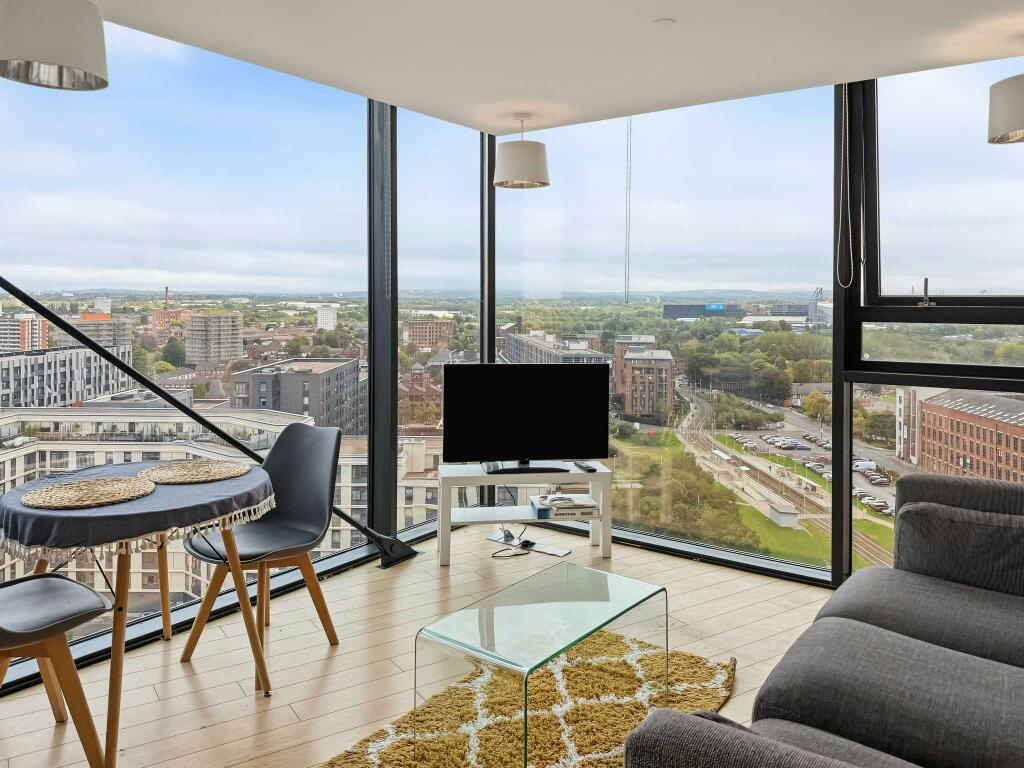
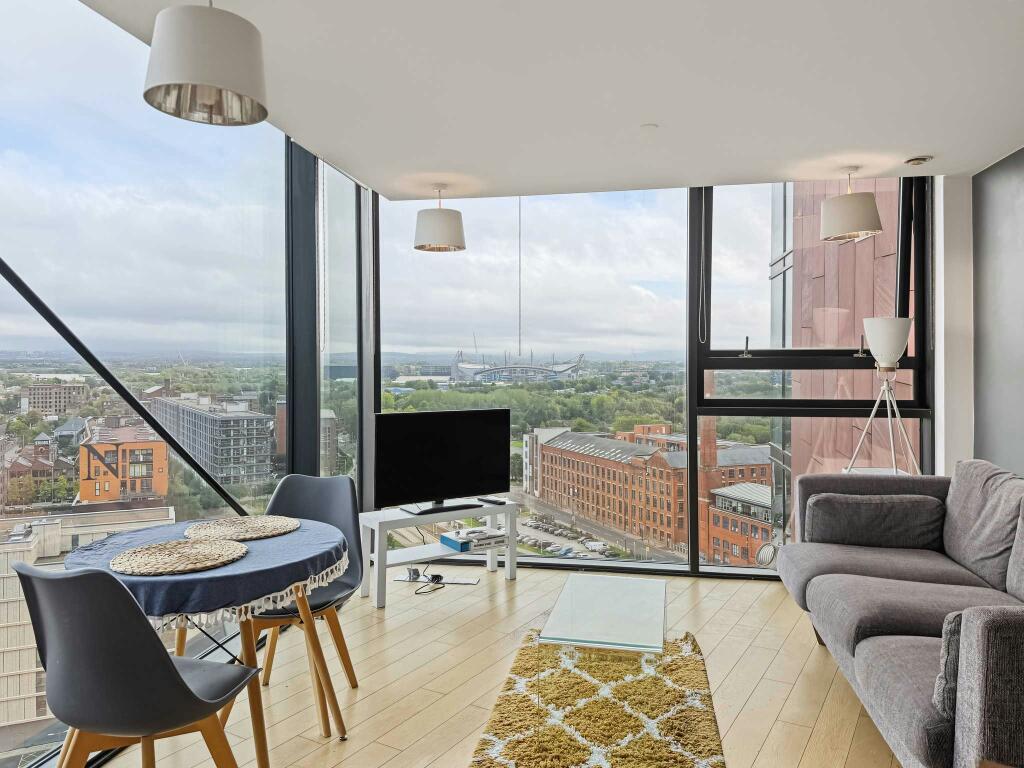
The corner apartment stands on the 17th floor of Islington Wharf, overlooking New Islington tram stop and right on the doorstep of Ancoats.
Her former landlord, who arranged for Molly-Mae to have one look around her old flat before it’s sold, said that she was a ‘lovely, polite and down-to-earth young woman, and an excellent tenant who looked after the apartment extremely well.’
The one bedroom apartment has double-aspect floor-to-ceiling windows which look across Manchester on one side, and out towards the Pennines on the other.
It’s listed for sale with no chain and the option to include existing furnishings (which seems to include the same couch Molly-Mae had at the time).
The flat also has a kitchen/living space, a communal garden, superfast broadband, and is within walking distance of Manchester Piccadilly.
New measures announced to tackle ‘rogue’ landlords across Greater Manchester
Emily Sergeant
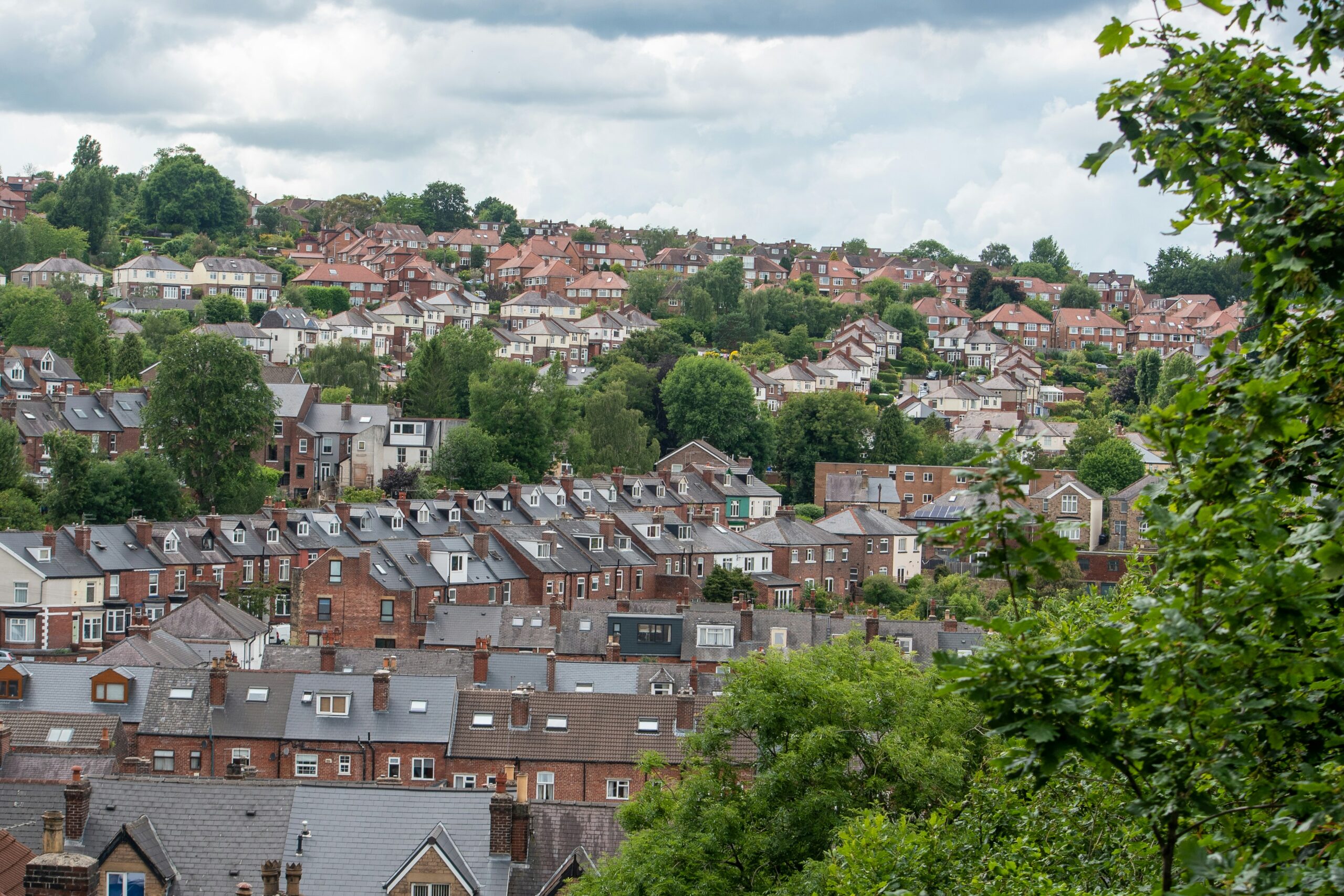
A cohort of trained enforcement officers are set to hit the streets in all 10 boroughs to help improve the lives of the region’s renters.
Forming part of Greater Manchester‘s commitment to the highest-quality housing standards alongside the Good Landlord Charter, the newly trained enforcement officers will be tasked with protecting tenants, joining Council teams in checking rental properties, bringing enforcement action against bad landlords, and cracking down on illegal practices.
The introduction of the new enforcement officers comes after what has been ‘years of sustained pressure’ on local budgets.
Greater Manchester Combined Authority (GMCA) says it is working with the 10 councils across the region to strengthen local teams, rebuild in-house skills and expertise, and ensure that powers can be applied with consistency in all boroughs.
As mentioned, this is happening alongside the Good Landlord Charter – which is GMCA’s ‘bold approach’ to drive up standards for renters across the region.
Landlords of more than half of rented properties in Greater Manchester have now signed up as supporters of the Charter, and as supporters, they have committed to going above and beyond legal minimums to improve the renting experience for hundreds of thousands of people.
“A safe place to call home is the cornerstone of a happy, healthy life,” explained Mayor Bev Craig. “But for years, people have felt trapped in poor-quality housing, and cash-strapped councils were unable to step in to help. I’m putting an end to that.
“We know there are plenty of good landlords in Greater Manchester, and many of them have already signed up to our Good Landlord Charter, but too many are just not good enough.
“That’s why we’re deploying a new generation of expert housing officers onto the streets of our towns and cities.”
Mayor Bev Craig declared that she ‘won’t stand by and let rogue landlords take advantage of people’.
She continued: “By empowering renters, working with responsible landlords, and using our powers to crack down on the bad ones, I will make sure everyone in Greater Manchester has the foundation for a good life.”

 Daisy Jackson -
14th July 2022
Daisy Jackson -
14th July 2022