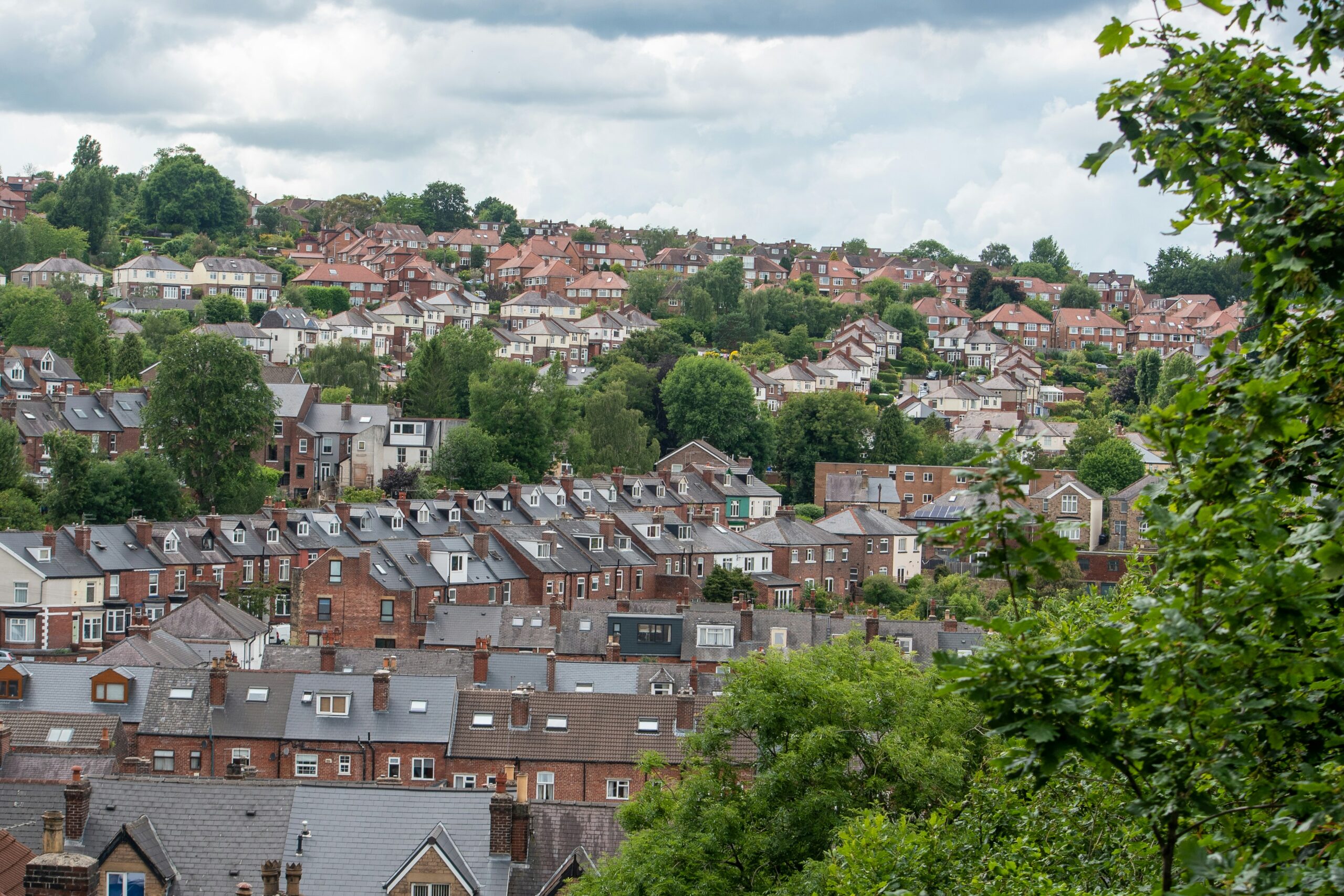
House prices in the North West have more than trebled over the past 20 years
In 1999, the average house price in the North West was just over £50,000. Twenty years later, the typical cost for a house in the region was around £164,000.
House prices in the North West have skyrocketed over the past two decades, new data has shown.
Estate agent Coulters Property reported the findings after conducting research on the changing landscape for first-time buyers.
Coulters also found that whilst property costs have risen sharply; earnings have lagged behind.
In 1999, the average house price in the North West was just over £50,000. Twenty years later, the typical cost for a house in the region was around £164,000.
During the same time period, average salaries rose from £16,000 to just £28,000.
ADVERTISEMENT
Mike Fitzgerald, Coulters Executive Chairman, said the stats reflected modern disparity between personal income and property prices.
“Although being a first-time buyer is exciting, over recent years, the affordability gap has stretched and continued to do so every year, making it difficult to make the first step onto the property ladder,” he commented.
ADVERTISEMENT
“In these uncertain times, these inequalities have been made much more apparent.
“There’s no questioning that wages have increased with the rate of inflation, but have they increased enough? Despite recent schemes such as Help to Buy or part-ownership, house prices are expected to increase, with the possibility of a 15% increase over the next five years or so.”
However, despite the deflating data, Mr. Fitzgerald emphasised that support was available for first-time buyers in Britain.
ADVERTISEMENT
“It’s important to seek all the information you can when considering getting a foot on the property ladder and not let the numbers put you off,” he explained.
“There is so much support and often a price bracket to meet first-time buyers’ needs.”
Mr. Fitzgerald continued: “Capital returns on property are traditionally strong, but like all investments the returns need to be measured over a sufficiently long period of time to flatten out short term spikes and dips in values.
“If done sensibly the outcome and rewards are certainly worth it, not only in financial terms but also in the pleasure that home ownership can bring.”
Molly-Mae Hague revisits first Manchester flat, now on the market for £185k
Daisy Jackson
Molly-Mae Hague’s first Manchester flat is now on the market for £185k – and the star herself has paid a visit to her old digs.
Those who have been following Molly-Mae since before she shot to serious fame on Love Island will have recognised the backdrop of her recent TikTok video.
The 27-year-old reality TV star and businesswoman posed around the one-bedroom flat, dancing to Sabrina Carpenter’s ‘House Tour’.
The apartment is where she lived just before entering Love Island, and where she and now-fiance Tommy Fury lived briefly when they left the show.
And now that exact flat where she really launched her social media career has been listed for sale, at £185,000.
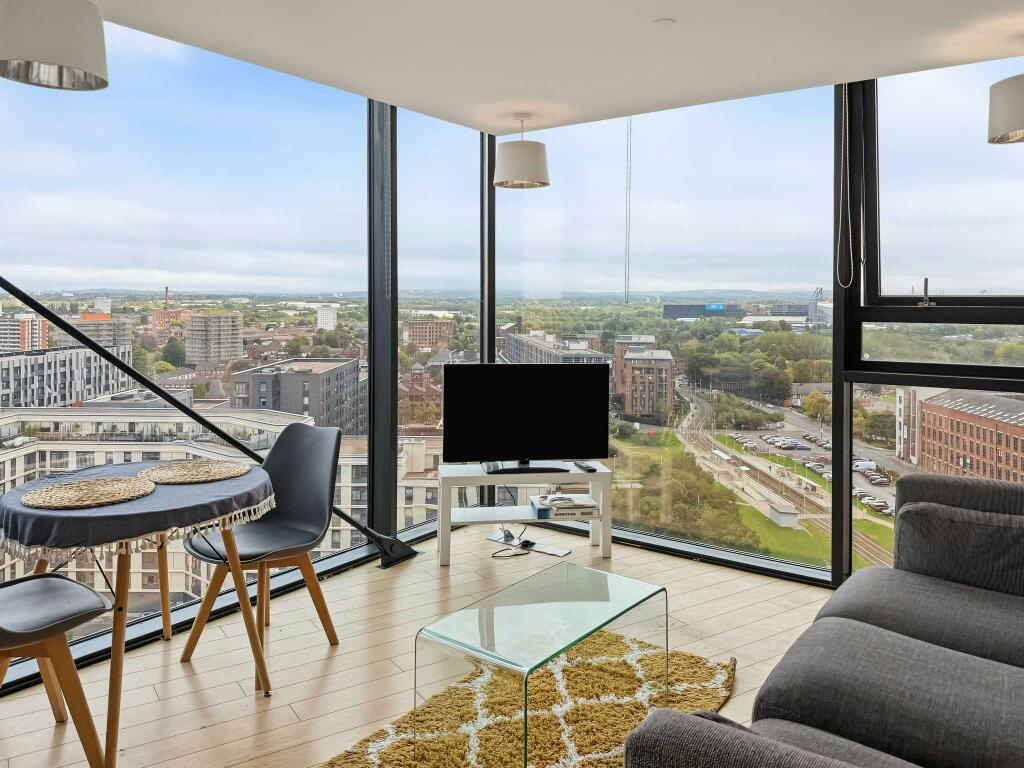
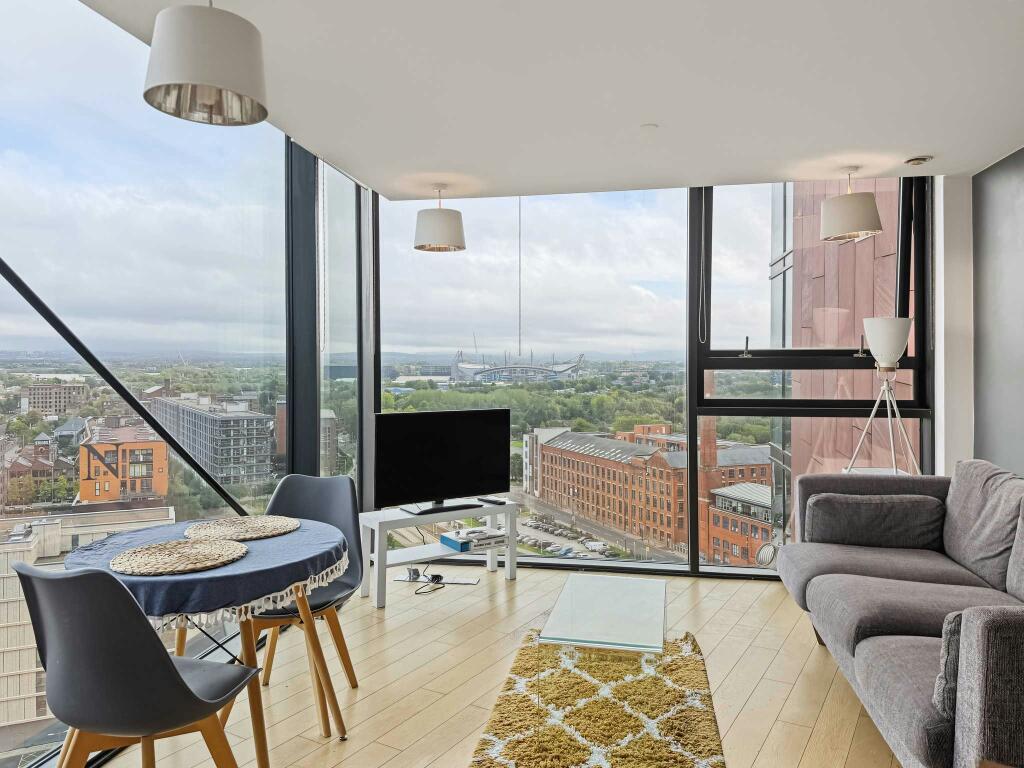
The corner apartment stands on the 17th floor of Islington Wharf, overlooking New Islington tram stop and right on the doorstep of Ancoats.
Her former landlord, who arranged for Molly-Mae to have one look around her old flat before it’s sold, said that she was a ‘lovely, polite and down-to-earth young woman, and an excellent tenant who looked after the apartment extremely well.’
The one bedroom apartment has double-aspect floor-to-ceiling windows which look across Manchester on one side, and out towards the Pennines on the other.
It’s listed for sale with no chain and the option to include existing furnishings (which seems to include the same couch Molly-Mae had at the time).
The flat also has a kitchen/living space, a communal garden, superfast broadband, and is within walking distance of Manchester Piccadilly.
New measures announced to tackle ‘rogue’ landlords across Greater Manchester
Emily Sergeant
A cohort of trained enforcement officers are set to hit the streets in all 10 boroughs to help improve the lives of the region’s renters.
Forming part of Greater Manchester‘s commitment to the highest-quality housing standards alongside the Good Landlord Charter, the newly trained enforcement officers will be tasked with protecting tenants, joining Council teams in checking rental properties, bringing enforcement action against bad landlords, and cracking down on illegal practices.
The introduction of the new enforcement officers comes after what has been ‘years of sustained pressure’ on local budgets.
Greater Manchester Combined Authority (GMCA) says it is working with the 10 councils across the region to strengthen local teams, rebuild in-house skills and expertise, and ensure that powers can be applied with consistency in all boroughs.
As mentioned, this is happening alongside the Good Landlord Charter – which is GMCA’s ‘bold approach’ to drive up standards for renters across the region.
Landlords of more than half of rented properties in Greater Manchester have now signed up as supporters of the Charter, and as supporters, they have committed to going above and beyond legal minimums to improve the renting experience for hundreds of thousands of people.
“A safe place to call home is the cornerstone of a happy, healthy life,” explained Mayor Bev Craig. “But for years, people have felt trapped in poor-quality housing, and cash-strapped councils were unable to step in to help. I’m putting an end to that.
“We know there are plenty of good landlords in Greater Manchester, and many of them have already signed up to our Good Landlord Charter, but too many are just not good enough.
“That’s why we’re deploying a new generation of expert housing officers onto the streets of our towns and cities.”
Mayor Bev Craig declared that she ‘won’t stand by and let rogue landlords take advantage of people’.
She continued: “By empowering renters, working with responsible landlords, and using our powers to crack down on the bad ones, I will make sure everyone in Greater Manchester has the foundation for a good life.”

 The Manc -
23rd July 2020
The Manc -
23rd July 2020