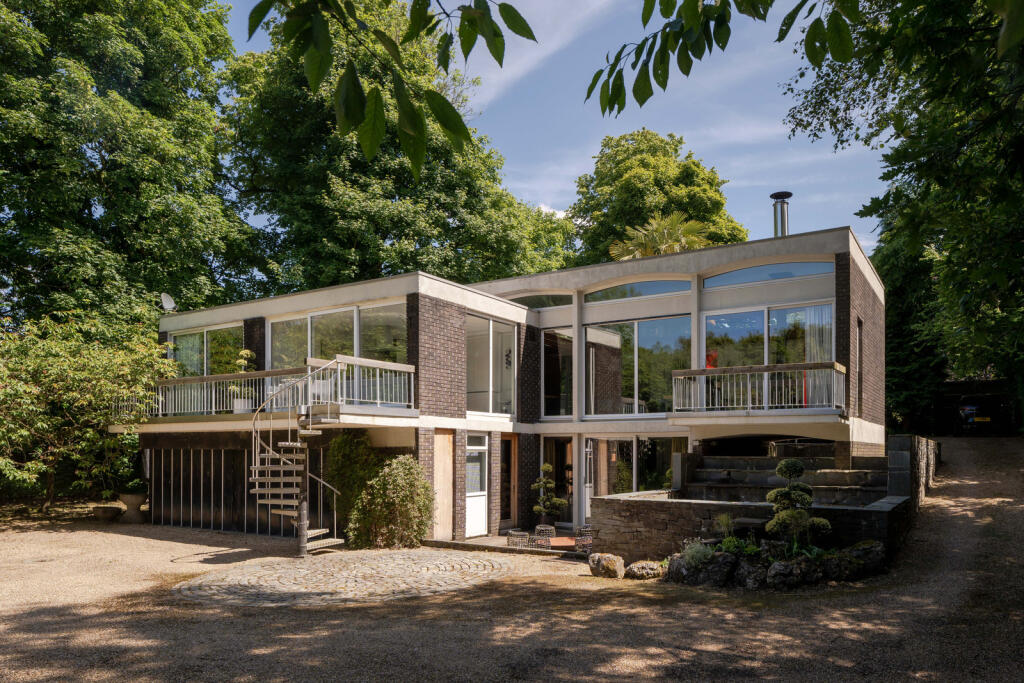
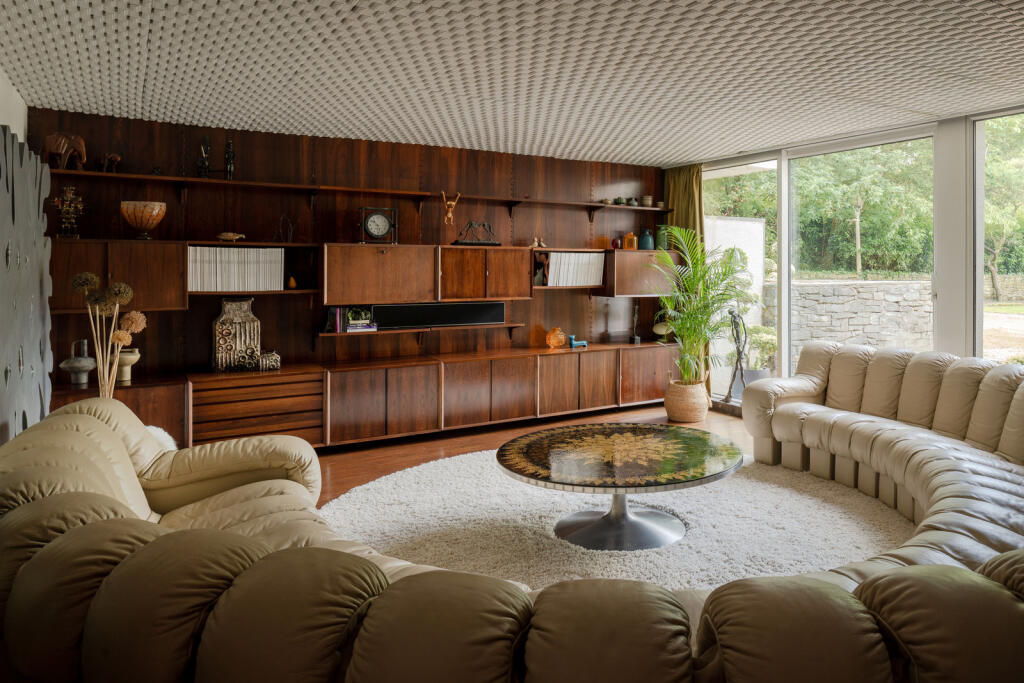
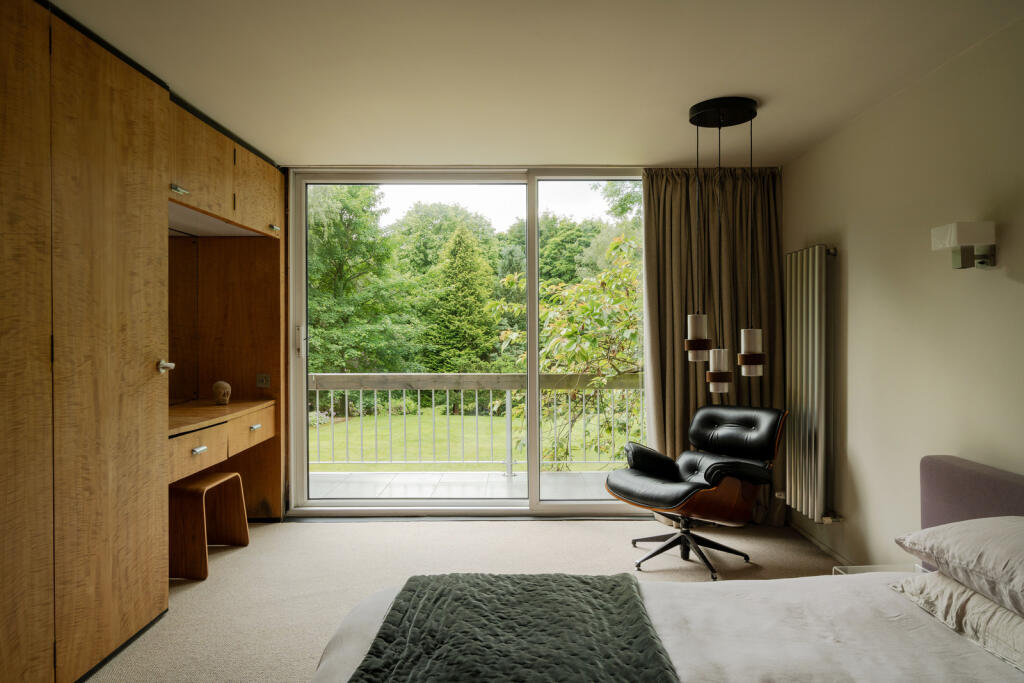
A rare Grade II-listed mid-century modern home designed by a renowned architect has gone on the market in Lancashire.
Now, we know this one is a little off patch for us… but honestly, it’s a truly unique masterpiece worth hyping up.
Before we all get carried away, it goes without saying that the vast majority of us won’t have the money to buy this house just chilling in bank accounts right now, but if like us, you’ve got no shame in admitting you love looking at houses you can’t afford in places you’ll probably never live, then allow us to introduce you to this absolute beauty.
This is Domus – thought to be one of the first ‘modern’ houses in the county, commissioned for Eric Cookson and his wife all the way back in 1958.
Mid-century modern homes are commonplace in the US, but rare in the UK / Credit: The Modern House
Mid-century modern (MCM) homes are commonplace in the US and in other countries across Europe, but here in the UK, it’s a different story.
ADVERTISEMENT
MCMs homes are said to be rare in the UK due to a preference for traditional, durable materials like brick, as well as higher land costs demanding smaller footprints, and because we have a climate that makes large, single-pane glass windows more impractical.
Hence why this home in the sought-after Burnley town of Reedley is so special.
ADVERTISEMENT
Designed by the renowned architect Alan Chambers, and concealed from view at the foot of a private driveway, fronted by landscaped gardens and a screen of mature specimen trees, estate agents say this exceptional Grade II-listed modern masterpiece is set intended for ‘creating, communing, and entertaining’.
This Grade II-listed home was designed by renowned architect Alan Chambers back in 1958 / Credit: The Modern House
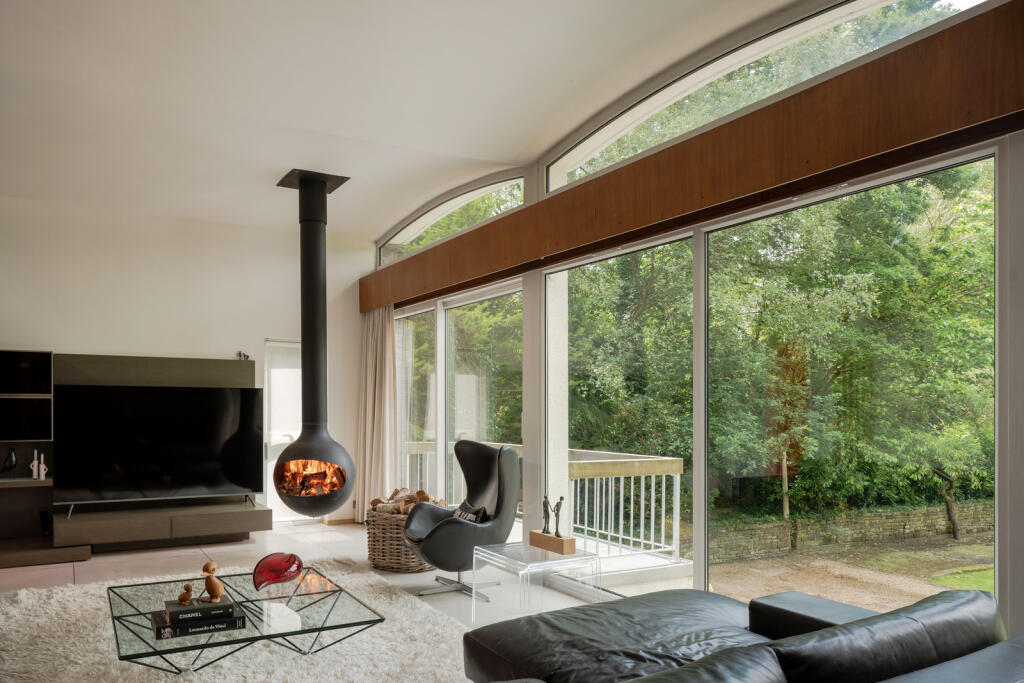
One of the property’s other stand-out features has to be its abundance of natural light in the main living spaces, where expansive full-height windows frame views of the garden.
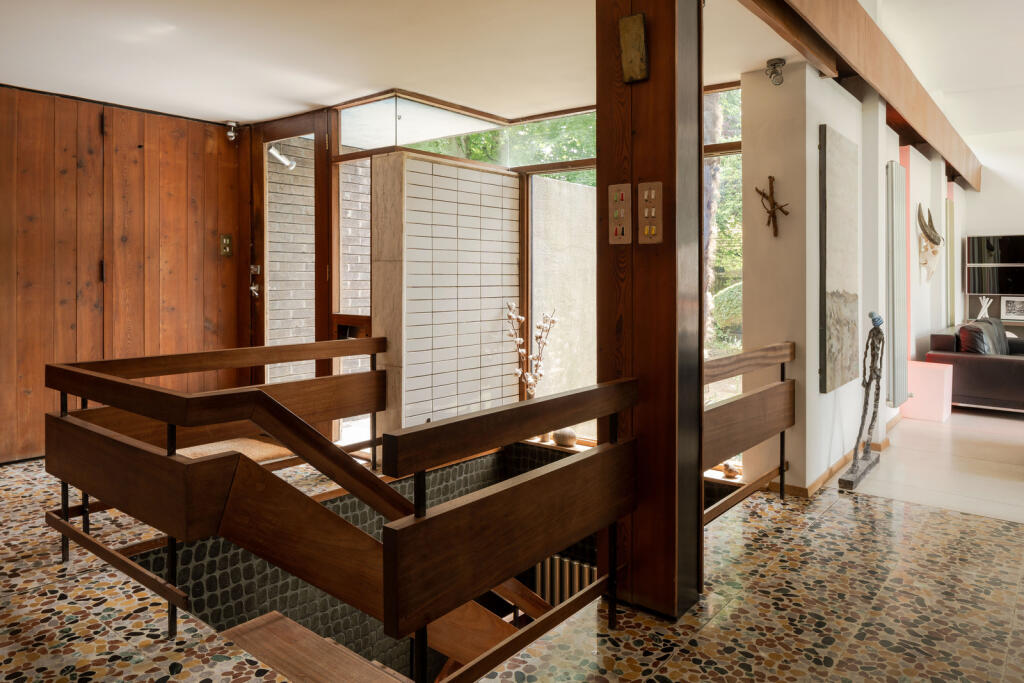
Retaining the building’s legacy has also been integral to its current owners, with much of the property’s internal detailing having been beautifully preserved throughout – most notably in terrazzo tiles, marble floors, and aluminium door furniture, light switches and sanitaryware.
ADVERTISEMENT
Oh, and of course, we have to mention the artfully crafted open-tread staircase as one of the many original features that just steals the show.
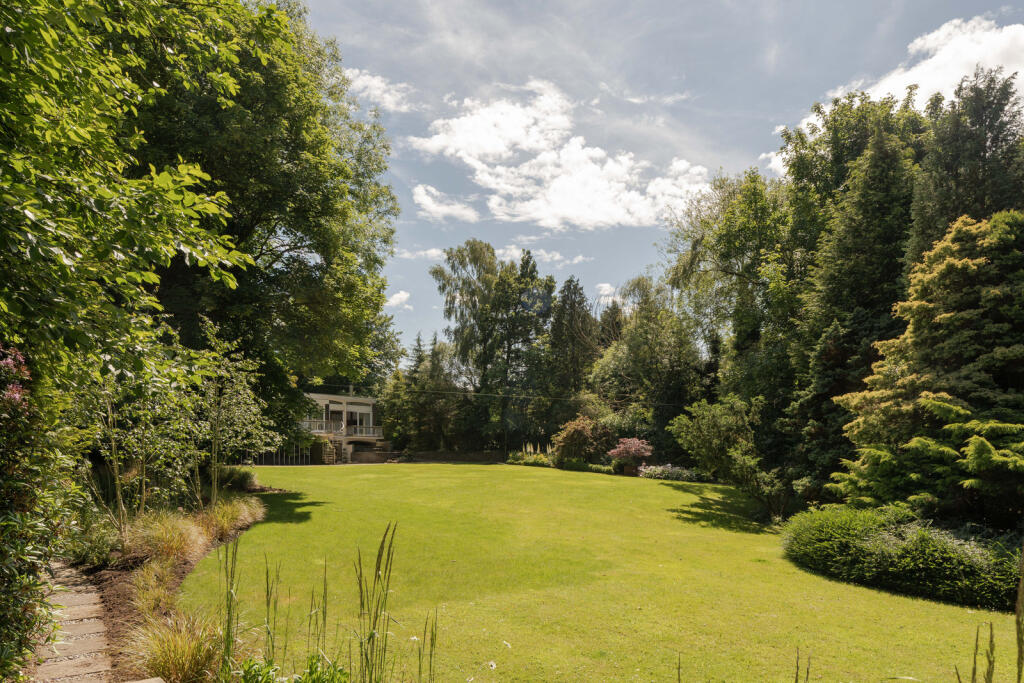
The outside of Domus is just as impressive as the inside too / Credit: The Modern House
The outside is just as impressive as the inside too, as not only is there a collection of characteristic balconies surrounding the property, but you’ll also find that the gardens and woodland extend to around 5.7 acres – which form an integral part of what makes this home so remarkable and unlike anything else in the North West
Like what you see then?
This property is currently on the market with mid-century modern expert estate agents, The Modern House, for a (pretty reasonable, to be fair) £1.1 million, and if you fancy taking a closer look, then you can contact the agents to arrange a viewing.
Or you could just take the cheaper route instead and have a nosy at the Rightmove link here.
Featured Image – The Modern House
Property
Molly-Mae Hague revisits first Manchester flat, now on the market for £185k
Daisy Jackson
Molly-Mae Hague’s first Manchester flat is now on the market for £185k – and the star herself has paid a visit to her old digs.
Those who have been following Molly-Mae since before she shot to serious fame on Love Island will have recognised the backdrop of her recent TikTok video.
The 27-year-old reality TV star and businesswoman posed around the one-bedroom flat, dancing to Sabrina Carpenter’s ‘House Tour’.
The apartment is where she lived just before entering Love Island, and where she and now-fiance Tommy Fury lived briefly when they left the show.
And now that exact flat where she really launched her social media career has been listed for sale, at £185,000.
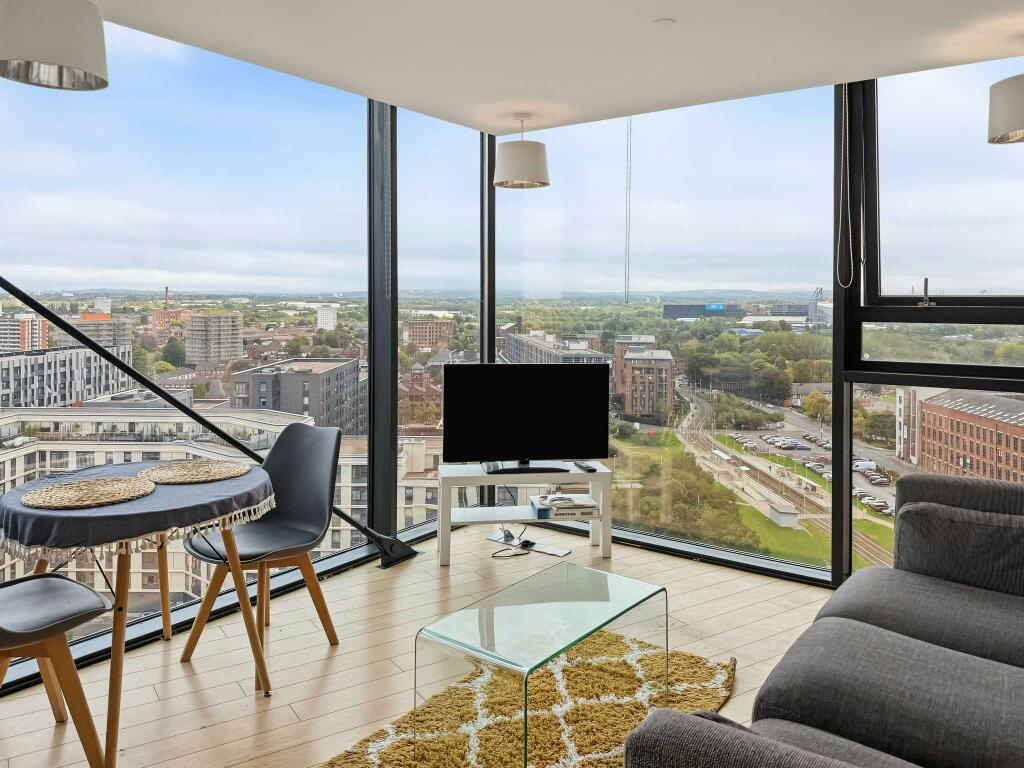
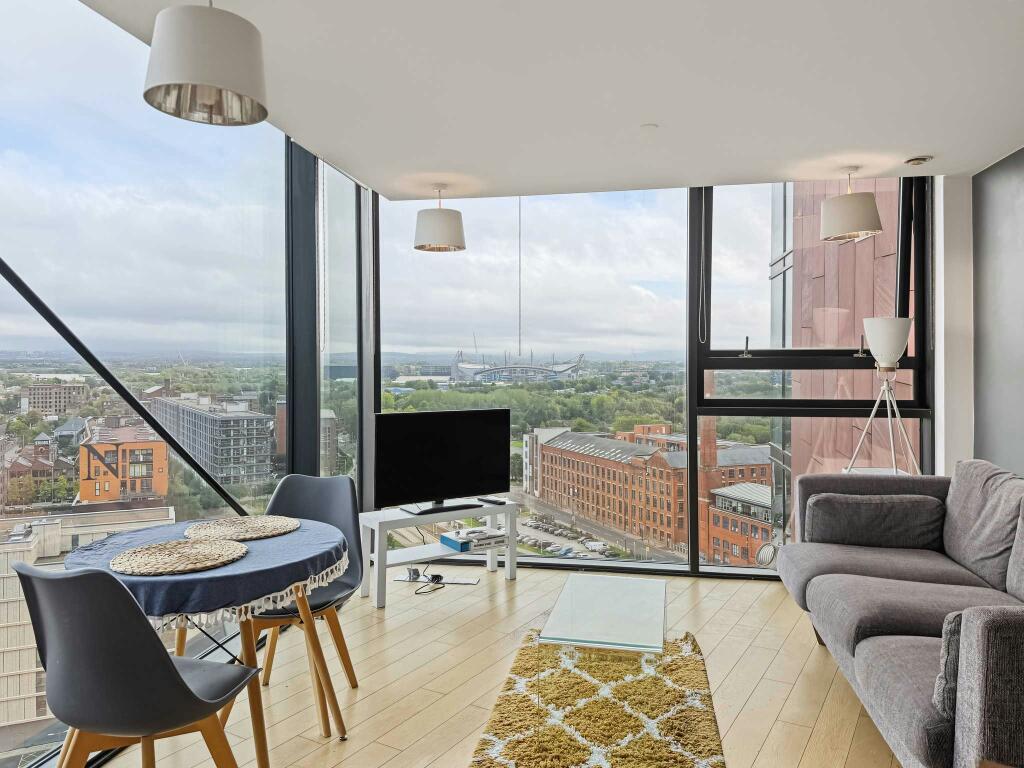
The corner apartment stands on the 17th floor of Islington Wharf, overlooking New Islington tram stop and right on the doorstep of Ancoats.
Her former landlord, who arranged for Molly-Mae to have one look around her old flat before it’s sold, said that she was a ‘lovely, polite and down-to-earth young woman, and an excellent tenant who looked after the apartment extremely well.’
The one bedroom apartment has double-aspect floor-to-ceiling windows which look across Manchester on one side, and out towards the Pennines on the other.
It’s listed for sale with no chain and the option to include existing furnishings (which seems to include the same couch Molly-Mae had at the time).
The flat also has a kitchen/living space, a communal garden, superfast broadband, and is within walking distance of Manchester Piccadilly.
New measures announced to tackle ‘rogue’ landlords across Greater Manchester
Emily Sergeant
A cohort of trained enforcement officers are set to hit the streets in all 10 boroughs to help improve the lives of the region’s renters.
Forming part of Greater Manchester‘s commitment to the highest-quality housing standards alongside the Good Landlord Charter, the newly trained enforcement officers will be tasked with protecting tenants, joining Council teams in checking rental properties, bringing enforcement action against bad landlords, and cracking down on illegal practices.
The introduction of the new enforcement officers comes after what has been ‘years of sustained pressure’ on local budgets.
Greater Manchester Combined Authority (GMCA) says it is working with the 10 councils across the region to strengthen local teams, rebuild in-house skills and expertise, and ensure that powers can be applied with consistency in all boroughs.
As mentioned, this is happening alongside the Good Landlord Charter – which is GMCA’s ‘bold approach’ to drive up standards for renters across the region.
Landlords of more than half of rented properties in Greater Manchester have now signed up as supporters of the Charter, and as supporters, they have committed to going above and beyond legal minimums to improve the renting experience for hundreds of thousands of people.
“A safe place to call home is the cornerstone of a happy, healthy life,” explained Mayor Bev Craig. “But for years, people have felt trapped in poor-quality housing, and cash-strapped councils were unable to step in to help. I’m putting an end to that.
“We know there are plenty of good landlords in Greater Manchester, and many of them have already signed up to our Good Landlord Charter, but too many are just not good enough.
“That’s why we’re deploying a new generation of expert housing officers onto the streets of our towns and cities.”
Mayor Bev Craig declared that she ‘won’t stand by and let rogue landlords take advantage of people’.
She continued: “By empowering renters, working with responsible landlords, and using our powers to crack down on the bad ones, I will make sure everyone in Greater Manchester has the foundation for a good life.”

 Emily Sergeant -
11th February 2026
Emily Sergeant -
11th February 2026