New £58 million plans to turn one of Manchester’s largest and oldest mills into a development of almost 300 canalside flats and townhouses have now been submitted.
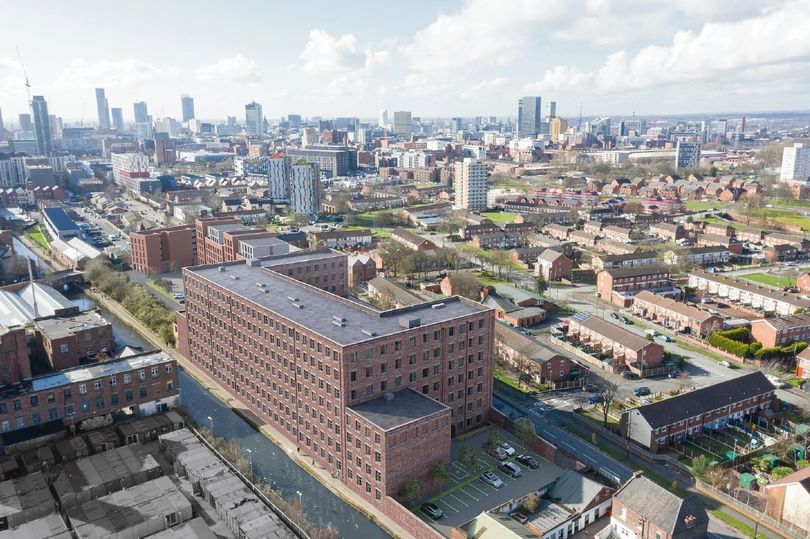
Brunswick Mill on Bradford Road in the heart of Ancoats is a Grade II listed building that dates back to the 1840s and is currently being used by a range of tenants, including textile businesses, a rehearsal space for musicians, and more.
But under these newly-submitted plans, developer Maryland Securities would convert the building into 153 apartments and 124 properties.
There would also be two new-build blocks on adjacent land.
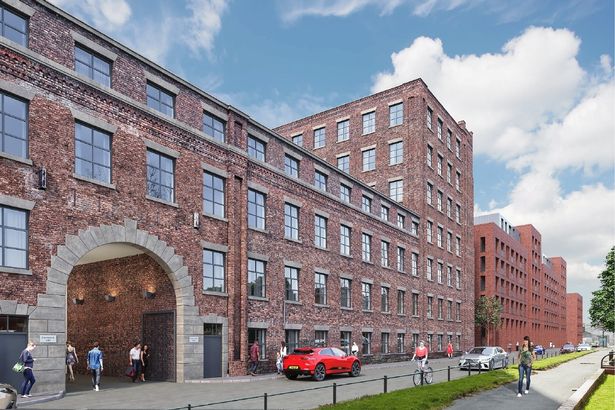
Being a building that boasts a great deal of historical architecture, the proposals – which have been designed by architect Hodder+Partners – will see the central courtyard retained, as well as the trussed ties and vaulted ceilings.
ADVERTISEMENT
Brunswick Mill is currently tenanted by textiles businesses, musicians and more / Credit: Hodder+Partners
It is hoped that developing the site will help link together New Islington and the Etihad Campus.
The plans for the project – which is valued at around £58 million – include approximately 20,000 sq ft of workspace and community space on the ground floor of the refurbished mill.
ADVERTISEMENT
This is “to help bring activity and vibrancy to Bradford Road”, Maryland says.
A convenient, well-lit and publicly accessible route through the site to the Ashton Canal towpath will also help provide “a revived sense of place”, the developer adds.
A viability assessment for the project has also been lodged, and Maryland has confirmed that its ‘relocation consultants’ have been in contact and have discussed the future of the building with all existing occupiers of the mill, adding that: “This engagement will continue throughout the planning process.”
ADVERTISEMENT
The courtyard and some significant architectural features are to be retained / Credit: Hodder+Partners
Speaking on the submission of the plans, Stephen Hodder – Chairman of Hodder+Partners – said: “The main ambition of this scheme is to celebrate the listed Brunswick Mill, which is a key part of Manchester’s industrial heritage.
“The two new buildings for the site are designed to complement the mill and ensure its prominence in the area is not lost in future years.
“We want to create a sustainable and characterful neighbourhood that will enhance the local environment.”
Maryland has said it estimates that the project will create 376 off-site and on-site construction jobs, with the new residents and commercial occupiers creating an annual economic benefit of £25.5 million over the first five years.
The developers also said the new ground floor workspace and community accommodation would also support 155 jobs, which is a 45% increase compared to the current occupation.
Featured Image – Wikimedia Commons
Property
Greater Manchester reveals £11.7m plan to tackle empty homes across the region
Emily Sergeant
Greater Manchester has revealed its £11.7m plan to tackle all the homes currently empty across the region.
They’re aiming to tackle the pressures currently being put on temporary accommodation by turning long-term empty homes throughout the region into safe and secure housing for families who need it.
Temporary accommodation is described as being a ‘vital safety net’ for people who are facing or are at risk of homelessness, as it ensures they have somewhere safe to stay – but rising demand, a shortage of affordable homes, and escalating costs have left Councils, such as Greater Manchester‘s, increasingly reliant on expensive alternatives that are often deemed unsuitable and place a significant strain on local budgets.
At the same time, thousands of long-term empty homes across Greater Manchester remain unused.
This is why, with new devolved powers, GMCA is now taking what it’s calling a ‘coordinated, region-wide approach’ to bring these empty homes back into use and pioneer long-term solutions to the temporary accommodation crisis.
Greater Manchester reveals its £11.7m plan to tackle empty homes across the region / Credit: Benjamin Elliott (via Unsplash)
New research has revealed that temporary accommodation usage across the region has nearly doubled since 2019, with 5,915 households now making use of it as of March 2025.
At the same time, it’s estimated that the region has around 12,700 homes which have been empty for six months or more.
So, the new £11.7 million package – which is funded by GMCA – will be used to refurbish or lease up to 400 properties and help Councils cut bills for ‘costly and unsuitable’ temporary accommodation, such as bed and breakfasts, hostels, or hotels.
“More than 8,000 children are among the families living in temporary accommodation in Greater Manchester and that is simply unacceptable,” commented Mayor Andy Burnham.
“Homelessness tears young families from their communities and support networks, leaving them in environments that are often wholly unsuitable. This experience leaves lasting scars and that’s why we’re taking bold action.
“By investing an initial £11.7m to bring long-term empty homes back into use, we can offer better housing options, reduce the reliance on costly temporary accommodation, and ease the financial strain on local authorities.”
Alongside this package, another £10.6 million fund will enable councils to provide financial incentives, repair support, and offer temporary leasing options for at least 400 empty homes, ensuring they can be quickly brought into use as temporary or settled accommodation for families.
The programme is part of the work of Greater Manchester’s dedicated Housing First Unit, established to deliver the vision for ‘a healthy home for all’ by 2038.
Featured Image – Wikimedia Commons

Property
Government sets date for ‘historic’ no-fault evictions ban next year
Emily Sergeant
The Government has officially set the date for the ban of no-fault evictions next year.
Renting in England is expected to be ‘transformed’ with a raft of major changes coming into effect as part of the new Renters’ Rights Bill from 1 May 2026 for 11 million people across the country – and this, crucially, includes the end of Section 21 evictions at no-fault of the tenant.
As it stands, Section 21 notices leaving thousands of people vulnerable to homelessness every year, but in just under six months’ time, private renters will no longer face this threat.
To the vast majority of renters and landlords who play by the rules, this government has got your back.
Further measures announced as part of the new Renters’ Rights Bill – which has now been passed in law – include a ban on rental bidding wars, making landlords and letting agents legally required to publish an asking rent for their property and prevented from asking for, encouraging, or accepting any bids above this price, and also a ban on in-tenancy rent increases written in to contracts.
The latter will prevent landlords from implementing higher rents mid-tenancy, and only allow them to raise the rent once a year to the market rate.
Landlords will also no longer be able to unreasonably refuse tenants’ requests to have a pet, nor will they be able to discriminate against potential tenants, because they receive benefits or have children.
‘No-fault’ evictions are now banned in England under historic new legislation / Credit: Maria Ziegler (via Unsplash)
On the flip side, however, the new Bill means landlords will have stronger legally valid reasons to get their properties back when needed – whether that’s be to move in themselves, sell the property, or deal with rent arrears or anti-social behaviour.
The Government says this will work to deliver a fairer system for both sides.
“We’re calling time on no fault evictions and rogue landlords,” commented Housing Secretary, Steve Reed. “Everyone should have peace of mind and the security of a roof over their head, and the law we’ve just passed delivers that.
“We’re now on a countdown of just months to that law coming in, so good landlords can get ready and bad landlords should clean up their act.”
Alongside the Renters’ Rights Act, an ‘improved’ Housing Health and Safety Rating System, which will better assess health and safety risks in homes and making it more efficient and easier to understand, will also be introduced.
And there are also planned new standards to ensure privately rented properties are warmer and cheaper to run.