Biddulph Grange Garden is one of the most intriguing and unusual National Trust properties in the country.
On a trip to this hidden gem, visitors can see gardens inspired by ancient Egypt, Italy and China in a single stroll.
It’s been described as a ‘horticultural Disneyland’, with entire continents crammed into sections of the garden.
A wander around the fascinating Grade I-listed grounds will bring you face-to-face with a group of stone sphinxes, a bright red Chinese pagoda by a lake, and a tiered Italian-style garden.
There’s also a Tudor-style Cheshire cottage and a sweeping Victorian garden with views of the valley below.
ADVERTISEMENT
The grounds at Biddulph Grange, right on the Staffordshire border with Cheshire, were designed by horticulturalist James Bateman as a ‘playful paradise’.
James took his massive collection of plants from around the globe and built entire worlds dedicated to them on his land, which are carefully preserved today by the National Trust.
This garden within Biddulph Grange packs in tonnes of features inspired by Chinese gardens.
There’s a red and turquoise pagoda overlooking a small lake with a traditional bridge crossing it, a small joss house (or temple), a tower, and even its very own ‘Great Wall’.
Red dragons are carved into the lawns and a golden sacred water buffalo sculpture overlooks the whole scene.
Bateman built his mansion in an Italian style, and the formal tiered gardens around it reflect that.
ADVERTISEMENT
The incredible terraces are packed with plants from around the world – it might be Italian in style, but Italian plants apparently don’t grow well on a wet and windy English hillside.
There aren’t many parts of the UK that could compare with the drama of the Himalayan mountains, but Biddulph Grange has tried to capture some of that magic in its glen area.
It’s filled with beautiful rock walls, streams, waterfalls and ferns.
There’s also a High Walk so you can take in the views of the garden from up high, before heading through to the tunnels that lead to the China Garden.
This unusual looking corner of the garden is The Stumpery, where dead tree stumps are used as scaffolding for climbing plants.
ADVERTISEMENT
Biddulph Grange’s stumpery is the oldest in the country and has been copied by many other gardens, including at Highgrove, Prince Charles’ home in Gloucestershire.
This Tudor-style cottage dates back to 1856 and its facade includes the initials of James and his wife Maria.
The National Trust has drawn possible links between the Cheshire Cottage and Queen Victoria’s famous Swiss Cottage, which she built for her nine children around the same time.
In Bateman’s time, the cottage would have been the commanding focus surrounded by small trees – now it’s dwarfed by amazing mature conifers.
Biddulph Grange is open from 10am to 3.30pm, Saturday to Wednesday, throughout January.
ADVERTISEMENT
It’s between 45 minutes and an hour to drive there from most parts of Greater Manchester.
You can also get there by taking the train to Congleton then a short bus ride on the 94 service to St Lawrence’s Church.
You can find out more about Biddulph Grange Garden at the National Trust website here.
Featured image: National Trust Images/John Miller
Things To Do
Chester Zoo welcomes The Traitors stars Claudia and Alan – but it’s not what you think
Lydia Mastrolonardo
No, Chester Zoo isn’t keeping actual Claudia Winkleman and Alan Carr in enclosures – everybody stand down.
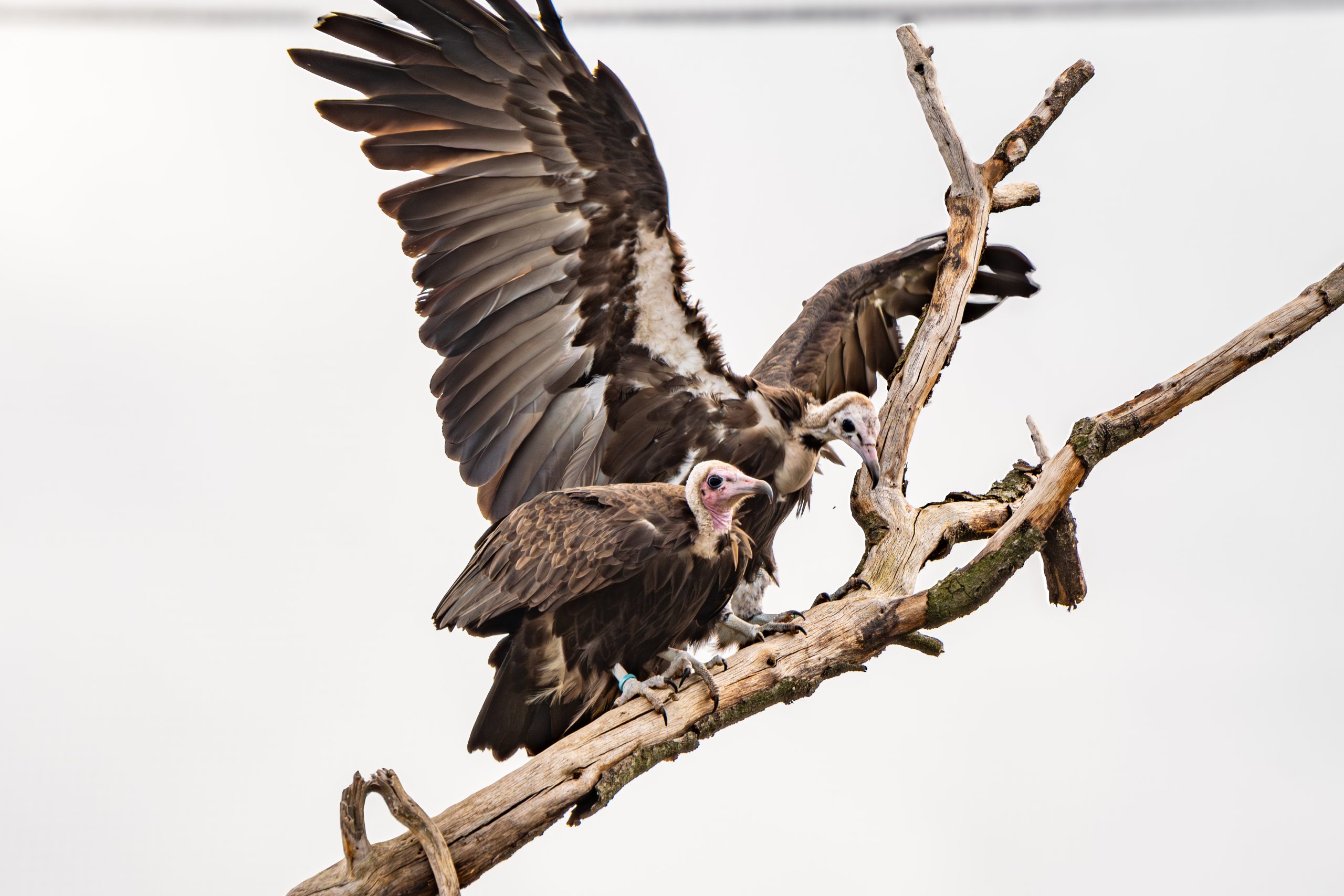
The zoo is in fact welcoming its first pair of hooded vultures, to hopefully boost the critically endangered species, and they just so happen to be named after some of our favourite celebrities from The Traitors.
As famous as Alan Carr and Claudia Winkleman are, these two give them a run for their money, as the first of their kind to ever come to Chester Zoo – making them pretty big celebs in the animal kingdom.
The pair of vultures are currently nestling in to their new home, alongside their new white-headed vulture roommates, at the Heart of Africa aviary. It is here that conservationists are hoping the newly bonded pair will start a family, as part of a Europe-wide breeding programme, to help safeguard their species from extinction – no pressure or anything.
Bird Keeper Heather-Anne Pedley said: “Alan and Claudia came to us from the Horstmann Trust, a conservation breeding centre for vultures, where they are an established breeding pair. We named them after Traitors stars Alan Carr and Claudia Winkelman, because what better way to reflect how funny and engaging they are, than to name them after two national treasures?
“Nobody prepared me for how much I would fall in love with them, their antics and characters. They look like they’ve just put a hood up, and they have this beautiful blue ring around their eyes, like natural eyeliner.”
Alan and Claudia, Chester Zoo’s new vultures. Credit: Chester Zoo
Hooded vultures are distinctive with dark brown feathers, a buff ‘hood’ and a bald face and throat, with wingspans of up to 180cm. They are native to west, central and southern Africa, where they typically pick up their lunch by soaring over the land, looking for carcasses to feed upon as part of ‘nature’s clean-up crew.’
It’s not all gore though, they are very active, clever and interested in their environment. The couples are monogamous, will preen each other, gently touch each other’s bills and co-build nests – quite the romantics.
Heather-Anne added: “This pair are real love birds, and we are hopeful they’ll go on to breed. Any youngsters they go on to have will become part of a European conservation breeding programme, helping to create an insurance population for this incredibly rare species.
“In the wild, vultures help prevent zoonotic diseases – illnesses that can spread between species – because their stomach acid is so strong they can eat decaying meat that other animals would not be able to digest. This helps prevent the spread of diseases like anthrax and botulism into the soil.”
Despite their crucial role across various ecosystems, vulture numbers are declining and they are now sadly classified as critically endangered, according to the IUCN Red List of Endangered Species.
This decline is driven by mid-air collisions or accidental electrocution by scanning the ground for prey whilst perched on uninsulated power lines. These birds are also at risk of being poisoned or even hunted to facilitate an unsustainable demand for vulture body parts and eggs to be used in traditional medicine and rituals, while there is no scientific evidence to support this use.
We are really rooting these two and hope that they settle into their new home.
ENB’s Romeo & Juliet at Palace Theatre Manchester – the world’s most famous story expertly reimagined | Review
Emily Sergeant
Every now and then you experience a bit of a full circle moment… and for me, this was one of them.
Back in 2011, when I was a dance-obsessed 14-year-old, taking and assisting classes countless times a week, I became enamoured by a BBC documentary series called Agony & Ecstasy: A Year with English National Ballet. As one of the country’s premier ballet companies – celebrating its 60th anniversary at the time of the documentary – ENB allowed cameras behind the scenes, from the rehearsal room to backstage, giving audiences a previously unseen inside look on what it takes to stage some of the most spectacular productions your eyes will ever meet.
One of the ballets being staged in the year the BBC followed the company was Romeo & Juliet.
Based on a story known around the world and with an unmistakable score by Prokofiev, it’s a ballet I was already fond of prior to the documentary, but seeing the work that went into making the show a reality, up close like never before, it turned into one of my favourites.
Over the years, I have been fortunate enough to see several different dance stagings of Romeo & Juliet – but last night, at the Palace Theatre in Manchester, was the first time I got to sit in the audience and see English National Ballet’s production live with my own eyes.
And it was just as magical as I was hoping it would be.
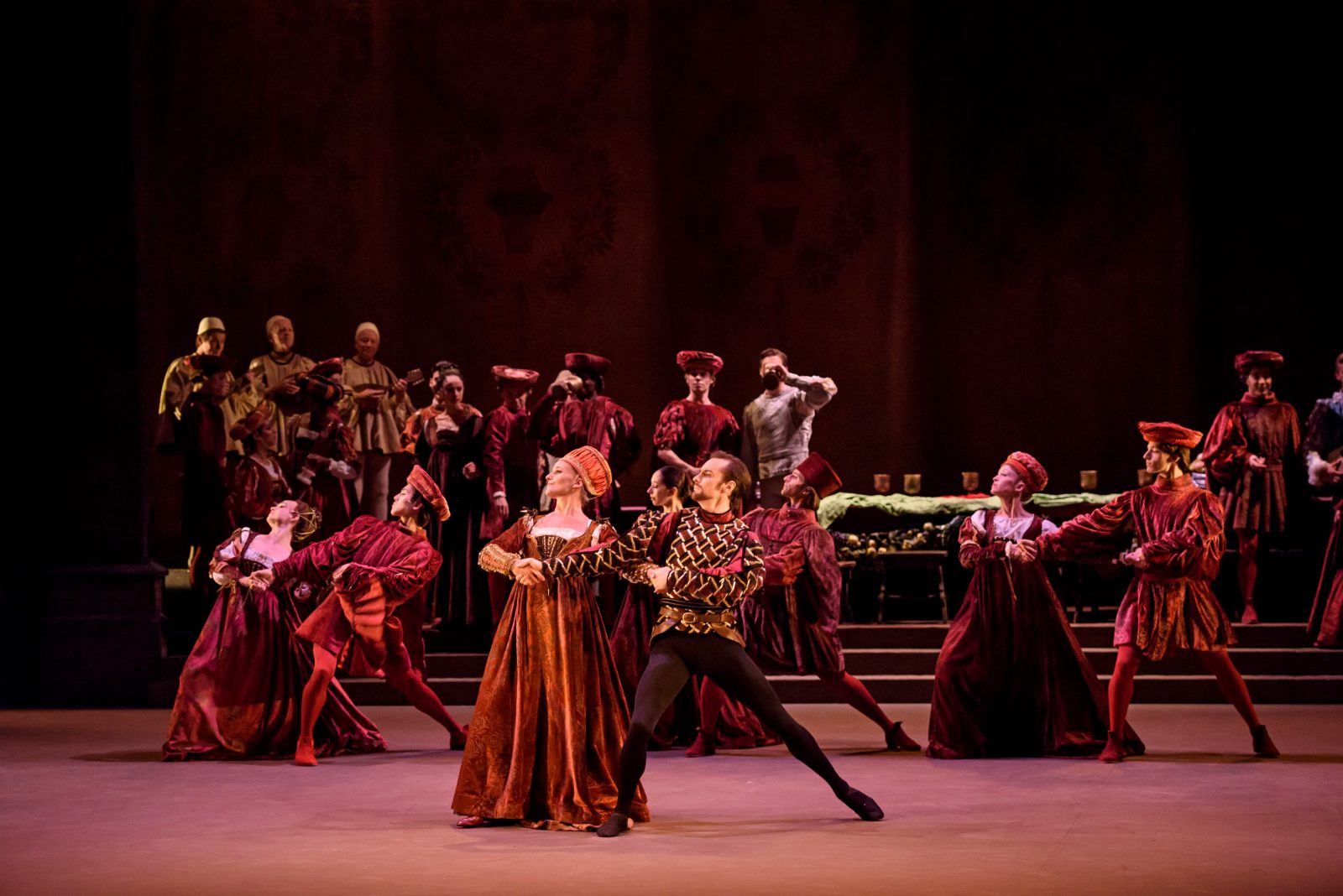
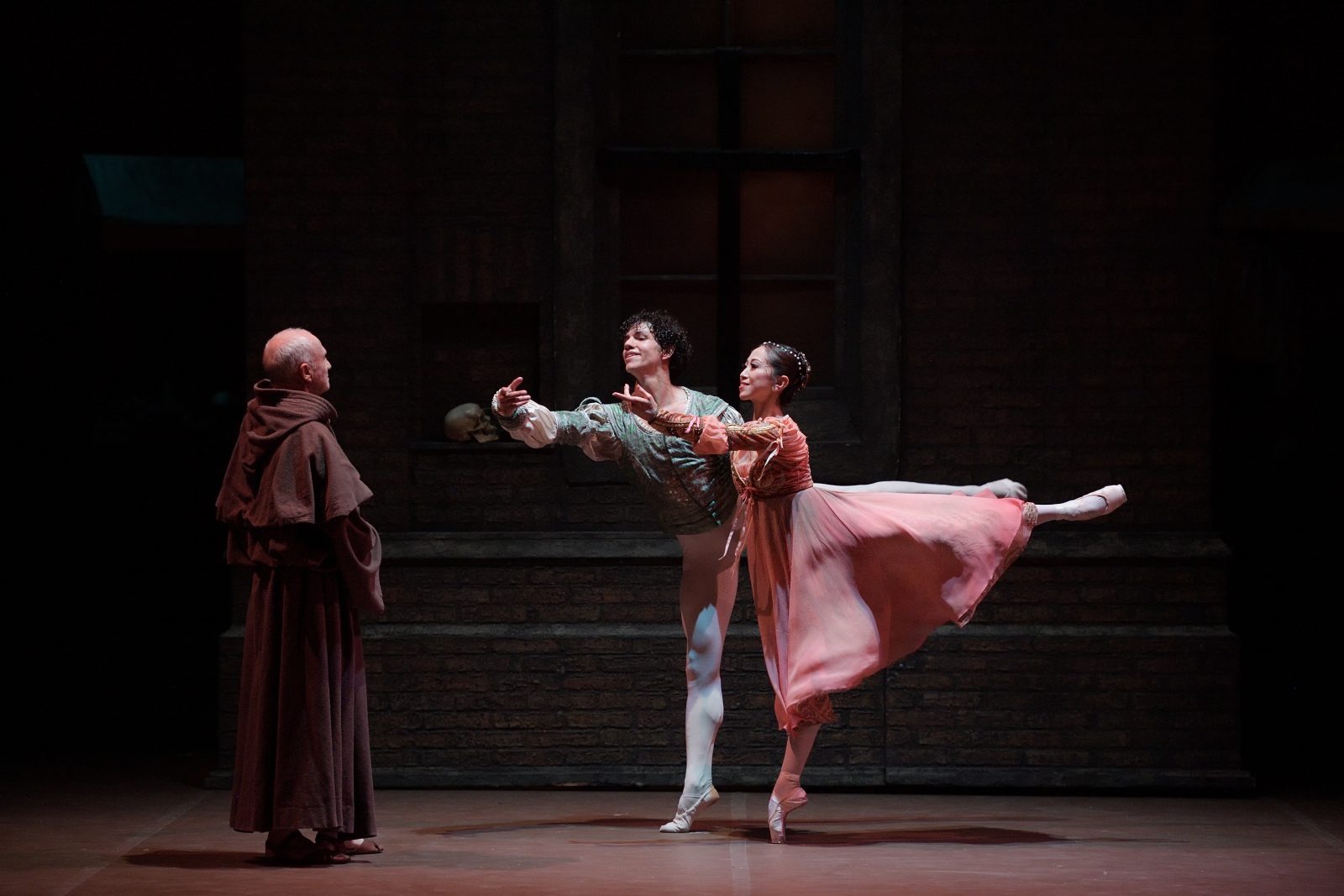
ENB’s Romeo & Juliet is now on stage at Manchester Palace Theatre / Credit: Laurent Liotardo
Right off the bat, I’m just going to presume you already have somewhat of a grasp on the story of Romeo & Juliet, right? Given the fact it’s arguably Shakespeare’s most famous work and one of the most iconic plays of all time.
And you’ll be pleased to know, even if you’re not seasoned in watching ballet, that the story we all know and love remains largely intact for this production, therefore making it easy for audiences of all ages and interests to follow along and admire.
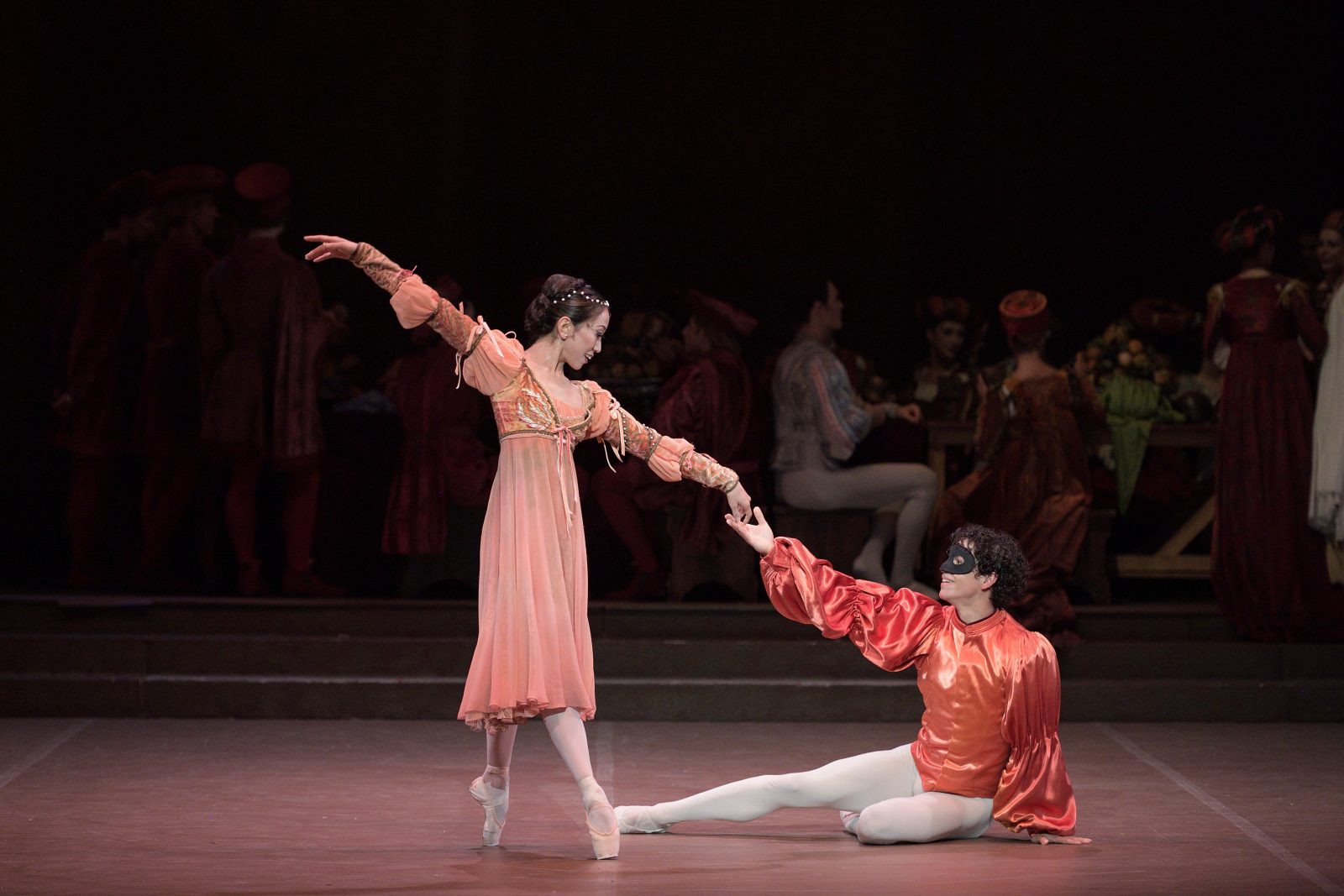
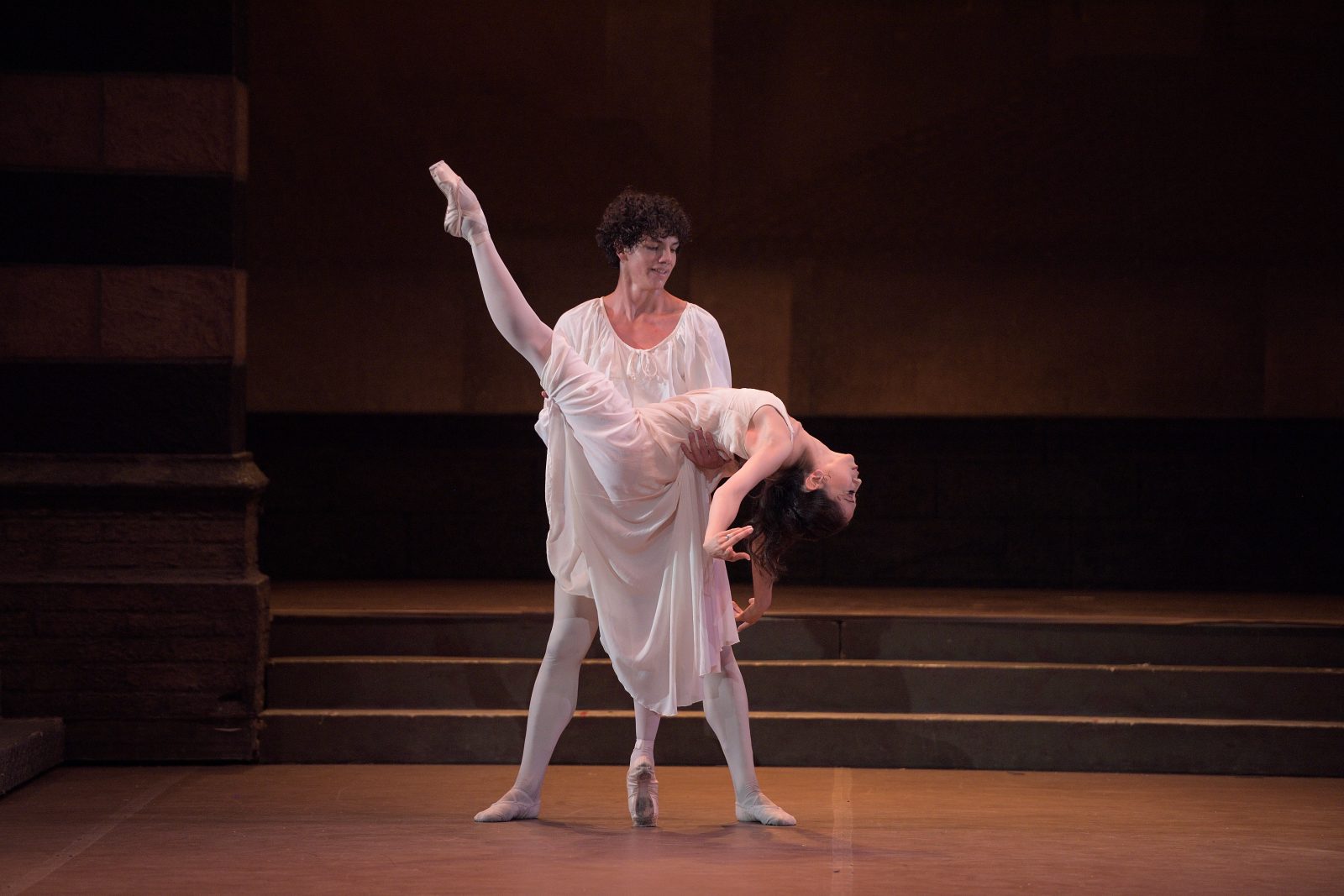
The two title characters, the star-crossed lovers themselves, were embodied expertly by Rentaro Nakaaki and Julia Conway as Romeo and Juliet, who had the audience captivated from the second they entered the stage – with undeniable chemistry and enviable technique.
Fabian Reimair took on the role of Tybalt with ease, Noam Durand was Mercutio, and Rodrigo Pinto was Benvolio, all while Elvis Nudo and Minju Kang stepped into the shoes of Paris and Rosaline.
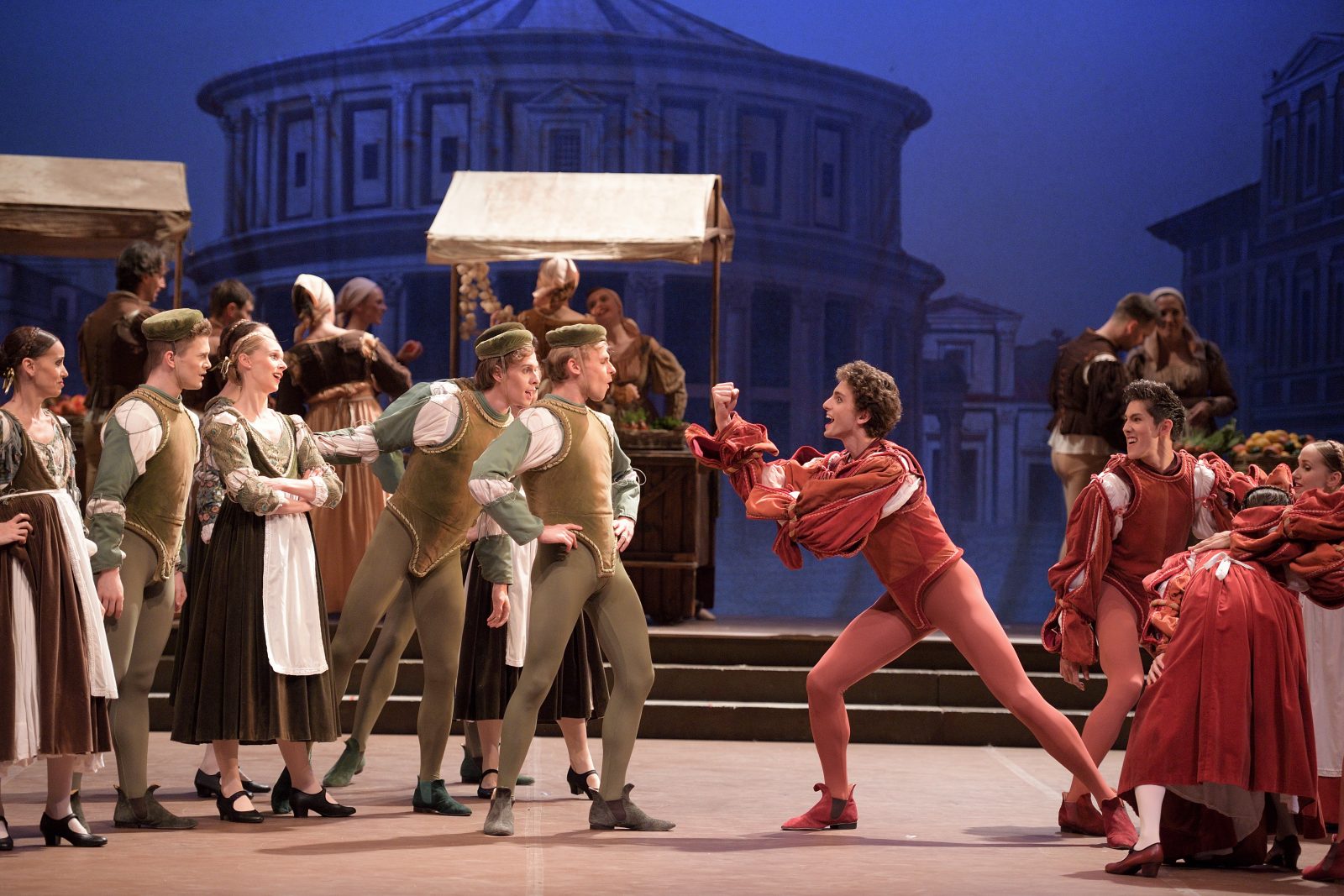
But the lead roles are nothing without the wider cast of supporting dancers and character actors, who really help transport you to 14th century Verona and help bring the authenticity a production as epic as this requires.
The world’s most famous story has been expertly reimagined / Credit: Bill Cooper | Laurent Liotardo
Aside from the dancing, it would be remiss not to praise the expert sets and costuming here from Ezio Frigero and Franca Squarciapino.
And I suppose I should also give a shoutout to little-known name, Rudolf Nureyev, who choreographed this version of Romeo & Juliet all the way back in 1977. Something tells me he would’ve had a great career… I could be wrong, though.
Romeo & Juliet really is one of the most tragic love stories of all time, and the power of that is not lost through dance. It’s still as raw and heartbreaking in this production as it always is.
And that is truly a credit to every single person forming part of it – both on the stage and off.

 Daisy Jackson -
7th January 2022