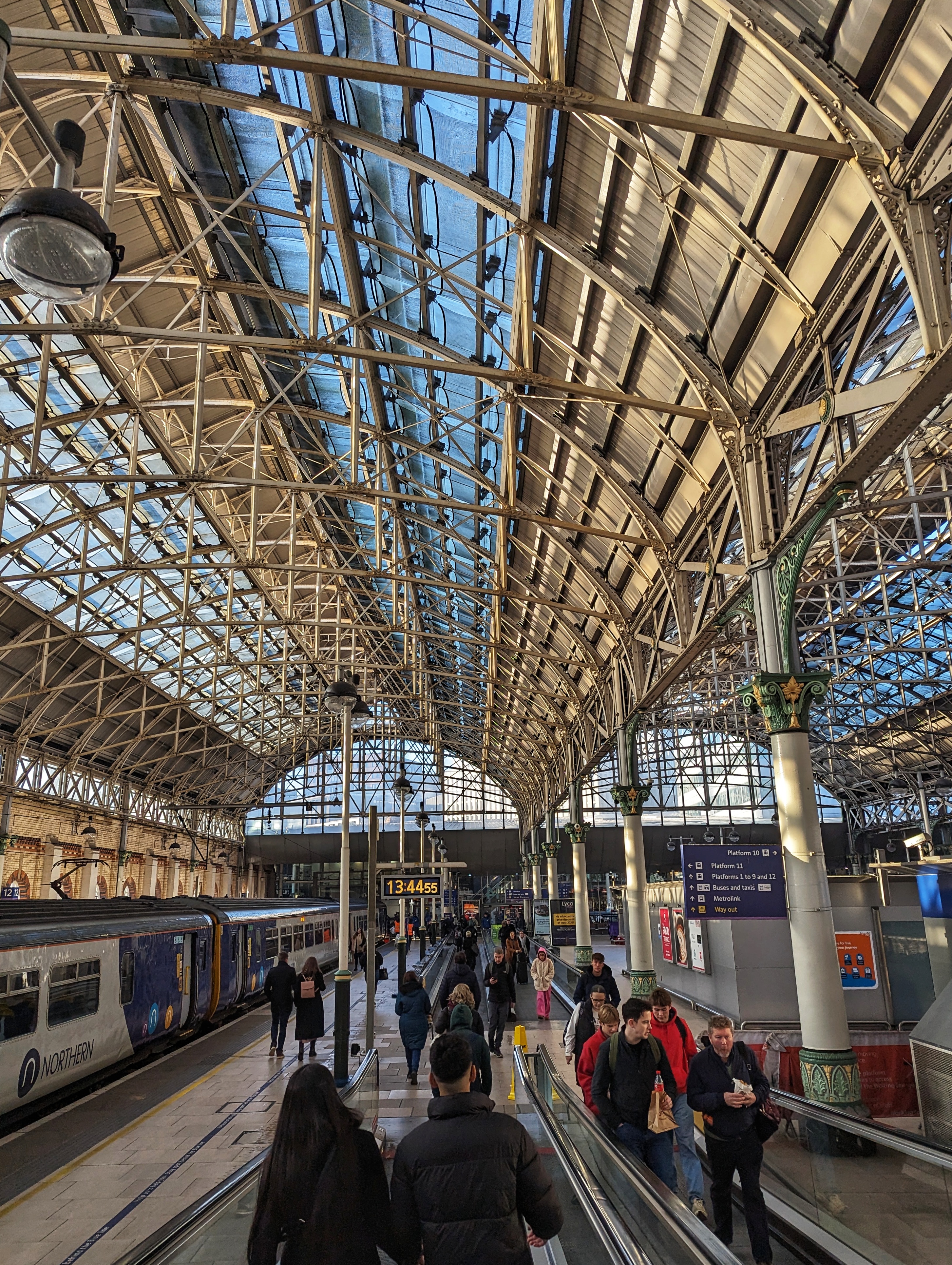
Manchester Piccadilly is set to close for nine days for a major ‘once-in-a-generation’ £7.9m upgrade.
The busiest train station in the North West will be almost entirely shut for more than a week next February, to enable improvements to take place to both track and signalling systems on the southern approach.
The work will span all main lines, which means passengers will find no trains from the south or east of the city will run into Manchester Piccadilly.
The main train shed – which is platforms one to 12 – will be closed completely, but the concourse will remain open and so will platforms 13 and 14 for limited westbound services.
Teams will be replacing 11 sets of points, renewing 9,000m of cabling, upgrading timber sleepers with modern concrete equivalents, and bringing lineside equipment bang up to date across six lines – some of which dates back to the 1980s.
ADVERTISEMENT
Network Rail has said that this investment has been ‘long-awaited’, with the ageing infrastructure capable of disrupting all trains in and out of Manchester.
There will be no trains from the south and east of the city into Manchester Piccadilly for nine days over February half term (Saturday 14 – Sunday 22 February 2026).
ADVERTISEMENT
Some trains from across the north will also be impacted during the essential upgrades as well as direct connections to Manchester Airport station.
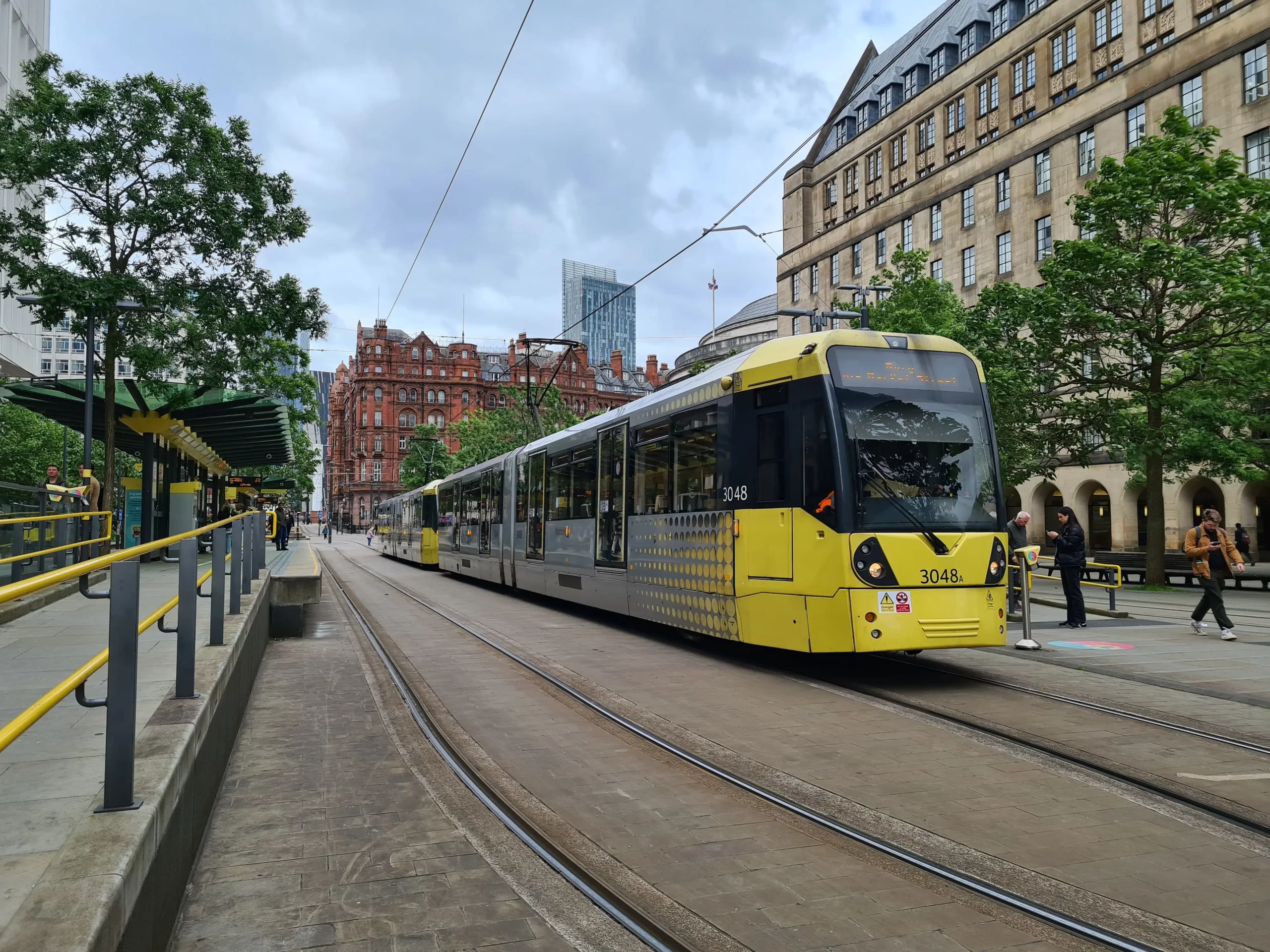
These services will terminate at other stations, including Stockport, with staff on hand across the network to coordinate bus and Metrolink Bee Network journeys.
Manchester Piccadilly to close for NINE days for ‘once-in-a-generation’ upgrade. Credit: Network Rail
Alternative travel plans will be released in the coming months by Network Rail, train operators, Transport for Greater Manchester (TfGM) and Manchester City Council.
ADVERTISEMENT
Julien Dehornoy, Network Rail’s North West & Central deputy regional managing director, said: “We’re investing £7.9m in renewing the Piccadilly corridor, a stretch of track critical to the journeys of around 400,000 trains into Manchester every year.
“This work is going to significantly reduce disruption for the many passengers who regularly use this route. Once the job is done, we will have a better, more reliable railway.
“The major overhaul over six railway lines can only take place during a full railway closure and we are working closely with train operators, TfGM and Manchester City Council on alternative travel plans to keep people on the move, the full details on which will be published in mid-November.”
Simon Elliott, Network Director Rail at TfGM, said: “This investment in Manchester Piccadilly’s rail infrastructure is a crucial step forward in delivering a reliable and resilient railway for passengers, freight and supporting the city-region’s continued economic growth.
“While unfortunately there will be some short-term disruption due to the nature of the works, through the Bee Network we’re committed to working with rail industry colleagues to ensure people can still move easily across Greater Manchester while these essential upgrades take place.”
ADVERTISEMENT
A spokesperson for train operators said: “This work will improve the reliability of trains running into the region’s busiest station.
“In the coming months, passengers can expect more detailed information about their specific journeys and any potential disruption.
“We would urge people to check with their operator or with National Rail Enquiries to plan their travel in advance.”
Featured image: The Manc Group

Travel & Tourism
Mandatory eye tests could be introduced for drivers over 70 in the UK
Emily Sergeant
Mandatory eye testing could be introduced in the UK as part of the first road safety strategy in more than a decade.
According to Government statistics, approximately four people die on Britain’s roads every day, with thousands more seriously injured each year, but through targeted action on speeding, drink and drug driving, not wearing seat belts, and mobile phone use, it’s expected that thousands of these tragedies can be prevented.
In fact, the new road safety strategy sets out an ‘ambitious’ plan to reduce deaths and serious injuries on Britain’s roads by 65% before 2035.
With the number of older drivers continuing to rise year on year, in line with Britain’s ageing population, a consultation on mandatory eyesight testing for those over 70 will be launched, the Government has announced, while options for cognitive testing will also be developed to protect all road users.
Mandatory eye tests could be introduced for drivers over 70 in the UK / Credit: David Travis (via Unsplash)
On top of this, measures to tackle inexperience behind the wheel by introducing a minimum learning period for learner drivers, and lowering the alcohol limit for driving for the first time since 1976 to help prevent causes of collisions, are also to be discussed.
This strategy sets out a new approach to reverse a decade of ‘stalled progress’, according to the Department for Transport (DfT).
It includes the internationally recognised Safe System approach, which acknowledges that while human error is inevitable, deaths and serious injuries are not, and rather than placing responsibility solely on individual drivers, the system ensures that road design, vehicle safety, enforcement and education work together to protect all road users.
We've launched a new Road Safety Strategy, aiming to cut deaths and serious injuries on Britain’s roads by 65% by 2035.
Key points include: – tougher action on drink driving – minimum learning periods for learner drivers – mandatory eye tests for older drivers
— Department for Transport (@transportgovuk) January 7, 2026
A new Road Safety Investigation Branch will be set up to analyse collision patterns and inform prevention strategies.
The branch will draw on linked police and healthcare data to identify root causes and make sure any interventions are more effectively targeted.
Transport Secretary, Heidi Alexander, described the strategy as a ‘turning point’, adding that: “We are taking decisive action to make our roads safer for everyone, from new drivers taking their first lessons to older motorists wanting to maintain their independence.
“The measures we are announcing today will save thousands of lives over the coming decade.
“Every life lost on our roads is a tragedy that devastates families and communities. For too long, progress on road safety has stalled.”
Featured Image – Andrea Piacquadio (via Pexels)
Travel & Tourism
Train ticket prices slashed by more than 50% as huge rail sale returns across UK
Emily Sergeant
The Great British Rail Sale is returning in the new year, and train ticket prices will be slashed by up to 50% or more.
Millions of discounted train tickets for half term activities, weekend getaways, and even commuting will be up for grabs next week, as the week-long rail sale – which is set to run from 6 to 12 January 2026 – will give passengers the chance to save well over 50% on many advance and off-peak tickets.
The reduced fares can be used to travel on thousands of popular routes between 13 January and 25 March 2026.
Nearly all train operators are taking part, with routes spanning the entire country.
For example, those who may be planning a quick getaway abroad over the next couple of months will be able to save quite a few pennies, as journeys from Manchester Piccadilly to Manchester Airport will cost just £1.20, down from £2.90.
You can get up to 50% off train tickets next week / Credit: Northern | Transpennine Express
This is the fourth year of the Great British Rail Sale, with last year’s sale selling more than one million tickets and saving passengers around £8 per journey, as well as generating £9 million in ticket sale revenue for the industry.
“The Rail Sale is back,” commented Transport Secretary, Heidi Alexander. “And that means further discounts for passengers as we freeze rail fares for the first time in three decades to help ease the cost of living.
“We all want to see cheaper rail travel, so whether you’re planning a half term getaway, or visiting friends or family, this sale offers huge reductions.”
This year’s sale comes as the Government aims to ‘ease the cost of living’ for hard-working people by freezing rail fares for the first time in 30 years.
If you weren’t aware, the Government is also in the process of bringing in major reform to Britain’s rail services by establishing Great British Railways (GBR) – which is the new, nationalised organisation to run the railway uniting together 17 different organisations under a single directing mind.