The beauty of Worsley Woods is something well known round these parts.
Part of a well-trekked three-mile circular walk – often highlighted as being one of the best across Greater Manchester – that also provides you with the chance to stroll along the Bridgewater Canal and take in the picturesque Worsley village and its cultural heritage, you can easily find yourself exploring the rich woodland area of this Salford suburb for hours.
But tucked away in a far corner of the RHS Bridgewater plot is something that’s really worth seeing.
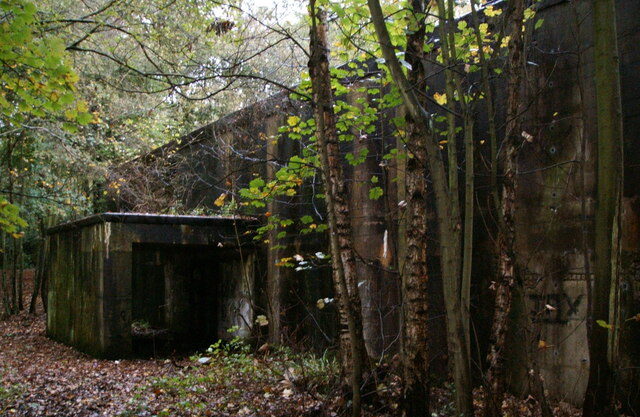
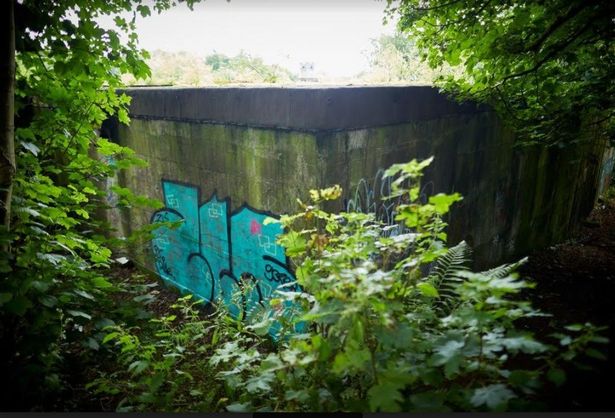
If you know just where to look, then you’ll come across a bunker from the Cold War that may one day blossom into a protected ancient monument.
Sure, it’s not exactly a pretty site – now well camouflaged by graffiti and foliage – but it’s long been a destination for so-called ‘urban explorers’, and in 2009, was also a magnet for thousands of party-goers who attended illegal, underground raves.
ADVERTISEMENT
It’s history goes back much, much further than that though.
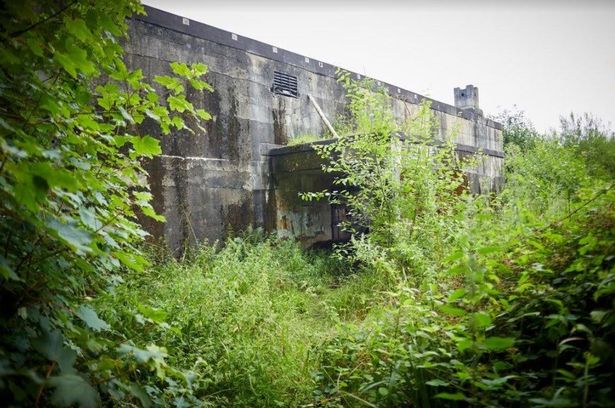
Mark Waugh / RHS Bridgewater
Dug into hillside in 1951, the bunker was constructed when the potential of a nuclear strike by a Joseph Stalin-led Soviet Russia was deemed to be at its height.
ADVERTISEMENT
According to a report by Salford University’s Applied Archaeology Department, it was built by the War Office as an anti-aircraft operations room on land at Worsley New Hall, and was part of a national network of defences, which included an alternative seat of government to the House of Commons underground at Box Hill, near in Corsham in Wiltshire.
In the event of a potential Soviet attack, it was thought the British population could be protected by anti-aircraft guns, and so the country was divided into 33 gun-defended areas arranged in five groups.
The bunker at Worsley was part of this web, with the next nearest at Frodsham.
ADVERTISEMENT
The two-storey square structure at Worsley was a main operations room, surrounded by eight reinforced concrete rooms and a viewing gallery and it would have had its own electricity supply and ample space for stores of food, but as nuclear technology advanced during the Cold War, defence policies changed.
It soon became clear a nuclear attack would come not from bombs being dropped by planes, but rather by inter-continental ballistic missiles.
Austerity in the 1950s also led to defence budget cuts.
By 1956, the Worsley bunker was being used as a Royal Navy store, by 1961, it had been transferred to the local authorities as a control centre in the event crisis, and then by 1968, it was closed for good.
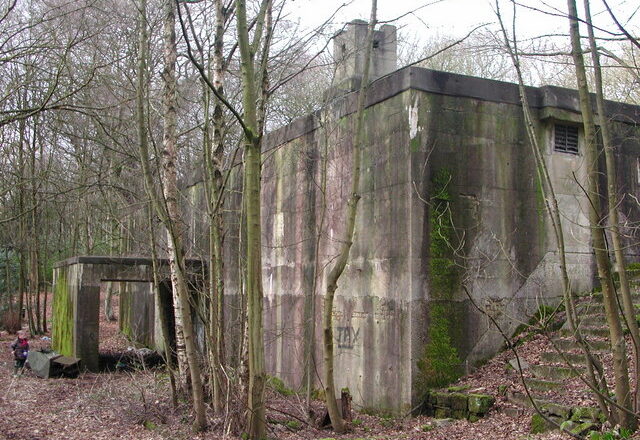
Geograph / Anthony Parkes
The story of the bunker doesn’t end there though, as in more recent decades, it has continued to have a varied history.
ADVERTISEMENT
Through the 1970s to the early 1980s, it was used by Greater Manchester Fire Service. Then in 1985, it was leased to to the Worsley Rife and Pistol Club who turned it into a shooting range, before Peel Investments acquired it in 2000.
In April 2009, one of several raves were held in the bunker attracting thousands of people.
Due to extensive vandalism occurring at the event, and in the years prior and post, both entrances were eventually blocked up, and it has remained empty ever since.
But when RHS Bridgewater eventually opens in May, the bunker will form part of its estate.
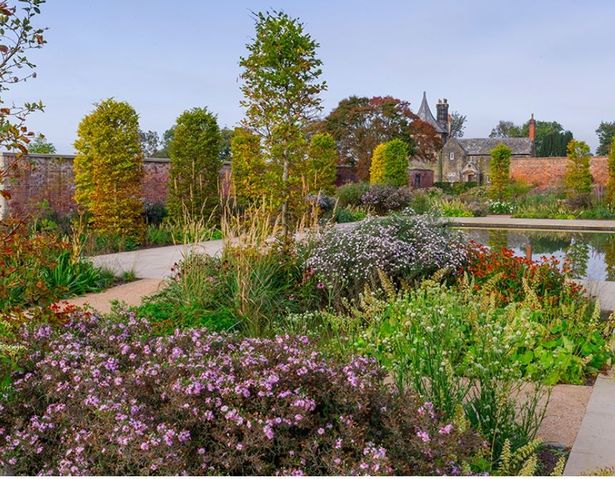
RHS Bridgewater will be the country’s fifth national garden.
ADVERTISEMENT
The Worsley Woods plot where the bunker stands was sold by Peel to the RHS, and Salford City Council then put £19 million towards the creation of the garden.
The £44m attraction – which covers 156-acres of land – was due to welcome visitors in July 2020, but just like most things, this was delayed due to the coronavirus (COVID-19) pandemic, although planting and preparation has been in full swing ever since, and it is set to transform the grounds of the former Worsley New Hall when it opens to the public this year.
What’s in store for the bunker in the future then? Well, it doesn’t sound like it’s going away any time soon.
A spokesperson for the RHS said: “The bunker definitely won’t be demolished, as it’s a really interesting part of the site’s heritage.
“There are no firm plans for how it’ll be used just yet, this will be looked at as part of the next phase of garden development from 2022 onwards.”
ADVERTISEMENT
___
You can get the latest updates on RHS Bridgewaterhere.
Trending
J. Cole to play biggest ever Manchester show on first world tour in half a decade
Danny Jones
Calling all those living in Cole World since 2007, J is coming to Manchester on his first world tour in more than five years, and we’re collectively losing our minds.
You could even say we’re in Dreamville.
Announcing a run of just half a dozen live gigs here in Britain, his UK leg will be kicking off this autumn, amid other shows over in mainland Europe, Australia and New Zealand, the States and the rest of North America, even South Africa.
Confirming Co-op Live as the chosen room for his long-awaited return to Manchester, this will be his debut at the massive indoor venue.
He’s even done a cool twist on the tour announcement.
Set to tour his latest release, The Fall-Off – his seventh studio album, which is rolling back the years after being pushed as a double-disk mixtape-esque CD – this feels like a full circle moment, nearly two whole decades on from his actual breakout mixtape, The Come Up. Time flies.
Moreover, it feels like Mancs have had to wait almost just as long to see him again.
The last time J. Cole visited Manchester was on the ‘4 Your Eyez Only Tour’ in 2017, meaning it’ll be nearly 10 whole years by the time we watch him live back up in the North West of England.
It’s also been widely publicised that this record was made with the intentions of it being his last (say it ain’t so), meaning this could also be one of your last chances to see the hip-hop legend live – at least for another VERY long time.
All told, the 41-year-old is set to perform in a total of 50 cities across 15 different countries on this upcoming tour, which gets underway in October.
31 October – Nottingham, Motorpoint Arena Nottingham
As detailed by the arena already, official Co-op members can get first in line for tickets, but you can also try your luck with presale by ordering a copy of The Fall-Off.
Otherwise, general admission will be available from 9am this Friday, 20 February, so you’d best be quick about getting them in your basket, all bought and paid for.
If this is set to be his final hurrah, it’s been one hell of a ride for someone who will, without a doubt, go down as one of the best rappers of all time.
Featured Images — Press shot (supplied via Co-op Live)
Trending
Gig review | DMA’s have Manc in their DNA, whether they know it or not
Danny Jones
Yes, we saw the crowds in Brixton, Leeds and so on, and they were also box office, no doubt – and we’re sure there’s plenty of bias coming in here – but DMA’s final night in Manchester was just magnificent on every level.
Still managing to bring a real Friday feeling even though it was a Sunday night following the protracted Valentine’s celebrations, when most were already dreading the inevitable Monday blues (morning, all), it felt like the perfect way to close out a weekend with everyone’s first love: music.
During a period when we’re all encouraged to be a little bit more sincere and spread pure positivity, seeing the sea of happy, smiling faces watching DMA’s on night two at the O2 Victoria Warehouse was just the injection we needed.
For starters, you can’t ask for much more than getting to hear not only Hills End from start to finish but ‘Lay Down’ live twice in one night. The limbs were just as mad the second time around, if not even more.
To quote a fan speaking in the comments under this video, for some, it was beyond good: “The best gig I’ve been to in my 45 years on this planet”, apparently.
Quite the bold statement, and while we’re not sure we’re quite ready to be so superlative just yet, hearing them play their debut album from cover to cover on its 10th anniversary did make for a perfect set and an “unreal night” as we’ve heard and seen so many remark in the hours since the gig.
One person wrote, “If the next album is good, these will be absolutely huge”, while another declared that they’re “the greatest on Earth” already.
Whatever point on the scale you land on, pretty much everyone almost universally agrees that their first record is still their best, even with all the bangers they’ve put out since.
One of the best moments of the entire nostalgia trip was when they bookended the show with ‘Timeless’ and played their usual extended outro with multiple repetitions of the chorus and a proper breakout, letting their instruments do the talking in a fast, frenetic flurry as the crowd thrashed around.
DMAs never let you down when it comes to a performance, and neither do Manc crowds.
One of those where you saw way more arms in the air than phones. (Credit: Audio North)
And maybe that’s just it, as far as bands that come to this region and do well, the Sydney trio are one of the VERY best, vouched for by pretty much every mate and regular gig-goer whose opinion you trust implicitly; you can certainly add us onto that list.
Maybe it’s somehow to do with some of those Melbourne roots, too, as we’ve often heard the parallels drawn between the two cities, and they even asked if there was anyone in from ‘Melbs’ between songs – there was a notable cheer – or maybe it’s just some kind of uncalculable magic we can’t understand.
Either way, besides the ongoing rise of Aussie rock and Anzac bands doing very well around the UK in general, there is something very special about this particular indie outfit’s connection with the North West and Manchester, specifically.
Johnny, Tommy and Matt have all themselves cited it as a ‘second home’ throughout their career, having hit the ground running and finding a cult following here right from the off.
In fact, they admitted that the full touring band still regularly flies into Manchester first whenever they’re heading to the UK. Love that.
‘Olympia’ and ‘Silver’ were also big standouts beyond the Hills End part of the setlist. (Credit: The Manc)
Perhaps labelling them part of the ‘Britpop revival’ is a bit reductive, but it certainly hasn’t done them any harm thus far, and conversely, it’s definitely done them plenty of favours here in Greater Manchester.
They’re not just adopted Brits who understand our history as a nation of audiophiles; they get our crowds and this city’s culture down to a tee.
Put simply, either through blind luck or divine intervention from the music gods, DMA’s are Mancs by proxy, and whether or not that means anything to them, it sure as sh*t means a whole lot to us.
Here’s to HE10, and we can’t wait for the next celebration in whatever form it comes.