Married at First Sight UK contestant Nikita Jasmine has been booted off the show after an alleged foulmouthed rant at her co-stars.
The 26-year-old Geordie, who is ‘married’ to Mancunian contestant Ant Poole on the show, had to be dragged away from the first dinner party, according to the Mirror.
Bosses said they had no choice but to remove her from the series after she exploded at the other couples, claiming they were only on the show for fame. They ruled that her behaviour had broken the strict code of conduct for participants.
Unfortunately, that also means that Manchester lad Ant’s journey on the show has also been cut short and his search for love continues.
Nikita, left and Mancunian lad Ant Poole with Nikita, right // E4
In an aim to milk the situation for everything it’s worth, a teaser for the dinner party showdown was previewed at the end of Tuesday night’s episode.
ADVERTISEMENT
A spokesperson for E4 said: “The wellbeing of cast and crew is our utmost priority at all times throughout production and beyond.
“During filming, a situation escalated off camera and Nikita displayed a level of aggression that was unacceptable and breached our agreed code of conduct on behaviour.
“As a result, she was asked to leave the experiment. All involved have been offered support and Nikita has since apologised and resolved the situation with those involved.”
TV & Showbiz
Mercury Prize 2026 review: RAYE takes home the crown as Newcastle celebrates the very best in music
Clementine Hall
One of the biggest nights in music kicked off last night as the Mercury Prize 2026 was awarded.
If there was ever a night to fall head over heels in love with British and Irish music, the 2026 Mercury Prize made a very convincing case.
Bringing together some of the country’s most exciting artists under one roof in Newcastle, this year’s ceremony was a reminder of just how much talent is packed into the current music scene.
From established legends to the names shaping what comes next, it was an absolute belter.
Images: Audio North
Held at the Newcastle Utilita Arena for the second year running, I think everybody in that room felt very lucky to be there to see firsthand who took home the coveted prize.
The shortlist brought together an impressive mix of artists, with Florence + The Machine, Olivia Dean, JADE, Suede, Pulp, Dave and Sir Paul McCartney among the big names making the lineup very star studded indeed.
Suede kicked things off with ‘Dancing With The Europeans’, bringing their unmistakable energy to the ceremony, while Pulp delivered ‘Begging For Change’ as part of the HELP(2) charity compilation.
It was a line-up that demonstrated the sheer range of music being made across the UK and Ireland, from contemporary pop to established rock and even jungle thanks to Bradford’s own Nia Archives.
And of course, there was one woman who had every reason to leave with a smile on her face.
RAYE took home the coveted Mercury Prize for THIS MUSIC MAY CONTAIN HOPE., an ambitious, genre-hopping album that blends jazz, soul, R&B and classical influences into something so fabulously unique.
Image: Audio North
Newcastle’s own Knats performance was definitely a highlight of the evening, combining slick jazz with spoken-word poetry against a projection of The Tyne Bridge.
A fitting image, and one that underlines the importance of holding such huge events in the north and highlighting the obvious talent that thrives here.
The 2026 Mercury Prize was a brilliant showcase of the country’s music at its best.
And with RAYE taking home the trophy, it’s clear there is plenty of ‘hope’ left in British music.
Chester Zoo welcomes The Traitors stars Claudia and Alan – but it’s not what you think
Lydia Mastrolonardo
No, Chester Zoo isn’t keeping actual Claudia Winkleman and Alan Carr in enclosures – everybody stand down.
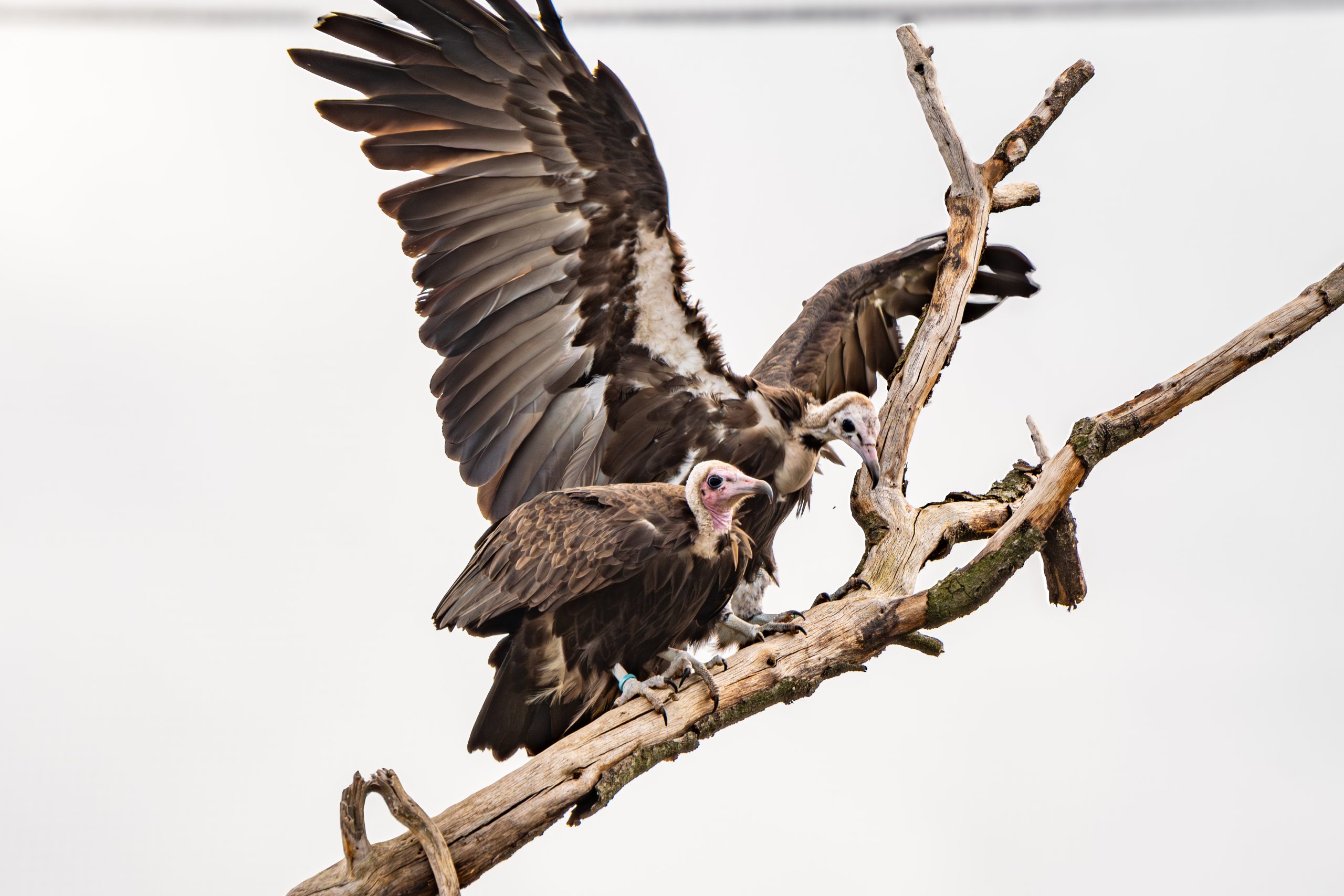
The zoo is in fact welcoming its first pair of hooded vultures, to hopefully boost the critically endangered species, and they just so happen to be named after some of our favourite celebrities from The Traitors.
As famous as Alan Carr and Claudia Winkleman are, these two give them a run for their money, as the first of their kind to ever come to Chester Zoo – making them pretty big celebs in the animal kingdom.
The pair of vultures are currently nestling in to their new home, alongside their new white-headed vulture roommates, at the Heart of Africa aviary. It is here that conservationists are hoping the newly bonded pair will start a family, as part of a Europe-wide breeding programme, to help safeguard their species from extinction – no pressure or anything.
Bird Keeper Heather-Anne Pedley said: “Alan and Claudia came to us from the Horstmann Trust, a conservation breeding centre for vultures, where they are an established breeding pair. We named them after Traitors stars Alan Carr and Claudia Winkelman, because what better way to reflect how funny and engaging they are, than to name them after two national treasures?
“Nobody prepared me for how much I would fall in love with them, their antics and characters. They look like they’ve just put a hood up, and they have this beautiful blue ring around their eyes, like natural eyeliner.”
Alan and Claudia, Chester Zoo’s new vultures. Credit: Chester Zoo
Hooded vultures are distinctive with dark brown feathers, a buff ‘hood’ and a bald face and throat, with wingspans of up to 180cm. They are native to west, central and southern Africa, where they typically pick up their lunch by soaring over the land, looking for carcasses to feed upon as part of ‘nature’s clean-up crew.’
It’s not all gore though, they are very active, clever and interested in their environment. The couples are monogamous, will preen each other, gently touch each other’s bills and co-build nests – quite the romantics.
Heather-Anne added: “This pair are real love birds, and we are hopeful they’ll go on to breed. Any youngsters they go on to have will become part of a European conservation breeding programme, helping to create an insurance population for this incredibly rare species.
“In the wild, vultures help prevent zoonotic diseases – illnesses that can spread between species – because their stomach acid is so strong they can eat decaying meat that other animals would not be able to digest. This helps prevent the spread of diseases like anthrax and botulism into the soil.”
Despite their crucial role across various ecosystems, vulture numbers are declining and they are now sadly classified as critically endangered, according to the IUCN Red List of Endangered Species.
This decline is driven by mid-air collisions or accidental electrocution by scanning the ground for prey whilst perched on uninsulated power lines. These birds are also at risk of being poisoned or even hunted to facilitate an unsustainable demand for vulture body parts and eggs to be used in traditional medicine and rituals, while there is no scientific evidence to support this use.
We are really rooting these two and hope that they settle into their new home.

 The Manc -
8th September 2021