New report finds £781m of consumer cash locked up in ‘refund credit’ from COVID-19 cancelled holidays
It also found that 43% of consumers surveyed who accepted an RCN were not offered a full cash refund when their holiday was cancelled - despite this being their legal right.
A new white paper exploring the impact on consumers as a result of holidays cancelled due to COVID-19 has been published today.
As YouGov data on the volume and value of Refund Credit Notes (RCNs) that are currently in circulation comes to light, the paper – which was commissioned by one of the UK’s largest holiday companies, On the Beach, and has been written by financial broadcaster, journalist and consumer expert, Georgie Frost – has revealed that a whopping £781.5 million of consumer cash is currently tied up in said RCNs, or “IOUs” with many travel companies.
It also shows that 43% of the consumers surveyed who accepted an RCN were not offered a full cash refund when their holiday was cancelled, despite this being their legal right.
As a result of the findings, On the Beach has set out five recommendations to help restore consumer trust in the industry – including a call for holiday companies to proactively contact their customers still holding RCNs from 2020 and offer them a full cash refund.
The beach holiday expert is also encouraging consumers currently holding an RCN but don’t want one, to contact their holiday provider now and ask for a full cash refund.
ADVERTISEMENT
It’s estimated that around 8.1 million people had a package holiday cancelled due to COVID-19.
Only half of those with a cancelled holidays received a full cash refund, and 851,000 (nearly 11%) accepted an RCN rather than cash, with the white paper outlining that over a million people with an RCN or rebooking were not offered a cash refund at the point of cancellation, even though this is a legal requirement.
ADVERTISEMENT
What’s more is that 52% of consumers surveyed were unaware of their legal right to cash.
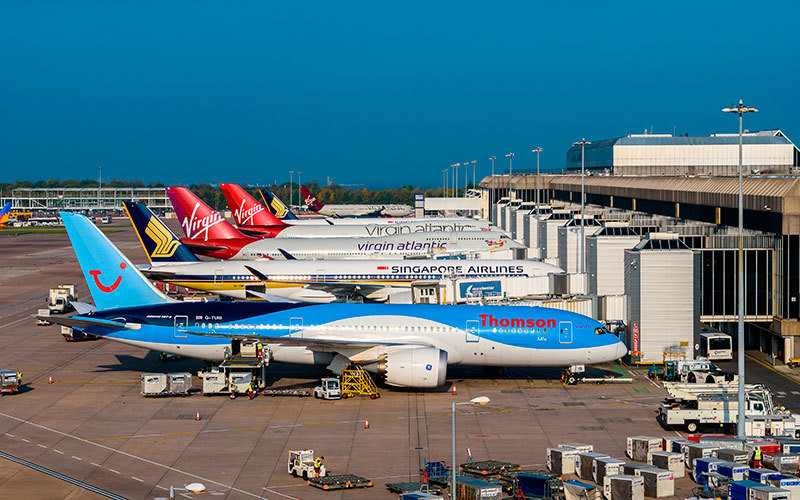
Around 8.1 million people had a package holiday cancelled due to COVID-19 / Credit: Flickr
“It’s sad to think that a family who has saved for months or even years for their one summer holiday abroad has had to fight to get their money back, and in many cases have not been provided with full and transparent information of what they are entitled to when their holiday was cancelled.” said Anna Richardson, who has written a foreword for the white paper.
“Looking forward to your holiday is a massive part of the whole experience, but while there is still so much uncertainty and disruption, people are understandably lacking the confidence to plan and book again because they’re unsure of their rights if it gets cancelled.
ADVERTISEMENT
“The smoke and mirrors being used by some holiday companies is wrong.
“I urge people who had their holiday cancelled to use their right to a full cash refund and contact their travel provider today to ask for their cash.”
Simon Cooper – Chief Executive of On the Beach – added: “COVID-19 shocked the travel industry and it was challenging for everyone in the early months to manage the disruption and volume of cancellations.
“We’re over 14 months on now and yet the knock on impact of refunds on consumer confidence continues to affect the industry. Even now, only a third of people say they would consider booking a holiday to a green list destination, so we have to do something to restore their confidence.
“Without it the industry will continue to be in trouble.”

ADVERTISEMENT
OnTheBeach is encouraging consumers with an RCN to contact their holiday provider / Credit: PublicDomainImages
He continued: “There are millions of people still holding these IOUs, in some cases over a year later with very limited opportunity to go on holiday [and] this is all because some travel companies actively avoided offering cash and used their customers’ money for future holidays as cash flow. No one would expect to receive a loan for this long and pay no interest, so why should these companies continue to hold onto their customers’ money for future holidays?
“To begin regaining consumer confidence and trust in the industry, we want those people with refund credit notes from 2020 to be refunded in full.
“We’re also urging regulators to enforce that holiday companies and airlines hold their customers’ money in separate, regulated trust accounts until the date of travel.”
43% of consumers surveyed who accepted an RCN were not offered a full cash refund / Credit: Flickr
Why are RCNs not in the best interests of consumers?
Where consumers are not aware that RCNs can be exchanged for cash, RCNs hold them to one travel provider, which means that they don’t have their own cash in the bank to spend as and when they want, or put into a savings account earning interest.
RCNs remove the consumer’s ability to shop around for the best holiday deals and dates when they want to rebook.
ADVERTISEMENT
It’s also reported that 6% of all vouchers issued in the UK go completely unused.
What does the report recommend?
On the Beach has set out five recommendations in the white paper to help rebuild consumer confidence in the travel industry, which are:
Automatic Refunds: Automatically refund customers in cash when RCNs have been held for a year.
Proactive Contact: Customers holding RCNs from 2020 should be contacted proactively, notified of their rights and offered a full cash refund.
New RCNs Offered Fairly: Any new RCNs offered to customers who have holidays cancelled in the future must be accompanied with the alternative choice of a full cash refund, with equal prominence.
Financial Protection: Greater protections for customers’ money with ring-fenced trust accounts should be a requirement for all ATOL holders and airlines.
Greater Transparency: Regulators to report on the number and value of RCNs in circulation, allowing potential customers to make informed decisions on who to book future holidays with.
___
You can find more information, and access advice and assistance regarding RCNs from OnTheBeach here.
Featured Image – Unsplash / Dan Gold
UK News
Greater Manchester’s ‘clean taxi’ plans backed by government funding
Danny Jones
The Greater Manchester Combined Authority’s (GMCA) ‘clean taxi’ initiative has been officially backed by the UK government, with an extra boost coming from a leading electric vehicle brand.
Millions of pounds are set to be pumped into the scheme over the coming years as the North West at large strives to become greener.
The Mayor himself, Andy Burnham, has made environmentally conscious travel a core part of his plans for the city region ever since he took up the post back in 2017; now he and his team are helping link up with connections in the capital to secure further investment.
With the new £8 million Hackney Support Fund being put into action as we speak, a further £2m is now set to go towards Manchester city centre and its surrounding boroughs via LEVC.
LEVC (London Electric Vehicle Company) have done away with classic petrol and diesel engines in their particular corner of the automotive industry, setting a more eco-friendly example for metropolitan cities up and down Great Britain.
As a result, Manchester City Council and the GMCA as a whole are looking to take a leaf out of their book as part of their wider carbon reduction targets, with local authorities having recently reaffirmed their five-year ‘climate change action plan’.
For context, the Hackney Support Fund in question is a series of government-backed grants aimed at helping taxi drivers replace older black cabs with more modern, zero-emission capable vehicles.
Not only that, but LEVC will also be offering licensed carriage drivers extended warranties on new and used TX cabs – like their new ‘eCity powetrain’ pictured above – as well as taxi scrappage allowance on other models.
Like any part of the country, our region itself has its own clean air goals, and with the continued expansion of the Bee Network continuing to advance that progress, we’re heading in the right direction.
It goes without saying that adding a fully-fledged fleet of cleaner, more energy-efficient EV taxis into that mix could help benefit these greener pursuits.
Managing Director at LEVC, Chris Allen, noted that the company has “helped the capital achieve legal air quality targets for the first time” and strongly believes that they can do the same up North.
Andy Burnham, Mayor of Greater Manchester, said: “Our taxi trade is a vital part of Greater Manchester’s transport network and supports the local economy.
“That’s why we’re working hard to secure funding and practical support to help drivers upgrade to cleaner, greener vehicles – improving air quality for everyone, while protecting livelihoods. By backing our taxi trade, we’re building a fairer, healthier city-region for all.”
Joey Barton officially sentenced over offensive online posts
Danny Jones
Retired footballer Joey Barton has officially been sentenced following a series of offensive posts on social media over the past year or so.
Six counts pertaining to three individuals, in particular, were highlighted when he appeared for his final hearing at Liverpool Crown Court on Monday, 8 December: online abuse directed at fellow ex-pros Eni Aluko, Lucy Ward and broadcaster Jeremy Vine.
Charged and now finally found guilty of ‘grossly offensive electronic communication with intent to cause distress or anxiety’, Joey Barton has been given a six-month prison sentence – suspended for 18 months, however, meaning he won’t serve jail time unless he reoffends during this period.
Here he is queuing up outside the Crown Court earlier today:
BREAKING: Former footballer Joey Barton given six-month prison sentence suspended for 18 months over "grossly offensive" social media posts about Jeremy Vine, Lucy Ward and Eni Aluko. pic.twitter.com/dQuAAT1mQu
For context, the social media posts in question refer to the ones made on X (previously known as Twitter) and directed at the aforementioned public figures.
The former Manchester City player and Liverpool youth product, who is originally from Merseyside but is now based around Widnes in Cheshire, was found guilty on Friday despite insisting his innocence throughout.
Barton – now 43 and having become a vocal far-right commentator – compared Aluko and Ward to two of the most infamous convicted serial killers in British history, writing that they were “the Fred and Rose West of football commentary” back in January 2024.
He also labelled radio host and TV presenter, Vine, a “bike nonce” in a post that he later went on to dismiss as nothing more than “crude banter” and an attempt at “dark and stupid humour”, stating that he has no intention of actually suggesting he was a paedophile.
Elsewhere in the court appearance, Barton claimed that he is a victim of “political prosecution”; nevertheless, the judge found that the one-time England international (who also played for Newcastle, QPR, Burnley, Rangers and Marseille) “crossed the line between free speech and a crime.”
You can see the moment Judge Andrew Menary handed down the verdict, which will see him avoid time in custody once more, in full down below.
As per an official update via the Crown Prosecution Service (CPS), Senior Prosecutor Callum Bryce of CPS Mersey-Cheshire said: “Between early January and mid-March 2024, Barton subjected three public figures to offences of malicious communications.
“Barton said in his evidence before the court that in some of his messages he was trying to make a serious point in a provocative way and that in others he was simply joking.
“The finding of the jury confirmed that his conduct had gone beyond any joke and his messages were grossly offensive with the purpose of causing anxiety and distress to his victims.”
It’s also worth noting that he has been charged, found guilty and sentenced before already this year.