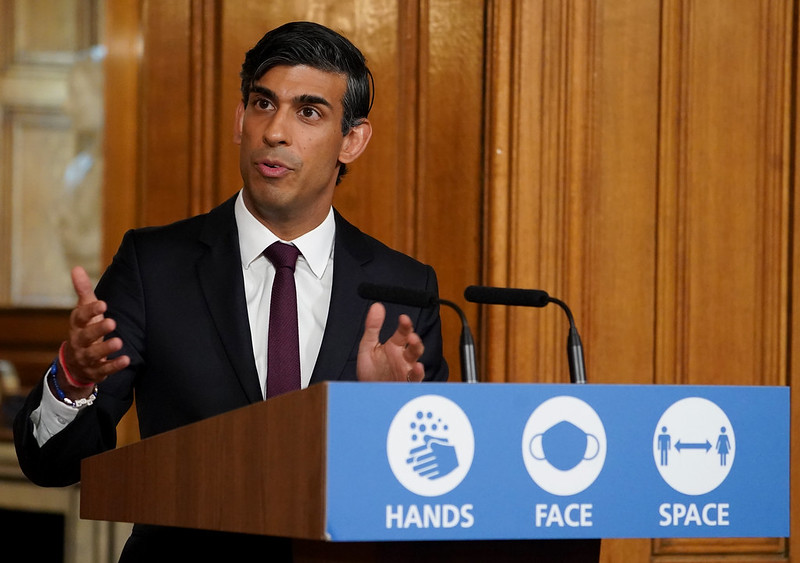
Labour says 100,000 North West jobs are on the ‘scrap heap’ due to Winter Plan
New analysis by the Labour Party, using Office of National Statistics employment data shows that more than a million workers are in these sectors simply dismissed as "unviable" by the government.
Labour has accused Rishi Sunak of throwing one hundred thousand North West jobs on the ‘scrap heap’ in his Winter Economy Plan.
The Chancellor confirmed the conclusion of the furlough scheme last week.
Whilst admitting he could “not save every job”, Sunak said he would be introducing a new six-month plan that would see the government top up wages of “viable” roles in winter.
But Labour has retorted that the support package is “fundamentally flawed” – with industries such as weddings, events, nigthlife, music, arts and sports remaining largely closed and therefore unable to access funding (employers must offer staff at least a third of their usual hours under the new regime).
Labour also argued that the new plan actually makes it cheaper to bring back one employee full-time and fire the other, offering little incentive to keep two part-time staff on board.

ADVERTISEMENT
Lucy Powell MP, Shadow Minister for Business and Consumers, said: “The Chancellor is consigning whole sectors of our economy to the scrap heap, damaging lives and livelihoods, and threatening the recovery. The failure of Ministers to ensure an effective Test, Track and Trace system means that many businesses are still fully or partially shut down. The decision to shut these firms out of the Job Support Scheme adds insult to injury.
“Labour has called for the government to come forward with an effective plan to recover jobs, retrain workers and rebuild businesses. This isn’t it. Even for those who can access it, the Job Support Scheme is badly designed and could lead to a wave of job losses, because the Chancellor’s sums do not add up for businesses. He must think again, before the jobs crisis reaches tipping point.”
ADVERTISEMENT
Despite generate billions in tax revenue and employ millions of workers, Labour is predicting the sectors hit hardest will be:
Nightlife – including 6,000 people employed in nightclubs, 42,000 people employed in pubs and bars.
Events – including 15,000 event caterers, 950 people organising and running exhibitions and conferences.
Arts – including theatres and cinemas still shut-down or operating at reduced capacity employing 4,000 people.
Weddings – The number of wedding guests allowed has been halved from 30 to 15, which will hit at least 70,000 weddings. This could cost an estimated £4.8bn, with 127,000 nuptials postponed to 2021.
Sports – employing 48,000 people.
Labour has also said that in the North West specifically, nearly 900 nightclubs, 80 cinemas, 4,540 pubs/bars and 1,750 arts venues will not be able to get the support they need from the Winter Plan.
Whilst some have praised the Chancellor’s latest efforts to protect jobs and prevent mass unemployment in Britain, others feel the measures do not go far enough.
ADVERTISEMENT
People in the hospitality sector – which must now shut at 10pm – have accused the government of unfairly targeting their industry during the pandemic.
The Treasury argued, however, that keeping industries afloat is highest on their agenda.
“Supporting jobs is our absolute priority, which is why we set out a range of new measures on Thursday including the job support scheme to protect millions of jobs, extending the self-employment income support scheme and 15% VAT cut for the hospitality and tourism sectors, and help for businesses in repaying government-backed loans,” they said in a statement.

Shadow Culture Secretary Jo Stevens said that industries were bracing themselves for a winter of further job losses.
“The UK’s cultural sector is a critical part of our national identity – not to mention a valuable part of the economy,” the MP stated.
ADVERTISEMENT
“These are skilled, specialist jobs in an industry that had been growing until the covid crisis hit.
“So far the government has promised money to prop up our theatres and concert halls but it’s the people who work in them who are suffering and who are excluded from government help.”
News
New images released of Piccadilly Gardens as transformation plans take a big step forward
Daisy Jackson
Plans to transform Piccadilly Gardens to make them more ‘colourful, vibrant and safe’ have taken a big step forward today, with new images released.
Manchester City Council has shared the vision to the public ahead of a planning application being submitted this summer.
The plans to finally give Piccadilly Gardens some love were revealed last autumn, but things are now moving at pace with a delivery team appointed to design and build the new public space.
The new images show the vision for more green space, including lawns, trees, planting, seating, and colourful horticultural displays.
The temperamental fountains will also be removed for good, replaced with a new space called The Pavilion which will host family-friendly events.
The low concrete walls and raised planters at the edge of the gardens will be ripped out, improving the setting of the Queen Victoria statue.
There’ll be a new, larger playground for younger children, created in the same high quality style as the new parks at Mayfield Park and Ancoats Green.
A pre-planning consultation has started today and will run until Wednesday 15 July, with plans to submit the final planning application later this summer.
The new-look play area at Piccadilly GardensPlans for the new Piccadilly Gardens from above
The council has said that these new designs reflect feedback from the public and opinions on what we want to see at the new Piccadilly Gardens.
Council Leader Cllr Bev Craig said: “We’re getting on with sorting out Piccadilly Gardens. We all want to see a space which Mancunians can be proud of – a welcoming and attractive environment which people want to spend time in.
“So as well other initiatives which are delivering more police and more CCTV, we’re bringing forward this scheme to transform the public space. That means investment in more flowers, more greenery, a new welcome pavilion, a new and bigger playground and an altogether more inviting Piccadilly Gardens. A bright new chapter is just around the corner.”
Further planned improvements to the area around Piccadilly Gardens in the coming years will include a multi-million pound investment by Transport for Greater Manchester to create a new, modern transport interchange.
Council calls on Manchester public to help bring hundreds of empty homes back into use
Emily Sergeant
Residents across Manchester are being called on to help bring hundreds of empty homes across the region back into use.
Since the beginning of this year, a major review has been underway around the city’s draft strategy for bringing empty homes back into use to help meet demand for affordable homes across the city, while also improving communities by tackling empty homes that can blight an area… but now, Manchester City Council needs your help.
Following a major public consultation, the Council is now acting on feedback to accelerate plans to bring as many long-term empty homes back into active use as possible.
Although the number of long-term empty homes in Manchester is near a historic low, with the Council having managed to reduce the number by more than half since 2013, there is still more work to be done.
“Every void property is a missed opportunity to provide a family a place to live, reduce homelessness, and lessen the burden on temporary accommodation,” the Council said in a statement.
The Council is calling on the Manchester public to help bring hundreds of empty homes back into use / Credit: Benjamin Elliott (via Unsplash)
So, how can residents help then? What do you need to do if you spot an empty home on a street nearby?
Well, the easiest way to report an empty home is to report the issue online here, or by emailing [email protected]. And then once that’s done, a team of dedicated empty homes officers will take up the case to find out who owns the property and work with the owner on a plan to bring the home back into use.
The vast number of empty homes are privately owned with complex histories, and there are some cases where an owner may have passed away.
While working collaboratively with housing providers, voluntary organisations and public services are also a key element of detecting potentially empty or ‘problematic’ homes to repurpose them.
Officers can also support, where required, if a communication or language poses a barrier to resolving an empty home issue.
Tailored approaches to different communities – where empty homes impact neighbourhoods in different ways – are also being considered, according to the Council.
“To think, if we could bring all empty homes back into use, then we could provide more homes for those on the housing register and take pressure off the whole housing system,” explained Cllr Gavin White, who is Manchester City Council’s executive member for housing and development.
“The potential of making empty homes a thing of the past is huge for Manchester families looking for a place to call home – and a significant part of tackling the housing crisis.”