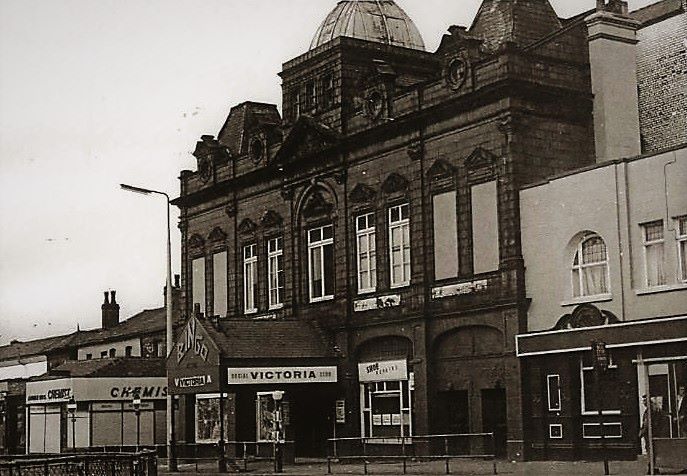
Many years ago, when entire neighbourhoods in Salford were flattened during the slum clearances, one relic from its Victorian days stood proud – the Victoria Theatre.
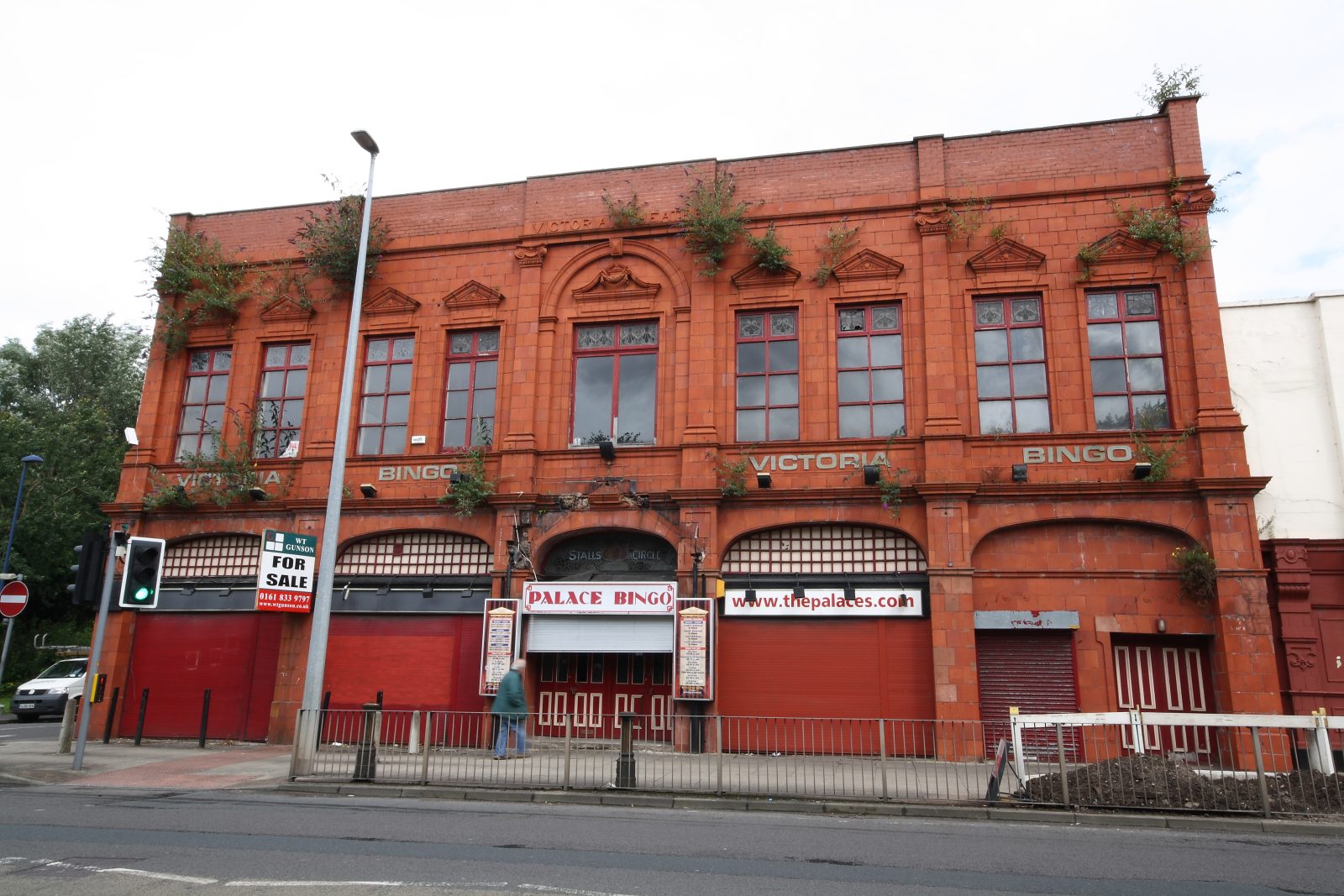
Once an important theatre space, then an early example of a cinema, then more recently a bingo hall, the present-day Victoria Theatre is in an empty masterpiece in a sorry state.
For years, the building was neglected. At various stages in the last decade it has been overrun by pigeons, used as a squat, had water pouring in through the roof and even been used as a marijuana farm.
In January 2021, new owners stepped in, and immediately tried to hit pause on the building’s rapid decline. The roof was patched up and the building made more secure, to try and preserve it until a proper restoration can begin.
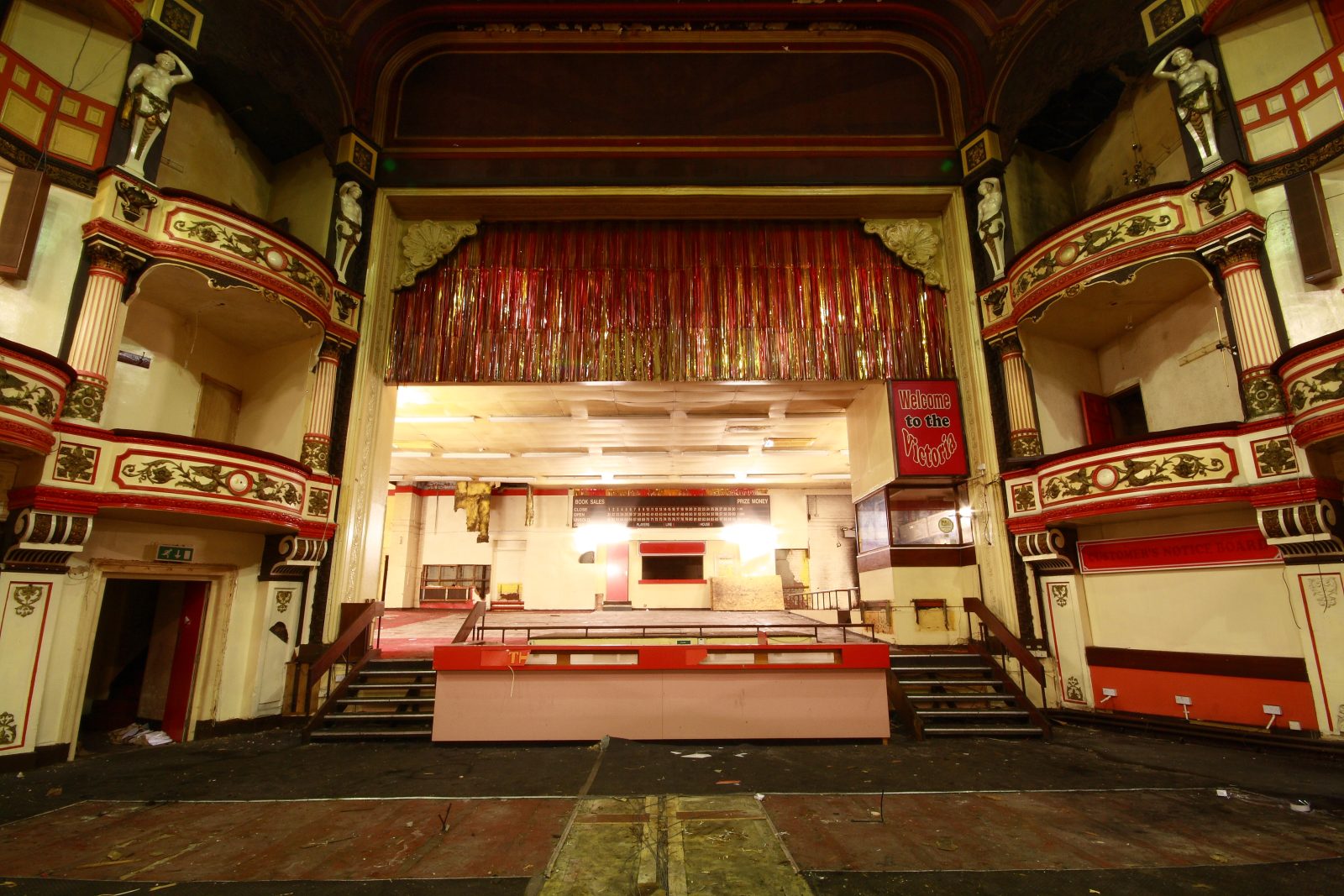
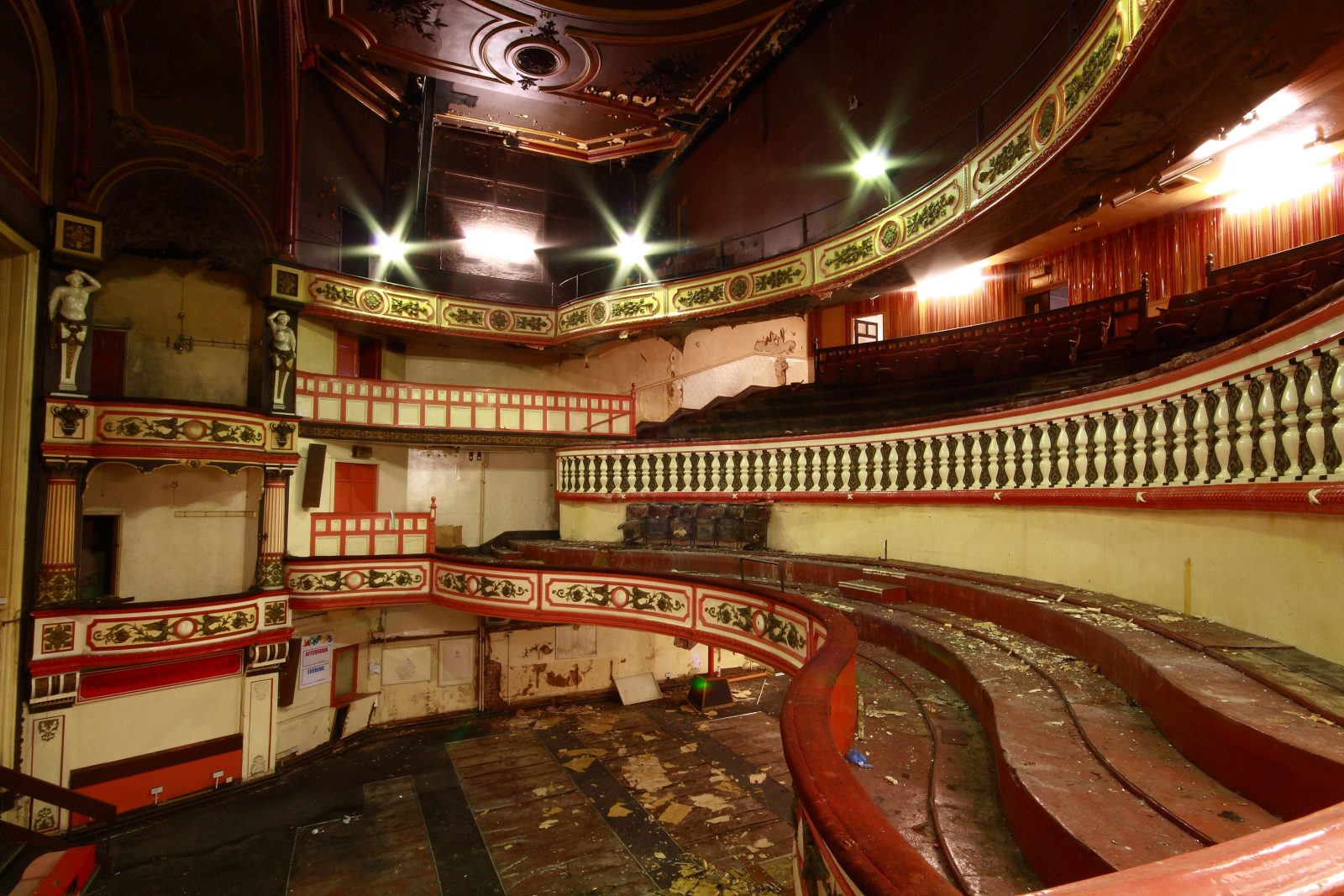
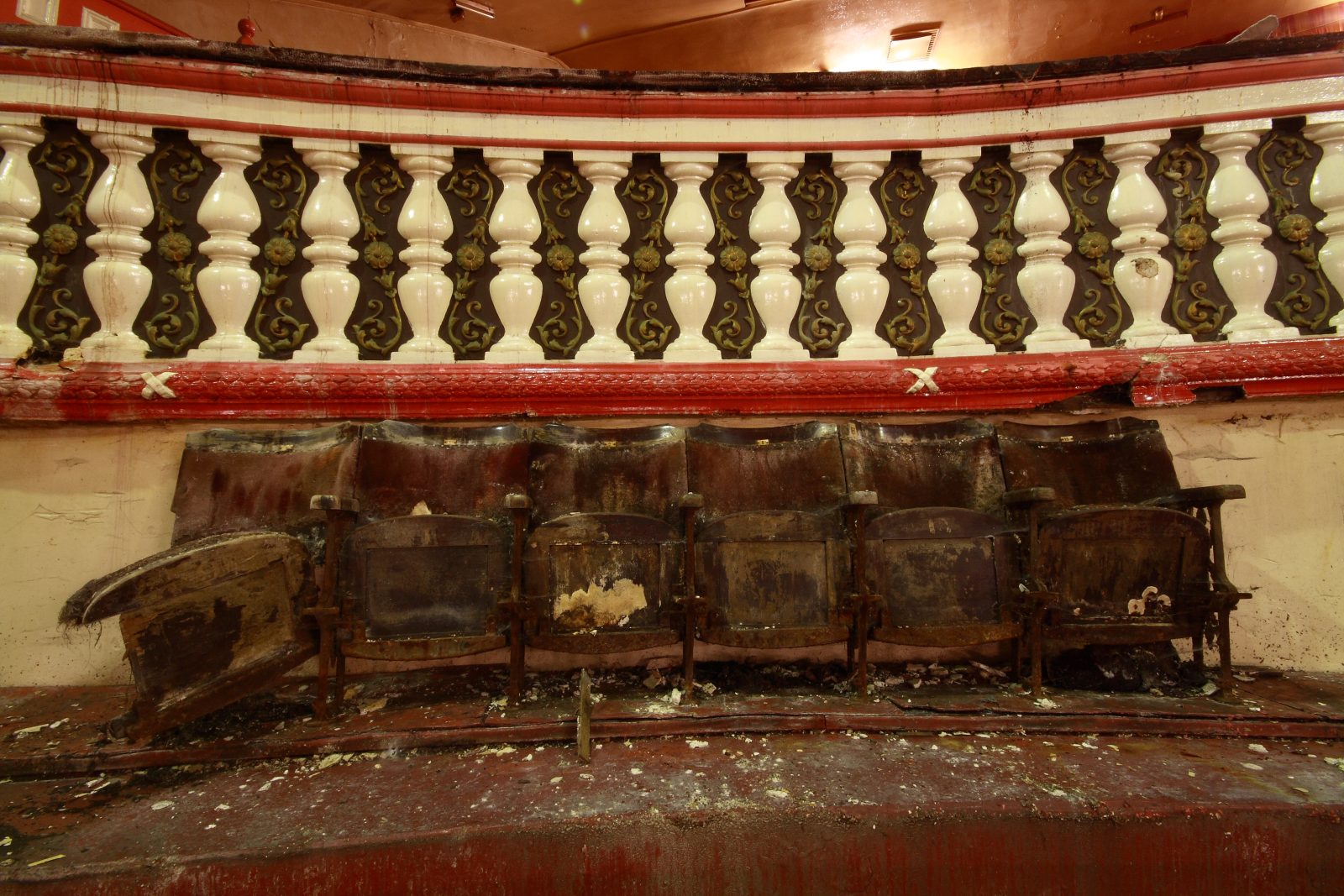
Inside Salford Victoria Theatre today. Credit: The Manc Group
And that is the vision – to bring this incredible Victorian theatre back into use for the Salford community.
ADVERTISEMENT
Inside, you can still see the grandeur that was once more prominent than the decay, from the ornate balconies to the huge stage, sloped towards the audience for optimum acoustics.
Bringing it back to life is massive – and costly – undertaking and the Salford Victoria Theatre Trust expect it could be 20 years before it could operate as a theatre again.
ADVERTISEMENT
Salford Victoria Theatre in 2012, its days as a bingo hall clearly visible. Credit: Dave Dewsnip
But it could be back in community use much sooner, if dreams come true, with plans for a phased reopening that would see meeting places, small business units, shops and a cafe back open and bustling in as few as five years.
The Trust’s current goal is to have the building listed as Grade II*, which would bump it up from being classed as a building of special interest to a ‘particularly important’ building.
If successful, the Grade II* listing could open up new pots of funding to help bring this beautiful space back into community use.
ADVERTISEMENT
The heyday
The Salford Victoria Theatre is a rarity in many ways.
It’s one of the few remaining examples of an interior designed by architect Bertie Crewe (the Alhambra in Paris is another), an early relic of motion pictures (dating all the way back to 1901), and contains a type of revolutionary-for-its-time engineering where the retracted stage curves downwards, like a roll-top desk.
Samanta Kelly from the Salford Victoria Theatre Trust said: “The craftsmanship that they pulled together is astounding. It was a very over-specced building for its time. They really future-proofed it.
“It was built as part our boomtown area where there was so much innovation going on – we had the first trams, the first electric lights, the first railway, all those sorts of things were going on at that time. The fact that they could get the money together to build something like this is quite amazing and it just goes to show what a thriving area this was. This wouldn’t get built today, not in Salford.”
ADVERTISEMENT
Sir Henry Irving travelled to Manchester to lay the foundation stone in 1899, along with Bram Stoker, as part of the movement to bring Shakespeare and opera out of London and to the regions.
It was an opera house to begin with but quickly pivoted to a variety theatre, and then a high-class cinema in 1918 as part of a refurbishment.
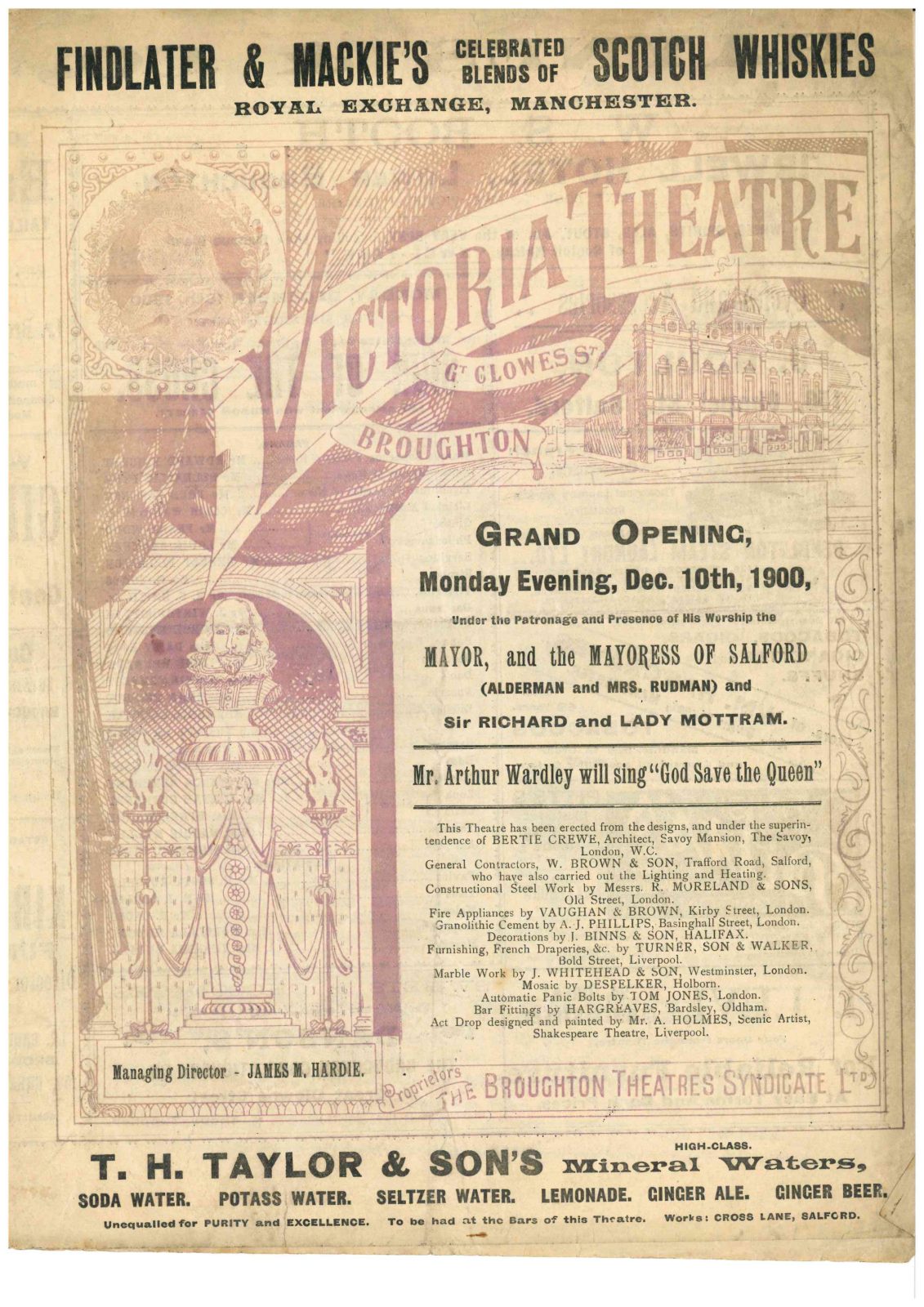
A flyer for opening night
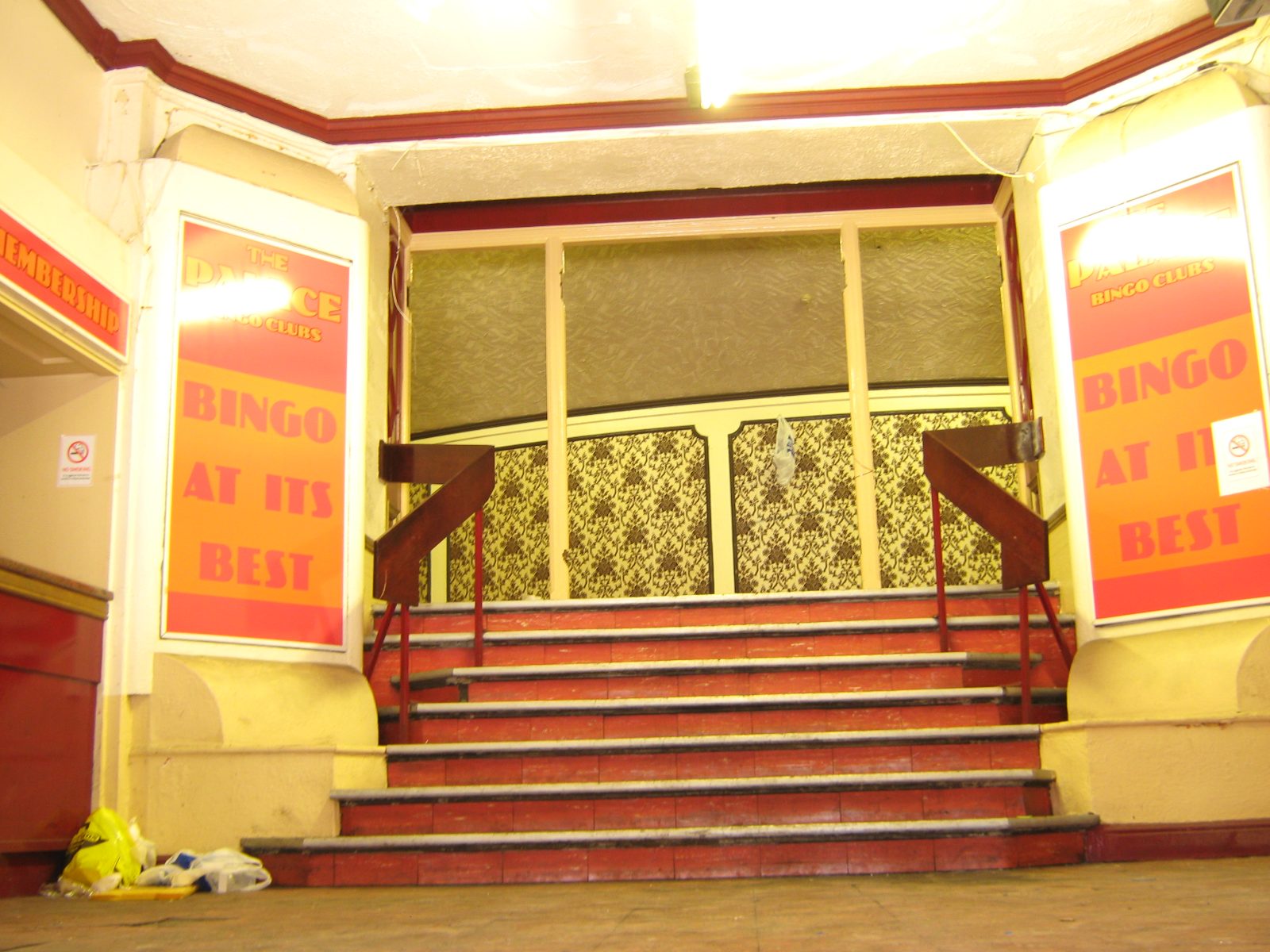
The theatre foyer. Credit: Dave Dewsnip
Sam recalls how the space operated as a cinema in its early days, saying: “We know they had back projection, that the cinema screen was at the front of the stage.
“They used to sell cheap seats on stage, behind the screen, so you could watch the films in reverse. So I guess you’d just have to learn to read subtitles back-to-front! They didn’t miss a trick in those days when there was money to be made.”
The retracting stage in the early 20th century was particularly impressive, and allowed directors to create shows with water features – like actual fountains with water tanks – as their centrepiece.
ADVERTISEMENT
The decline
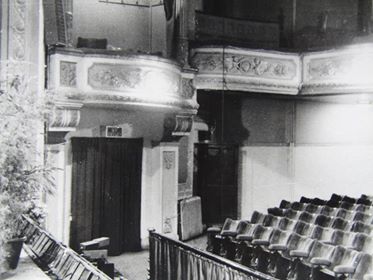
Salford Victoria Theatre in 2012. Credit: Dave Dewsnip
Despite its importance both locally and nationally, the Victoria Theatre’s days were numbered.
Sam says: “The reason the theatre suffered and ended up closing was for the same reason the whole area has – the demolition of the local housing, which made the high street suffer. Obviously people weren’t coming to the high street, they weren’t coming to the theatre.”
The clearance of back-to-back slum housing also expanded to include this corner of Lower Broughton, though Sam believes the homes here could’ve been saved with a bit of refurbishment.
The theatre today. Credit: The Manc Group
“When they pulled the houses down they didn’t replace it with anything,” Sam says. “They had no plan. They were just pulling things down. And they didn’t just pull the houses down.
“They pulled down Edwardian libraries, they pulled down Edwardian baths on Regent Road. The houses weren’t slums, but they scattered the communities and it had a really detrimental affect on people’s psyche.
ADVERTISEMENT
“It was a very close-knit community where everyone relied on each other, as people in poorer communities tend to. There was a sense of aspiration and hope back then. By the 1980s it was very depressing.
“Mocha Parade [a now-demolished shopping arcade] was built, which was just a depressing place, people used to call it Mugger’s Paradise.
The stage now is a relic of its bingo days and has been badly vandalised. Credit: The Manc Group
“Some of the well-established businesses on that high street were there for 100 years – butchers, bakers, candlestick makers. There was one veg shop called McEvilly & Sons, and Billy’s kids were still running it on Mocha Parade and they were the last ones standing. They stayed until they pulled Mocha Parade down.
“Sometimes you feel like you’re fighting a losing battle but it’s the last bit of old Salford left. I know the older community will be gone and not bothered too much about it but I think it would be a great boost to the community to see this building alive again.
“And that’s what we’re hoping to promote by saving building like the Victoria, to have that sense of pride in the community and a strong base where people can work out of.”
ADVERTISEMENT
The future
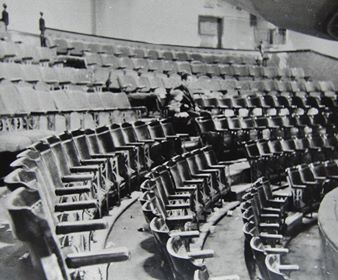
Salford Victoria Theatre in 2012. Credit: Dave Dewsnip
So the vision and the passion to save the building is there, but with years of neglect to undo, how exactly can the Victoria Theatre be saved?
“The plan would be to have a phased reopening,” Sam says. “The viability study basically says that it would be good to open, that there’s great potential for it in the area.
“They looked at all the surrounding theatres and things to see what sort of demographic we’d be looking at coming to the theatre. So they’ve looked at a phased reopening so restoring different bits of the building.
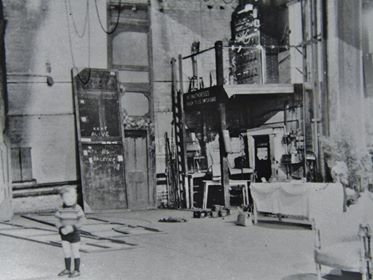
Salford Victoria Theatre in 2012. Credit: Dave Dewsnip
“They’ve started with the dressing room block which could be a little community meeting places or a space for small business, until it can be used as a dressing room block.
“Mocha Parade [a now-demolished shopping arcade] was built, which was just a depressing place, people used to call it Mugger’s Paradise.
ADVERTISEMENT
“Some of the well-established businesses on that high street were there for 100 years – butchers, bakers, candlestick makers. There was one veg shop called McEvilly & Sons, and Billy’s kids were still running it on Mocha Parade and they were the last ones standing. They stayed until they pulled Mocha Parade down.
“Sometimes you feel like you’re fighting a losing battle but it’s the last bit of old Salford left. I know the older community will be gone and not bothered too much about it but I think it would be a great boost to the community to see this building alive again.
“The front has a couple of shops and what used to be the Jacobean cafe on the first floor, which was the theatre cafe, so the idea would be to open the front of the building first to get the shops and the cafe open, and then there was an idea for a sort of ‘shabby chic’ opening of the auditorium if we get the stalls and stage secure.
“We’d obviously have to net off the balconies until we could get the money for restoration for them, so the idea would be to get the building working gradually and then bring the auditorium back fully and restore it – but that is a long-term vision.
ADVERTISEMENT
“We’ve had lots of interest in using the building, even from a group wanting to play table tennis inside – I didn’t want to tell them about the rake [slope] on the floor!
“It’s a difficult road. You’ve got to justify why this building should be saved and I think there’s a huge number of reasons it should be saved for the community. It’s of great importance to our national theatre history but also our local history.”
Featured image: The Manc Group
Salford
Three major events announced for finale of Salford’s 100th birthday celebrations
Daisy Jackson
Salford’s 100th birthday celebrations are heading towards a spectacular finale, with three major events set to bring the city’s communities, creativity and history into the spotlight this autumn.
Following a packed programme of celebrations, performances and art commissions since the city’s official birthday in April, Salford City Council has revealed what’s still to come – including a huge outdoor projection featuring more than 1,500 local people, the biggest-ever Wagon Train finale, and a special live performance celebrating the sounds of Salford.
The free events have been co-produced by Salford creative organisations Walk the Plank and From The Other, with public funding from The National Lottery through Arts Council England.
The Salford 100 autumn events follow a year of activity designed to explore Salford’s past, celebrate its present and imagine its future.
The celebrations officially began on 21 April, Salford’s centenary birthday, with Birthday City — a day of surprises for residents who shared their birthday with the city.
Seven Salfordians were selected for special birthday treats, including a teaching assistant who had worked at the same school for more than 20 years, a nine-year-old boy, and the founder of local suicide prevention charity Jak’s World.
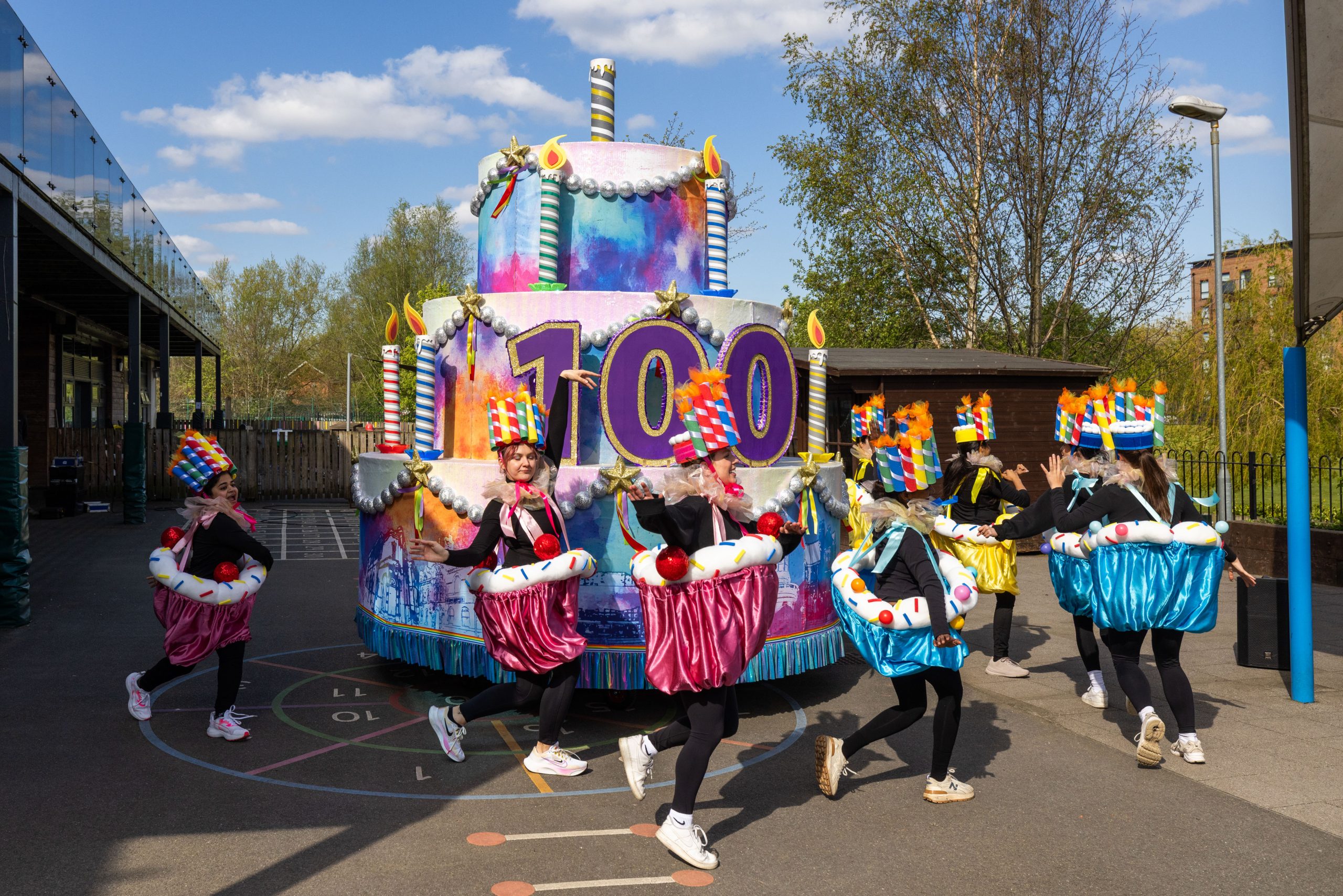
Performances from Mr Wilson’s Second Liners, Manchester Dhol Players and the BBC Philharmonic, alongside dancers and a giant birthday cake, appeared in unexpected locations around the city – including on a commuter train, at workplaces, a school and even a supermarket.
With the final major events now approaching, Salford’s centenary celebrations are set to end the year on a high.
And best of all, all three autumn events are free to attend.
For more information about Salford’s centenary programme Salford 100, and individual commissions, head HERE.
Salford Everywhere: A City Gathering
Friday 9 and Saturday 10 October, from 6pm – Peel Park
Salford 100
Salford is set to become the canvas for a spectacular celebration of its people when Salford Everywhere premieres this October.
Created by award-winning visual artist and filmmaker Matthew Rosier, the monumental artwork features more than 1,500 Salfordians, from NHS workers and builders to schoolchildren, supermarket teams, athletes, Royal Mail staff, dementia support groups and food bank volunteers.
On 9 and 10 October, video artworks featuring the local contributors will be projected onto buildings across the city.
The main free gathering will take place at Peel Park from 6pm to 10pm, where a 45-minute film will be projected at huge scale onto the University of Salford’s Maxwell Building, with two screenings each evening.
The film will be accompanied by a live musical score celebrating Salford’s rich musical heritage, featuring local choirs and brass bands. The score has been arranged by Michael Betteridge, with music direction from Salford-based composer and DJ AFRODEUTSCHE.
Meanwhile, Salford Shopping Centre in Pendleton will be illuminated from 7pm to 10pm, with the 1,553 local participants projected at monumental scale.
Rosier said the project captures the ‘humour, togetherness and toughness’ of Salford, after spending a month editing footage of the people who took part.
It promises to be a powerful celebration of the people who make Salford what it is today.
The Wagon Train Centenary Finale
Sunday 25 October, 6pm – Seedley Park, part of Buile Hill Park
After travelling around Salford throughout the summer, the Wagon Train is heading to Seedley Park for its biggest celebration yet.
Created by outdoor arts curators Walk the Plank, the spectacular family event will welcome an audience of around 3,000 people, bringing together performance, music, fire and plenty of Salford spirit.
Expect aerial performances, a glittering glowing Time Capsule and the Wagon Train of Inventions, celebrating Salford innovations from electricity to space exploration.
And yes – the giant birthday cake is making a return.
The event will also celebrate Salford’s entertainment heritage, with dancers taking audiences on a journey through the city’s nightlife, from ballroom to northern soul. Drummers and DJs will provide the soundtrack.
There will be plenty for younger visitors too. Children will work with artists to create Fuel of the Future — willow and tissue-paper lanterns that they can carry as part of the performance.
The evening will culminate with Pride of Salford torch bearers igniting a huge fire drawing designed by young people, followed by a short fireworks finale.
More than 350 Salfordians are expected to take part in the show.
Walk the Plank co-founder Liz Pugh said the finale will bring families and communities together ‘with a bang’, while celebrating homegrown talent and looking towards Salford’s future.
Songs of Salford: Live Preview
Saturday 14 November, 7.30pm – Swinton Grand Palais. Free tickets, limited spaces, details to be released soon
Artists involved in Songs of Salford. Credit: Daniel Johnson
Salford’s centenary celebrations will also get a musical send-off with the first live performance of Songs of Salford.
From The Other and award-winning producer Charlie Deakin-Davies have brought together five Salford artists to create a new record reflecting the city, its people and its communities.
The project features classically trained vocalist and pianist Salo, spoken-word artist The Thirsty Poet (Matt Concannon), battle rapper and youth worker Che3kz, Zimbabwean-born songwriter and poet Meduulla, and singer-songwriter Sam Seth.
The record also brings together communities from Age Friendly Salford, Salford Youth Zone, Monton Community Choir and music engineering students from the University of Salford.
On 14 November, audiences will get the first chance to hear the complete record performed live at the iconic Swinton Grand Palais.
The performance will feature all five artists alongside a 10-piece ensemble from the BBC Philharmonic Orchestra.
The Songs of Salford record itself will be released in 2027.
High School Musical at Lowry, Salford – a night spent reliving our childhood | Review
Amy Williams
What a night spent reliving our childhood.
Now, I don’t want to exaggerate or seem biased, considering this is one of my favourite film trilogies of all time, but this could be the best stage show I’ve seen in a long while.
We all know how High School Musical goes, right? Set at East High, we follow Troy and Gabriella (the star basketball player, and the geeky new girl) who meet over New Year, and then become ‘star-crossed lovers’ when back at school as they’re part of two different ‘cliques’.
The duo mess with the ‘Status Quo’ when they audition for the school musical. But will they stick to what they know? Or become stars of the stage? I’m sure you know the ending.
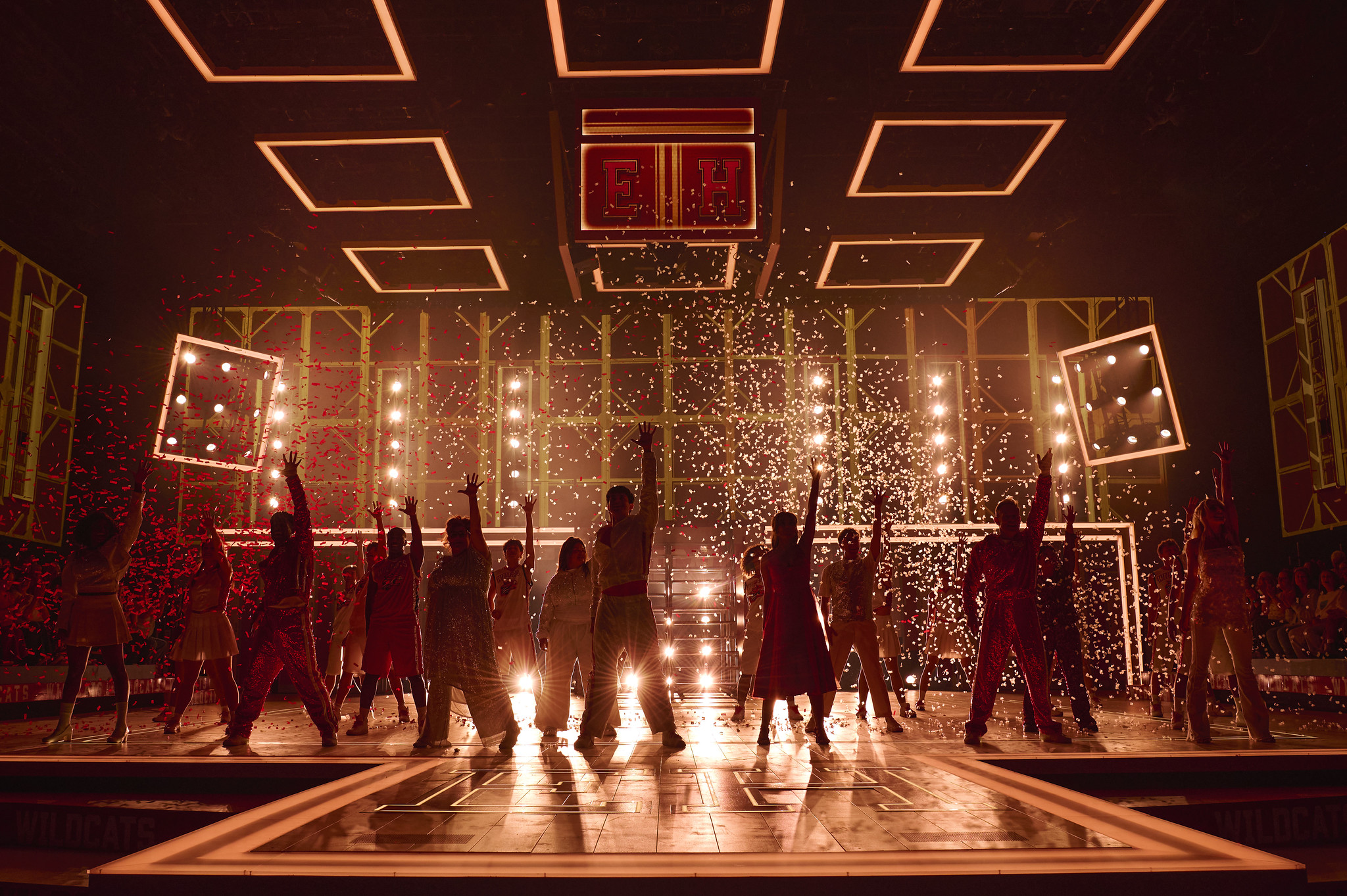
High School Musical is currently on stage at Lowry, Salford / Credit: Matt Crockett (Supplied)
From the costumes and the characters, to the memorable songs (there’s actually 52 songs in this production, including a mega mix at the end), they’ve kept right to the script of the films – and that’s exactly what we wanted to see.
Of course, the biggest throwback of them all is Kaycee Stroh – who originally featured as Martha Cox in the film trilogy – taking the role as Ms Darbus, and she was just as incredible as we expected her to be. And to see her do the iconic dance in the finale was unbelievable, 13-year-old Amy was screaming.
Also featuring Jason Donovan as Coach Bolton, Tobias Turley as Troy, Leonor Correia as Gabriella, Caitlin Tipping Sharpay, and Luke Bayer as Ryan, it was a proper impressive cast all round.
It’s a night to properly relive your mid-00s childhood / Credit: Matt Crockett (Supplied)
There was crowd interaction right from the off, as they taught the crowd a cheerleading routine to be included later in the show, plus for the finale, they had the lyrics on the big screen too so everyone could sing-along.
If we could go and see this show every single night, we would – it is absolutely brilliant.

 Daisy Jackson -
20th May 2022
Daisy Jackson -
20th May 2022