Life sentences for people who abuse children, and those who kill emergency workers on duty are among a series of criminal justice reforms coming into force today.
The government says the landmark reforms are designed to “make our streets safer”.
The reforms are part of the new Police, Crime, Sentencing and Courts Act (PCSC Act) – which the government says equips police with “the powers and tools they need to combat crime”, while overhauling sentencing laws in a bid to protect the public, and keep serious sexual and violent offenders behind bars for longer.
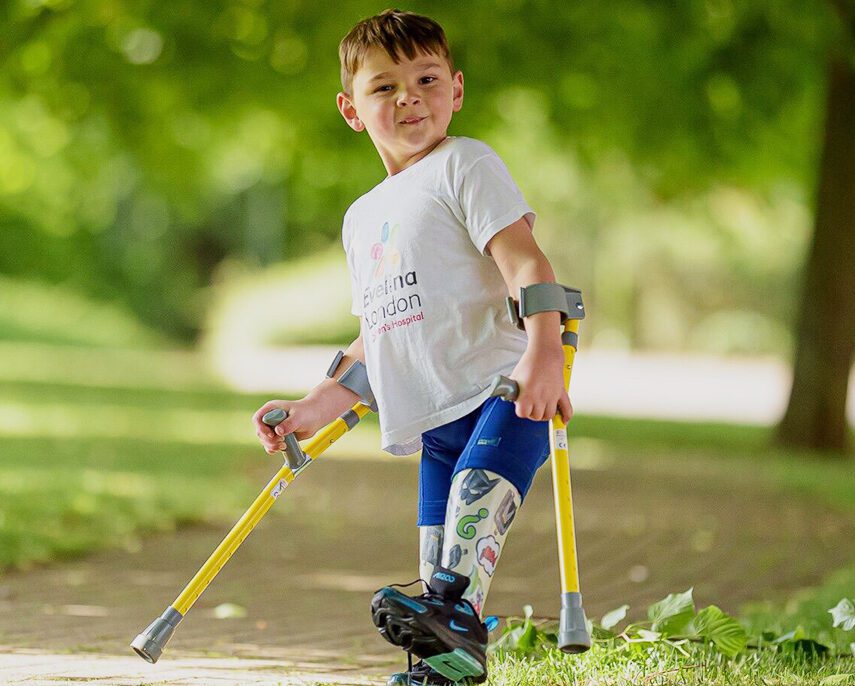
The introduction of higher maximum penalties for a range of child cruelty offences will be known as ‘Tony’s Law’ after seven-year-old Tony Hudgell.
When Tony was a baby, he was attacked by his birth parents and left with broken fingers and toes, plus torn ligaments in his legs – however, he was left untreated and in pain for 10 days, and the delay in getting treatment meant that both his legs had to be amputated in 2017, which has left him wheelchair-bound.
ADVERTISEMENT
His birth parents were sentenced to the current maximum jail term of 10 years.
But Tony’s adoptive mother Paula Hudgell said that more has to be done to protect vulnerable children, adding that the planned tougher sentences are for “Tony and all the babies and children that suffered or lost their lives at the hands of their abusers”.
The introduction of mandatory life sentences for those who unlawfully kill emergency workers in the line of duty will be known as ‘Harper’s Law’.
The law follows the tireless campaigning of PC Andrew Harper’s family, and his widow Lissie Harper, who were prompted to take action after the 28-year-old was killed while responding to a call about a stolen quad bike in Berkshire on 15 August 2019.
ADVERTISEMENT
PC Harper’s killers – 19-year-old Henry Long, and his two 18-year-old passengers Jessie Cole and Albert Bowers – were cleared of murder, and given sentences of between 13 years and 19 years for manslaughter, and although an appeal was made by the Attorney General asking for their jail terms to be increased, this was rejected.
Lissie had previously said she was “outraged” by the length of sentences handed to the three teenagers responsible for his death.
Some of the other reforms being introduced as part of the PCSC Act include ending the automatic early release of offenders deemed to be a danger to the public, giving domestic abuse victims more time to report incidents of common assault or battery, and making the taking of non-consensual photographs or video recordings of breastfeeding mothers will be punishable by up to two years in prison.
The most violent and sexual offenders, including rapists, will also be forced to spend longer in prison to keep the public safer.

ADVERTISEMENT
‘Harper’s Law’ will be introduced in memory of PC Andrew Harper after a tireless campaign by his family and widow Lissie / Credit: gov.uk
Judges will also be able to hand down life sentences for death by dangerous driving or death by careless driving when under the influence of drink or drugs, and there will also be a new offence of causing serious injury by careless driving.
Controversially, the PCSC Act also introduces a new offence of “intentionally of recklessly” causing public nuisance, which the government says reflects the rise in so-called “guerrilla protest” tactics, and there’ll also be new police powers to tackle non-violent protests that cause disruption to the public or access to parliament.
“This government is delivering on its commitment to make our streets safer,” Prime Minister Boris Johnson said.
“We have changed the law so that dangerous criminals are given the sentences they deserve and kept behind bars, and we are backing the police with the powers they need to keep us safe.
“We are well on our way to getting 20,000 more police officers, and we will continue to support victims seeking justice and bear down on crime so that everyone, in every town, village and city, has the security and confidence they deserve.”
ADVERTISEMENT
You can read the full list of reforms introduced as part of the PCSC Act on the gov.uk website.
Featured Image – Pxhere
News
How and where to recycle or donate your Christmas tree in Manchester | 2026
Emily Sergeant
The new year is here, and the ’12 days of Christmas’ are up… which means it’s time for a fresh start.
Christmas Day and New Year’s Eve both feel like things of the past now, and for most of us, this is our first proper week back at work too, which means (if you haven’t already) it’s time to tackle the task of taking down and putting away all the festive decorations – even if it is one of the dullest times of the year and it signals that the magic of Christmas is over.
For those of us that opt for a real Christmas tree though, the end of the year always brings one question – now what do we do with it?
Manchester City Council has aimed to answer that very question by providing residents with a handful of different ways to recycle their Christmas trees to make sure they’re put to good use and don’t go to waste or get dumped.
Here’s the different options.
___
Recycle it in your food and garden waste bin
You can recycle your Christmas tree by cutting it up and placing it in your food and garden waste bin, but you’ll need to make sure you take the following steps before doing so.
Remove all decorations and fairy lights
Take off the base or wooden block if your tree has one
Make sure the trunk is not thicker than your wrist. Wood thicker than your wrist is too big and can’t be put in the garden and food bin. Large trunks and wooden bases can be taken to a recycling centre.
Donate it to charity
Did you know you can donate your Christmas trees to charity? That’s right – for residents living in Manchester, all you’ll need to do is register your tree with national charity JustHelping, along with a donation towards the collection, and you can help a local hospice or charitable cause in the city-region.
The money raised will go to good causes in the area, including Moya Cole Hospice (previously St Anne’s Hospice), Francis House, and We Love Manchester.
You can find more information and register your tree here.
It’s time to take down and recycle our Christmas trees for another year / Credit: Myriam Olmz | Tanbir Mahmud (via Unsplash)
Take it to a local drop-off point
You can drop your real tree throughout January at:
Angel Meadow Park (entrance Old Mount Street) – M4 4HA
Wythenshawe Park and Gardens Athletics Track – M23 0PH
Heaton Park (Middleton Road entrance) – M8 4NB
Boggart Hole Clough (near the Visitor Centre) – M9 7DH
Patchett Street, off Hyde Road in Ardwick – M12 4RY
Bring it to your local recycling centres
And finally, wherever you live in Manchester, you can take your real Christmas tree – and even your artificial tree that is beyond reuse – to your local recycling centre for free of charge, but it’s worth noting that if you’re planning on using a van, pick-up truck, or a twin-axle trailer to dispose of your tree, then you’ll probably need to apply for a permit.
You can find information about your nearest recycling centre here.
Are you elsewhere in Greater Manchester? Recycle for Greater Manchester (R4GM) has teamed up with local councils and charities across the region to provide Greater Manchester residents in all 10 boroughs with several different options for either recycling or donate their old Christmas trees.
Featured Image – Jelleke Vanooteghem (via Unsplash)
News
NHS releases list of first conditions set to be eligible for new ‘online hospital’
Emily Sergeant
The first conditions that are set to be eligible for video appointments via the new NHS online hospital have been revealed.
In case you hadn’t heard, back in September of last year, the Government has announced that the NHS would be setting up an ‘online hospital’ known simply as NHS Online – which will not have a physical site and instead digitally connect patients to expert clinicians anywhere across the country.
Ultimately, this means patients can be seen faster than normal, as teams triage them quickly through the NHS App and let them book in scans at times that suit them at centres closer to their home.
NHS Online – which will begin to see its first patients in 2027 – is expected to deliver the equivalent of up to 8.5 million virtual appointments and assessments in its first three years, according to the NHS, which is four times more than an average NHS trust.
And now, the NHS has selected nine ‘common’ conditions which will be the first to be treated by the NHS Online service.
📲 Introducing NHS Online 📲
A new digital hospital will transform healthcare.
From 2027, you'll be able to get specialist care:
✅ straight to your home via the NHS App ✅ faster than a traditional hospital appointment ✅ wherever you live in England
Women’s health issues, including severe menopause symptoms and menstrual problems that can be a sign of endometriosis or fibroids, will be among the conditions available for online referrals, as will prostate problems like prostate enlargement and a raised prostate specific antigen (PSA) level, along with eye conditions including cataracts, glaucoma, and macular degeneration.
NHS Online will also provide support for other painful and distressing conditions, such as iron deficiency anaemia and inflammatory bowel disease (IBD).
So, how will NHS Online work then? Well, when a patient has an appointment with their GP, they will have the option of being referred to the online hospital for their specialist care instead, and then from there, they’ll be able to book directly through the NHS App.
Once referred to the online hospital, patients will have the ability to see specialists from around the country without leaving their home or having to wait longer for a face-to-face appointment.
The NHS has released a list of the first conditions set to be eligible for the new ‘online hospital’ / Credit: Nordwood Themes (via Unsplash) | rawpixel
If they need a scan, test, or procedure, then they’ll be able to book this in at a time that suits them at Community Diagnostic Centres closer to home.
Patients will also be able to track their prescriptions and get advice on managing their condition at home too.
“We’ve selected nine common conditions which the NHS Online service will initially provide support for when it launches next year, including some women’s health issues as well as prostate problems,” commented Professor Stella Vig, who is the National Clinical Director for Elective Care at NHS England.
“We know that these conditions can be painful and difficult to cope with so providing faster, more convenient access to diagnosis and treatments will have a real and positive impact on people’s lives.”