Doctors are warning that the use of laughing gas has risen to such concerning levels that it’s becoming an “epidemic” among Britain’s young people.
After a report in the British Medical Journal (BMJ) published in June 2020 revealed that there was “a visible mark of the increasing incidence of nitrous oxide (N2O) misuse” since the first COVID-19 lockdown began, concerns have been continually raised by medical professionals over the effects of the substance and what prolonged usage could do to the body.
Nitrous oxide – which is also known as laughing gas, “hippie crack” balloons, and nos – is now the second most-used drug among 16 to 24-year-olds in the UK, with more than half a million people in this age group in England and Wales found to have used the drug in 2019-2020.
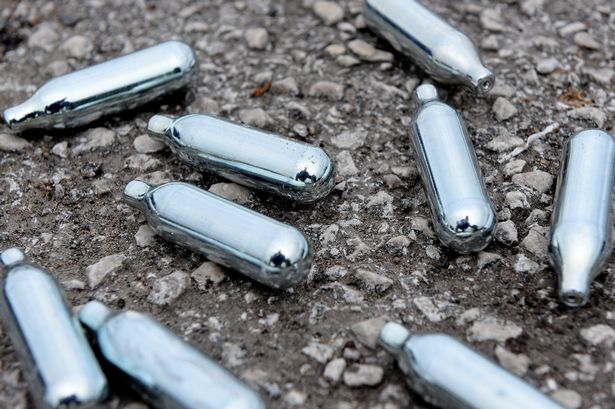
As defined by FRANK, nitrous oxide is “a colourless gas most commonly found in pressurised metal canisters [which] you may have seen lying around in streets outside bars and nightclubs.”
It’s often consumed by “transferring the gas into a container (usually a balloon), then inhaling from the balloon” and this is because “inhaling nitrous oxide directly from the canister is very dangerous [as] the gas is under such high pressure, which can cause a spasm of the throat muscle and stop a person breathing.”
ADVERTISEMENT
Doctors warn of a laughing gas ‘epidemic’ among Britain’s young people / Credit: Geoff Davis (via Geograph)
The popularity of nitrous oxide is believed to be due to the fact that it’s cheap and easy to get hold of, and it’s while it’s known to produce feelings of euphoria, relaxation, and calmness, as well as fits of giggles and laughter, it’s also linked to a wide range of negative side effects.
And now, doctors are warning that prolonged use could cause some serious health issues.
ADVERTISEMENT
In a now-viral TikTok, Doctor David Nicholl – consultant neurologist at Queen Elizabeth Hospital in Birmingham – said he was seeing large numbers of young people coming into hospital after taking nitrous oxide, and warned that many using the substance recreationally may not be aware of the risks and that it was becoming an “epidemic”.
“At the moment we are seeing an epidemic of young people being admitted to hospital off their legs because they have been taking whippets,” he explained.
He adds that some patients are left with “life-changing neurological injuries”.
ADVERTISEMENT
“It’s an absolute epidemic and some of these people using this will have no idea that actually they could end up not being able to walk for the rest of their life just for a bit of a laugh,” Dr Nicholl concluded in the video.
It was reported that the Home Office asked the independent Advisory Council on the Misuse of Drugs (ACMD) to analyse the harm caused by nitrous oxide last year, and was seeking advice on whether to make the possession of it a criminal offence.
There were also 36 deaths in Britain associated with laughing gas between 2001 and 2016, according to the Office for National Statistics (ONS).
Featured Image – Facebook
News
Sara Cox tipped to replace Scott Mills for Eurovision 2026
Danny Jones
Greater Manchester’s very own Sara Cox is reportedly set to replace Scott Mills at the 2026 Eurovision Song Contest following his sacking from the BBC.
Mills was axed by the news and entertainment corporation on Monday, 1 April, for ‘misconduct’, which has now been revealed to involve a historic relationship with a boy aged under 16.
While the fallout surrounding Scott Mills is only just beginning, the task of finding his replacement in multiple roles has already begun – though it looks like one may have already been decided.
Now reported by multiple outlets, it appears as though Bolton-born Sara Cox is first in line to pick up Mills’ co-hosting duties for this year’s Eurovision show.
Having already been involved with coverage of the event on multiple ocassions in the past, it now appears that she’ll be in post for the Grand Final too.
As a long-standing radio and TV staple, it only takes a quick look at social media to see how much backing she has already received in the past, with a post from last year reading, “Great to have Sara Cox back commentating on Eurovision“, and others from over a decade ago praising her past presenting.
In fact, it might not end just here either, as many are already calling for her to replace the 53-year-old breakfast show host.
From her days as a Radio 1 favourite to becoming a BBC mainstay across the board, her popularity only seems to have grown over the last decade, especially thanks to her charity fundraising efforts.
While an official announcement is yet to be made, the feeling is that it is all but confirmed for her to take over from Mills as part of the Eurovision commentary team.
As for the now vacant early morning slot on BBC Radio 2, the likes of Claudio Winkleman, Vernon Kay, fellow Manc Nick Grimshaw, the aforementioned Rylan, and several others have all been floated as potential stand-ins/future full-time hosts.
Do you think both should be given to Sara Cox, and if not, who would you like to see replace Scott Mills?
Millions of UK workers to get pay rises from today as National Living and Minimum Wage increases
Emily Sergeant
Millions of workers across the UK are set to begin receiving substantial pay rises from today.
After the Government announced back in November that it would take the recommendations made by the Low Pay Commission, and increase both the National Minimum Wage and National Living Wage, those changes have now come into force in a bid to ensure people on lower incomes are ‘properly rewarded’ for their work.
If you’re unfamiliar with the Low Pay Commission, it’s an independent body made up of employers, trade unions, and experts whose role is to advise the Government on the minimum wage.
As mentioned, the rate recommendations introduced today were agreed unanimously by the Commission.
This means that the living wage, for eligible workers who are aged 21 and over, has now risen by 4.1% from today to £12.71 an hour.
For a full-time worker, that means a pay increase of £900 a year.
Millions of workers in the UK are getting pay rises from today / Credit: John Kakuk (via Unsplash) | Pexels
The National Minimum Wage rate for workers aged 18 to 20-year-olds has also increased today by 8.5% to £10.85 an hour, and then for 16 to 17-year-olds, and those on apprenticeships, the rate has increased by 6% to £8 an hour.
“The recommendations we made last autumn sought to balance the need to protect the economy and labour market, whilst providing a real-terms increase for the lowest-paid members of society,” commented Baroness Philippa Stroud, who is Chair of the Low Pay Commission.
“A lot has changed since we gave our advice to the Government last autumn, and we are now beginning to gather evidence for recommendations later this year.
“The current economic uncertainty makes it essential that the Commission hears from those affected by the minimum wage and builds consensus for evidence-based recommendations.
Workers aged 21 and over are now legally entitled to the National Living Wage after the age threshold for the highest rate was lowered from 23 in 2024.
National Minimum Wage rates are available to workers aged 16 upwards.