Right in the heart of Manchester city centre there’s a stunning Catholic church that’s been hidden away for hundreds of years. Or it has been until now.
The scaffolding that’s long-marred Lincoln Square during its redevelopment has finally been removed to show St Mary’s Hidden Gem in its full glory, and glorious it really is.
Externally it’s comprised of the plain, red brick you see all over Manchester, but with a few special additions.
An ornate bell tower, stone-dressed windows and a carved stone doorway with a hand above forming the sign of the Ascension of Christ give visitors just the smallest hint of the beauty waiting to be discovered within.
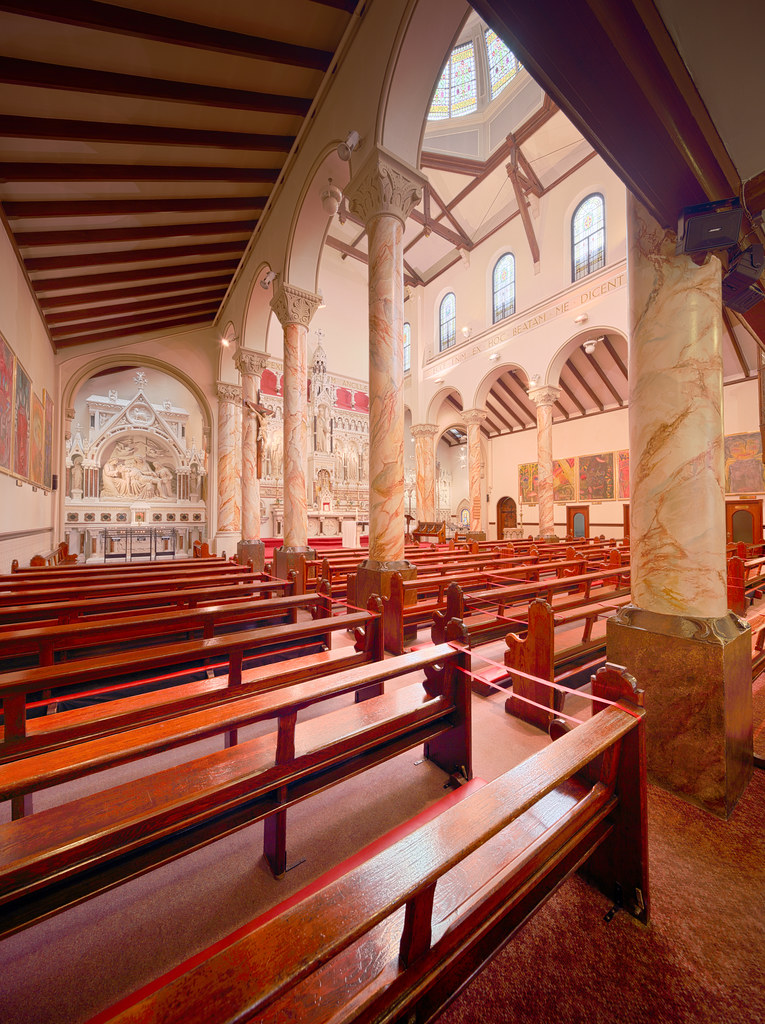
Venture through its doorway, and you’ll be greeted by beautiful stained glass windows, a majestic Victorian carving and High Altar made of marble.
ADVERTISEMENT
Image: The Manc Group
Life-size statues of Our Lady, St Stephen, St Patrick, St Peter, St John, St Hilda, St Augustine and St Joseph, all of whom gaze down serenely from on high.
In the very centre of the Altar, above the Tabernacle, sits Christ himself bearing the Sacred Heart. Elsewhere, you’ll spy striking expressionist paintings of the Stations of the Cross – the handiwork of late British artist and professor of painting Norman Adams.
ADVERTISEMENT
The church dates all the way back to 1774 , when it was originally located on Rook Street (near to today’s Fountain Street).
Over the years it has been afflicted by fires and other acts of God, still it stands firm.
The roof is said to have spontaneously cracked and collapsed in 1833 after its Rector at the time, Father Henry Gillow, had (in folly) enlisted his congregation’s help to conduct repairs without the oversight of a master builder.
At other points in St Mary’s history, a number of fires have required it to be rebuilt several times.
First erected at its home on Mulberry Street in 1794 following a fire, the church was rebuilt again in 1848 after it was destroyed in similar circumstance once again – leading architects to redesign it in an eclectic mix of Norman, Byzantine and Gothic styles that horrified top architects of the day.
It was the first Catholic church to be built in the Uk for some 250 years, thanks to Henry VIII’s desire to remarry, which led the country to break away from the Catholic church in the 1530s, but its parishioners were very poor, and during the 17th century had to meet secretly to conduct services.
Inside St Mary’s. Credit: Filckr
During this time, catholics were treated as second class citizens and were banned from many privileges – such as owning a horse, serving the armed forces, practising law or teaching – incase they might decide to side with the Pope over the Crown.
ADVERTISEMENT
Thankfully this is no longer the case today, and it remains open for all to visit – religious or not – to soak up a moment of quiet away from the noise of the city.
Whilst over time the Manchester that exists outside it has changed beyond recognition, St Mary’s HIdden Gem remains an oasis of peace today just a stone’s throw from the hustle and bustle of Albert Square and Deansgate.
Well worth a visit for its stunning interiors alone, this charming piece of Manchester history is worth seeking out – and now, its easier to find than ever before.
Feature image – The Manc Group
City Centre
Manchester Art Fair returns this autumn with more than 180 exhibitors under one roof
Emily Sergeant
One of the UK’s largest art fairs is back in Manchester this autumn, bringing more than 180 exhibitors together all under one roof.
Not only is it one of the UK’s largest and one of the most significant art fairs, but it’s by far one of the most celebrated cultural events in Greater Manchester‘s social calendar too.
Designed for the collector, the curator, and those who are just simply curious, the event draws in tens of thousands of visitors, and will feature lots of new and returning galleries and artists this year – all of whom will be showing new works.
2026’s edition will be its biggest yet too, as the event is returning to Manchester Central for four days this year instead of the usual three.
Returning from Thursday 19 to Sunday 22 November, the fair will have more than 600 artists there for an exceptional showcase of modern and contemporary art, with thousands of works available to discover and buy from both world-renowned names and some of the most exciting emerging creative talent.
In a significant move, the fair’s highly anticipated Preview Night will move to Thursday evening, opening an expanded programme of art, talks, workshops, and new experiences across the four days that follow.
Leading the lineup of new features are Manchester Art Fair’s Art Masterclasses, which have been created for developing artists looking to advance their creative practice.
These new experiences will sit alongside a rich programme of artist talks, panel discussions, Q&As, live demonstrations, and other hands-on creative workshops.
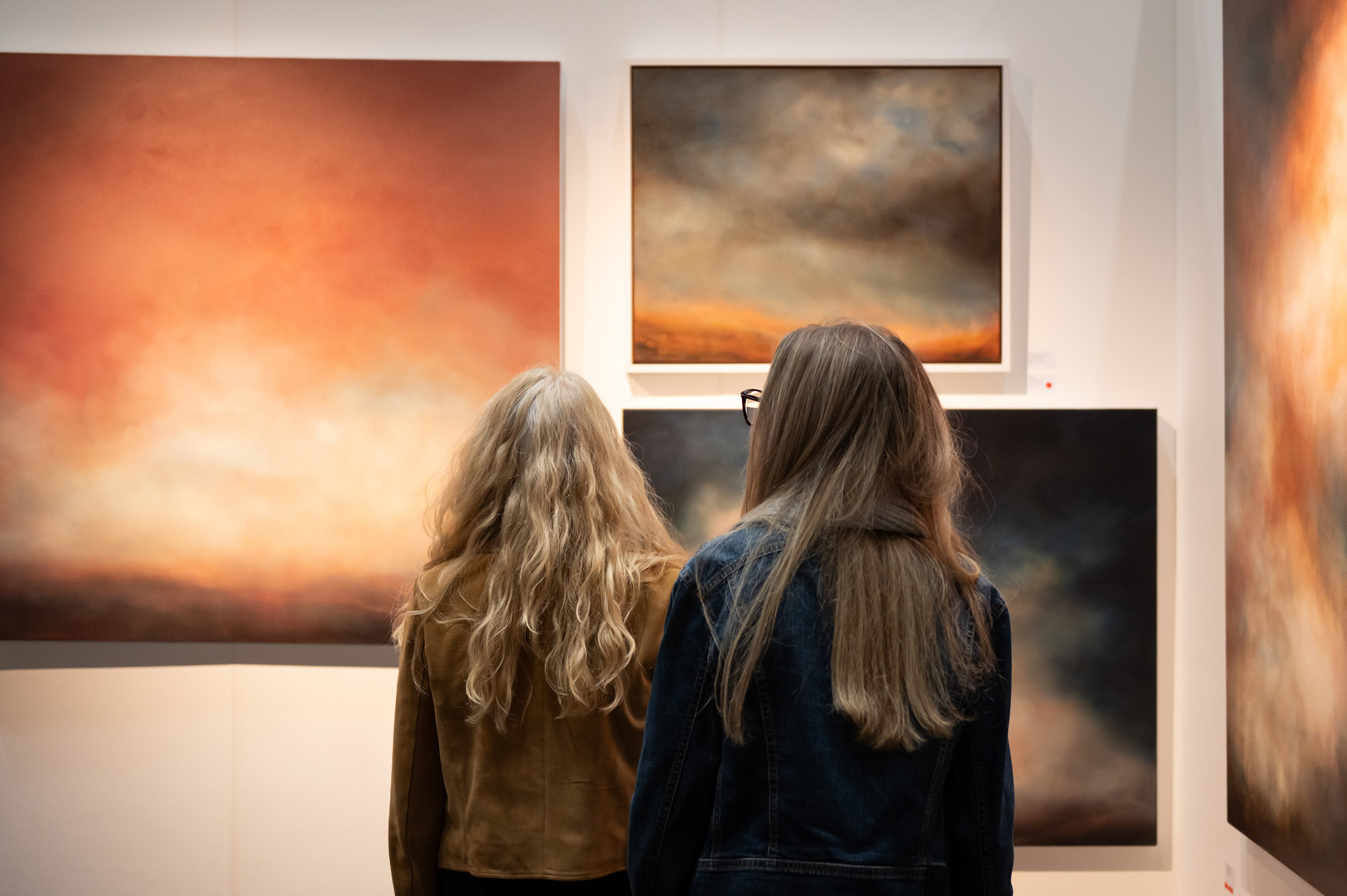
More than 180 exhibitors will all gather together under one roof / Credit: Supplied
Manchester Art Fair 2026 will first open at Manchester Central with an exclusive preview night on Thursday 19 November, before it then continues on Friday 20, Saturday 21 and Sunday 22 November – with tockets now on sale.
Tickets are priced at £15 for a day ticket or £25 for a preview night ticket, including access throughout the weekend, all with booking fees applying.
You can get your hands on tickets from the Manchester Art Fair website HERE, and find out more information on this year’s event HERE.
Featured Image – Supplied
City Centre
Scheme approved and date set for work to begin on Piccadilly Gardens transformation
Emily Sergeant
The long-awaited Piccadilly Gardens transformation is a go.
It’s official – planners have given the green light for the scheme to transform Piccadilly Gardens, with Manchester City Council having received no objections to the proposals which meant that officials were able to approve the full planning application without it needing to be considered at next month’s Planning Committee.
The decision means that preparation works can continue at pace, ready for the main works due to get underway this autumn.
In case you aren’t up to date with the Piccadilly Gardens transformation plans, the idea is, in a nutshell, to put the ‘Gardens’ back in Piccadilly Gardens.
But what exactly does this mean?
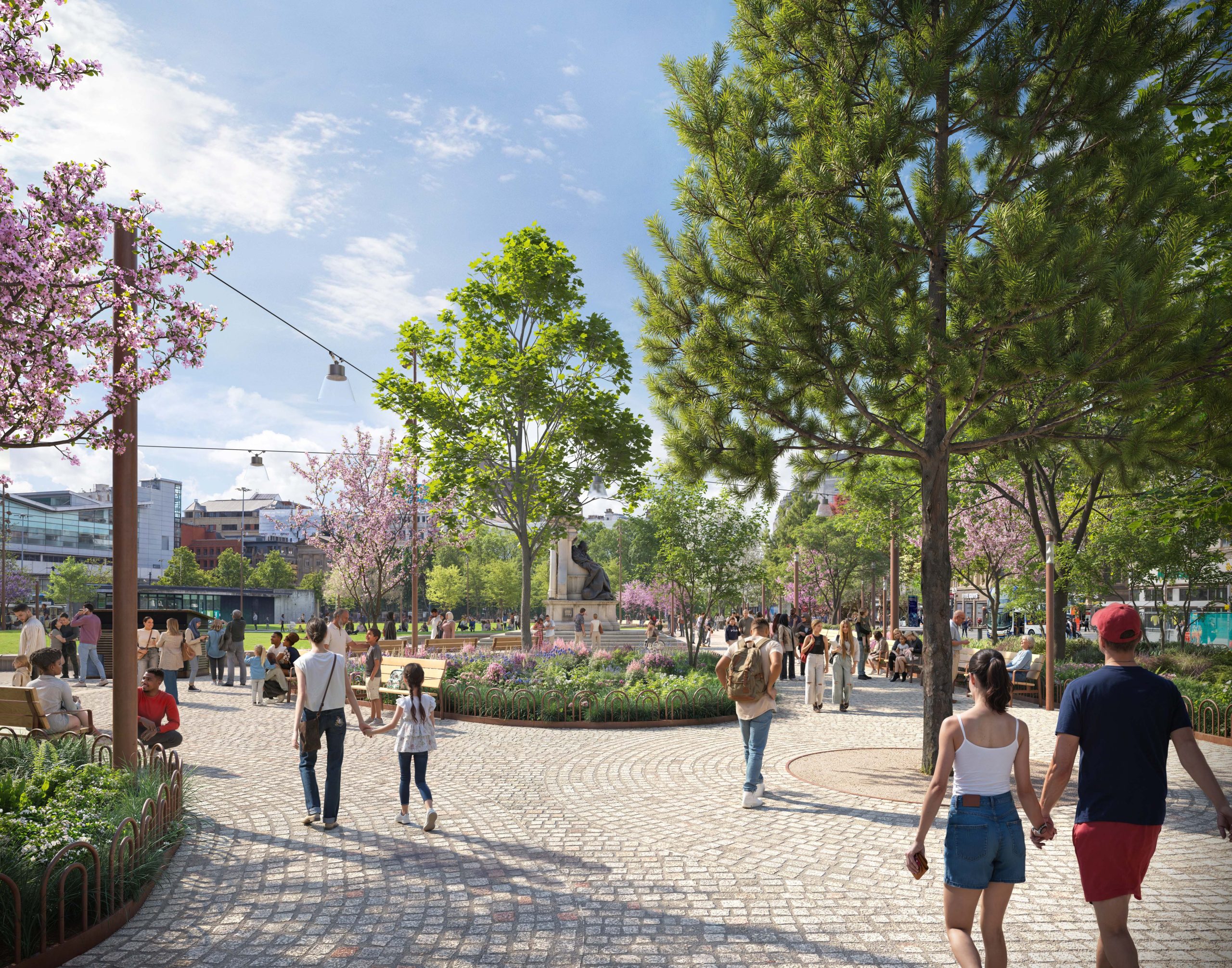
Well, the approved plans show a vision for more green space – including lawns, trees, planting, seating, and colourful horticultural displays – with the temperamental fountains being removed for good and replaced with a new space called The Pavilion that will host family-friendly events.
Date set for work to begin on Piccadilly Gardens transformation / Credit: Supplied
The low concrete walls and raised planters at the edge of the gardens will be ripped out, improving the setting of the Queen Victoria statue.
An there’ll be a new, larger playground for younger children, created in the same high-quality style as the new parks at Mayfield Park and Ancoats Green.
The plan is to also make the space ‘safer’ overall, through improved sightlines, better lighting, and enhanced CCTV.
The Council and its partners say they are ‘clear’ that delivering a ‘better’ Piccadilly Gardens cannot just be about physical improvements, but it also requires improvements to how the area is managed and maintained.
We're putting the Gardens back into Piccadilly Gardens
The major regeneration plan to transform the square has now been approved by planners.
This means we can start work this autumn to make the Gardens more colourful, vibrant and safer for residents and visitors. pic.twitter.com/5Ayv2k9SRw
This process is said to have already started, primarily with a strengthened police presence, but a new management model is also being developed to ensure that improvements are sustained.
“Securing planning permission means that before this year is out, we can get started properly on work to transform the space and have it finished and ready for the public to use next year,” explained Councillor Garry Bridges, who is the Leader of Manchester City Council.
“Piccadilly Gardens has huge potential to be a real asset to the city and its people. We know it hasn’t been good enough – but that’s about to change.”

 Georgina Pellant -
15th April 2022
Georgina Pellant -
15th April 2022