Plymouth Grove isn’t necessarily a street where you’d expect to find one of the most important literary sites in the country.
At first glance, this part of Longsight appears to consist of typical terrace housing in a standard neighbourhood. Yet, an extraordinary building stands amid these ordinary surroundings.
Sitting across from a row of terraces with a bold blue plaque, Elizabeth Gaskell House is a rare remaining example of a suburban regency villa in Manchester.
Painted pink for a time, over the years its number has changed from 42 to 84 as more properties have squeezed in around it.
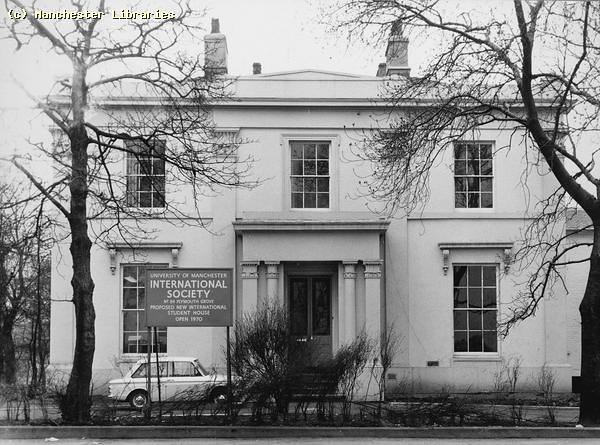
The villa was purchased by the University of Manchester in 1969 and it was used by the International Society until the late 1990s. During this time, it housed a nightclub in its basement.
Home to local author Elizabeth Gaskell from 1850 to her death in 1865, this was where the majority of her critically significant novels were written, including the most famous, Cranford.
ADVERTISEMENT
It’s said that Cranford was her favourite book, with Gaskell even naming her cat after it.
Ahead of its time, the story has never been out of print in its 170-year history. Throughout the pages, Gaskell champions feminist values: breaking away from period norms to focus her tale on a group of self-reliant unmarried women.
ADVERTISEMENT
The world of Cranford has been popularised since the BBC adapted the world of Matty and Deborah Jenykns for television in 2007.
When the hit BBC1 series first aired it put Knutsford decidedly on the map, even if the town was, as Cheshire Life reported at the time, snubbed in favour of Wiltshire for filming.
Manchester’s part in the story, meanwhile, often gets overlooked.
ADVERTISEMENT
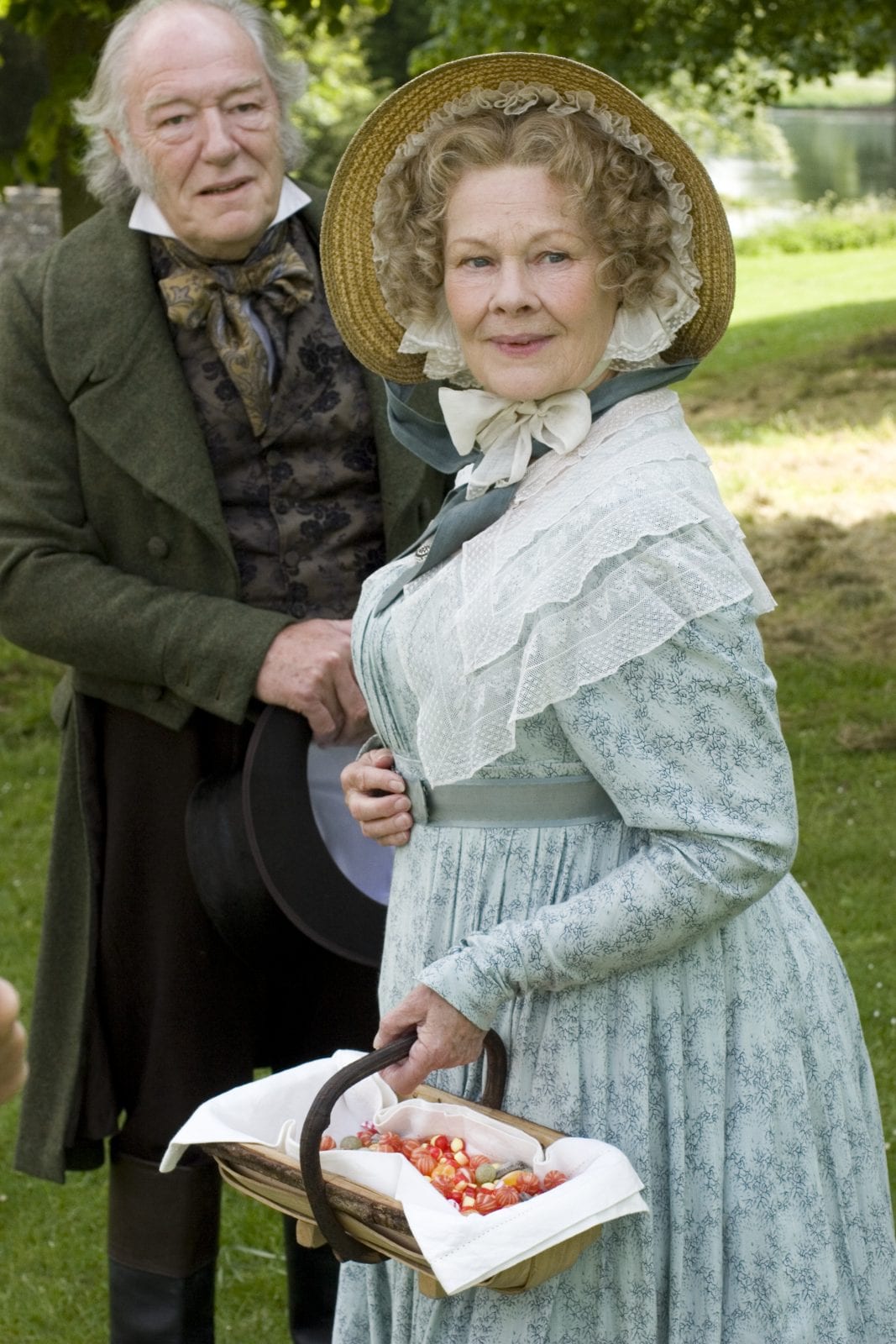
Dame Judi Dench as Miss Matty Jenkyns, the younger sister of Cranford’s moral guardian Miss Deborah. This costume is currently on show at the villa as part of new exhibit A Love Affair with Cranford / Image : BBC
Many will be aware of the popular TV series. But few are aware that, despite the title, it is actually a combination of three of Gaskell’s novels – Cranford, My Lady Ludlow,Mr. Harrison’s Confessions – all written during her time living in the house.
Today, the villa looks the same as it did when she was penning some of her most important work, right down to the quill and paper cast askew at her writing desk.
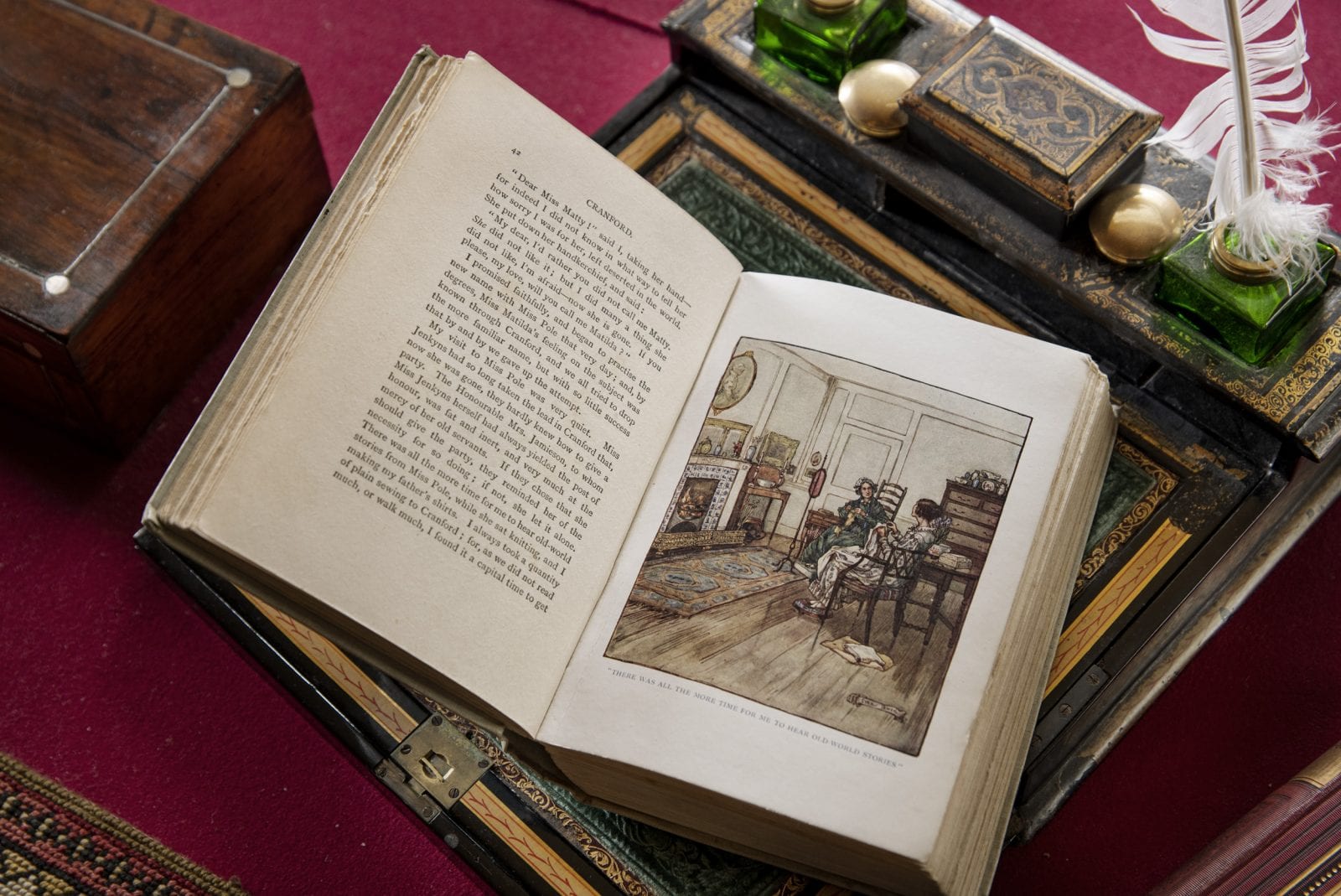
A rare first edition copy of Cranford is on display at the house outside the author’s newly-refurbished bedroom
Whilst Gaskell lived at Plymouth Grove, she received some notable visitors, and it’s easy to imagine the likes of Charles Dickens, John Ruskin, and Harriet Beecher-Stow reclining on the chintz settees in the plus drawing room.
You can also picture Gaskell’s good friend Charlotte Bronte shyly hiding behind the drapes to avoid an over-eager caller (which we have on good authority she definitely did during one stay).
Lovingly restored by some incredibly knowledgeable volunteers from the Manchester Historic Buildings Trust, you can still step in off the street today and feel like its famous former tenant has just popped out.
ADVERTISEMENT
They’ve painstakingly sourced every item inside using the house’s 1914 auction catalogue to make sure everything is as historically accurate as possible.
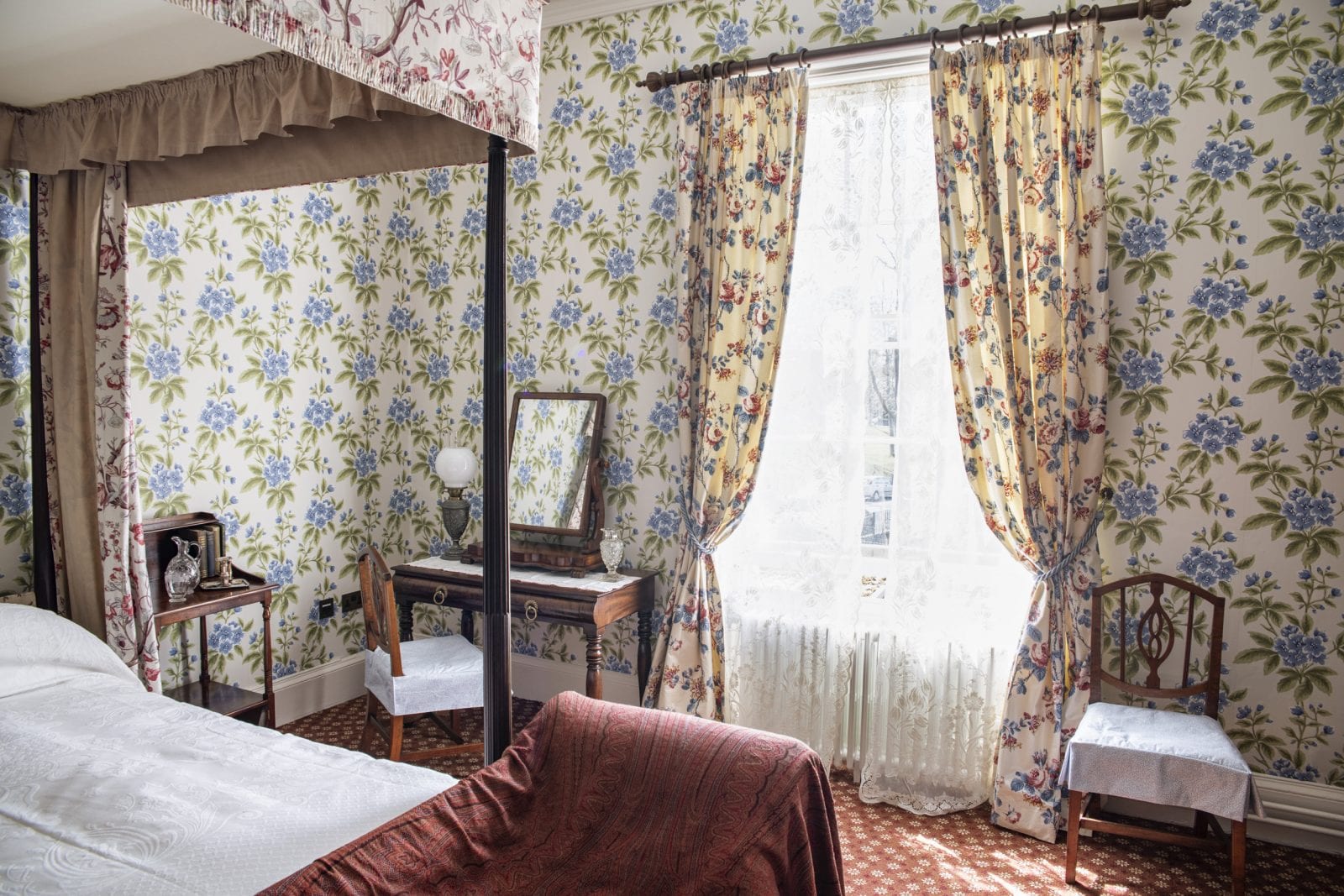
Inside Elizabeth Gaskell’s bedroom, restored by volunteers to look just as it did during the author’s lifetime
The detail is all there. And you can even ring the bells in the servant’s quarter, thanks to the efforts of one dedicated volunteer who rewired all the original bell pulls by hand.
The Study, Morning Room, Drawing Room and Dining Room have all been restored to how they were pre-1857, but the latest and most exciting new addition to the house is Gaskell’s bedroom – a project that kept the volunteers going through the past year’s successive lockdowns.
The focus of their energies during Covid, the restoration of Elizabeth Gaskell’s most private space was not easy to pull off – especially with borders and shops firmly closed. Still, they managed it, drawing on contacts and friends to help work around the issues 2020 threw at them.
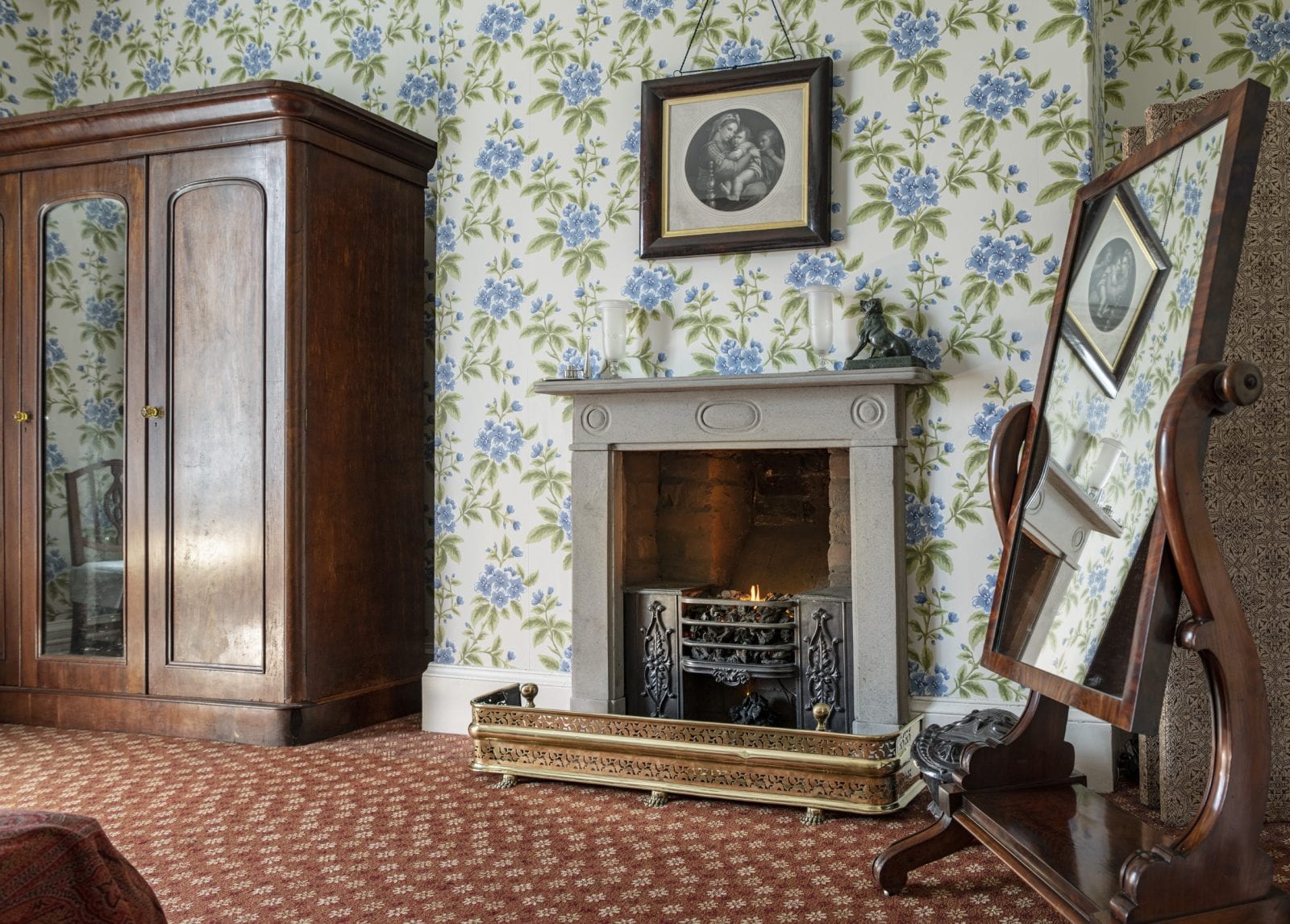
The end result is something really special: a near-perfect recreation of the room in which Elizabeth would’ve dressed her children, written her personal letters, and maybe even parts of her iconic novels.
ADVERTISEMENT
It’s open to visit now every Wednesday, Thursday and Sunday from 11am-4.30pm.
Tickets for a year’s admission are priced at just £5.50 for adults and £4.50 for senior citizens and students – and are well worth hanging on to for book lovers, who won’t want to miss the second-hand book sale that takes place here every month.
‘If only he was here’: Peter Hook reflects on Ian Curtis as Joy Division join Rock and Roll Hall of Fame
Danny Jones
We were lucky enough to play a part in a bit of music history (albeit only a small one) this week, as we had the privilege of chatting with the one and only Peter Hook of Joy Division and New Order, as the pair were finally admitted into the Rock and Roll Hall of Fame.
A long overdue bit of recognition, if you ask, but a momentous day nonetheless.
Chatting with Hooky and a long-time friend, collaborator, and beloved Manchester-based DJ, Graeme Park, in the aftermath of being named in the ‘Class of 2026’, he was visibly moved and honoured by the announcement. Here’s what he had to say…
Joking from the off by repeating Graeme’s initial question, “How does it feel?” (an absolute tap-in, that one), the 70-year-old bassist and co-founder of both iconic Greater Manchester groups admitted that they “had a couple of false starts”, to put it mildly, but went on to add: “we can only thank our fans.”
Confessing there has been somewhat of a mixed reaction about “what it means” to them and/or in the industry these days, he made it clear that on a personal level, it’s still a huge moment.
Put simply, he said: “Without the fans, we’d all be nothing.”
He also went on to praise the sort of no-nonsense, DIY and unapologetic approach of the Manc music scene, quipping: “You know, what would Simon Cowell have said about Ian Curtis, Bez, Shaun [Ryder] – Ian Brown, for god’s sake?!”
Acknowledging that while no one was necessarily an “accomplished singer” (often the case when you start early and just pursue a passion), his caveat was that “they had heart and soul” and “they embody something deep within us all that has lasted and will continue to last.”
Noting a de facto ‘Renaissance’ that a few names have enjoyed – especially following the passing of certain notable figures – he believes, rather, that they never went anywhere and that Northern crowds and beyond have helped those songs stretch to three, four, even five different generations.”
He’s not wrong: they’ve never stopped connecting with audiences, and they NEVER will.
Once more, it was an absolute joy (again, pardon the pun) to chat with Peter and Parky, who clearly haven’t lost their love for each other, nor this business – even after all these decades.
Congratulations to both bands, Hooky, Bernard Sumner, Stephen Morris, Gillian Gilbert, Tom Chapman, Phil Cunningham, as well as every session musician who’s ever played these tunes and kept them alive.
Last but not least: forever and always, rest in peace, Ian Curtis.
Inside Soho House Manchester as rooftop pool finally opens
Daisy Jackson
Soho House Manchester finally opened its doors to members late last year – but there’s still more to come.
The exclusive members’ club, which costs from £2,400 per year to access, faced several years’ worth of unavoidable delays as it transformed the old Granada Studios.
And even now that members can finally visit the space for networking, dinner and drinks, events, and working, Soho House isn’t actually finished.
Instead, the hotly-anticipated venue is opening in phases – the latest of which is that beautiful rooftop pool, with views overlooking the city from the top of the former television studio.
New images taken inside Soho House Manchester show several of the completed spaces, from lounges with beautiful natural light flooding through skylights, to stylish candlelit dining rooms, to gorgeous bedrooms.
In keeping with the building’s history, the Soho House design team have stuck with a premium mid-century interior, including terrazzo flooring and warm wood details, muted green and orange colour palettes, and chrome furniture.
Have a look inside Soho House Manchester:
Soho House Manchester is now open. Credit: SuppliedBeautiful interiors. Credit: SuppliedA bar space. Credit: Edvina BruzasRestaurant spaces. Credit: Edvina BruzasDetails of Soho House Manchester. Credit: Edvina BruzasMid-century details at Soho House Manchester. Credit: Edvina BruzasInside Soho House in Manchester. Credit: Edvinas BruzasNew spaces are still opening. Credit: Edvinas BruzasThere are 22 bedrooms inside. Credit: Harry Crowder
There are now 22 beautiful bedrooms up on the sixth floor, exclusively available to Soho House Members, which carry on the 1950s heritage design.
As the build continues, members will soon have access to a Soho Health Club with a gym, reformer Pilates studio, smoothie bar, and infrared sauna and steam room.
Every Soho House has a strict no-photos policy to protect to privacy of members – which means unless you fancy forking out £333.33 a month, you might never see inside it beyond the club’s official photography.