Plymouth Grove isn’t necessarily a street where you’d expect to find one of the most important literary sites in the country.
At first glance, this part of Longsight appears to consist of typical terrace housing in a standard neighbourhood. Yet, an extraordinary building stands amid these ordinary surroundings.
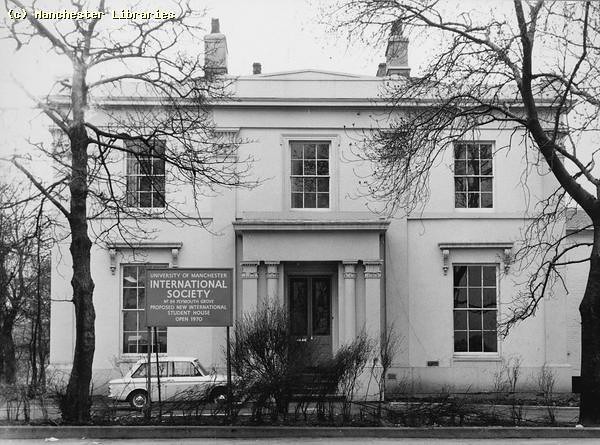
Sitting across from a row of terraces with a bold blue plaque, Elizabeth Gaskell House is a rare remaining example of a suburban regency villa in Manchester.
Painted pink for a time, over the years its number has changed from 42 to 84 as more properties have squeezed in around it.
The villa was purchased by the University of Manchester in 1969 and it was used by the International Society until the late 1990s. During this time, it housed a nightclub in its basement.
Home to local author Elizabeth Gaskell from 1850 to her death in 1865, this was where the majority of her critically significant novels were written, including the most famous, Cranford.
ADVERTISEMENT
It’s said that Cranford was her favourite book, with Gaskell even naming her cat after it.
Ahead of its time, the story has never been out of print in its 170-year history. Throughout the pages, Gaskell champions feminist values: breaking away from period norms to focus her tale on a group of self-reliant unmarried women.
ADVERTISEMENT
The world of Cranford has been popularised since the BBC adapted the world of Matty and Deborah Jenykns for television in 2007.
When the hit BBC1 series first aired it put Knutsford decidedly on the map, even if the town was, as Cheshire Life reported at the time, snubbed in favour of Wiltshire for filming.
Manchester’s part in the story, meanwhile, often gets overlooked.
ADVERTISEMENT
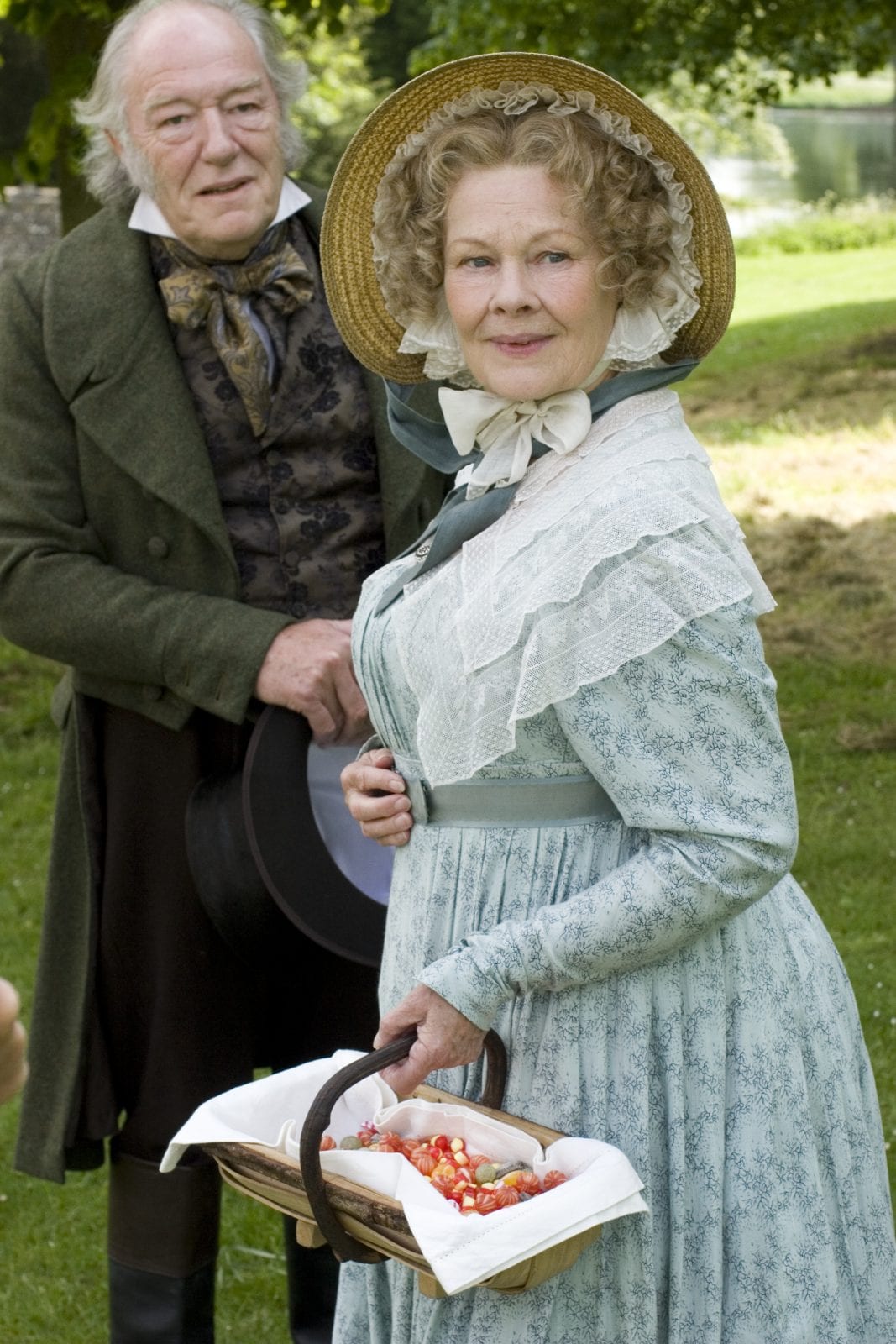
Dame Judi Dench as Miss Matty Jenkyns, the younger sister of Cranford’s moral guardian Miss Deborah. This costume is currently on show at the villa as part of new exhibit A Love Affair with Cranford / Image : BBC
Many will be aware of the popular TV series. But few are aware that, despite the title, it is actually a combination of three of Gaskell’s novels – Cranford, My Lady Ludlow,Mr. Harrison’s Confessions – all written during her time living in the house.
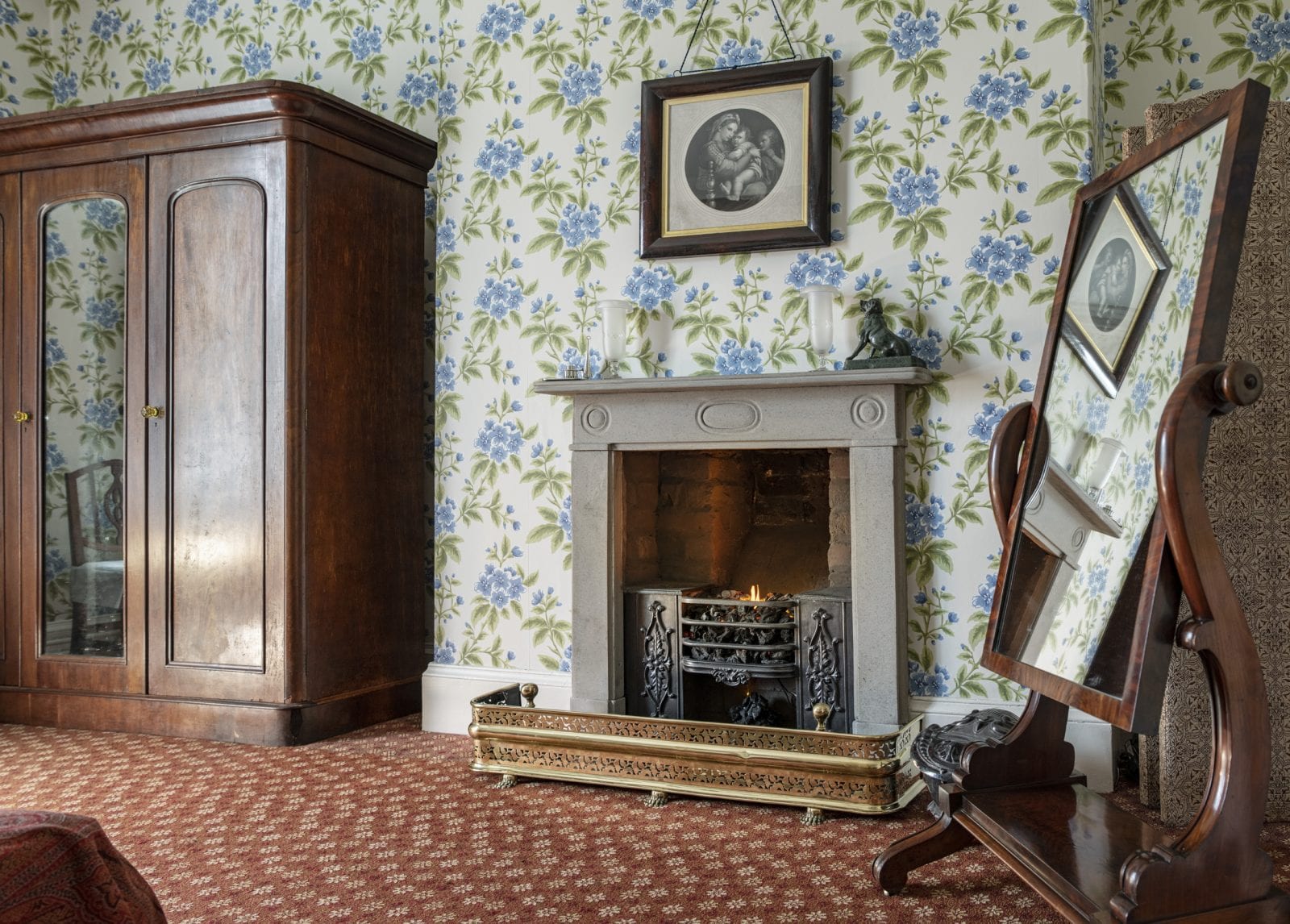
Today, the villa looks the same as it did when she was penning some of her most important work, right down to the quill and paper cast askew at her writing desk.
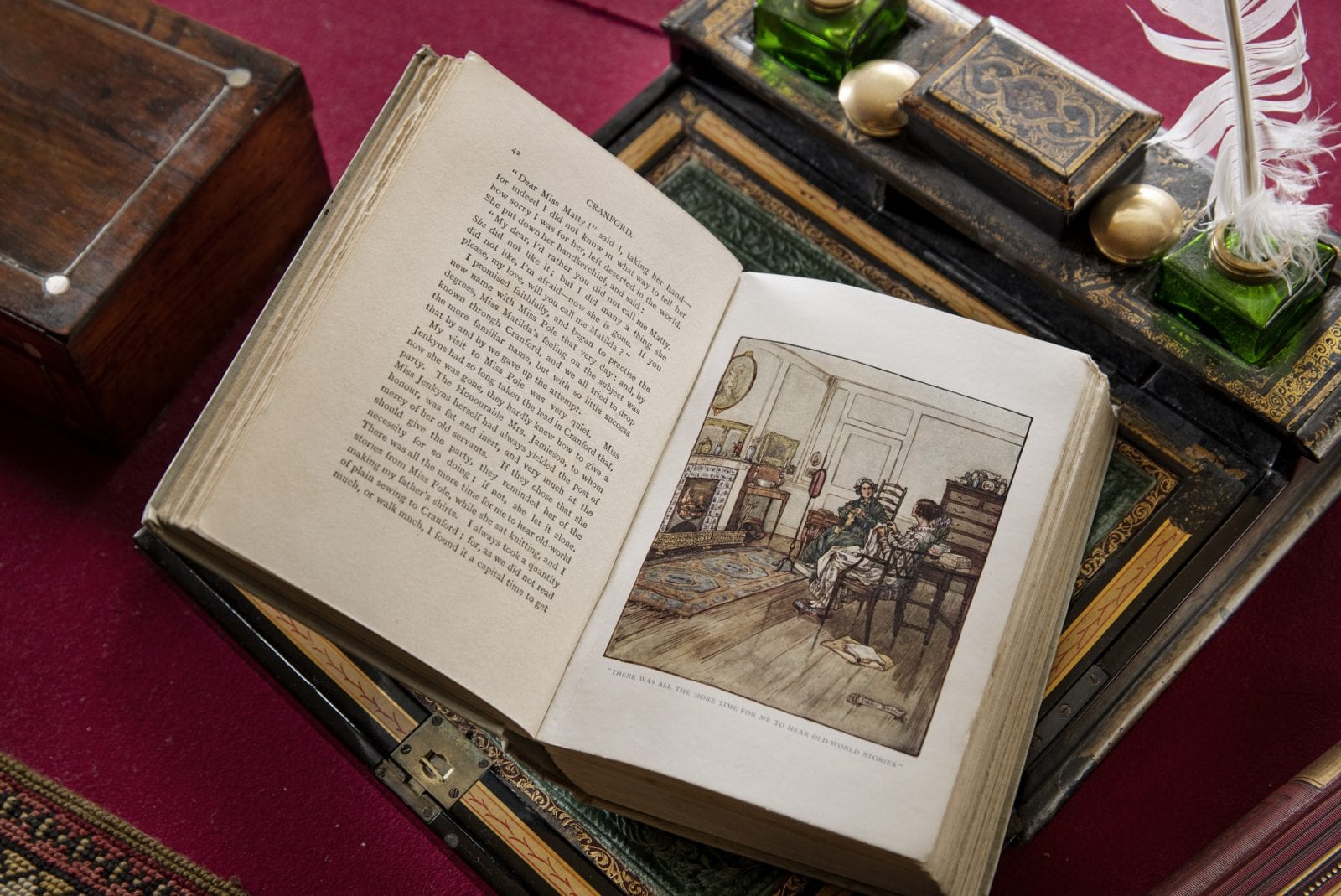
A rare first edition copy of Cranford is on display at the house outside the author’s newly-refurbished bedroom
Whilst Gaskell lived at Plymouth Grove, she received some notable visitors, and it’s easy to imagine the likes of Charles Dickens, John Ruskin, and Harriet Beecher-Stow reclining on the chintz settees in the plus drawing room.
You can also picture Gaskell’s good friend Charlotte Bronte shyly hiding behind the drapes to avoid an over-eager caller (which we have on good authority she definitely did during one stay).
Lovingly restored by some incredibly knowledgeable volunteers from the Manchester Historic Buildings Trust, you can still step in off the street today and feel like its famous former tenant has just popped out.
ADVERTISEMENT
They’ve painstakingly sourced every item inside using the house’s 1914 auction catalogue to make sure everything is as historically accurate as possible.
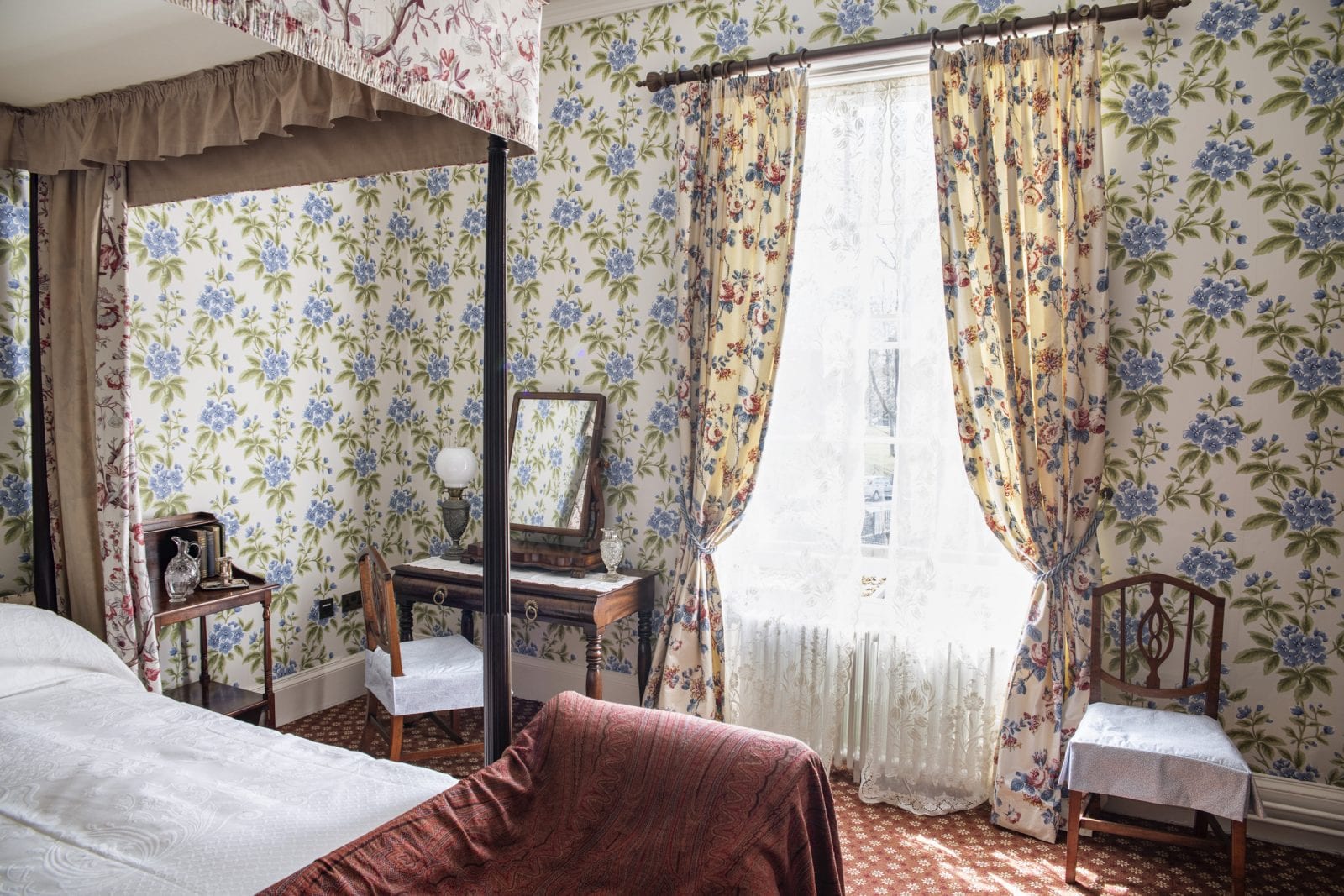
Inside Elizabeth Gaskell’s bedroom, restored by volunteers to look just as it did during the author’s lifetime
The detail is all there. And you can even ring the bells in the servant’s quarter, thanks to the efforts of one dedicated volunteer who rewired all the original bell pulls by hand.
The Study, Morning Room, Drawing Room and Dining Room have all been restored to how they were pre-1857, but the latest and most exciting new addition to the house is Gaskell’s bedroom – a project that kept the volunteers going through the past year’s successive lockdowns.
The focus of their energies during Covid, the restoration of Elizabeth Gaskell’s most private space was not easy to pull off – especially with borders and shops firmly closed. Still, they managed it, drawing on contacts and friends to help work around the issues 2020 threw at them.
The end result is something really special: a near-perfect recreation of the room in which Elizabeth would’ve dressed her children, written her personal letters, and maybe even parts of her iconic novels.
ADVERTISEMENT
It’s open to visit now every Wednesday, Thursday and Sunday from 11am-4.30pm.
Tickets for a year’s admission are priced at just £5.50 for adults and £4.50 for senior citizens and students – and are well worth hanging on to for book lovers, who won’t want to miss the second-hand book sale that takes place here every month.
The Peak District walk with amazing views, a cosy cafe, and a great pub at the end
Daisy Jackson
If you’re looking for a country walk that’s got a bit of everything – we’re talking views, lakes, history, picturesque villages and, crucially, pints – this is the one.
Step across the Greater Manchester border into High Peak, and you can take on a circular walk that’s got it all.
The walk takes in all the best bits of the English countryside, from rolling hills to proper pubs.
Park in the village of Hayfield, then head out west to join the Sett Valley Trail, which joins Hayfield and New Mills.
The trail itself is 2.5 miles and follows a former railway line – but now it’s a tree-lined trail that’s perfect for a gentle stroll, cycle or even horse ride.
You’ll pass the Birch Vale reservoir, but won’t be following the trail all the way to New Mills.
Get as far as Emma’s Sett Valley Cafe and stop for an early break – indulgent hot chocolates, great bakes, and a decent amount of brunch dishes beneath colourful festoon lighting.
Emma’s Sett Valley Cafe. Credit: The Manc Group
Once you’re fuelled, head slightly back on yourself to skirt Birch Vale Reservoir, cross the River Sett, and walk towards Sitch Lane.
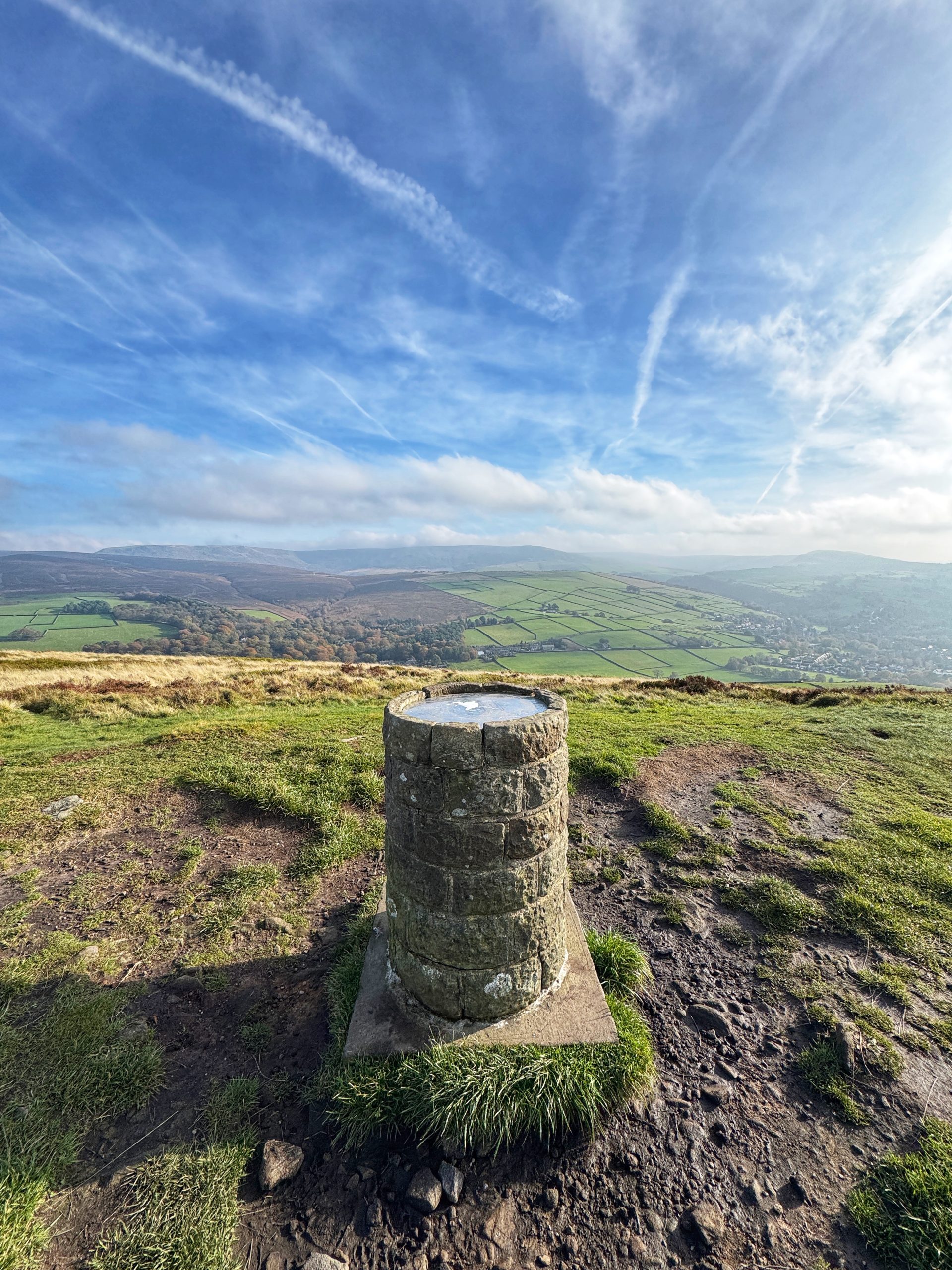
The road will take you to the very edge of the Peak District ready for an uphill climb to the peak of Lantern Pike.
It’s not a giant by Peak District standards (373m compared to Kinder Scout’s 636m) but the views are 360 degrees – fields on all sides and the incredible Manchester skyline in the distance.
Walk straight over the summit and down the other side, walking along the edge of Hey Wood and across fields full of friendly cows, past Little Hayfield and back into the main village of Hayfield.
Views from the Sett Valley trailSummiting Lantern PikePretty views near Little Hayfield
Here you’ll find The Pack Horse, a country pub that’s gained some serious accolades in recent years.
Famed for its seasonal, locally-sourced menu, at this time of year you can expect hearty post-hike lunches like sharing pies, Manchester eggs, and incredible Sunday roasts.
Despite a top-notch menu, the pub is more than happy to welcome in customers (and dogs) who are covered in mud – as all good countryside boozers should.
Sharing pie at The Pack Horse in HayfieldThe Pack Horse in HayfieldTheir famous Manchester egg
You can see a map of the circular walking route at AllTrails HERE.
Mercury Prize 2026 review: RAYE takes home the crown as Newcastle celebrates the very best in music
Clementine Hall
One of the biggest nights in music kicked off last night as the Mercury Prize 2026 was awarded.
If there was ever a night to fall head over heels in love with British and Irish music, the 2026 Mercury Prize made a very convincing case.
Bringing together some of the country’s most exciting artists under one roof in Newcastle, this year’s ceremony was a reminder of just how much talent is packed into the current music scene.
From established legends to the names shaping what comes next, it was an absolute belter.
Images: Audio North
Held at the Newcastle Utilita Arena for the second year running, I think everybody in that room felt very lucky to be there to see firsthand who took home the coveted prize.
The shortlist brought together an impressive mix of artists, with Florence + The Machine, Olivia Dean, JADE, Suede, Pulp, Dave and Sir Paul McCartney among the big names making the lineup very star studded indeed.
Suede kicked things off with ‘Dancing With The Europeans’, bringing their unmistakable energy to the ceremony, while Pulp delivered ‘Begging For Change’ as part of the HELP(2) charity compilation.
It was a line-up that demonstrated the sheer range of music being made across the UK and Ireland, from contemporary pop to established rock and even jungle thanks to Bradford’s own Nia Archives.
And of course, there was one woman who had every reason to leave with a smile on her face.
RAYE took home the coveted Mercury Prize for THIS MUSIC MAY CONTAIN HOPE., an ambitious, genre-hopping album that blends jazz, soul, R&B and classical influences into something so fabulously unique.
Image: Audio North
Newcastle’s own Knats performance was definitely a highlight of the evening, combining slick jazz with spoken-word poetry against a projection of The Tyne Bridge.
A fitting image, and one that underlines the importance of holding such huge events in the north and highlighting the obvious talent that thrives here.
The 2026 Mercury Prize was a brilliant showcase of the country’s music at its best.
And with RAYE taking home the trophy, it’s clear there is plenty of ‘hope’ left in British music.

 Georgina Pellant -
18th June 2021