Great pubs all share a few key ingredients that make them a town or city’s favourite drinking den. A good selection of pints, an atmosphere that represents its community and maybe even a 300-year historical timeline of surviving world wars, terror attacks and a complete rebuild from the foundations up… Oh wait, that might just be the one pub.
Now, if you’re a fan of boozers with old-school traditional values and a complex history, Sinclair’s Oyster Bar is the time capsule of a watering hole for you. Tracing its roots back to 1720, this Grade II listed building was a Tudor institution, and it’s fair to say it has stood the test of time.
The half-timber structure has had its fair share of career changes over Manchester’s evolving generations. Nowadays we pop in for a pint, your great-grandfather might have got his cuffs altered and his great-grandfather would have picked up his pork chops for tea – straight off the pig.
Alongside The Old Wellington Inn next door, this area was known as ‘Shambles Square’, originally used as a middle-aged butcher shop where live animals were slaughtered and sold on the spot, pretty grim.
It later became a drapers shop selling fabrics for local tailors, but you’d do well to find a fitted suit in here these days and the closest you’d come is the Arndale over the road – which funnily enough is where the pair of pubs both used to stand.
ADVERTISEMENT
As an industrial hub, this part of Manchester was heavily targeted by German bombing in WWII, and in 1941 weathered over 450 tonnes of bombs over two days during the ‘Christmas Blitz’ creating one of the biggest mass blazes the country has seen since The Great Fire of London in 1666. 272 tonnes of bombs were dropped on the first night and 195 the following evening making Manchester the 11th most targeted area in Britain. But it would take more than the Luftwaffe to bring Sinclair’s Oyster Bar to the ground.
Sinclair’s Oyster Bar in Manchester has a fascinating 300-year-old history. Credit: The Manc GroupSinclair’s Oyster Bar is full of history. Credit: The Manc GroupSinclair’s stairs – which would have previously been in situ across town. Credit: The Manc Group
The area around it was eventually rebuilt in the 70s and is covered by modern buildings we see today, but the tale of survival added another storyline just before the turn of the century. In 1996, the buildings survived a 3000-pound IRA bomb that tore through nearby Corporation Street. With it formally being nestled amongst thick concrete buildings and its ‘built to last’ foundations, the historic little plot only succumbed to minimal damage.
ADVERTISEMENT
This close call resulted in Sinclair’s and the Old Wellington needing a new permanent home. It doesn’t sound like the easiest feat to move a group of 300-year-old buildings a stone’s throw across a bustling city centre but when it’s worth it – it is worth it.
The plan was proposed by civil engineer Martin Stockley and architect Ian Simpson to raise the buildings on 15-foot stilts, move them 300 meters and angle them 180 degrees to form the new square in the shadow of Manchester Cathedral.
To add a little bit of necessary complexity to the manoeuvre, the 18th-century structures had to be dismantled into over 10,000 separate parts before being photographed, labelled and meticulously reassembled over a painstaking 11-month period. It sounds like a really tedious LEGO set but for industry professionals, just imagine the feeling of putting that last piece in.
ADVERTISEMENT
These days Sinclair’s Oyster Bar is a ‘Digital Detox’ pub where phones aren’t allowed. Credit: The Manc GroupSinclair’s Oyster Bar still does a VERY cheap pint for Manchester. Credit: The Manc Group
Sinclair’s and The Old Wellington have slotted in nicely in the modern day with their distinctive architecture cutting through the monotony of the glass and sandstone surroundings.
Now, the architecture is all well and good but setting foot inside these days we’re here for the pints. This Sam Smiths pub serves up a humble selection of beers and stouts at the best prices. You won’t find a Stella Artois, a Madri or some Jungle Juice Pale IPA in here, just traditional British-brewed lager.
It boasts one of the cheapest beers in town at around £3.50 with one of the best beer gardens about – which is frequented by football fans, first-time visitors and locals alike.
The boozers uphold the values of old with its proud ‘digital detox’ slogan encouraging its inhabitants to keep their phones in their pockets and have a chin wag over a Taddy Lager and a pack of dry roasted nuts.
The Peak District walk with amazing views, a cosy cafe, and a great pub at the end
Daisy Jackson
If you’re looking for a country walk that’s got a bit of everything – we’re talking views, lakes, history, picturesque villages and, crucially, pints – this is the one.
Step across the Greater Manchester border into High Peak, and you can take on a circular walk that’s got it all.
The walk takes in all the best bits of the English countryside, from rolling hills to proper pubs.
Park in the village of Hayfield, then head out west to join the Sett Valley Trail, which joins Hayfield and New Mills.
The trail itself is 2.5 miles and follows a former railway line – but now it’s a tree-lined trail that’s perfect for a gentle stroll, cycle or even horse ride.
You’ll pass the Birch Vale reservoir, but won’t be following the trail all the way to New Mills.
Get as far as Emma’s Sett Valley Cafe and stop for an early break – indulgent hot chocolates, great bakes, and a decent amount of brunch dishes beneath colourful festoon lighting.
Emma’s Sett Valley Cafe. Credit: The Manc Group
Once you’re fuelled, head slightly back on yourself to skirt Birch Vale Reservoir, cross the River Sett, and walk towards Sitch Lane.
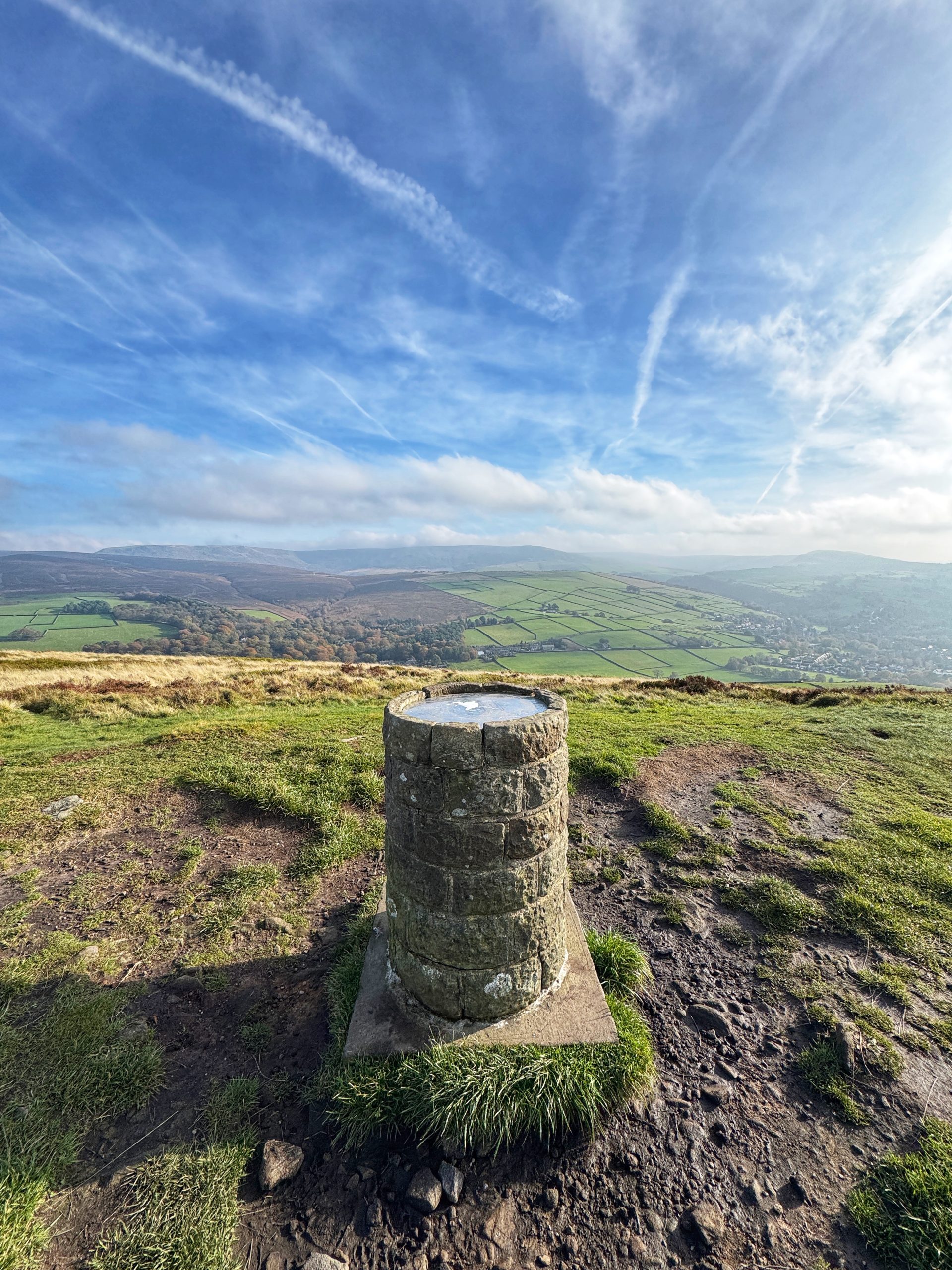
The road will take you to the very edge of the Peak District ready for an uphill climb to the peak of Lantern Pike.
It’s not a giant by Peak District standards (373m compared to Kinder Scout’s 636m) but the views are 360 degrees – fields on all sides and the incredible Manchester skyline in the distance.
Walk straight over the summit and down the other side, walking along the edge of Hey Wood and across fields full of friendly cows, past Little Hayfield and back into the main village of Hayfield.
Views from the Sett Valley trailSummiting Lantern PikePretty views near Little Hayfield
Here you’ll find The Pack Horse, a country pub that’s gained some serious accolades in recent years.
Famed for its seasonal, locally-sourced menu, at this time of year you can expect hearty post-hike lunches like sharing pies, Manchester eggs, and incredible Sunday roasts.
Despite a top-notch menu, the pub is more than happy to welcome in customers (and dogs) who are covered in mud – as all good countryside boozers should.
Sharing pie at The Pack Horse in HayfieldThe Pack Horse in HayfieldTheir famous Manchester egg
You can see a map of the circular walking route at AllTrails HERE.
Mercury Prize 2026 review: RAYE takes home the crown as Newcastle celebrates the very best in music
Clementine Hall
One of the biggest nights in music kicked off last night as the Mercury Prize 2026 was awarded.
If there was ever a night to fall head over heels in love with British and Irish music, the 2026 Mercury Prize made a very convincing case.
Bringing together some of the country’s most exciting artists under one roof in Newcastle, this year’s ceremony was a reminder of just how much talent is packed into the current music scene.
From established legends to the names shaping what comes next, it was an absolute belter.
Images: Audio North
Held at the Newcastle Utilita Arena for the second year running, I think everybody in that room felt very lucky to be there to see firsthand who took home the coveted prize.
The shortlist brought together an impressive mix of artists, with Florence + The Machine, Olivia Dean, JADE, Suede, Pulp, Dave and Sir Paul McCartney among the big names making the lineup very star studded indeed.
Suede kicked things off with ‘Dancing With The Europeans’, bringing their unmistakable energy to the ceremony, while Pulp delivered ‘Begging For Change’ as part of the HELP(2) charity compilation.
It was a line-up that demonstrated the sheer range of music being made across the UK and Ireland, from contemporary pop to established rock and even jungle thanks to Bradford’s own Nia Archives.
And of course, there was one woman who had every reason to leave with a smile on her face.
RAYE took home the coveted Mercury Prize for THIS MUSIC MAY CONTAIN HOPE., an ambitious, genre-hopping album that blends jazz, soul, R&B and classical influences into something so fabulously unique.
Image: Audio North
Newcastle’s own Knats performance was definitely a highlight of the evening, combining slick jazz with spoken-word poetry against a projection of The Tyne Bridge.
A fitting image, and one that underlines the importance of holding such huge events in the north and highlighting the obvious talent that thrives here.
The 2026 Mercury Prize was a brilliant showcase of the country’s music at its best.
And with RAYE taking home the trophy, it’s clear there is plenty of ‘hope’ left in British music.

 Harry Quick -
23rd August 2024