A total of 50 organisations have joined forces to back the launch of a new campaign targeted at preventing drownings in the UK.
After the latest figures have shown that 277 people sadly lost their lives in accidents in the water in the UK in the past 12 months alone, health and safety campaigners have come together today, on what is World Drowning Prevention Day, to launch the joint campaign – which is called Respect the Water.
Run by the National Water Safety Forum (NWSF), Respect the Water aims to reduce the number of water-related deaths and accidents, and looks to highlight the potential dangers of water, and encourage people to reconsider their actions and adopt safer behaviour.
“We want you to enjoy the water, but we also want you to recognise its dangers and never underestimate its power,” the NWSF explains of the campaign.
By 2026, the campaign is aiming to halve the number of people in the UK who accidentally die in the water each year.
ADVERTISEMENT
There may be a #heatwave at the moment, but the water is still cold. If you got into difficulty in cold water, would you know what to do? Your instinct is to thrash around, but cold water shock can make you gasp uncontrollably. Instead, #FloatToLive. pic.twitter.com/Ka26jYvFIU
The World Health Organisation (WHO) statistics estimate 235,600 people drown every year globally, and it is among the 10 leading causes of death for children.
More than 90% of drowning deaths occur in rivers, lakes, wells, domestic water storage vessels, and swimming pools in poorer countries – with children and adolescents in rural areas disproportionately affected.
The NWSF also explains that current drowning figures show a clear gender divide, with men accounting for the vast majority of those who die, so while it says the campaign is “primarily aimed at men”, the safety advice is just as relevant for anyone who finds themselves in difficulty in open water – both at the coast or inland.
The joint campaign has been launched as temperatures have been soaring across the UK as of late, and are set to continue over the summer, and also comes after two teenagers tragically lost their lives in separate incidents in Greater Manchester within the last two weeks alone – a 16-year-old boy in Salford Quays, and another 16-year-old boy in Dawber Delph quarry in Appley Bridge, near Wigan.
ADVERTISEMENT
As we approach the summer school holidays in parts of the UK, we are asking those visiting coastal areas to:
✓ Choose a lifeguarded beach ✓ If you're struggling in the water, #FloatToLive ✓ If you have children, teach them to float
— Canal & River Trust (@CanalRiverTrust) July 15, 2022
The 50 groups backing the campaign are nationwide – including the RNLI, HM Coastguard, the National Fire Chiefs Council, the Royal Society for Prevention of Accidents, the Royal Lifesaving Society, Swim England, Water Safety Scotland and Water Safety Wales.
“Contrary perhaps to popular imagination, most accidental drownings occur inland: 168 or 62% in 2021,” said a spokesperson for the Respect the Water campaign group.
“With all UK schools now out for summer, rivers, lakes, canals, flooded quarries and reservoirs are set to get increasingly busy, though many are perhaps unaware of the dangers that these cold, freshwater settings can pose, even when air temperatures are very high.”
277 people died after drowning in the UK in 2021, which is compared to 254 in 2020, and 233 in 2019.
ADVERTISEMENT
The RNLI encourages those who find themselves in difficulty in the water to float to “increase your chances of survival” / Credit: RNLI
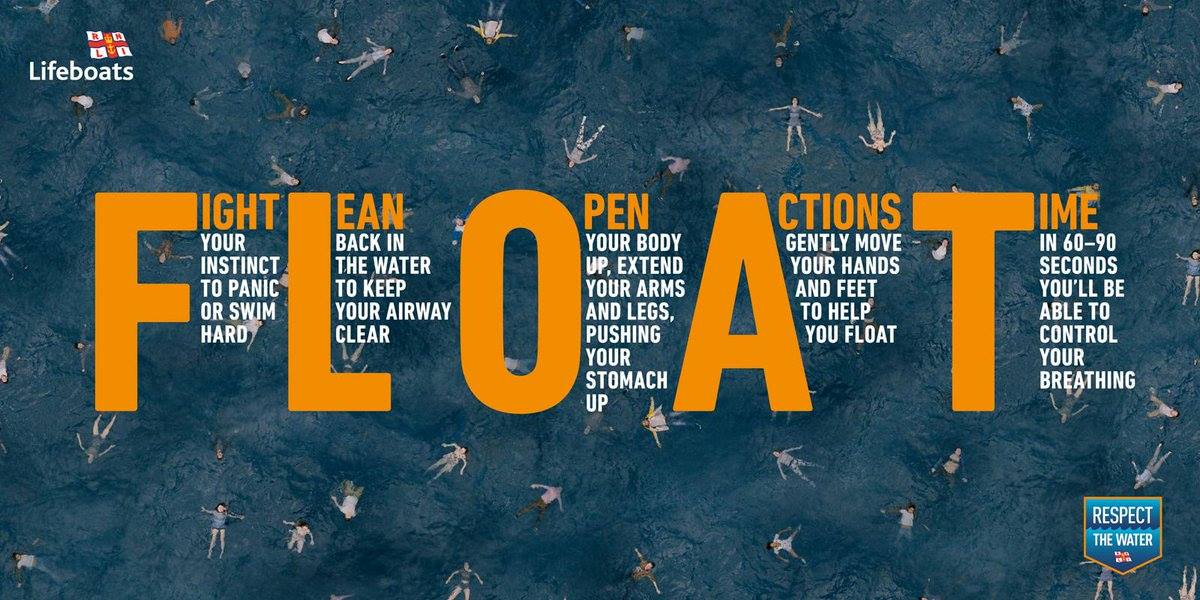
The RNLI and the Respect the Water campaign says there are “two simple skills” everyone should know that could save a life.
“If you find yourself in difficulty in the water, float to increase your chances of survival,” the RNLI says.
Fight your instinct to thrash around.
Lean back, extend your arms and legs.
If you need to, gently move them around to help you float.
Float until you can control your breathing.
Only then, call for help, swim to safety or continue floating until help arrives.
If you see someone else in trouble in the water, call 999 or 112 and ask for the Coastguard.
Victim named and murder investigation launched after young woman is killed in Newton Heath stabbing
Emily Sergeant
The victim of a street stabbing in Newton Heath this week has been named for the first time as a murder investigation continues.
It comes after officers from Greater Manchester Police (GMP) responded to reports of a disturbance at around 2am yesterday (Thursday 15 October) on Dorking Avenue, in the Newton Heath area of Manchester, and when they arrived on the scene, they found a woman in her 20s with serious injuries that were ‘consistent with a stabbing’.
Despite best efforts of all emergency services involved, the young woman was sadly pronounced dead at the scene.
As the murder investigation progresses, the woman has now been publicly named and a photo of her has been released for the first time.
She has been named as 26-year-old Alisha Samuels.
At this time, one man, aged 25, has been arrested on suspicion of murder, and a man and woman, aged 61 and 38, have been arrested on suspicion of assisting an offender, and they all remain in custody – with officers continuing their enquiries to establish the full circumstances of this incident.
Alisha’s family have asked for privacy whilst they deal with the devastating loss of their loved one, GMP has stated.
“We are continuing to urge people who may have information in relation to this incident to please come forward to support our investigation and bring justice for Alisha,” the police force said in a public appeal.
Anyone who may have witnessed the incident, or has mobile phone, CCTV, or doorbell footage, is urged to call GMP on 0161 856 5464, or contact them via the Major Incident Public Portal here.
Alternatively, you can contact Crimestoppers on 0800 555 111
Featured Image – GMP (Family Handout)
News
Former supply teacher jailed for multiple upskirting and AI sex offences across Greater Manchester
Emily Sergeant
A former supply teacher has been jailed for multiple upskirting and AI sex offences in schools across Greater Manchester.
Abusali Rahman – a British national of Bangladeshi ethnicity from Salford – appeared in Bolton Crown Court this week for his sentencing after first being charged with, and then pleading guilty to, several offences.
The offences are including, but not limited to, 12 counts of taking an indecent photograph/pseudo-photograph of a child (images obtained by upskirting), three counts of making indecent photograph / pseudo-photograph of a child (making AI-generated images), and one count of attempting to meet girl under 16 following sexual grooming.
The offences are alleged to have taken place between December 2023 and June 2025, according to Greater Manchester Police (GMP).
Twelve girls have been identified in relation to the upskirting offences – aged between 13 and 16 at the time of the alleged offending – at seven high schools in three Greater Manchester boroughs (Bury, Bolton, and Salford).
GMP says it has remained in close contact with the schools, local authorities, and other partners throughout the investigation to ensure all appropriate support is in place for those who need it.
Additionally, the court also heard how Rahman amassed a collection of images of young girls, using AI and other methods to sexualise them.
The images numbered more than 300 in total, ranging from Category A to Category C classifications, and Rahman would post these on social media, often alongside humiliating and disgusting captions.
Rahman was sentenced to six years in prison, and will also be subject to a 20-year Sexual Harm Protection Order.
A former supply teacher has been jailed for child sex offences in schools across Greater Manchester / Credit: GMP
Detective Constable Lisa McGaffin, from GMP’s Bolton Child Protection Team, described Rahman’s crimes as ‘absolutely abhorrent’.
“My thoughts throughout this process have always been with the young girls who have been subject to such indignity,” DC McGaffin said following the sentencing this week. “Their welfare and support will always be a priority for us.
“While working as a teacher – someone who young children should trust and be safe with – Rahman repeatedly took secret photos for his own sick gratification, before posting images online which showed his total disregard for the girls’ respect and dignity.

 Emily Sergeant -
25th July 2022
Emily Sergeant -
25th July 2022