Rapper Big Zuu has grown quite a reputation as a foodie personality, receiving rave reviews with his new ITV series Big Zuu’s 12 Dishes in 12 Hours.
So when he teamed up with the prestigious Conde Nast Traveller to share a list of the best restaurants in Manchester, expectations were high.
Most of us expected him to dig out some authentic little local gems – and he did almost exactly the opposite.
Big Zuu’s favourite restaurants have been labelled by fans as, quite bluntly, ‘bulls**t’.
So where did he think was worthy of a place on his top five restaurants? Was it the Michelin-approved independents like The Sparrows or the newly-Bib-Gourmand Higher Ground, or cosy local favourites like Erst or Bar San Juan? Yeah, not exactly.
ADVERTISEMENT
Instead, Big Zuu has chosen a selection of mostly chain restaurants, with a couple of actual Manchester businesses chucked in for good measure. Though he calls the city ‘Mani’ the whole way through which is a little controversial.
At the top of his list comes San Carlo, the Italian restaurant group that you can find in several major UK cities at this point.
ADVERTISEMENT
Big Zuu said it’s his favourite place to go before a night out, stating that it’s ‘big and extravant but not very expensive’.
The grime star and TV personality also said that his favourite dish to order at San Carlo is the half-and-half pizza.
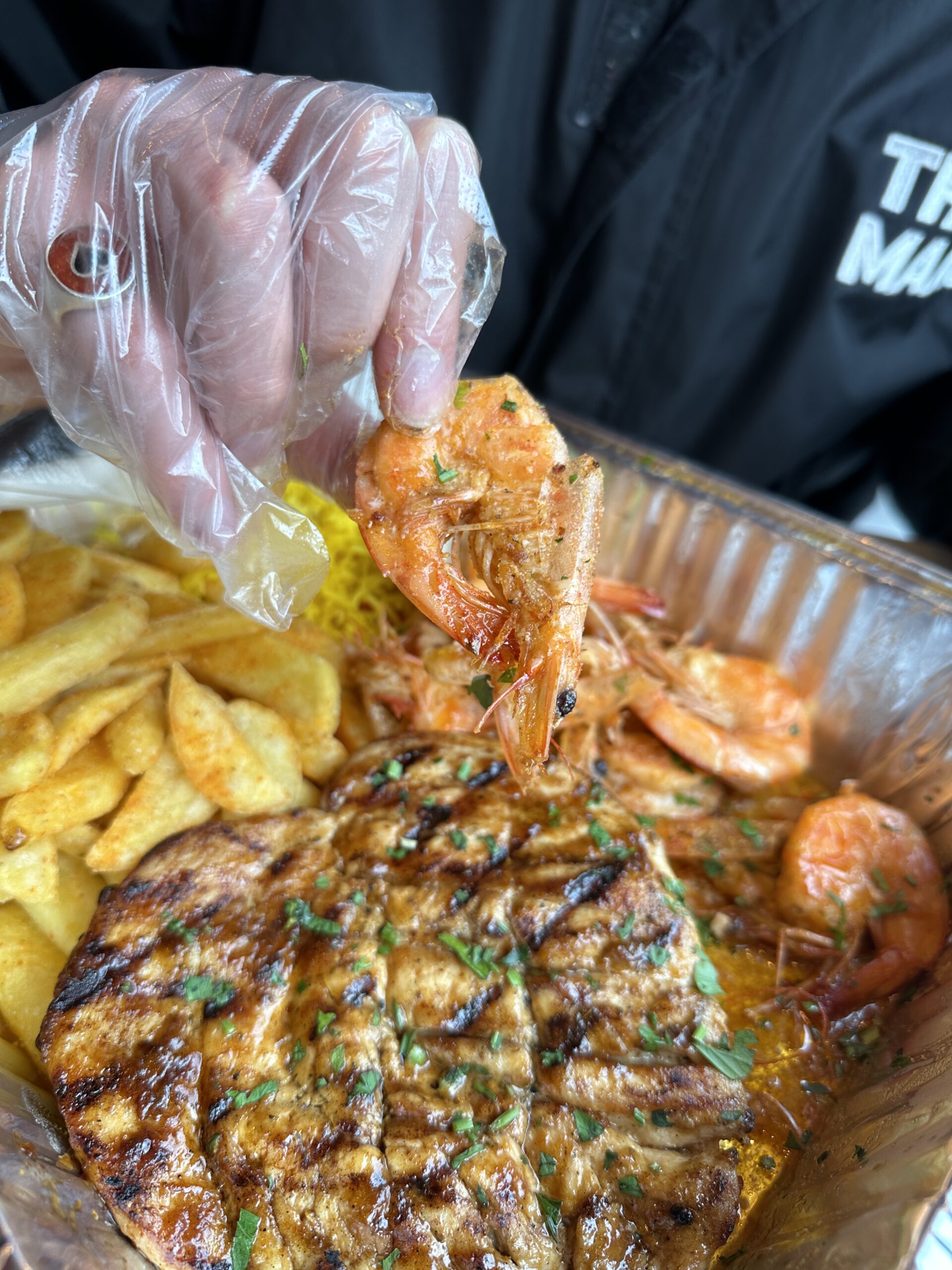
Next up? Jimmy’s Killer Prawns, which to be fair is a fun place to eat if you don’t mind wearing latex gloves and a plastic bib – but doesn’t exactly scream authentic Manchester to us.
ADVERTISEMENT
Big Zuu said he hasn’t actually visited the Liverpool Road restaurant, and prefers to order his mountains of prawns for delivery, and said ‘it’s great value – you just can’t go wrong’.
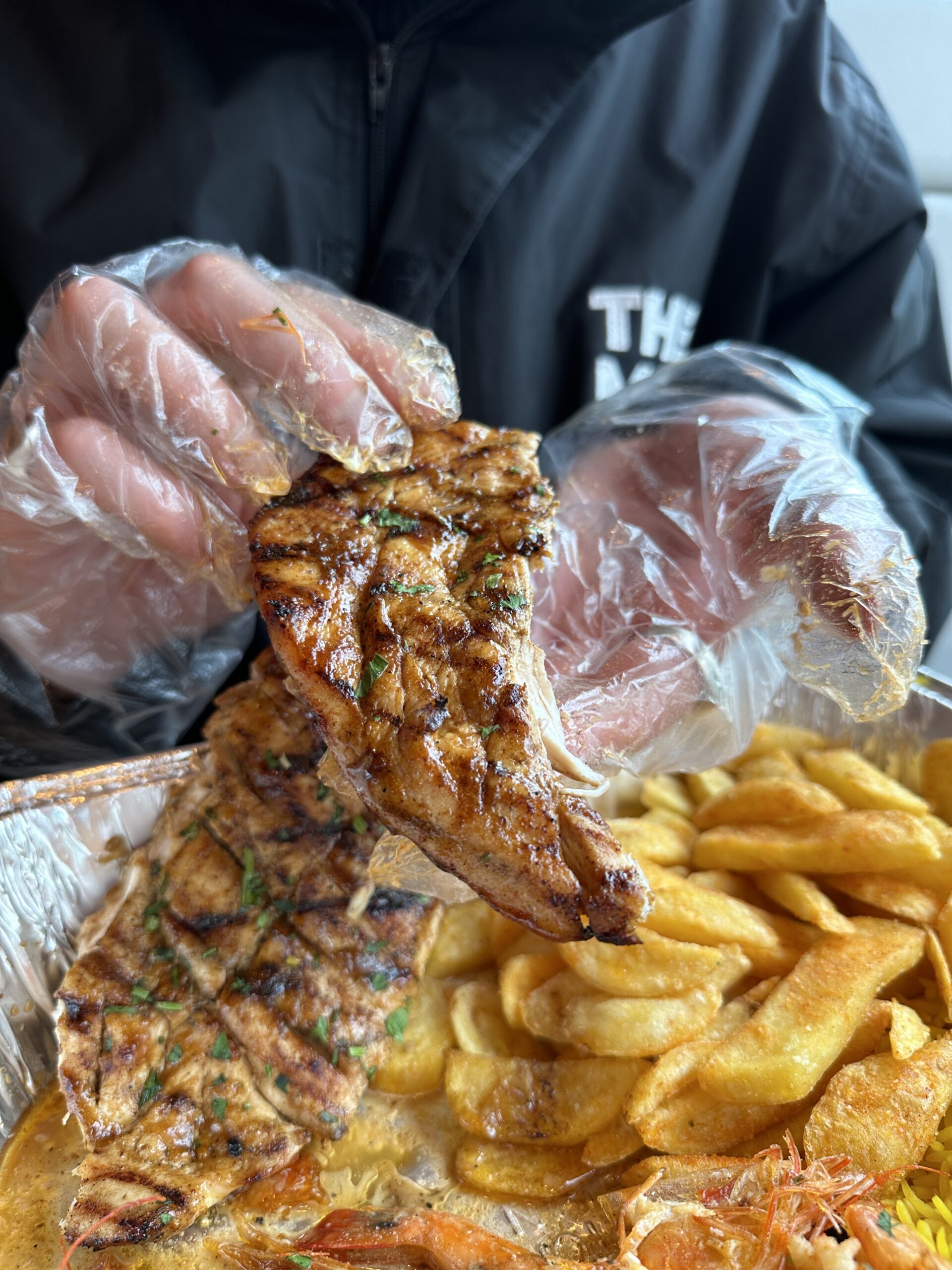
Jimmy’s Killer Prawns was listed as one of Big Zuu’s favourite restaurants in ManchesterJimmy’s Killer Prawns was listed as one of Big Zuu’s favourite restaurants in Manchester
He also listed Dishoom, an Indian group that started down in London but has indeed become of Manchester’s most popular restaurants since opening on Bridge Street in 2018.
Our site of Dishoom its ‘own flavour’ apparently, and Big Zuu raved about the daal and naan bread.
He said: “I’ve got a real soft spot for the Manchester one. It’s big and a little bit easier to get into. I love the décor: it’s in a beautiful building, with beautiful architecture” – and no one could argue with him about that.
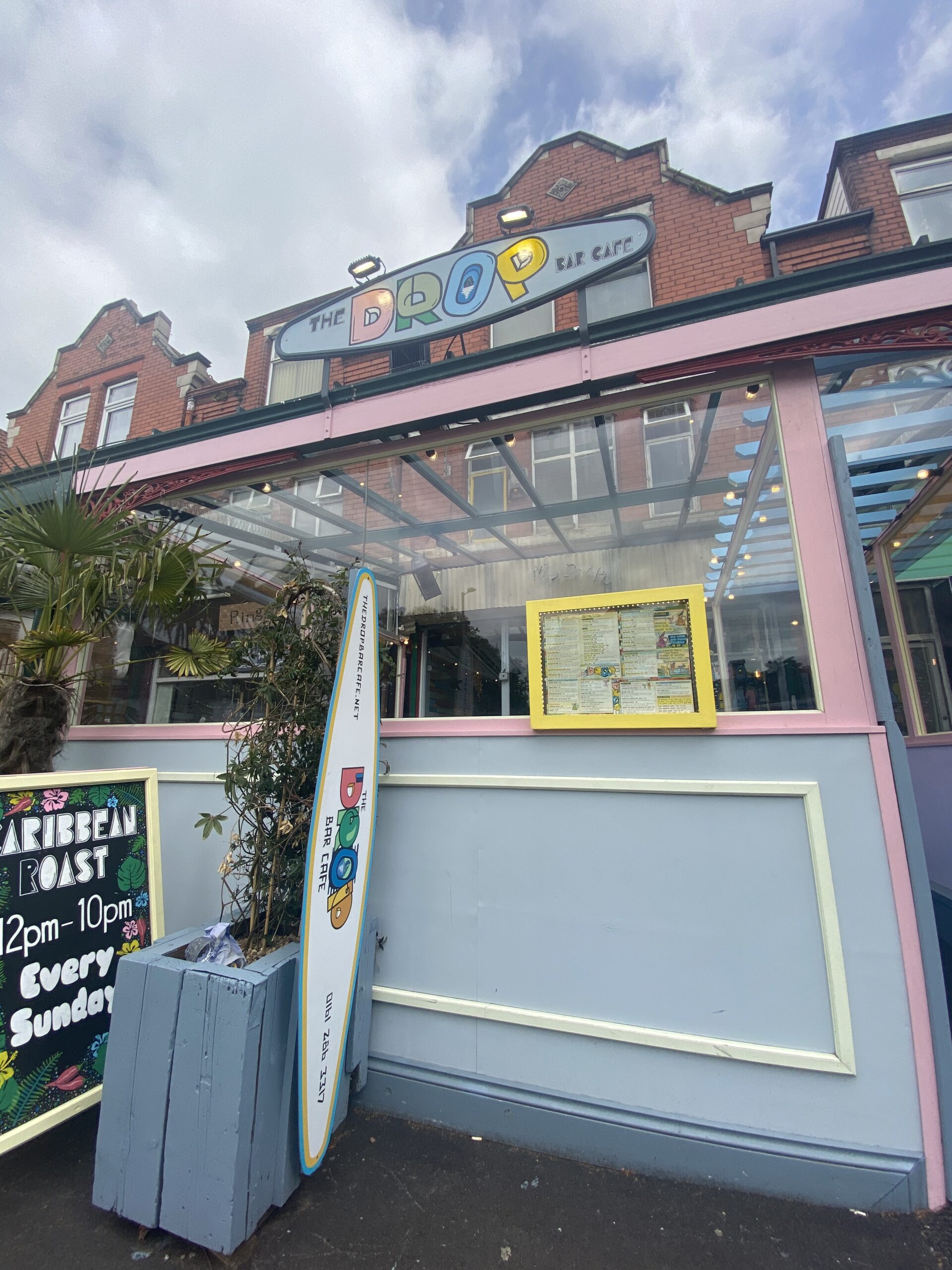
Big Zuu gave a shout-out to Chorlton’s The Drop Bar Cafe, a Caribbean restaurant famed for its ‘Hench Boxes’.
ADVERTISEMENT
He said: “Most places people go to in Manchester are in the city centre, but this is out near Old Trafford, so this is a bit out there.”
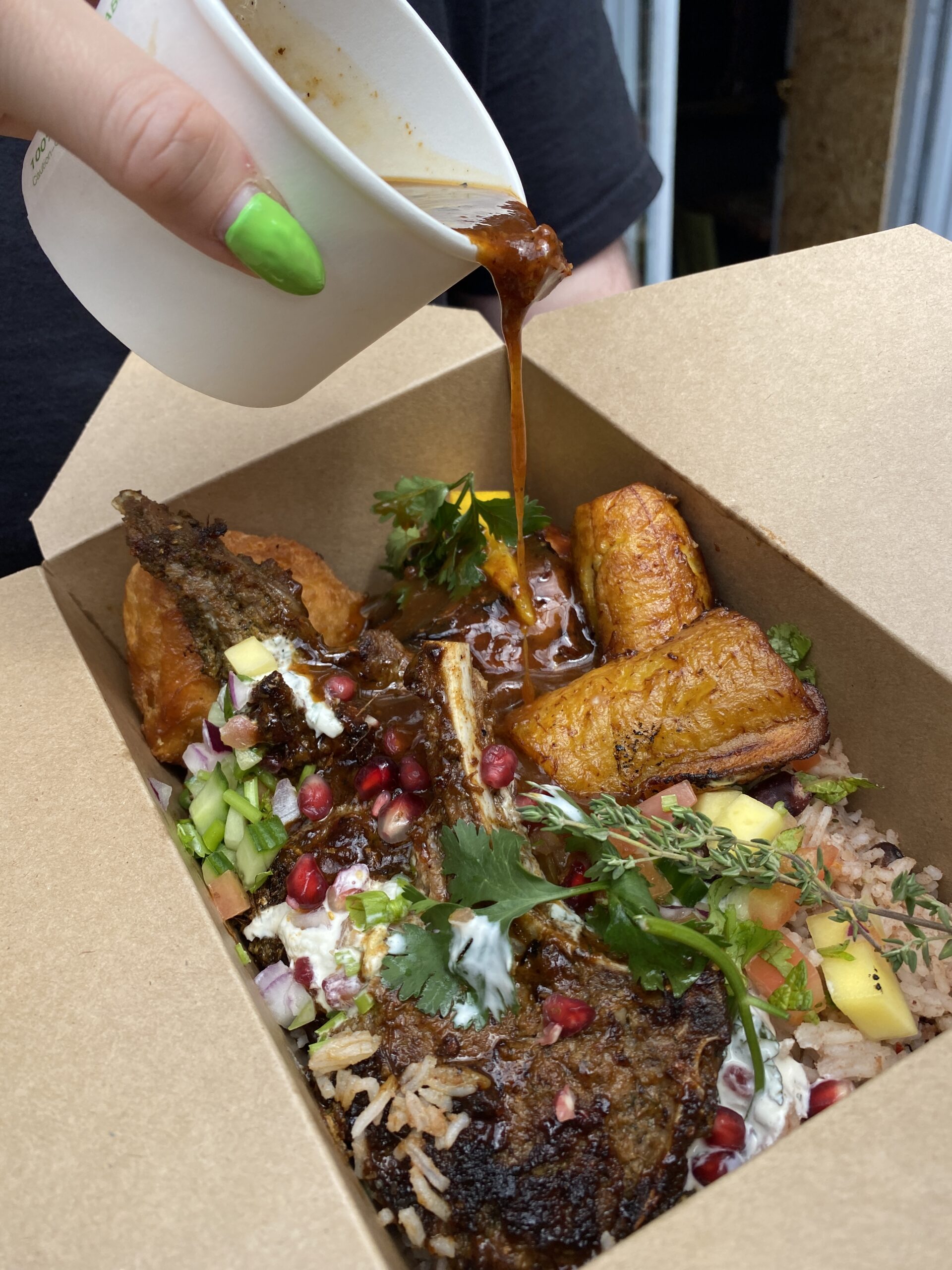
The Drop Bar Cafe in Chorlton is also one of Big Zuu’s favourite restaurants in ManchesterThe Drop Bar Cafe in Chorlton is also one of Big Zuu’s favourite restaurants in Manchester
Big Zuu continued: “They do a Caribbean Sunday roast and it’s just so good. You can get everything you want – lamb, chicken and all the usual sides like coconut rice with peas and fried plantain. And there is an epic ‘reggae roast,’ which is jerk chicken with things like mac ‘n’ cheese and the ‘veggie rasta roast,’ which is toasted pumpkin.”
And his final pick went to Chai Latte Cafe on Stevenson Square in the Northern Quarter, which he said ‘may not be the best in the universe’ but is good after a night out when you’re ‘starving’.
Siri, show me a bigger back-handed compliment.
Since sharing Big Zuu’s insights on social media, Conde Nast Traveller has received a fair few comments questioning his choices.
ADVERTISEMENT
One person asked on Instagram: “Is this a joke?”
Another said: “When you have chain restaurants in a guide to the BEST a city can offer… I think we know its a bulls**t guide! Thank you, next.”
Someone else posted: “I doubt that in the city with one of the coolest food scenes the top 5 restaurants are almost all chain restaurants…”
And another wrote: “This is a wack list and nobody calls it ‘Mani’”
And one final cynic shared: “This looks like the restaurants w the biggest PR budget.”
Plans unveiled to deliver 50,000 council and ‘genuinely affordable’ homes in Greater Manchester
Emily Sergeant
Plans to deliver 50,000 council and ‘genuinely affordable’ homes in Greater Manchester have been unveiled.
By removing ‘blockers’ to development and transforming disused public land into new housing schemes, Greater Manchester Mayor Bev Craig has set out her plan to tackle the housing crisis and deliver ‘a new generation’ of homes – with 50,000 new ‘genuinely affordable’ homes to be available across the city region by 2039.
It’s expected that 10,000 of these homes will either be built, on site, or in the pipeline with planning permission ready to go by May 2028.
To meet the scale of this ambition and deliver the homes the region needs, Greater Manchester Combined Authority (GMCA) says it will need to ‘pull every lever at [its] disposal’, from remediating brownfield land, to bringing forward dormant sites in public ownership.
That’s why the Mayor will be asking Greater Manchester‘s public bodies to carry out a public land review and identify sites that could be brought forward to deliver homes.
GMCA has already used its Brownfield Housing Fund to support several schemes that are delivering thousands of affordable homes – including social rent homes – as part of the £2 billion Good Growth Fund.
If you’re unfamiliar, the Good Growth Fund is investing in a pipeline of projects to deliver new homes, regenerate town centres, create jobs, and build infrastructure to connect people and places.
“When I was Manchester City Council Leader, I built more council and social homes than Manchester had built in 25 years,” Bev Craig declared. “But we need to go further and faster in every bit of Greater Manchester.
“We will be leading by example when it comes to freeing up disused and dormant public land for development and I’m calling on other Government bodies to join us.
“I know first-hand the security that a Council house brings, and that’s why I am absolutely committed to delivering the Council and social homes that people here in Greater Manchester need, so everyone can have the foundation of a good life in our city region.”
Currently, land supply for 78,585 new homes of all tenures up to 2030 has been identified.
Greater Manchester is in line to receive an initial £1.8 billion from the Government’s Social and Affordable Homes Programme, and the Mayor will meet with Government in the coming weeks to set out joint plans to achieve these ambitions.
Featured Image – Benjamin Elliott (via Unsplash)
News
Government sets out multi-million-pound plan to move UK away from animal testing in science
Emily Sergeant
A £22m push to ramp up the UK’s move away from animal testing in science is set to bring together cutting-edge tech and research.
The latest figures show there were 2.54 million animal testing procedures in Great Britain in 2025, which is down 3.8% on 2024, but with a further update due to be released later this year, the Government is now moving to ‘capitalise’ on that momentum with funding to shift the nation onto alternative testing options.
A dedicated national research hub and nine new high-tech projects are planned to develop ‘better ways’ to test medicines on human biology rather than animals.
According to the Government, this means treatments for conditions like cancer and inflammatory bowel disease (IBD) could be developed ‘faster’ and ‘more precisely’ to not only help patients but crucially also move science away from traditional animal testing.
At the heart of the plans is a new Pre-clinical Translational Models Hub – based in Cambridge and backed by £20 million in Government funding, which will work to build and share models of human tissue, grown from NHS patients, to test new treatments.
The new hub will accelerate the development of testing on ‘organoids’ – tiny, simplified versions of a human gut, tumour or brain, using cells donated by patients.
From beating heart cells in a dish to AI that can predict how drugs move through the body, exciting alternatives to animal testing are transforming medical research.
We're investing £22m to help scientists develop the next generation of life-saving treatments. pic.twitter.com/1EWRQvwySa
— Dept. for Business, Innovation, Science and Trade (@biztradegovuk) August 12, 2026
Because these ‘organoids’ retain crucial features of a patient’s own biology, they will help researchers learn how a real person may respond to a drug and provide additional insights that can complement information that is currently obtained from animals.
Scientists will then be able to use these cutting-edge techniques in their own labs to work out which medicines are worth pursuing.
Overall, it’s hoped that the move will slash the time it takes to get ‘potentially life-changing’ treatments to market.
Alongside the funding for the new Hub, nine cutting-edge projects aimed at identifying new methods of animal-free scientific testing – from beating heart cells in a dish, to lab-grown human ear models, and AI that predicts how medicines move through the body – are being funded.
Sadly, many of these still rely on testing on dogs and monkeys, as it stands.
“This marks another significant step forward in the UK’s move away from animal testing in science and research,” commented Science Minister Chris McDonald.
“This is all about backing our world-leading researchers and innovators to improve lives, giving them the tools they need to deliver more effective treatments for horrendous diseases like cancer, while also preventing the need for animal testing wherever possible.
“It’s also a boost for our life sciences sector, fuelling opportunities for new investment and new jobs, and ensuring Britain is better off.”