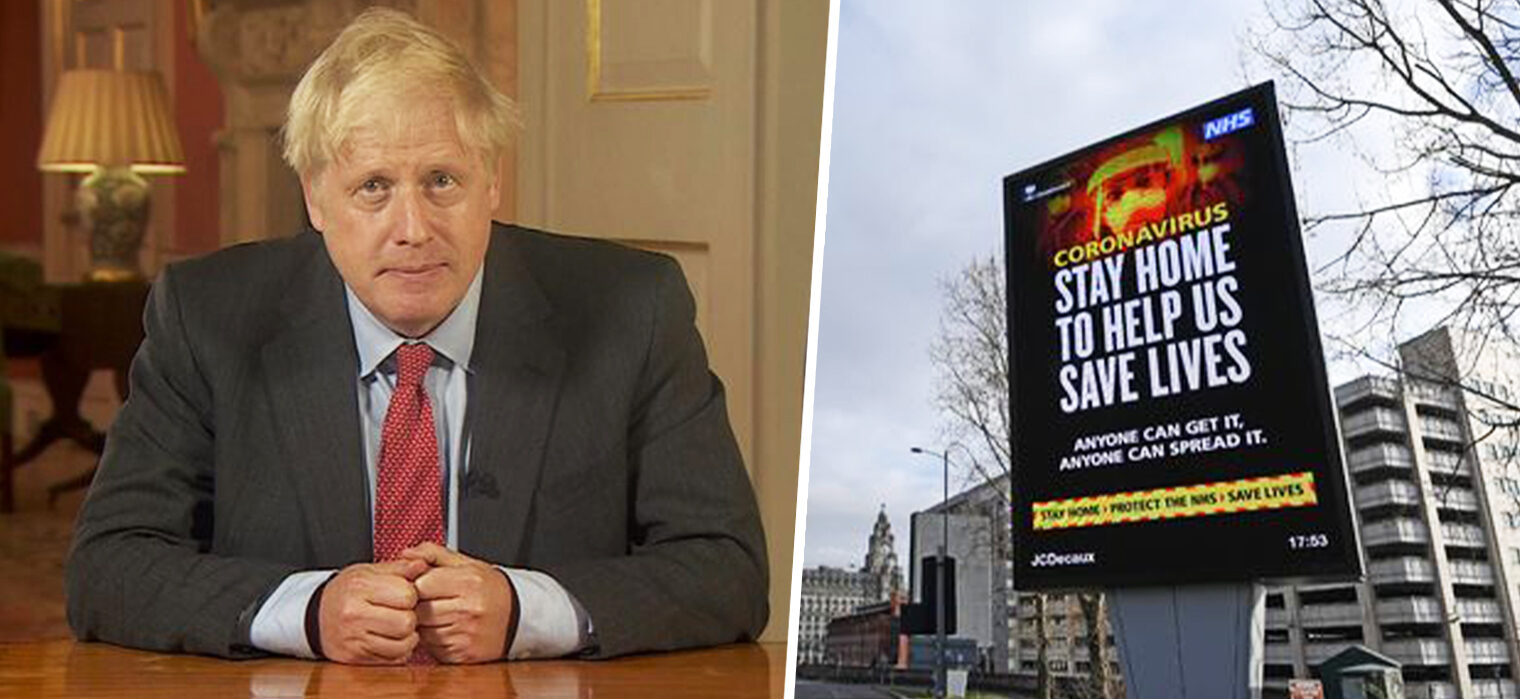
A new set of tougher national restrictions are to be imposed across the whole of England following the recent rise in coronavirus case numbers, Boris Johnson has confirmed.
The Prime Minister outlined the measures in a televised address from Downing Street on Monday evening (January 4), calling the spread of the new variant “frustrating and alarming”.
Under the new rules, people should not leave their homes for any reason except for essential purposes (such as shopping, medical needs, or exercising with one other person).
People should work from home unless they cannot do so.
The clinically vulnerable should shield again.
ADVERTISEMENT
Primary and secondary schools will close immediately and move to online learning for all pupils except children of key workers and the most vulnerable.
Higher Education provision will remain online until mid February for all except future critical worker courses.
ADVERTISEMENT
BREAKING: @BorisJohnson confirms National Lockdown in England until mid Feb.
Johnson had warned of stricter rules just hours prior to his evening speech; telling press there was “no question” of tougher measures during his visit to a hospital administering the Oxford/AstraZeneca vaccine.
Whilst Johnson vowed the government would “do everything we can to keep the virus under control”, he also admitted there would be “tough, tough” weeks ahead in the UK’s fight against COVID-19.
First Minister Nicola Sturgeon previously announced a nationwide lockdown in Scotland would come into force from midnight tonight, with a legal requirement to “stay at home”.
ADVERTISEMENT
Labour leader Sir Keir Starmer on Sunday had demanded a national lockdown in England within 24 hours.
Mr Starmer responded to the announcement urging the need to “get the virus under control, protect the NHS and create the space for the vaccine to be rolled out as quickly as humanly possible”.
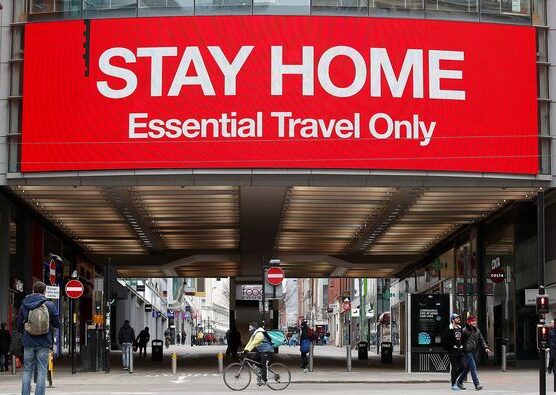
The new restrictions come as it was confirmed the UK recorded 58,784 new coronavirus (COVID-19) cases today – the highest daily total since the start of the pandemic.
It is the seventh day in a row that there have been more than 50,000 daily cases.
Government figures also showed there have been 407 more deaths in the past 24 hours.
ADVERTISEMENT
The UK’s coronavirus alert level is also being raised from 4 to 5 for the first time since the system was set out in May of last year.
Level 5 or “red” means there is a “material risk of healthcare services being overwhelmed”, compared to Level 4 when transmission of the virus is “high or rising exponentially”.
The COVID-19 alert level refers to the threat of the epidemic, and is separate from the tiering system in England.
The House of Commons will sit from 11.30am on Wednesday in order to hear a statement from Mr Johnson and to debate public health regulations, with Speaker Sir Lindsay Hoyle adding: “As per my advice on the previous recall, I would strongly urge you NOT to physically come to Westminster to participate in any business unless absolutely necessary due to the current severe public health situation”.
___
ADVERTISEMENT
For the latest information, guidance and support during the coronavirus (COVID-19) pandemic in the UK, please do refer to official sources at gov.uk/coronavirus.
#StayHome
News
Police arrest another man in connection with Manchester synagogue terror attack last year
Emily Sergeant
Another man has been arrested this week in connection with the attack on a synagogue in Manchester last year.
In case you need a reminder, the shocking knife and car attack took place on 2 October 2025 on Yom Kippur – the holiest day in the Jewish calendar – at the Heaton Park Hebrew Congregation Synagogue, and during the incident, two men sadly lost their lives during the attack – Adrian Daulby, 53, who was shot dead by Greater Manchester Police (GMP) while trying to stop the attacker from entering the synagogue, and Melvin Cravitz, 66, a worshipper who also helped stop the attacker.
The attacker was named as 35-year-old Jihad al Shamie – a 35-year-old British citizen of Syrian descent who lived in Prestwich – who at the time was on bail for an alleged rape, before being shot dead by police.
Yesterday evening (Tuesday 26 May 2026), officers from Counter Terrorism Policing North West, alongside GMP, executed a warrant at an address on St James’ Road in Higher Broughton.
A 49-year-old man has been arrested on suspicion of failing to disclose information regarding terrorist activity, contrary to S38B of the Terrorism Act 2000, and he has been taken into custody for questioning.
Another man has been arrested in connection to the Manchester synagogue terror attack / Credit: Google Maps | GMP
This brings the total number of people arrested in connection with the incident to eight.
That number includes a 30-year-old man arrested on suspicion of failing to disclose information regarding terrorist activity, contrary to S38B of the Terrorism Act 2000, who still remains under investigation, and a man who has since been charged with terrorism offences that are not directly linked to the attack.
“We remain unwavering in our commitment to establishing the full picture behind the attack and getting answers for those affected, including the local community,” commented Assistant Chief Constable Rob Potts, who holds operational responsibility for Counter Terrorism Policing North West.
“We are prepared to take swift, firm action where we suspect criminal offences may have occurred.
“Our investigation is continuing, and I would once again urge anybody who may have information that could assist us to please contact police.”
Featured Image – GMP
News
Met Office dishes on how long heatwave’ll last as yesterday was hottest May day on record
Emily Sergeant
The Met Office has given us an idea of how long this current heatwave may last.
It comes after a new UK temperature record was broken yesterday, as it reached 34.8°C at the weather station in Kew Gardens – with the figure being both the highest daily maximum temperature recorded in meteorological spring (March, April, and May), as well as the highest temperature in May all together.
The previous record of 32.8°C was reached in 1922 and 1944.
If confirmed and validated, and May sees a new official daily temperature record, it would mean that more than half of the monthly record highs – seven out of 12 – have been set since 2003.
Today has been the hottest day in May on record with Kew Gardens provisionally reaching 34.8°C – exceeding the previous highest May temperature in the UK by a full 2 degrees Celsius🌡️
This heat would be exceptional in the UK even in mid summer, let alone in May📈 pic.twitter.com/d8boJYgaXJ
But what exactly is considered to be a heatwave? Well, heatwave conditions in the UK are met when a location records a period of at least three consecutive days with temperature values meeting or exceeding the heatwave temperature threshold for that location.
Looking ahead to the rest of the week, and providing the public with an indication of how long these temperatures could last, Met Office weather forecasters say the start of the week will see the heatwave continue for much of England and Wales with temperatures ‘well above average’, and today (Tuesday 26) expected to be another ‘very hot day’ with a rapid rise in temperatures through the morning.
The heat will then continue through the week, with highs of 31°C forecast for Wednesday, 30°C on Thursday, 27°C on Friday, and 28°C on Saturday.
“We’ve now provisionally broken the spring and May temperature record,” commented Met Office Chief Operational Meteorologist, Dan Suri.
“Meteorologically, what we’ve seen is the influence of warmth building under an area of high pressure near the UK allowing exceptional heat to build allowing maximum and minimum temperatures to reach levels not previously reported at this time of year.
“Further heat is in the forecast for much of England and Wales, with similar temperatures forecast for Tuesday.
“High pressure is forecast to gradually lose its influence later in the week, though maximum temperatures will still remain high and in the low 30°Cs for some mid-week and high 20°Cs late this week.”