Brits have now donated more than £100 million to a fundraising campaign providing aid to refugees fleeing Ukraine.
With the conflict continuing to rise and as the Russian invasion of Ukraine said to be “turning lives upside down”, a group of 15 UK charities last week launched a government-backed fundraising appeal – known as the Disasters Emergency Committee (DEC) – to club their efforts together to provide aid to those fleeing what is being described as one of the most “heartbreaking” situations the charities have “ever seen”.
The impressive £100 million total – which has been accumulated over four days since the launch of the appeal – is said to include “generous” donations from the Queen, the Prince of Wales, and the Duke of Cambridge, as well as hundreds of thousands of members of the British public.
The amount raised is equivalent to more than £1 million per hour.
The DEC said the funds are already being used by charities in Ukraine and at its borders to give people food, water, medical assistance, protection and trauma care.
The British public has helped raise £100 million in just four days to support the DEC Ukraine Humanitarian Appeal – the equivalent of more than £1 million an hour!
The DEC said the funds are already being used by charities in Ukraine and at its borders to give people food, water, medical assistance, protection and trauma care.
ADVERTISEMENT
“This amazing show of support for people fleeing the conflict has meant that we have been able to start spending money straight away to help more people,” said Jo Kitterick, head of supporter engagement at the Catholic Agency for Overseas Development – which is one of the charities involved in the committee.
“I want to thank everyone who has donated to help us support them in their moment of greatest need,” she added.
Ms Kitterick said the charities part of the committee are currently setting up safe centres with beds, food and washing facilities inside Ukraine and on its borders.
ADVERTISEMENT
Transport, information, psychological support, and child-friendly spaces are also being provided.
The Disasters Emergency Committee (DEC) was set up amid growing concern for civilian welfare following Russia’s invasion of Ukraine after it was estimated that up to four million people could flee Ukraine due to the conflict.

Brits have now donated more than £100 million to the DEC providing aid to refugees fleeing Ukraine / Credit: DEC (via Twitter)
The DEC said that people fleeing Ukraine are in desperate need of food, water, medical assistance and protection.
Many refugees are being forced into hiding to stay safe.
“The majority crossing the borders are women and children arriving with only what they can carry,” the DEC added.
ADVERTISEMENT
Giving an insight into the current situation from the perspective of someone on the ground, Andrew Morley – chief executive of World Vision International, who has recently returned from Siret on the Romanian border – explained: “We support children in countless crises across the world, including those I have recently visited such as Syria and the DRC, but I have never seen a more heartbreaking situation.
“All the children I met were crossing the border in tears, with pain and fear in their eyes.
“They were lost and scared.
“They need the basics, simple, practical help [and while] our staff have been present in this area for decades and there on the ground to deliver it, we need financial support to do this.”
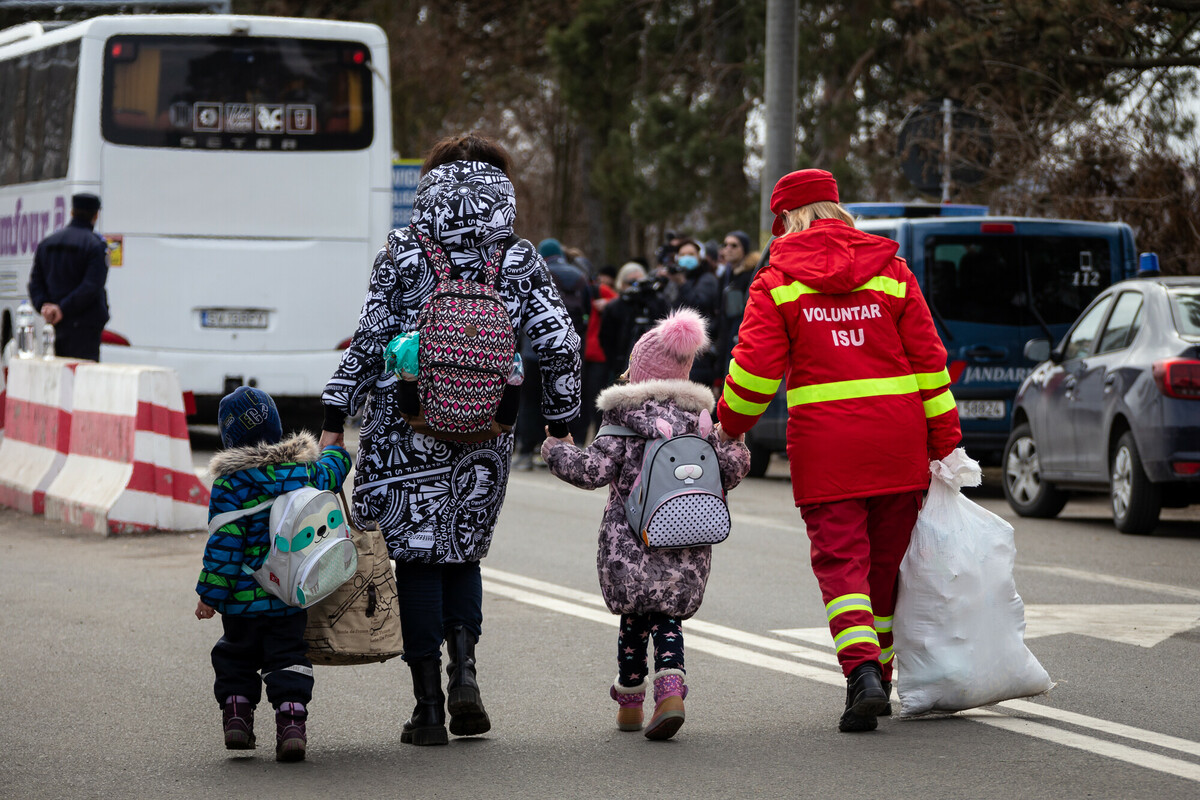
The DEC said that people fleeing Ukraine are in desperate need of food, water, medical assistance and protection / Credit: DEC (via Twitter)
The DEC’s 15 member charities are – Action Against Hunger, ActionAid UK, Age International, British Red Cross, CAFOD, CARE International UK, Christian Aid, Concern Worldwide UK, International Rescue Committee UK, Islamic Relief Worldwide, Oxfam GB, Plan International UK, Save the Children UK, Tearfund, and World Vision UK.
ADVERTISEMENT
Appeals for public donations to the committee are currently being broadcast on various UK news channels, with every pound donated by the British public set to be matched by the government up to the value of £20 million.
The DEC has stressed that monetary donations are needed as opposed to specific items, which are often challenging to transport and not always relevant.
You can find more information and donate via the DEC here.
The simple hack that can save healthcare workers and teachers money on their holidays
Danny Jones
With cost-of-living pressure ever-present in the background of most everyday lives, finding some spare pennies for a getaway feels more difficult than ever, and if there’s anyone who deserves discounts on a holiday, it’s healthcare workers.
That’s why, when we became aware of the simple hack that can save those working in healthcare services money on holidays, we thought we’d help spread the word.
We’re sure lots of you working within the sector already know plenty about this booking strategy, but for anyone who doesn’t, how do you fancy saving up to half a grand on your next jolly?
In fact, even those working in education can cut their costs, too.
With searches for ‘holiday voucher code’ up by 73% on Google, and even the likes of TikTok seeing ‘money saving tips’ up by 45%, travel agency TUI have decided to team up with the Health Service Discounts platform for 2026.
Providing those who work for the NHS with a ‘Holidays for Heroes’ (HfH) access code on various popular peak-season trips, this exclusive discount can be added on top of all other seasonal TUI deals, including the company’s ‘First Choice’ package holidays.
With the HfH code alone guaranteeing workers an extra £100 off their bookings, play your cards right, and you could get up to £500 in total discounts overall.
How to access the healthcare ‘Holidays for Heroes’ deal
Separate from standard Blue Light card savings, here’s how it works, and don’t worry, it’s all very simple:
As mentioned, education workers can also benefit from similar money off, with an extra £50 per person through the TUI x Discounts for Teachers partnership, as well.
Ella Foden-Lynch, Partnerships Manager for TUI, said in a statement: “Getting away is absolutely vital for wellbeing, especially for those working in high-stress healthcare and education roles.
“With the cost-of-living crisis still putting a strain on household budgets, we know how hard it is to stretch your pay to cover a much-needed family break. By unlocking these exclusive TUI deals, we hope to give our key workers the realistic recovery time they deserve without the financial worry.”
So, for those of you healthcare heroes and teachers looking for a well-deserved break, we urge you to find an affordable holiday that suits you very soon. With cheaper airport pints also inbound later this year, here’s hoping you save even more spends for when you’re away.
New ‘cutting-edge’ cancer treatment to be rolled out on NHS from next week
Emily Sergeant
A new ‘cutting-edge’ cancer treatment is set to be rolled out on the NHS from next week.
Thousands of men with prostate cancer are to be offered high-powered ‘precision’ radiotherapy on the NHS to target the disease more effectively – helping reduce side-effects and spare them 15 courses of treatment.
The highly targeted SABR (stereotactic ablative radiotherapy) delivers radiotherapy to the tumour from many different directions to help reduce the risk of cancer spreading or returning.
SABR has been proven to be effective at far fewer doses than conventional radiotherapy.
Standard radiotherapy can often be a major burden for patients and loved ones, due to the substantial treatment and travel time involved, but SABR is typically delivered in just five doses within a fortnight, compared to at least 20 doses with external beam radiotherapy.
Thousands of men with prostate cancer are to be offered high-powered ‘precision’ radiotherapy on the NHS to target the disease more effectively, helping reduce side-effects and spare them 15 courses of treatment.
Around 17,500 men are diagnosed with low or intermediate risk prostate cancer in England each year and could be offered the option of SABR radiotherapy.
It is expected that the cutting-edge technique for localised prostate cancer will be offered at all 48 radiotherapy providers across England in the coming days – with the first centres making it available on the NHS from next week.
The roll-out could free up around 50,000 appointments for prostate cancer treatment each year, helping the NHS continue to bring down waiting times for patients.
NHS chief executive, Sir Jim Mackey, said the news will ‘transform’ treatment for thousands of men with localised prostate cancer.
“This cutting-edge approach will transform treatment for thousands of men with prostate cancer, helping the NHS provide far more powerful and convenient care to stop their cancer spreading,” Sir Mackey commented.
“Having been proven effective in keeping cancer under control, this technology will not only help reduce the risk of certain side effects but also the major ‘to-and-fro’ burden of hospital treatment, which can be really draining for so many patients and their families.”