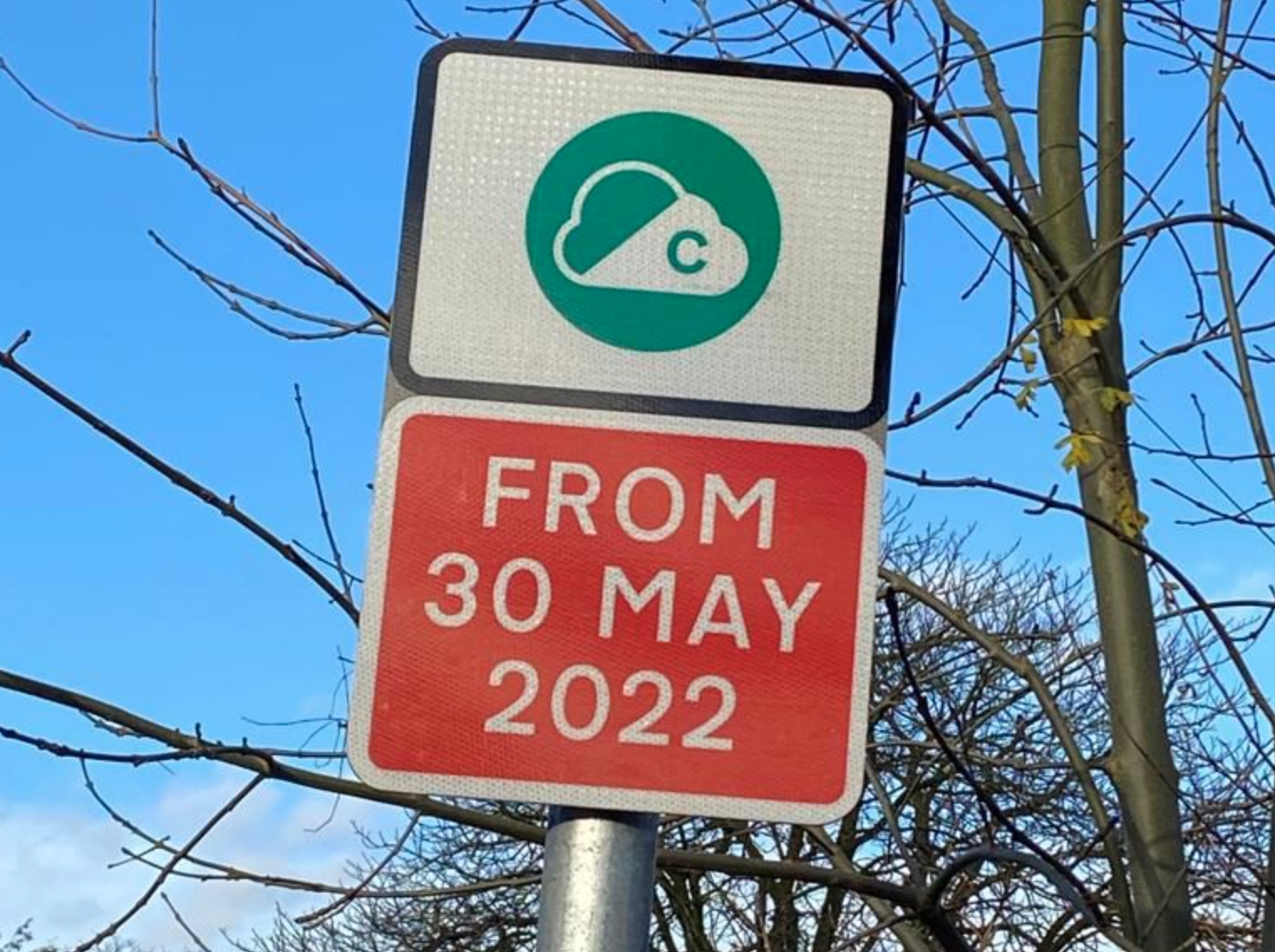
The cost of covering up over 1,000 out-of-date Clean Air Zone (CAZ) signs in Greater Manchester with stickers saying ‘under review’ has now been revealed.
After leaders in Greater Manchester raised “fundamental concerns” that certain global and national factors may “impact on the ability” of local businesses and individuals to upgrade their vehicles, and questioned whether the current support package agreed with government of £120 million would be sufficient, the controversial scheme was paused, has now been delayed, and will not go ahead on the original start date of 30 May 2022.
Greater Manchester Combined Authority (GMCA) said that “emerging evidence” from businesses and trade highlighted significant challenges related to supply chain issues and inflation, and they also pointed to the money needed for taxis, vans, minibuses, and coaches.
Overall, there were concerns that the introduction of the scheme could create “financial hardship” for commercial vehicle users in the region.
With the deadline for the scheme now pushed back to 2026, this therefore meant that 1,194 out of the 1,309 installed CAZ signs across the region needed to be amended, as they read the original start date.
ADVERTISEMENT
1,194 out of the 1,309 installed CAZ signs across the region needed to be amended due to saying the wrong start date / Credit: Twitter (@FSBManchester)
While it was confirmed at the start of this month that stickers reading ‘under review’ would be placed over all the road signs, it was revealed that this would not be covered by the original £3 million contract for signage, and would require extra funding – however, no expected cost figures were announced at the time.
It’s now been confirmed that this work will cost £186,000.
ADVERTISEMENT
This six-figure sum was revealed in a report published ahead of a Greater Manchester Air Quality Administration Committee meeting this week, and confirms that all of the costs associated with the Clean Air Zone in Greater Manchester – including the stickers – are funded by the government.
Councillors on the committee will begin the process of reviewing the evidence and options for a revised scheme when they next meet.
Since the committee last met, Greater Manchester’s council leaders and Mayor Andy Burnham have agreed that all CAZ charges should be scrapped, with Mr Burnham calling on the government to introduce a ‘non-charging’ scheme, which would help fund vehicle upgrades rather than charge road users.
National Lottery hunts for Tameside player who’s not claimed £1m winnings
Daisy Jackson
The hunt is on to find a National Lottery player in Tameside who’s won £1m – and not claimed it.
The missing millionaire won the huge prize on a Lotto ticket bought on Wednesday 1 July, somewhere in the Borough of Tameside.
But with just two months to go until the prize expires, the player has still not come forward to claim their winnings.
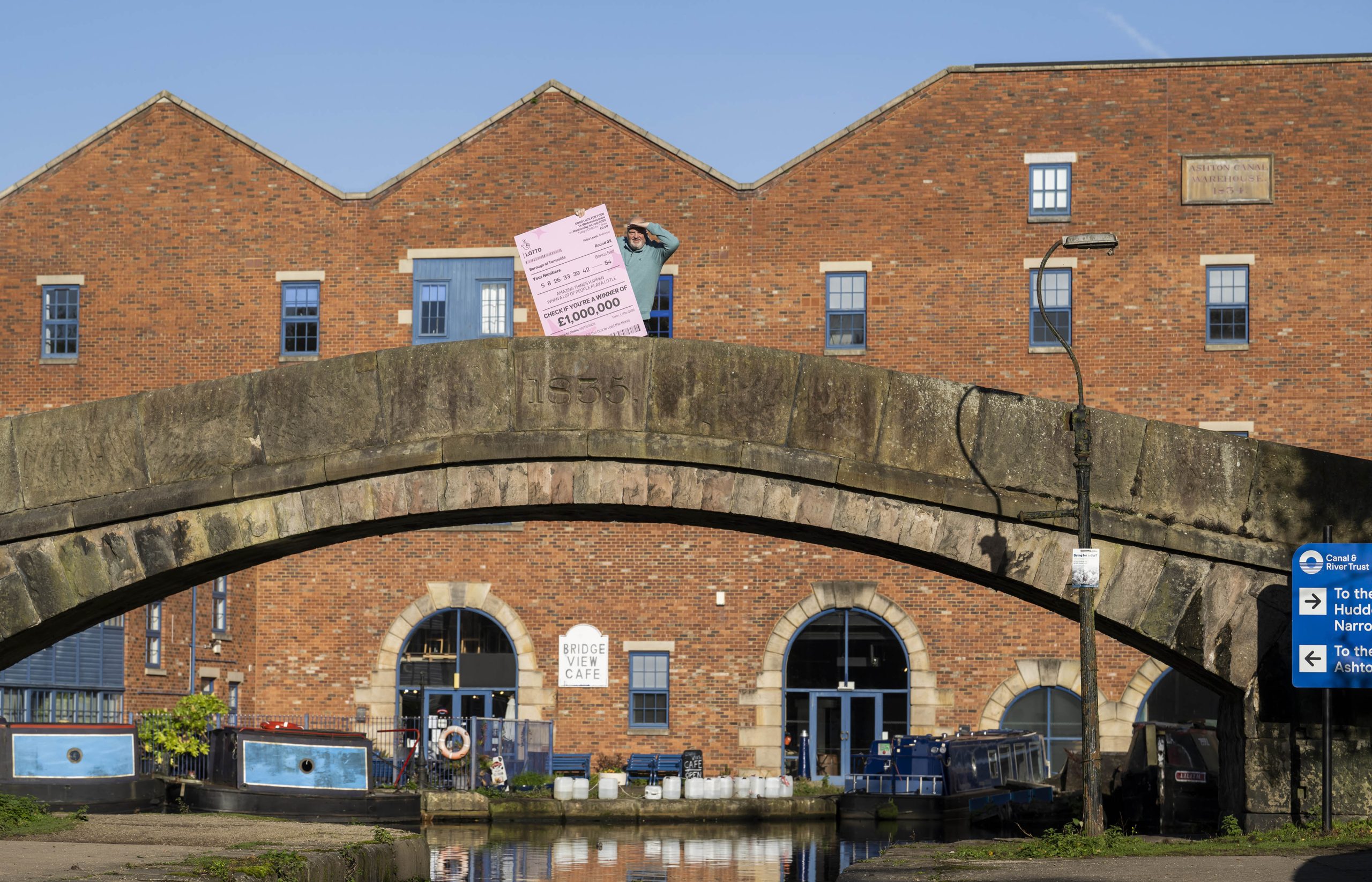
The winning numbers in were 5, 8, 26, 33, 39, 42 and the Bonus Ball was 54.
Now, the National Lottery is renewing its search for the millionaire, calling for the mystery winner to cash in their prize before it expires at midnight on 28 December.
National Lottery Senior Winners’ Advisor Andy Carter has been out in Tameside ‘hunting’ for the missing millionaire, visiting everywhere from Portland Basin to Hartshead Pike.
Andy said: “I’ve searched high and low across Tameside for our missing millionaire, but I’ve had no luck.
National Lottery hunts for Tameside player who’s not claimed £1m winnings. Credit: Anthony Devlin/Assignments/Press Association
“With just two months left to claim this £1 million prize, now is the time for anyone who bought a Lotto ticket in Tameside for the 1 July draw to have another look.
“The winning ticket could be tucked away somewhere completely ordinary, while its owner has absolutely no idea they are a millionaire.
“We’d love to find the person we’ve been looking for and turn this search into a celebration. So, if you bought a ticket in the area, dig it out, check those numbers and help us find Tameside’s missing millionaire. It could be you.”
With all National Lottery draws, players have 180 days from the day of the draw to claim their prize if they have the winning ticket. Anyone who has any queries or who believes they have the winning ticket for any of the National Lottery draws within the 180-day deadline should call the National Lottery Line on 0333 234 5050 or email [email protected].
Featured image: Supplied – Anthony Devlin/Assignments/Press Association
News
Public urged to call the police if they see this wanted man
Daisy Jackson
Cheshire Police are appealing for the public’s help in tracing a wanted man with links to Macclesfield and Alsager.
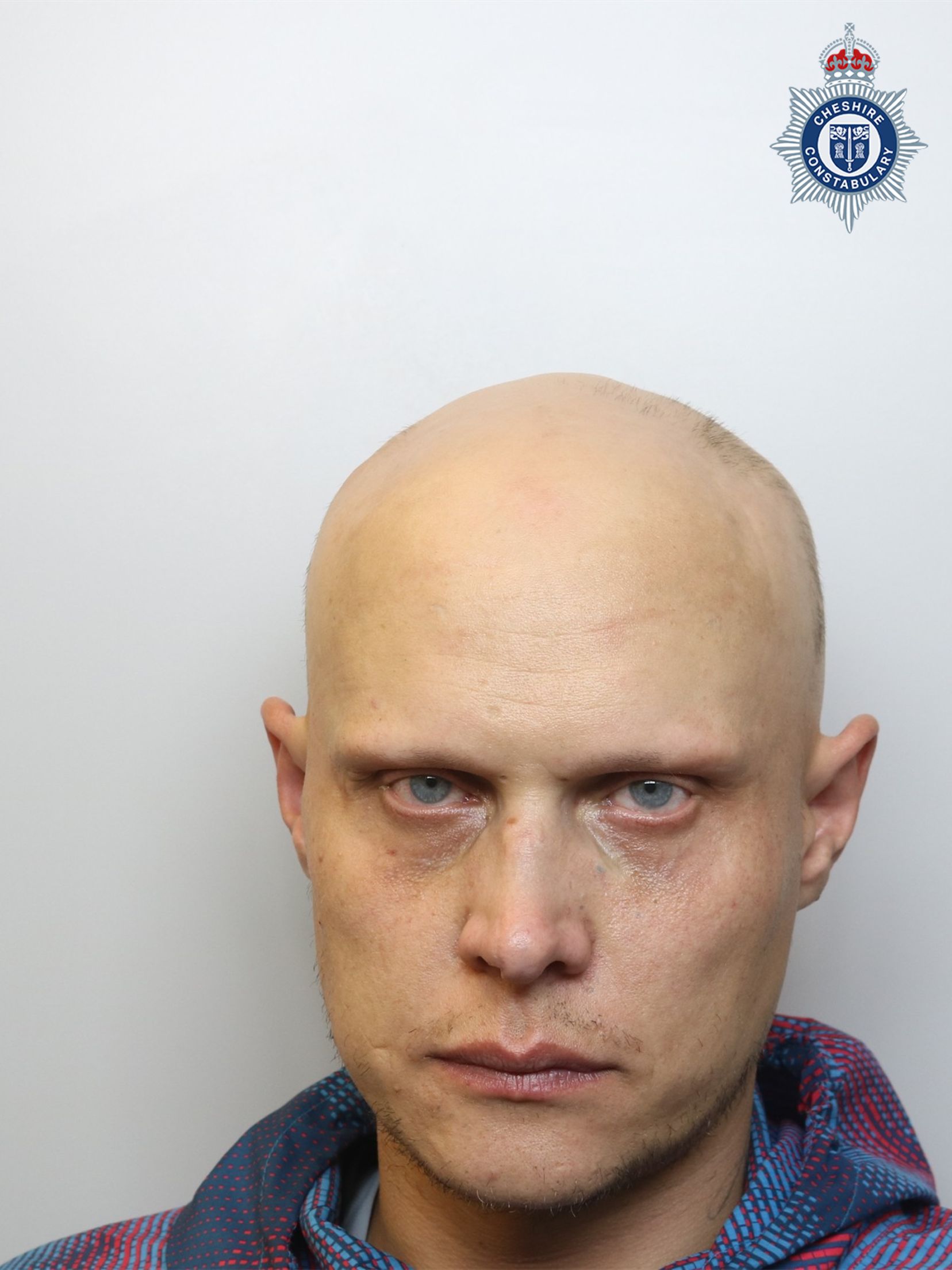
Joshua Wyatt, 34, is wanted on recall to prison, and officers are urging anyone who has seen him or knows of his whereabouts to come forward.
Wyatt is described as being 183cm (6ft) tall and of medium build, with a bald head and blue eyes.
Police believe he has links to both Macclesfield and Alsager.
Anyone who sees Wyatt or has information about where he may be is asked to contact Cheshire Police on 101 or report information via the force’s website.
Information should be provided quoting reference number 26000809013.

 Emily Sergeant -
21st March 2022
Emily Sergeant -
21st March 2022