A major project that will deliver a 100-mile-plus network connecting Manchester’s parks, squares and waterways has been unveiled – and it includes impressive floating walkways.
The first steps for the CyanLines mega project have been unveiled today, including the first four routes which will link the likes of Mayfield Park, New Islington Marina, Castlefield Viaduct and Kampus.
The ambitious plans will also link lesser-known pocket parks, canal tow paths, and pedestrianised walkways, and will incorporate new planned outdoor spaces such as the Science Museum courtyard and the former Central Retail Park.
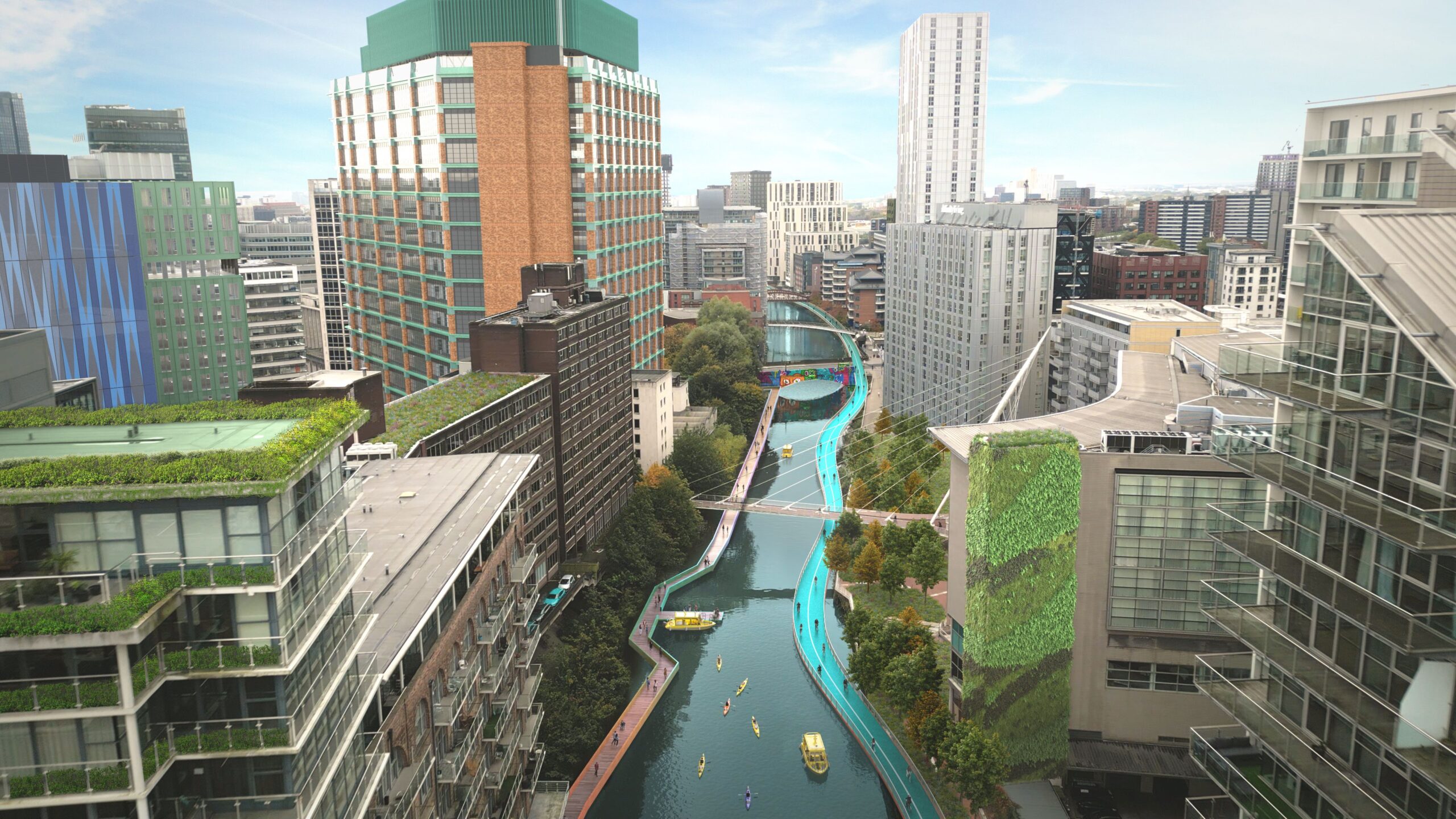
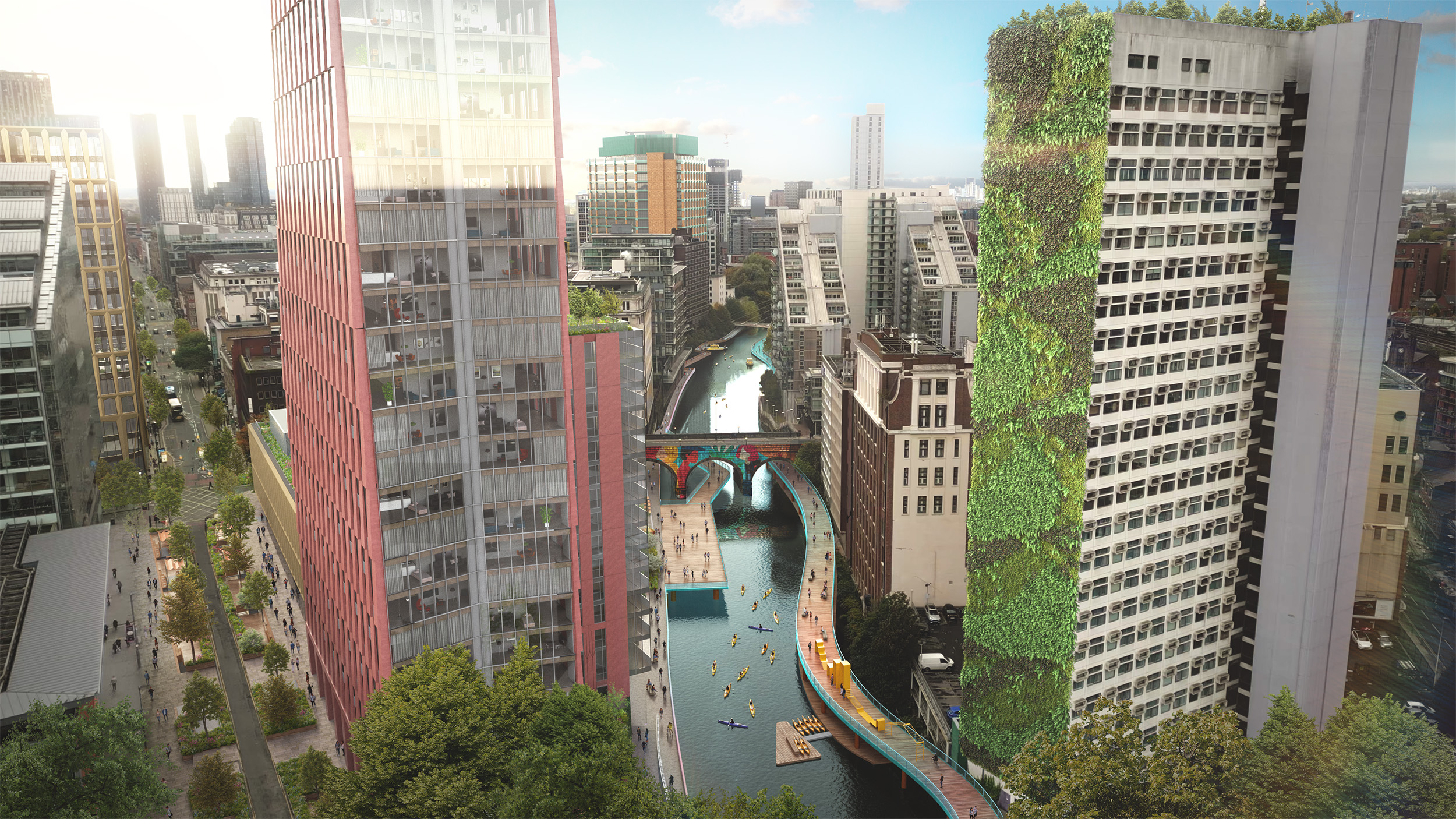
One particularly eye-catching proposal will be a new floating walkway across the middle of the River Irwell, complete with a canoe dock and storage area.
The plans will adapt to Manchester’s ever-expanding cityscape and will link up new and existing developments, providing green walking and cycling routes around town.
ADVERTISEMENT
Manchester and Salford City Councils have already worked together and secured funding from the National Trust, Natural England, and the National Lottery Heritage Fund’s Nature Towns and Cities programme.
There are four CyanLines pilot routes – the first being a 5km ‘Irk Valley Explorer’ that will link Chethams Library and the Glade of Light memorial, Angel Meadows, the under-development City River Park, and the Barney’s Steps made famous by LS Lowry, ending with a view of the city skyline.
ADVERTISEMENT
Then there’s the Mayfield, New Islington and Ancoats Loop, which will connect together Mayfield Park, the Ashton Canal, the Central Retail Park which is being transformed into a campus for the UK Government, New Islington Marina, Ancoats Green, and all the way down to leafy Kampus.
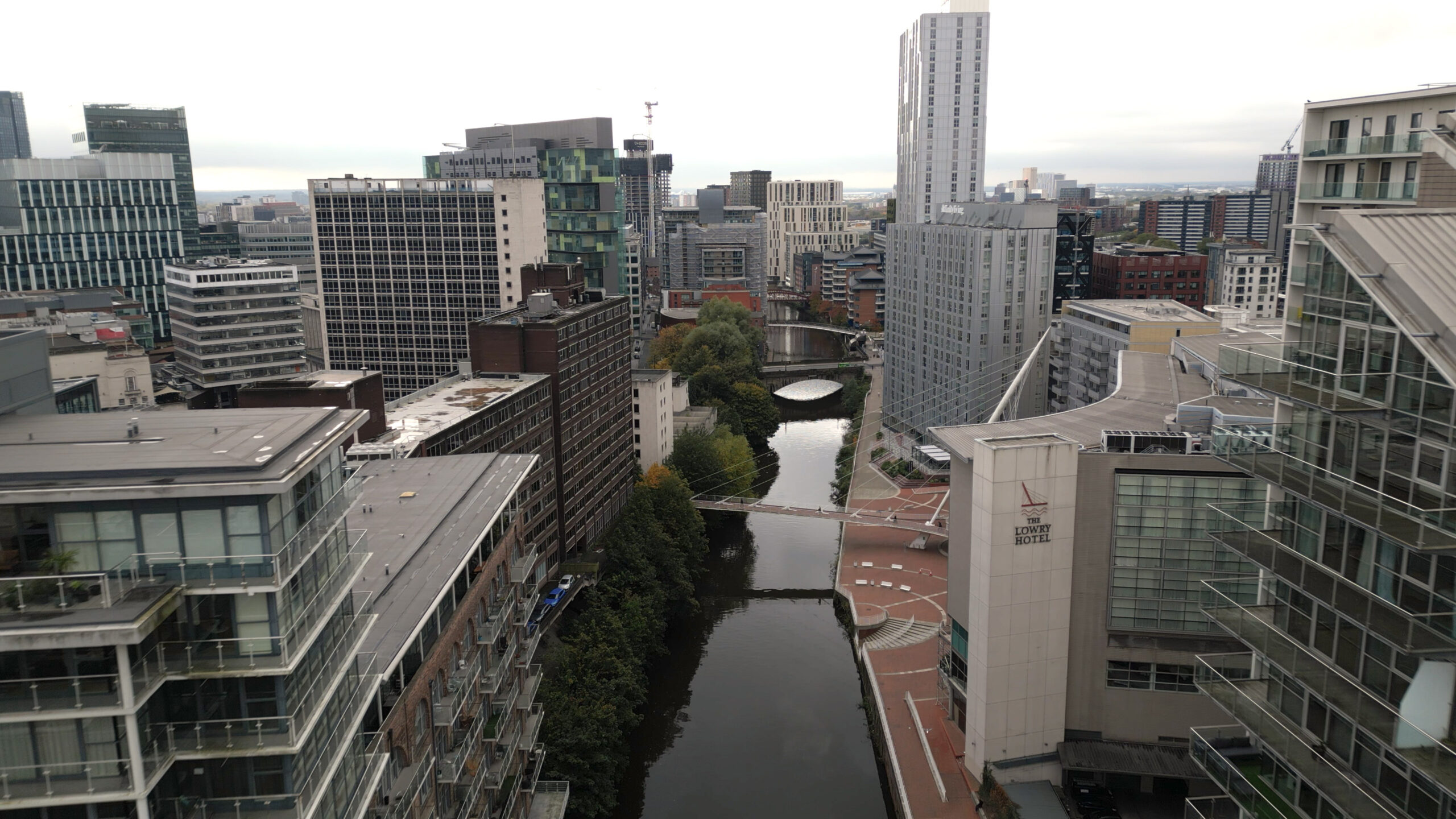
How the River Irwell could look with the CyanLines routes in placeHow the River Irwell looks currently
CL3, otherwise known as the ‘Walking the knowledge corridor’, incorporates significant landmarks like the Emmeline Pankhurst statue, our historic canal network, the Palace Theatre, Symphony Gardens, the universities, Manchester Museum, and Whitworth Art Gallery.
And the final of the four pilot routes is the CL4, focused around the almighty Castlefield Viaduct but also joining the Bridgewater Canal into Salford and the Irwell River Park, as well as the gardens around Chapel Street, Greengate Park, and the River Irwell itself.
ADVERTISEMENT
Councillor Bev Craig, leader of Manchester City Council, said: “Manchester is on a mission to make our city greener, investing in new parks and green spaces including the likes of Mayfield, Ancoats Green and the Castlefield Viaduct, in addition to our work to celebrate and open up our rivers and canals. We are a city with exciting, and transformational plans for the future. .
“But there’s more that we can do together. CyanLines is a bold new initiative over the next decade to imagine and create over 100 miles of connected parks, green spaces and waterfronts.
“This is just the start of CyanLines and I urge residents, business owners, community groups and leaders to join us on this very exciting journey to truly transform our city.”
Tom Bloxham MBE CBE, CyanLines project co-founder and chair, Urban Splash and founding Chair Manchester International Festival (MIF) and Factory International said that the same ambition that grew MIF will be applied to CyanLines.
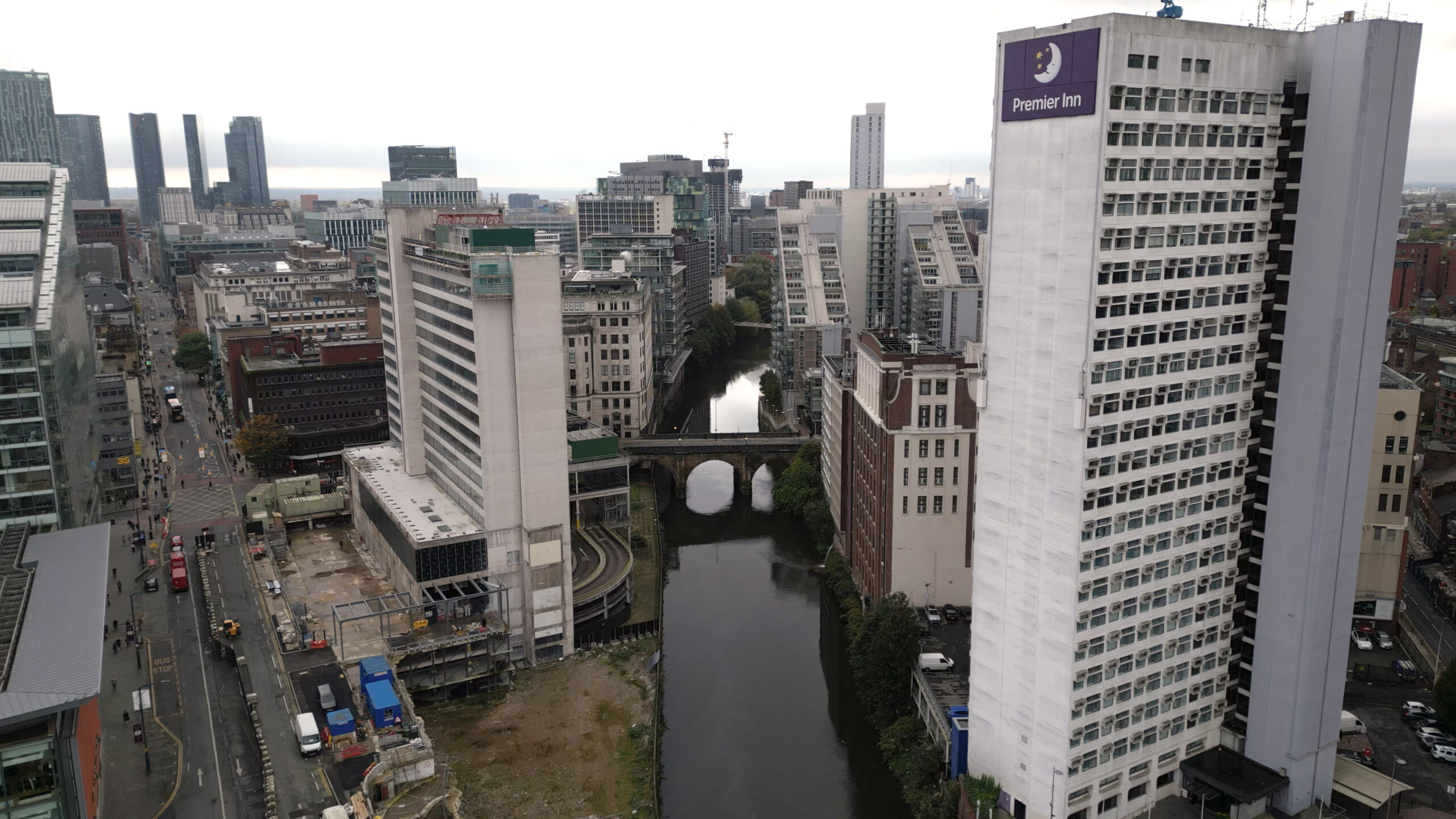
More before-and-after images of the CyanLines pilot plans
He said: “We want to bring the whole city along with us, to help us plan, fund and deliver CyanLines. No idea is too big, too ambitious, too audacious or too small or too straightforward.
ADVERTISEMENT
“Everyone wants more green space. Everyone wants to be able to walk to the end of Castlefield Viaduct. Everyone wants to be healthier and happier.
“Imagine more species and drifts of plants and wildflowers and allotments in the city centre and being able to walk one or 100 miles of continuous paths linking all our amazing spaces. Together we can make it happen!”
Pete Swift, CyanLines project co-founder and CEO of Planit said: “The first four CyanLines provide so much more than walkable and wheelable connections linking the existing and planned excellent green and blue spaces across the city, to bring us all closer to nature and nature closer to us.
“The routes will be the starting point, or spring board, for a whole plethora of CyanLines projects which will bring new opportunities for nature to thrive and to be enjoyed.
“The ambition for CyanLines does not stop at Manchester and Salford city centres. It will ultimately link up all Greater Manchester’s boroughs to bring our citizens and communities closer to nature and help drive a greener, healthier, and inclusive future. From Dunham Massey in the south, to Northern Roots in Oldham; from Leigh via RHS Bridgewater, Media City on to the foot of the Pennines.”
ADVERTISEMENT
Mike Innerdale, regional director North of England, National Trust said: “National Trust are firm supporters of CyanLines, not least because its core aim mirrors our own of ensuring more people have access to nature particularly in our towns and cities, and to bring nature to people’s doorsteps wherever they live.
“We recently announced we have secured the majority of the £3 million of funding for the Castlefield Viaduct which will allow us to bring Phase 2 of this iconic sky park project to life, enabling us to create a through route at the heart of the city. We look forward to working with the CyanLines team and other partners as both our projects advance, connecting Castlefield viaduct with the other wonderful spaces in Manchester and Salford city centres.”
Scheme approved and date set for work to begin on Piccadilly Gardens transformation
Emily Sergeant
The long-awaited Piccadilly Gardens transformation is a go.
It’s official – planners have given the green light for the scheme to transform Piccadilly Gardens, with Manchester City Council having received no objections to the proposals which meant that officials were able to approve the full planning application without it needing to be considered at next month’s Planning Committee.
The decision means that preparation works can continue at pace, ready for the main works due to get underway this autumn.
In case you aren’t up to date with the Piccadilly Gardens transformation plans, the idea is, in a nutshell, to put the ‘Gardens’ back in Piccadilly Gardens.
But what exactly does this mean?
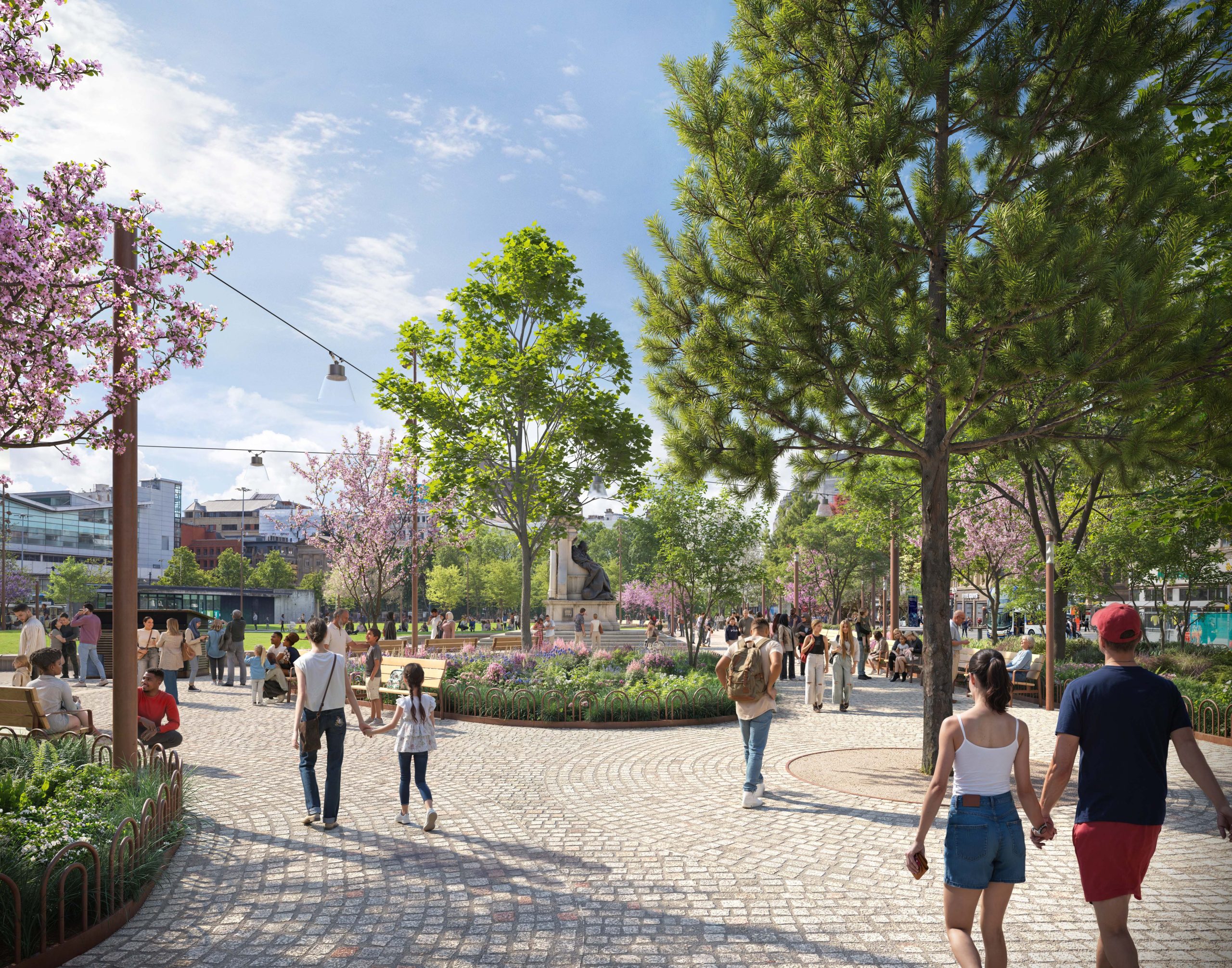
Well, the approved plans show a vision for more green space – including lawns, trees, planting, seating, and colourful horticultural displays – with the temperamental fountains being removed for good and replaced with a new space called The Pavilion that will host family-friendly events.
Date set for work to begin on Piccadilly Gardens transformation / Credit: Supplied
The low concrete walls and raised planters at the edge of the gardens will be ripped out, improving the setting of the Queen Victoria statue.
An there’ll be a new, larger playground for younger children, created in the same high-quality style as the new parks at Mayfield Park and Ancoats Green.
The plan is to also make the space ‘safer’ overall, through improved sightlines, better lighting, and enhanced CCTV.
The Council and its partners say they are ‘clear’ that delivering a ‘better’ Piccadilly Gardens cannot just be about physical improvements, but it also requires improvements to how the area is managed and maintained.
We're putting the Gardens back into Piccadilly Gardens
The major regeneration plan to transform the square has now been approved by planners.
This means we can start work this autumn to make the Gardens more colourful, vibrant and safer for residents and visitors. pic.twitter.com/5Ayv2k9SRw
This process is said to have already started, primarily with a strengthened police presence, but a new management model is also being developed to ensure that improvements are sustained.
“Securing planning permission means that before this year is out, we can get started properly on work to transform the space and have it finished and ready for the public to use next year,” explained Councillor Garry Bridges, who is the Leader of Manchester City Council.
“Piccadilly Gardens has huge potential to be a real asset to the city and its people. We know it hasn’t been good enough – but that’s about to change.”
Work is set to begin in November, with further dates and timelines announced in due course.
Featured Image – Supplied
News
Greater Manchester announces £15m investment in grassroots culture
Lydia Mastrolonardo
Greater Manchester is investing more than £15 million in grassroots and community culture over the next three years, with funding set to support organisations across all 10 boroughs.
The funding will support a range of cultural activity, including disability arts, youth engagement, community music-making, theatre, live music, dance, and documentary filmmaking.
Investment will be prioritised in neighbourhoods that are viewed as facing greater barriers to cultural engagement, addressing inequalities in access, meaning these community theatres, grassroots music venues and local production companies are set to be given an additional £407,540 per year.
This investment is a fantastic opportunity for Mancunians to come together and celebrate the beautiful place that we are lucky enough to call home.
Culture is absolutely essential for unity and reinforcing our sense of civic pride, in addition to bringing valuable skills, expertise and new opportunities to our region. Not to mention the benefits co-creation can have on wellbeing and positive growth.
Recognising the transformational impact culture can have, Greater Manchester has pledged continual support to existing leading regional institutions which will ensure culture remains central to local regeneration, as well as committing funds and support to new grassroot talent.
What’s more is that funding has been secured for enrichment across all ten boroughs, meaning nobody has to miss out.
This boost in funding will also help deliver on the Mayor of Greater Manchester’s commitment to putting ‘things to do’ at the heart of town centres, with nine new organisations to receive funding for the first time. Included in this are OT Creative Space, String of Hearts, Manchester’s Reform Radio, Venture Arts, and Stand and Be Counted Theatre.
Mayor of Greater Manchester, Bev Craig said: “Shared cultural experiences are powerful opportunities to bring people together, create opportunities and build pride. We are investing more than £15 million for culture over the next three years, funding organisations of all shapes and sizes, in all 10 boroughs, so that everyone in Greater Manchester has access to an experience that speaks to them.
“Doorstep access to everything from theatre to live music, dance to documentary filmmaking, has the power to transform lives and shape communities. The Culture Fund is a key part of my commitment to putting things to do at the heart of our towns.”
This exciting £15m investment is to be divided into just over £5m each year, for cultural organisations in the region, across a three year period. This funding is designed to increase reach to more people within our communities and to ensure that the cultural sector remains thriving and strong.
Greater Manchester has also vowed to give the well-known Inspire Fund a £20,000 annual boost, to provide small grants to more local artists, small cultural organisations, creatives and freelancers.
In Rochdale, Breaking Barriers, known for amplifying unheard voices by co-creating work with local communities, have received an annual award of £40,000, as well as Skylight Circus Arts securing an annual award of £27,540 for its inclusive circus workshops for communities and schools.
Doc North, a not-for-profit organisation supporting working-class documentary makers and storytellers in the North of England, has been given £42,000 and popular grassroots music venue, The Snug, has been awarded £70,000.
In response to the challenges faced by the sector, a new Structural Fund of £100,000 has also been implemented to help to solidify stronger cultural networks and partnerships across the region. This will aid organisations to take risks and experiment in the delivery of new ideas.
In a city region so rich with culture and history, it’s about time we start engaging within our communities and celebrating what we have on offer here in Greater Manchester.

 Daisy Jackson -
10th September 2025
Daisy Jackson -
10th September 2025