Doctors are warning that the use of laughing gas has risen to such concerning levels that it’s becoming an “epidemic” among Britain’s young people.
After a report in the British Medical Journal (BMJ) published in June 2020 revealed that there was “a visible mark of the increasing incidence of nitrous oxide (N2O) misuse” since the first COVID-19 lockdown began, concerns have been continually raised by medical professionals over the effects of the substance and what prolonged usage could do to the body.
Nitrous oxide – which is also known as laughing gas, “hippie crack” balloons, and nos – is now the second most-used drug among 16 to 24-year-olds in the UK, with more than half a million people in this age group in England and Wales found to have used the drug in 2019-2020.
As defined by FRANK, nitrous oxide is “a colourless gas most commonly found in pressurised metal canisters [which] you may have seen lying around in streets outside bars and nightclubs.”
It’s often consumed by “transferring the gas into a container (usually a balloon), then inhaling from the balloon” and this is because “inhaling nitrous oxide directly from the canister is very dangerous [as] the gas is under such high pressure, which can cause a spasm of the throat muscle and stop a person breathing.”
ADVERTISEMENT
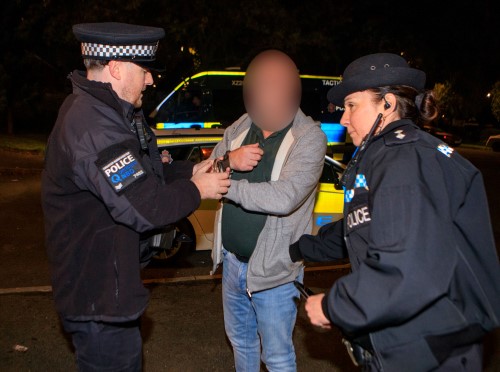
Doctors warn of a laughing gas ‘epidemic’ among Britain’s young people / Credit: Geoff Davis (via Geograph)
The popularity of nitrous oxide is believed to be due to the fact that it’s cheap and easy to get hold of, and it’s while it’s known to produce feelings of euphoria, relaxation, and calmness, as well as fits of giggles and laughter, it’s also linked to a wide range of negative side effects.
And now, doctors are warning that prolonged use could cause some serious health issues.
ADVERTISEMENT
In a now-viral TikTok, Doctor David Nicholl – consultant neurologist at Queen Elizabeth Hospital in Birmingham – said he was seeing large numbers of young people coming into hospital after taking nitrous oxide, and warned that many using the substance recreationally may not be aware of the risks and that it was becoming an “epidemic”.
“At the moment we are seeing an epidemic of young people being admitted to hospital off their legs because they have been taking whippets,” he explained.
He adds that some patients are left with “life-changing neurological injuries”.
ADVERTISEMENT
“It’s an absolute epidemic and some of these people using this will have no idea that actually they could end up not being able to walk for the rest of their life just for a bit of a laugh,” Dr Nicholl concluded in the video.
It was reported that the Home Office asked the independent Advisory Council on the Misuse of Drugs (ACMD) to analyse the harm caused by nitrous oxide last year, and was seeking advice on whether to make the possession of it a criminal offence.
There were also 36 deaths in Britain associated with laughing gas between 2001 and 2016, according to the Office for National Statistics (ONS).
Featured Image – Facebook
News
Uber has officially started trialling driverless taxis in Manchester
Emily Sergeant
It’s official… driverless taxis have hit the streets of Manchester.
As the leading transportation company looks to bring robotaxis to other major cities around the UK, it has been confirmed that a trial of autonomous vehicles is now underway in Manchester – with the services being operated using the technology of Uber’s partner firms, Pony and Verne.
Uber said it was ‘excited’ to take this first step toward ‘making this technology accessible’ to people across the UK.
The three companies first collaborated on the deployment of a commercial robotaxi service back in March of this year, combining Pony.ai’s autonomous driving system, Uber’s global mobility platform, and Verne’s service ecosystem and operational framework.
At this time, there has been no official application to launch passenger services in Manchester, according to The Guardian.
However, posts on various social media platforms – such as X, LinkedIn, and Instagram – by each of the companies this week have confirmed that trials are underway in the city.
“New technologies play an increasingly important role in the growth of our city region,” TfGM said. “But they need to be introduced responsibly, safely and with real thought about what it means for our residents.
“Safety will always be our top priority, and we will need strong assurances that no vehicles will operate on our roads that pose any risk to residents.”
Manchester, we’re on our way! Today, we’re announcing that we’re partnering with @Verne_robotaxi and @PonyAI_tech to pilot autonomous vehicles in Manchester. Building on our service together in Zagreb, Gen-7 Robotaxis are now testing in Manchester.
We’re excited to take this first step toward making this technology accessible to people across the UK. 🇬🇧
“By bringing together Pony.ai’s proven autonomous driving technology, Verne’s operational and market expertise, and Uber’s global platform, we’re taking an important step toward making autonomous ride-hailing available to more riders in more places.”
Featured Image – Uber Investor
News
Police issue urgent warning following a rise in scam calls across Greater Manchester
Emily Sergeant
The public is being urged to ‘remain vigilant’ following a rise of scam calls across Greater Manchester.
Greater Manchester Police (GMP) says it has been made aware that scammers, who are impersonating police officers, are contacting people trying to convince them to hand over personal and sensitive information linked to their ownership of cryptocurrency.
From the numerous reports that GMP has received, one common method the offenders appear to be using is claiming that a suspect has been arrested and was found to be in possession of the victim’s personal documents – such as their passport, driving licence, or banking details.
On several occasions, fraudsters asked victims about their cryptocurrency accounts – specifically looking for their IDs, recovery phrases, and security codes.
GMP is urging the public to know that the police would never ask you to share this information or move your accounts.
The police have issued an urgent warning following a rise in scam calls across Greater Manchester / Credit: Rawpixel | Nordwood Themes (via Unsplash)
“These calls can appear convincing and are being made through spoofed GMP phone numbers but we are urging the public to remain vigilant, especially when providing sensitive information via phone calls,’ GMP said in a statement this week.
GMP is asking that the public ‘be wary’ of unsolicited calls, emails or messages relating to cryptocurrency investments or accounts, and that they never share passwords, recovery phrases, or security codes with anyone, as well as refusing to transfer any money or cryptocurrency to accounts suggested by a caller.
DS Reed, from GMP’s Cyber Crime Team, said these calls are ‘incredibly sophisticated’, and those responsible are targeting ‘vulnerable communities’
“We take offences of this nature incredibly seriously, and our Cyber Crime Team are working around the clock to understand how these offences have occurred, and how to prevent it from continuing,” DS Reed concluded.
Featured Image – Priscilla Du Preez (via Unsplash)

 Emily Sergeant -
30th August 2022
Emily Sergeant -
30th August 2022