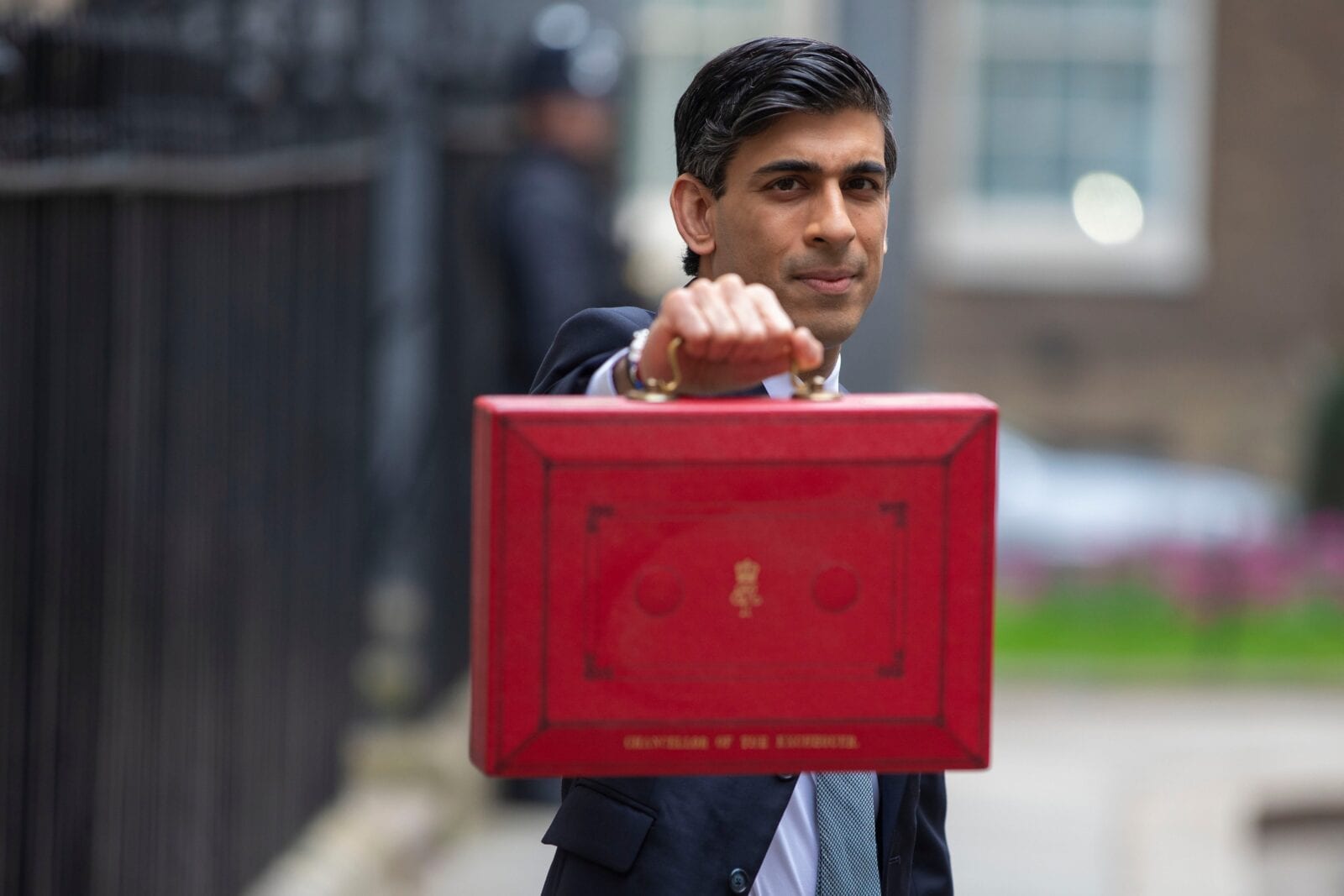
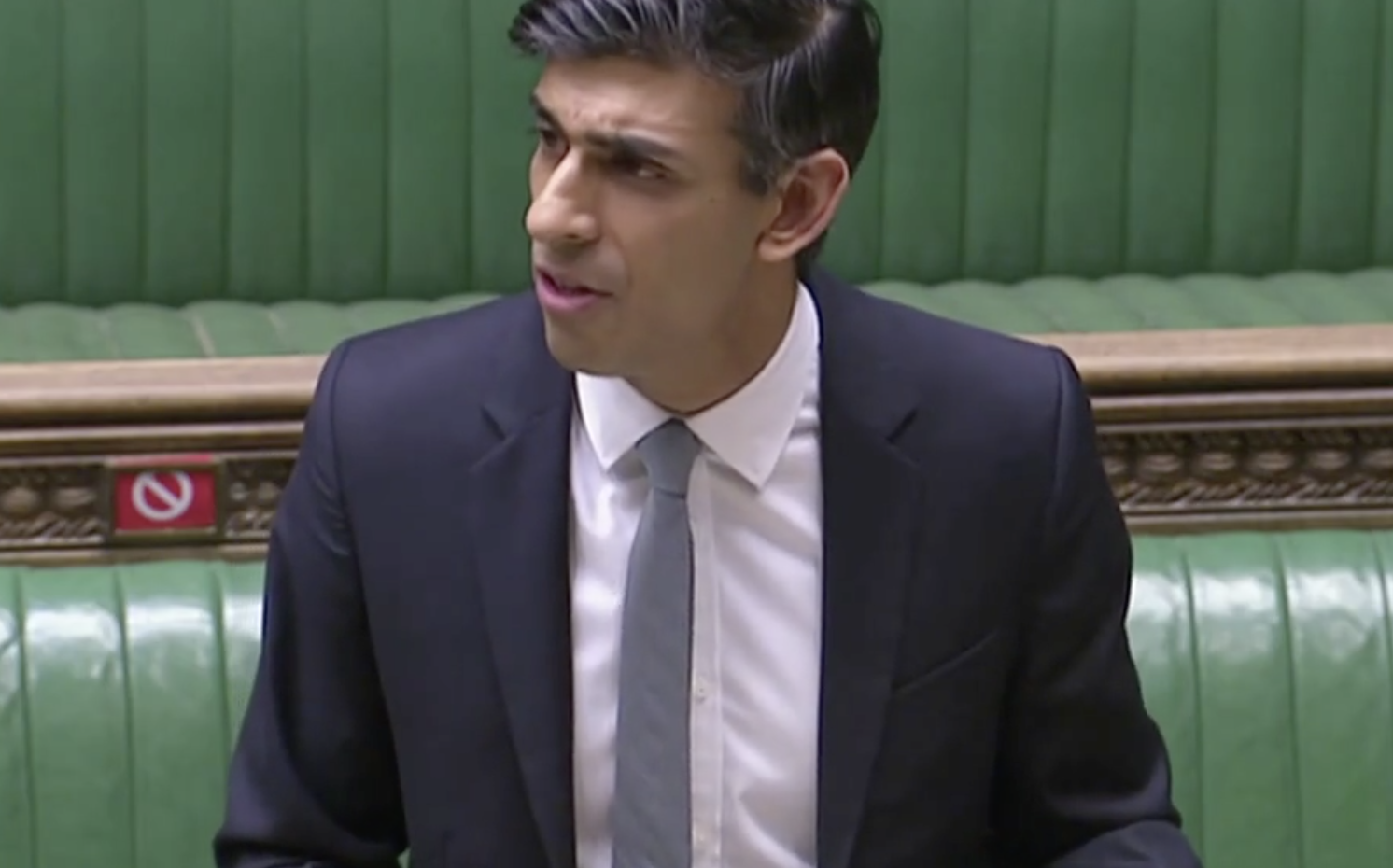
Rishi Sunak announced his Budget to the House of Commons this afternoon – revealing the government’s financial blueprint for recovery after one of the most tumultuous economic years on record.
Whilst the image of the Chancellor holding aloft the iconic red briefcase always attracts interest, the build-up to ‘Budget 2021’ had been accompanied by considerable buzz.
Many businesses have only been permitted to trade for a few months since COVID-19 first forced Britain into lockdown last March, whereas some sectors have remained closed entirely.
With an ‘irreversible’ roadmap to reopen the economy now published, millions have been speculating as to whether financial support will remain available – and how the country will get back on its feet.
Here’s a breakdown of everything Sunak had to say in his address to MPs on March 3.
ADVERTISEMENT
What was in the 2021 Budget?
Sunak’s debut Budget in March 2020 was an anomaly; including a series of policies designed to manage the economic impact of a deadly virus which was, back then, only in its infancy.
But the pandemic quickly spiralled out of control in the aftermath of that address, and the Chancellor has been forced to make regular interventions ever since to keep the economy afloat.
ADVERTISEMENT
On Wednesday, Sunak announced how the country planned to recover from its £355 billion debt incurred during the past 365 days, as well the financial support that will be accessible.
Sunak unveiled a three-part plan to “protect the jobs and livelihoods of the British people”, predicting a “swifter and more sustained recovery” to pre-COVID levels by the middle of 2022.
The furlough scheme will be extended
To protect the jobs and livelihoods of the British people through the remaining phase of this crisis, the furlough scheme will be extended until the end of September. #Budget2021pic.twitter.com/q48eo1ppqI
The Coronavirus Job Retention Scheme has resulted in millions of employees being furloughed since March – with the government covering 80% of wages for hours staff cannot work.
ADVERTISEMENT
Around 11 million jobs have been protected as a result.
The Chancellor confirmed on Wednesday that this furlough scheme is set to be extended until September 2021.
However, as the economy reopens again, employers will be expected to make contributions.
From July, companies will need to pay 10% towards furlough payments. This will increase to 20% in August and September.
The National Living Wage will be increased to £8.91 from April.
ADVERTISEMENT
Self-employed support will continue
Support for the self-employed will continue with a 4th grant covering February to April, and a 5th grant from May.
As the tax return deadline has now passed, 600,000 more people, many of whom became self-employed last year, can now claim the 4th and 5th grants. #Budget2021pic.twitter.com/1nJO2ZmPqn
The Chancellor also confirmed further support for the self-employed in the weeks ahead.
This includes a fourth grant covering February to April, and a fifth grant from May.
Sunak added: “As the tax return deadline has now passed, 600,000 more people, many of whom became self-employed last year, can now claim the 4th and 5th grants.”
Grants are being made available for retail, hospitality and personal care companies
‘Restart Grants’ worth £5 billion are being introduced to support businesses before reopening.
This includes grants of up £18,000 for pubs, hairdressers and gyms.
ADVERTISEMENT
Non-essential retail premises will be able to claim up to £6,000.
The 5% reduced rate of VAT will also be extended for six months to September 30 – with an interim rate of 12.5% for six months.
Business rates relief will continue until the end of June.
Apprentice incentive payments are being increased
We’re taking what works to get people into jobs and making it better.
Today we’re doubling the apprentice incentive payments we give businesses to £3,000 – that’s for all new hires, of any age. #Budget2021pic.twitter.com/1ld67CRfNr
To help get young people into jobs, the Chancellor has also announced that apprentice incentive payments for businesses will be increased.
“Today we’re doubling the apprentice incentive payments we give businesses to £3,000 – that’s for all new hires, of any age,” he stated.
ADVERTISEMENT
The Stamp Duty cut is being extended
The new £500,000 nil rate band for #StampDuty won't end on 31st March, it will end on the 30th June.
Then, to smooth the transition back to normal, the nil rate band will be £250,000, double its standard level, until the end of September. #Budget2021pic.twitter.com/jq7APWRP5M
Sunak also confirmed that the Stamp Duty cut will be extended by three months.
The Chancellor stated: “The new £500,000 nil rate band for Stamp Duty won’t end on March 31, it will end on the June 30.
“Then, to smooth the transition back to normal, the nil rate band will be £250,000, double its standard level, until the end of September.”
Planned duty increases for alcohol and fuel are being cancelled

Planned increases in duties for spirits have been cancelled / Image: Adam Wilson via Unsplash
Elsewhere in the Budget, the Chancellor announced that planned increases in duties for spirits like Scotch whisky, wine, cider and beer will all be cancelled.
The planned increase in fuel duty is also being cancelled.
ADVERTISEMENT
Paying back the debt…
We're not going to raise the rates of income tax, national insurance, or VAT.
Instead, we are freezing personal tax thresholds. Nobody’s take home pay will be less than it is now, as a result of this.
In an attempt to pay back the money borrowed to fund the government’s COVID economic recovery packages – which has led to the highest rate of UK borrowing since World War II – Sunak said that he would be freezing personal tax thresholds.
Corporation tax will increase to 25% from April 2023.
The Chancellor pledged not to raise the rates of income tax, national insurance, or VAT.
“Nobody’s take home pay will be less than it is now, as a result of this,” Sunak stated.
“It is a tax policy that is progressive and fair.”
Renting is now cheaper than buying across much of the UK – but not in one Greater Manchester area
Emily Sergeant
New statistics have revealed that renting a property is now cheaper than buying one across much of the UK.
But in one popular Greater Manchester area, it still remains the other way around.
According to leading property platform Rightmove, which has analysed the latest price data, the average monthly rent in Great Britain is now lower than a typical new mortgage payment – with the average advertised monthly rent nationwide being £1,547 and a new mortgage on a typical home currently costing around £1,670 a month.
This means that renters, for the first time since June 2025, are coming out £123 a month better off than buyers.
Rightmove says that, to arrive at that figure, it used the current average asking price of £373,971, paired with the average two-year fixed rate of 5.35% recorded so far in April, and with calculations assuming a 20% deposit and a 30-year term.
So, what has changed then? Well, the simple answer is that mortgage rates have gone up.
Renting a home is now cheaper than buying one across much of the UK / Credit: Benjamin Elliott (via Unsplash)
The average two-year fixed rate sat at 4.24% in February, but by April, it had climbed to 5.35%, and unfortunately, that increase is enough to push a new buyer’s monthly payment above what many people are currently paying in rent.
The national picture does not tell the whole story though, however, as there are real differences from one part of the country to another, largely driven by local property prices.
As mentioned earlier, there is one popular Greater Manchester residential area where buying is still cheaper than renting overall, according to the latest data – and that is Salford.
In Salford, the average asking price of a property is £245,478 with an average monthly mortgage repayment being £1,096, whereas the average monthly rent sits at £1,323, so this means that a +£277 difference.
Rightmove property experts say Salford is helped by ‘more affordable’ property prices keeping borrowing costs ‘in check’.
“Mortgage payments have risen quite sharply in a short space of time for new buyers,” commented Rightmove property expert, Colleen Babcock.
“It will be interesting to see whether more would-be buyers turn to renting temporarily while rates remain high, particularly when monthly costs can exceed average rents and the timing of rate cuts is still unclear.”
Featured Image – Shvets Production (via Pexels)
News
‘We were so lucky to have it’ – Has Manchester’s hospo scene reached a dangerous tipping point?
Danny Jones
Greater Manchester’s hospitality sector is calling for change and better support, both for the local community and the UK government, following the latest raft of closures.
Various well-known independent businesses have closed in the first quarter of 2026 across the city centre, let alone the numerous others across the ten boroughs over the past year or so.
In truth, this worrying trend has been going on for much longer than the last 12 months, and it seems that it’s not just new openings that are most at risk of closing before they can even get going, but now well-established regional institutions are struggling to stay afloat.
Case in point, our oldest Turkish restaurant – which had been serving central Manchester for nearly half a century – Topkapi Palace, has now closed seemingly for good.
A recent addition to the city centre itself, French-Vietnamese cafe and restaurant Doux Chaton wrote on social media: “This is genuinely so sad to see. Topkapi Palace is part of Manchester’s fabric. Running an independent spot is no joke — it takes everything.
“If we keep letting places like this go, we lose more than food; we lose culture, history, identity. Please support your local independents where you can. It matters more than ever – our representatives need to support our community not only regionally but nationally.”
They went on to tag the likes of Mayor Andy Burnham, Chancellor Rachel Reeves and others to call for crucial intervention sooner rather than later.
For some, it’s unfortunately already too late.
Currently, their Stockport in Hazel Grove looks to be remaining open, but we’ve seen this story before; Almost Famous, Seven Brothers, Greens, and SO many others have sadly had to shut up most, if not all, of their locations.
As of this May, we’ve already had to say goodbye to the likes of Topkapi, KAJI, Climat and House of Fu; Project Halcyon, Örme, the long-standing TNQ, the first-ever Northern Simmons site, a branch of Banyan, just to name an unlucky few.
This is just heartbreaking. We can’t carry on with either this PM or Chancellor. Both need stepping to one side and allowing others mop up their disaster of a tenure.
And that’s just the ones that shut down in the first few months of this calendar year; 2025 was a gut-wrenching year for the food and drink industry, with indies all over the region and beyond having to fight tooth and nail to stay open for even just a few days of weekly trade.
Almost just as concerning has been some of the behaviour by some patrons, even here in our own city.
From more than one or two reports of people walking out on their bills, people even nicking the most petty stuff, such as decorations and bar’s cushions, to a troubling number of no-shows that don’t just mean one less reservation – it can mean the next person missing out on a seat and people losing money.
Another nearby native commented: “I honestly think Manchester is on a tipping point for many people – what was ‘old’ Manchester, which many of us loved, is being slowly erased by the new. People here are saying basically ‘use it or lose it’.
“Fair enough, but there’s very little spare money about, and I hear lots of people saying they don’t go into town for the day to spend that money shopping and for a meal or treat-day because they don’t ‘recognise the place’.”
They go on to add: “Most importantly, they often say they don’t like Manchester now. The towers that are shoved in places where you could see daylight and there was space to walk and breathe are overwhelming.
“I’m not being reactionary – I love New Islington and Cutting Room Square, etc., but NQ has lost its grit, and I find Deansgate really soulless and depressing when once I used to go out every night after work for drinks, and go in every month with the family on a Saturday for culture, shop and a meal.
“No more. Love Manchester, but I’m not in love with it anymore. Topkapi was great once, and it’s sad it’s gone.” A passionate appeal, indeed.
It goes without saying that rising energy bills, untenable business rates, rent, and a general cost of living crisis mean that people simply don’t have enough money to go out for tea, treat themselves to a drink in a nice bar, or even just go to the pub as often as they once did.
We’re by no means experts, but it’s easy for all to see that something needs to be done and fast, as we’d like to avoid seeing any more of our hard-working Manc favourites falling by the wayside and joining the list of those that we’re still mourning to this day.