Famous Didsbury eco-pioneer and RSPB founder Emily Williamson to be honoured with new statue
A new festival dedicated to Emily Williamson at Manchester Art Gallery will examine her eco-campaigning legacy and give people the chance to vote for the final statue design
Known as the woman who saved a million birds, the famous Victorian Didsburyite Emily Williamson is widely considered to be one of the outstanding eco-pioneers of her day.
Now, she is set to be honoured with a new festival at Manchester Art Gallery – culminating in the announcement of the winning design of a statue for Emily.
Emily founded what would become the RSPB from her home in Didsbury’s Fletcher Moss Park in 1889 by inviting her friends to tea and asking them to sign a pledge to ‘Wear No Feathers’.
Statue design by Eve Shepherd / Image: Emily Williamson statue campaign
That one pledge ricocheted through the next century, spawning campaigns and movements that changed the face of UK conservation.
A statue of Emily in the grounds of her former home is one of the ways of giving her the recognition that she deserves and it’s hoped that her legacy will be used to inspire a new generation of nature activists.
ADVERTISEMENT
As COP26 looms and promises are made regarding action on climate change, the activist and RSPB founder’s campaigning legacy will be celebrated with a dedicated festival.
The event, which runs from. 12 to 14 November, will also showcase local stories of resistance, resilience and hope in the world of conservation today.
ADVERTISEMENT
The festival will welcome some of Manchester’s most dynamic change-makers, exploring the links between conservation, campaigning, science, and art at a pivotal moment for humanity.
Of the 24 speakers scheduled to appear, 23 will be women – shining a spotlight on some key female players in the conservation world.
Speakers confirmed so far include RSPB CEO Beccy Speight; the British Ornithologists’ Union President Juliet Vickery; campaigner and Springwatch presenter Megan McCubbin; and Emily Williamson’s descendent, bird scientist Professor Melissa Bateson.
The living link between Emily’s history and her eco-campaigning legacy will also be examined in a range of panel debates that will look at Victorian Manchester’s greenness and the city’s changing relationship with the natural world today; campaigning tactics across the centuries; the fashion industry vs environmentalists; and the link between nature and mental health.
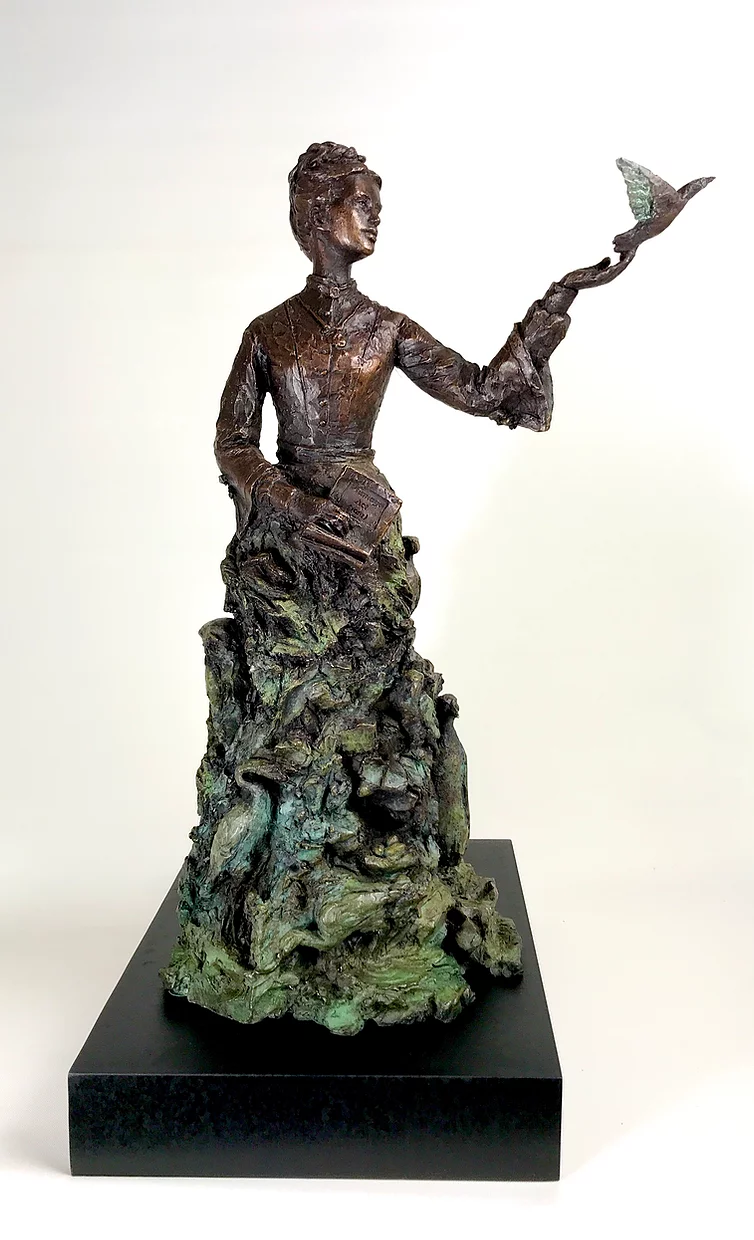
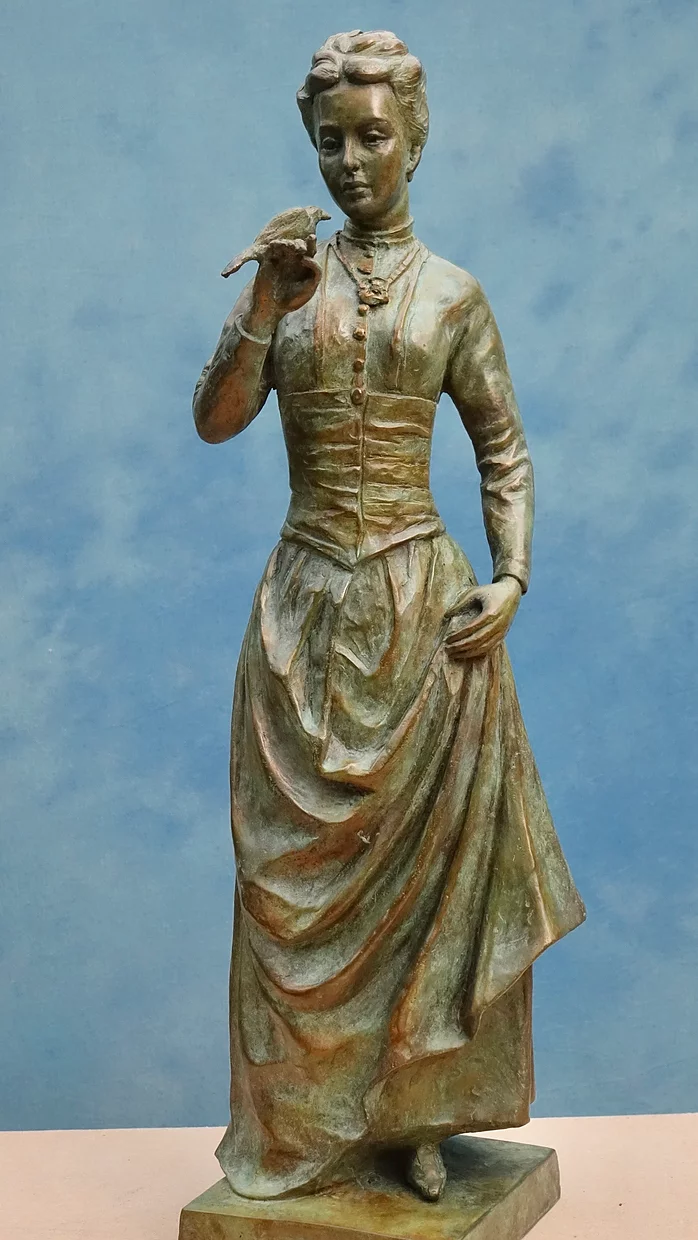
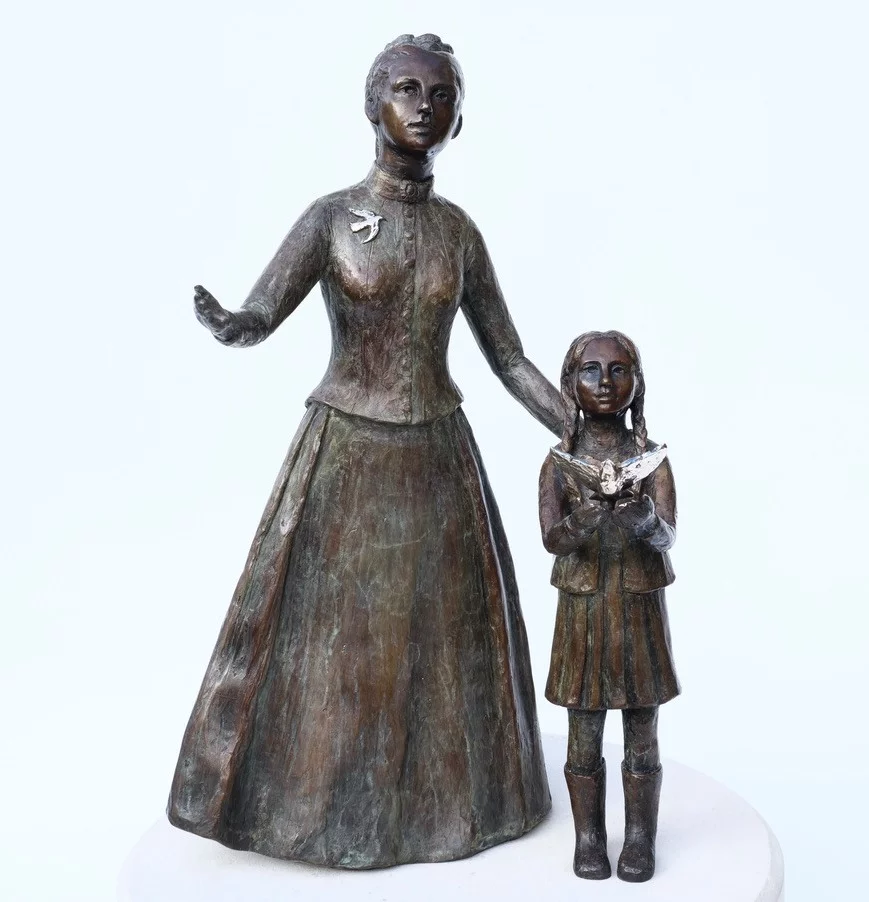
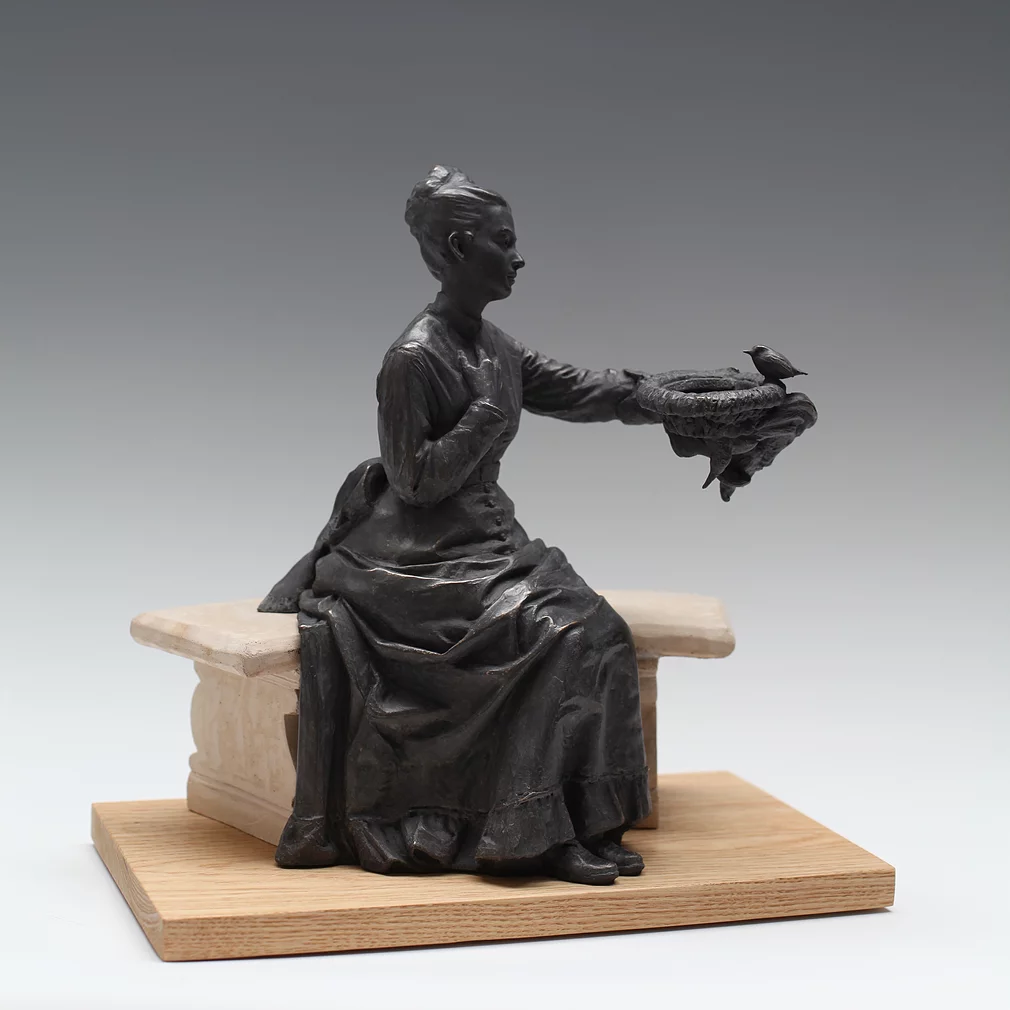
The festival will culminate in the announcement of the winning design of a statue for Emily, which members of the public have been voting for in their thousands.
The maquettes (miniature statues) of the four shortlisted designs will be on display at Manchester Art Gallery from Saturday 30 October until Sunday 14 Novemberand with voting open until 12 pm on Sunday 14 November.
Statue design by Billie Bond / Image: Emily Williamson statue campaign
Festival founder, social historian and author Tessa Boase, who uncovered Emily’s story and photograph while researching her book on the RSPB’s origins, says:
“Emily Williamson understood the value, magnificence and significance of nature, especially birds. She stood firm and fought against the powerful worldwide ‘murderous millinery’ trade – and she won. This festival celebrates her achievement and remarkable legacy, showcasing some exceptional women fighting for nature here in Manchester today.”
ADVERTISEMENT
Emily Williamson founded the (R)SPB, now the UK’s largest conservation charity, in 1889. In 1891 she teamed up with two other eco pioneers to take it to the next level: Etta Lemon and Eliza Phillips of Croydon.
None of these women has been remembered by history.
As Tessa Boase explains:
“The first thing that struck me when I visited RSPB headquarters at The Lodge, Sandy, was the male portraits looming down all round the entrance hall.
“Where were the female founders? After unearthing their photographs, I commissioned these drawings from nature-lover and artist Clare Abbatt in the hope that, one day, they might hang in The Lodge and redress the gender balance.”
Emily’s story shows us that one voice can make a difference. With 15% of birds in Britain now facing extinction, her legacy is more crucial than ever.
The large drawings of Emily, Etta and Eliza will feature alongside the shortlisted designs of a statue for Emily Williamson. This will be the first time that the portraits have gone on public display.
Manchester Art Gallery is open Wednesday to Sunday, 10 am to 5 pm. For further information on the Emily Williamson Festival and the Emily Williamson Statue Campaign visit the dedicated website here
Feature image – David Dixon via Commons Wikimedia / Wikipedia
News
High School Musical at Lowry, Salford – a night spent reliving our childhood | Review
Amy Williams
What a night spent reliving our childhood.
Now, I don’t want to exaggerate or seem biased, considering this is one of my favourite film trilogies of all time, but this could be the best stage show I’ve seen in a long while.
We all know how High School Musical goes, right? Set at East High, we follow Troy and Gabriella (the star basketball player, and the geeky new girl) who meet over New Year, and then become ‘star-crossed lovers’ when back at school as they’re part of two different ‘cliques’.
The duo mess with the ‘Status Quo’ when they audition for the school musical. But will they stick to what they know? Or become stars of the stage? I’m sure you know the ending.
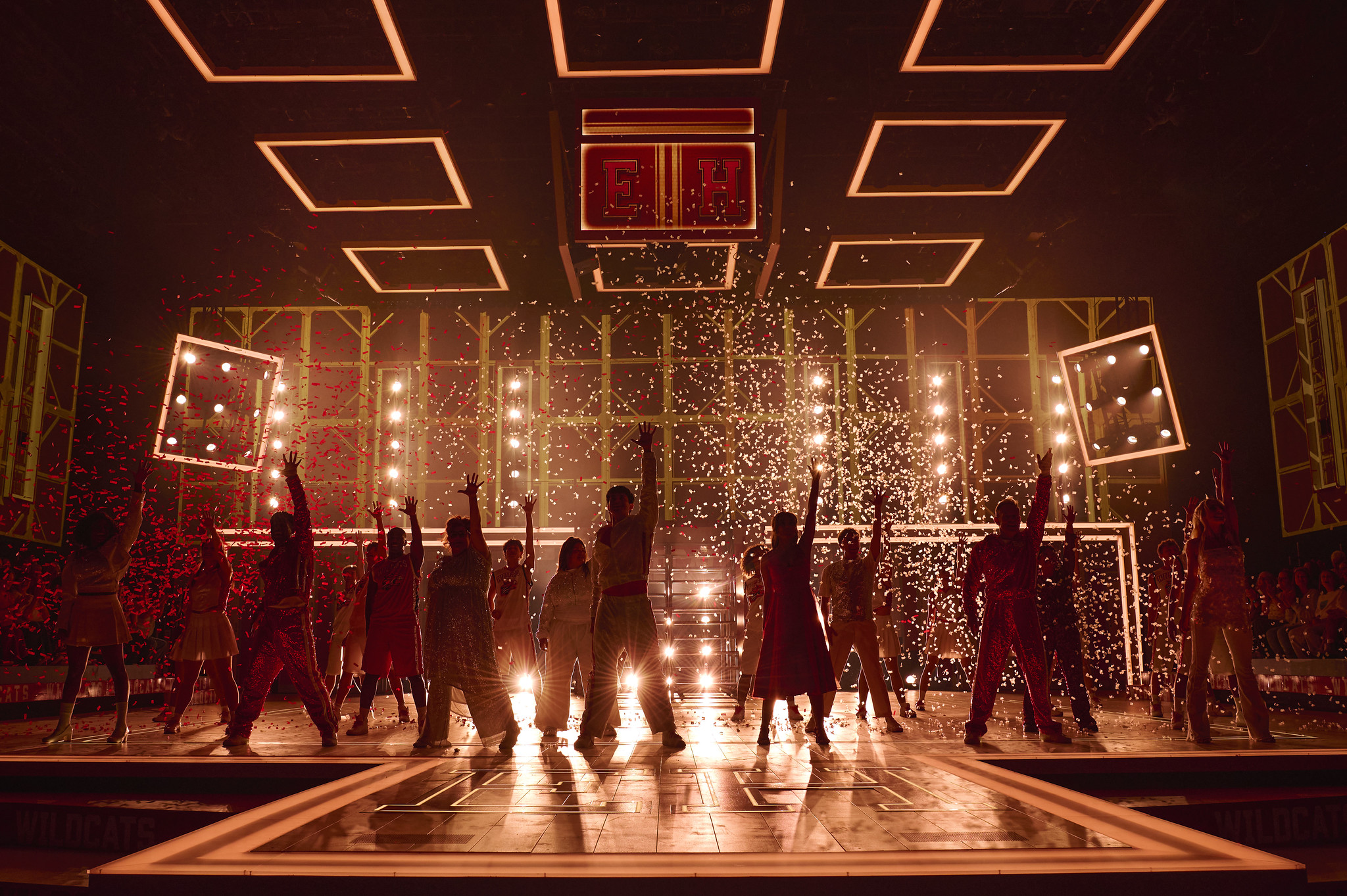
High School Musical is currently on stage at Lowry, Salford / Credit: Matt Crockett (Supplied)
From the costumes and the characters, to the memorable songs (there’s actually 52 songs in this production, including a mega mix at the end), they’ve kept right to the script of the films – and that’s exactly what we wanted to see.
Of course, the biggest throwback of them all is Kaycee Stroh – who originally featured as Martha Cox in the film trilogy – taking the role as Ms Darbus, and she was just as incredible as we expected her to be. And to see her do the iconic dance in the finale was unbelievable, 13-year-old Amy was screaming.
Also featuring Jason Donovan as Coach Bolton, Tobias Turley as Troy, Leonor Correia as Gabriella, Caitlin Tipping Sharpay, and Luke Bayer as Ryan, it was a proper impressive cast all round.
It’s a night to properly relive your mid-00s childhood / Credit: Matt Crockett (Supplied)
There was crowd interaction right from the off, as they taught the crowd a cheerleading routine to be included later in the show, plus for the finale, they had the lyrics on the big screen too so everyone could sing-along.
If we could go and see this show every single night, we would – it is absolutely brilliant.
Fontaines D.C. announce massive return to Manchester on new European tour
Daisy Jackson
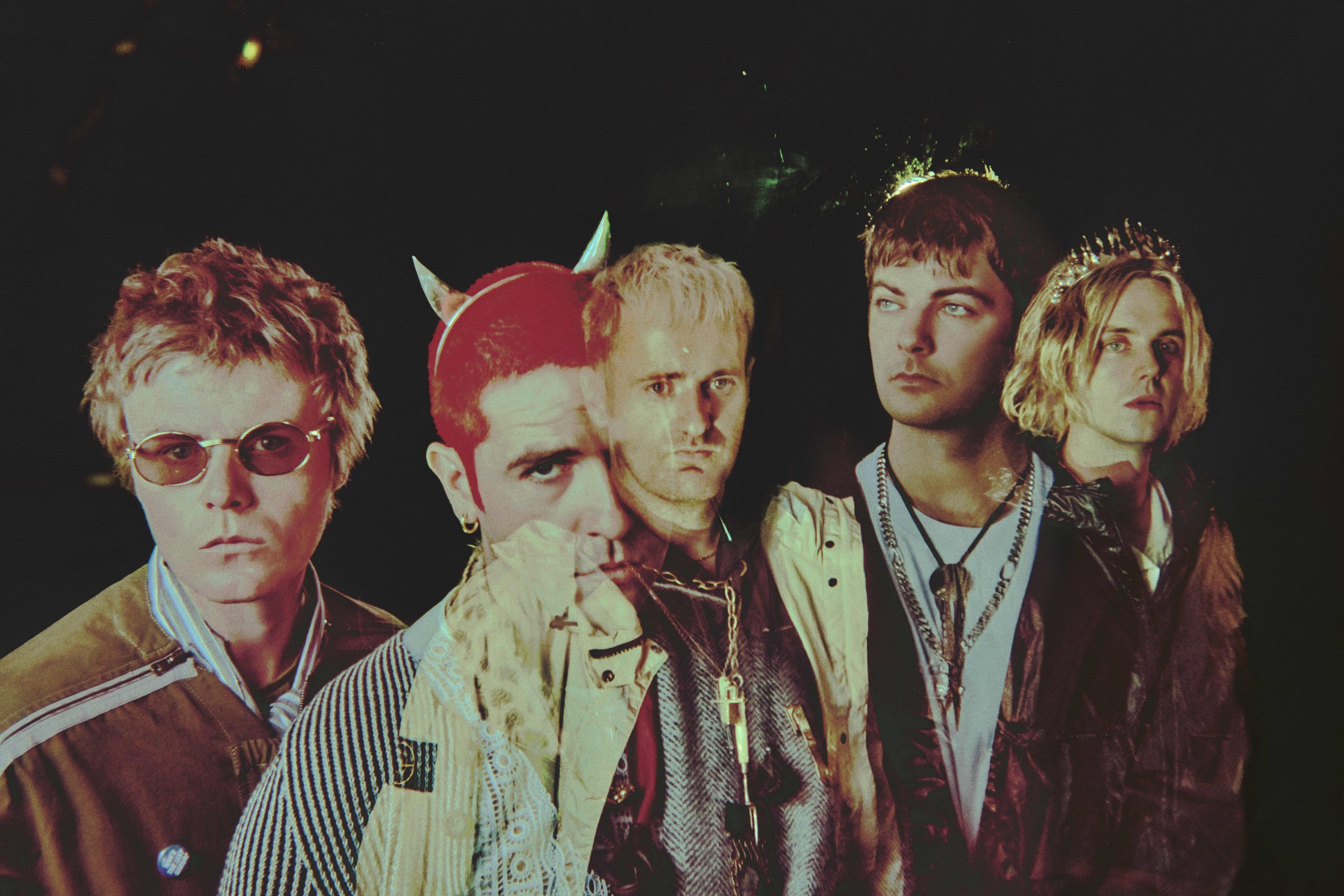
Fontaines D.C. have just announced their biggest headline tour to date, including a massive arena gig here in Manchester.
The wildly popular Irish rock band are set to play a whopping 20 arena shows across Europe and the UK this autumn.
The tour has been announced in celebration of their upcoming fifth studio album, Dopamine Chamber, which is set for release this October.
Fontaines D.C. will hit the road just five days after the album drops, kicking off their European tour in Lisbon on 21 October.
Then they’ll make their way over to the UK, with shows in Manchester, Leeds, Liverpool, Glasgow, Birmingham and London.
Fans in their home country of Ireland are told to stay tuned for live news very soon.
As we speak, Fontaines D.C. are warming up to play one of the country’s biggest festivals, with headline slots at Reading & Leeds Festival.
They’ve already released Marianne, the first single from their new album, and frontman Grian Chatten says of the album: “The album itself is a dopamine chamber. You step inside and we test these different mind- or mood-altering pieces of music on you.”
The new record has been recorded between London, the English countryside, and Palermo, where Chatten recorded vocals in a makeshift booth built from mattresses and cushions.
He said: “There’s a poignant sense of us being on the brink of some other kind of form of humanity, or non-humanity.”
Tickets will go on general sale at 10am on Thursday 3 September, with pre-sale live from 10am on Tuesday 1 September.
You can access tickets for Fontaines D.C. in Manchester HERE.
Fans who pre-order Dopamine Chamber from the official store by 6pm on Monday 31 August will gain access to the UK pre-sale.
Fontaines D.C. UK tour dates in full
Friday 20 November – Liverpool, UK – M&S Bank Arena
Saturday 21 November – Manchester, UK – AO Arena
Sunday 22 November – Glasgow, UK – OVO Hydro
Tuesday 24 November – Leeds, UK – First Direct Bank Arena
Wednesday 25 November – Birmingham, UK – Utilita Arena

 Georgina Pellant -
21st October 2021
Georgina Pellant -
21st October 2021