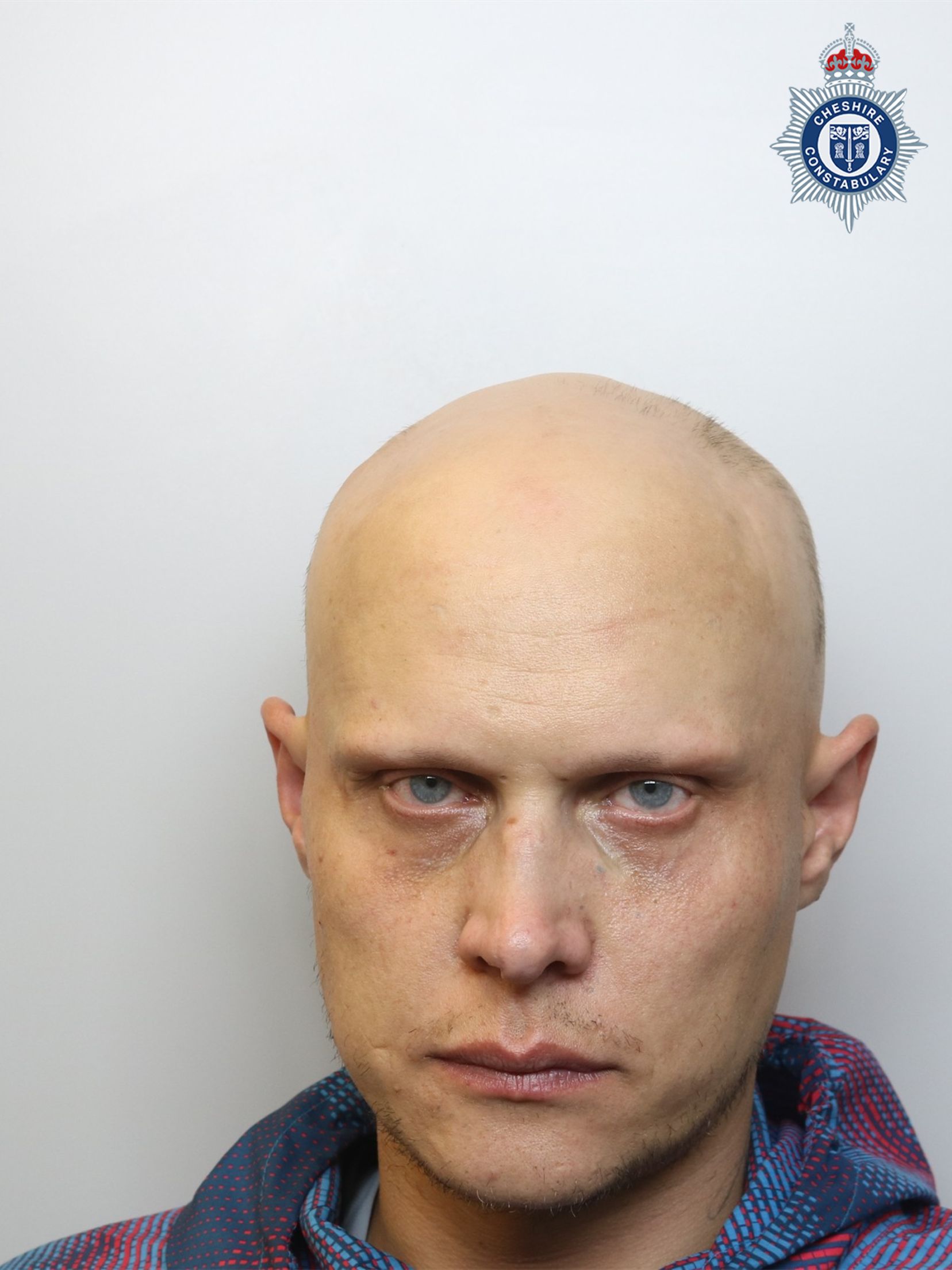
It looks like a scene from a movie, but the story behind the image of Khayam Ali Khurshid being captured by armed officers in the streets of Amsterdam days after murdering Cole Kerssaw is a very real one.
Last Friday (May 21), three men were sentenced for the murder of Cole, a young boxer from Bury, after a comprehensive investigation by Greater Manchester Police which eventually spanned an ocean.
GMP’s Major Incident Team of fugitive finders crossed the English Channel to get their final man, after Mohammed Izaarh Khan handed himself in at Bury police station and gunman Kamran Mohammed was found close to home in Rochdale just days after the murder took place in August of last year.
The fatal shooting, which happened on Chesham Road, made headlines around the UK at the time, and in the days following, a large scale manhunt was already underway.
Detective Chief Inspector Andy Butterworth, Senior Investigating Officer, explains: “The Critical Wanted Unit completed numerous extensive and meticulous enquiries, including phone work around the location of Khurshid, before we got word from the border agency that he was on the Channel tunnel en route to France.
ADVERTISEMENT
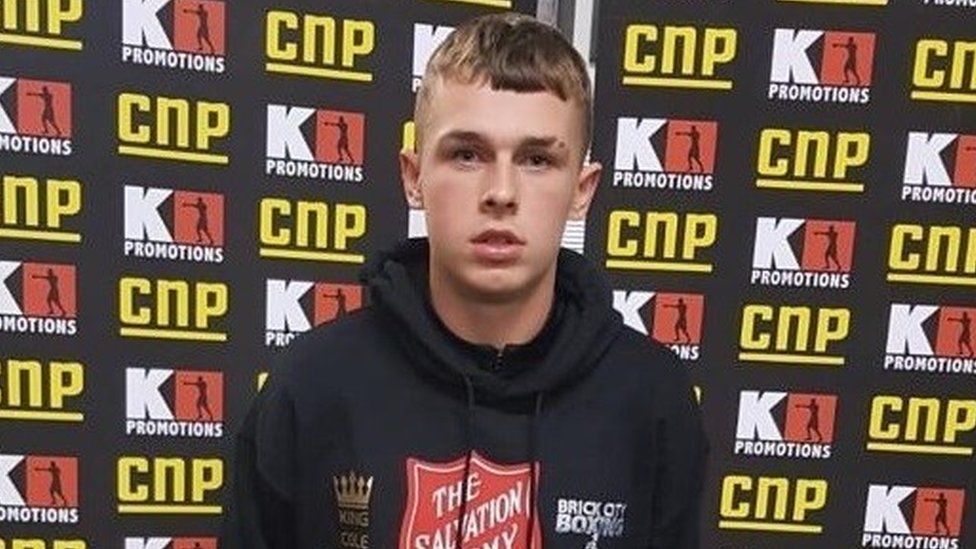
GMP // Cole Kershaw, pictured above, was gunned down in Bury
“The unit were then able track him down as being in Amsterdam and we knew from financial transactions that he was planning to board a flight to Dubai, but he actually missed this flight as he didn’t have a COVID certificate.
“The work of the Dutch authorities continued before they tracked him to a nearby street and sent me a picture to check it was him; it was and then the next message I had was that they’d got him!”
ADVERTISEMENT
Following the dramatic detention by armed officers in the Dutch capital, it was then the job of the Force Extradition Unit to go to the Netherlands to arrest Khurshid and bring him back to the UK, where he would ultimately face justice for his actions.
The arrest was one of nearly 100 arrests made by GMP’s Critical Wanted team in 2020 – 48 of them being Greater Manchester’s most high-profile fugitives.
A further 46 arrests were made of suspects believed to be assisting those on the run and being involved in other serious crime such as drug supply and assault.
ADVERTISEMENT
DCI Butterworth added: “We couldn’t have brought every one of these men to justice had it not been the tireless work of the Critical Wanted Unit, and it’s a team that is vital in securing the arrests of the most serious of suspects we have in our region.
“Any investigation, particularly one as big as this one, is not just about one detective or one team – it is a big team effort from so many people across the force and the Force Critical Wanted Unit, for one, played a crucial role in this case.”
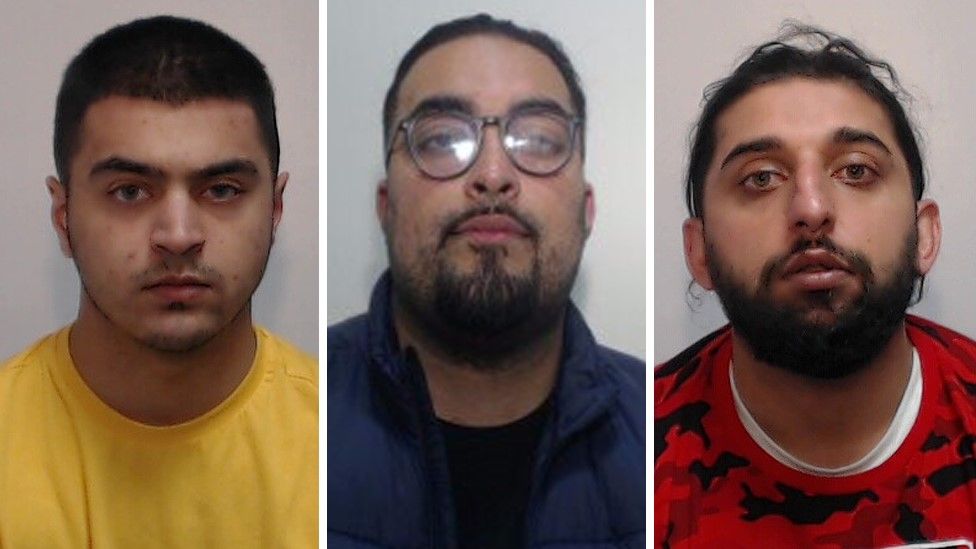
GMP // Kamran Mohammed, Mohammed Izaarh Khan and Khayam Ali Khurshid were jailed for life
Detective Inspector Simon Akker, head of GMP’s Force Critical Wanted Unit, said: “Once again our team have gained a brilliant result for all the painstaking hours of work that they put into ensuring that Greater Manchester’s most dangerous individuals are behind bars instead of on the streets.
“While a lot of our work is domestically alongside the North West Regional Organised Crime Unit and National Crime Agency, it is not uncommon for suspected criminals to flee the country in a bid to avoid facing the consequences of their crimes, but this case epitomises our dedication of going to whatever lengths possible to bring offenders to justice.
“Here we worked collaboratively with the Dutch authorities, and even now we are still liaising closely with them to catch today’s fugitives who, while they may be at large, should know that all of our international partners have the shared endeavour of ridding these people from our streets and we will do what we can in order to achieve this.”
ADVERTISEMENT
Over 350 hours of video footage, including 75 CCTV cameras, were meticulously viewed through the course of the investigation, and over 250 people were spoken to as part of the operation – codenamed Landseer.
Kamran Mohammed (28/03/2001), Mohammed Izaarh Khan (19/04/1999), and Khayam Ali Khurshid (20/03/1992) – all from Bury – were each sentenced to life on Friday 21 May 2021 after being found guilty of murder and possession of an offensive weapon with intent to endanger life.
News
The simple hack that can save healthcare workers and teachers money on their holidays
Danny Jones
With cost-of-living pressure ever-present in the background of most everyday lives, finding some spare pennies for a getaway feels more difficult than ever, and if there’s anyone who deserves discounts on a holiday, it’s healthcare workers.
That’s why, when we became aware of the simple hack that can save those working in healthcare services money on holidays, we thought we’d help spread the word.
We’re sure lots of you working within the sector already know plenty about this booking strategy, but for anyone who doesn’t, how do you fancy saving up to half a grand on your next jolly?
In fact, even those working in education can cut their costs, too.
With searches for ‘holiday voucher code’ up by 73% on Google, and even the likes of TikTok seeing ‘money saving tips’ up by 45%, travel agency TUI have decided to team up with the Health Service Discounts platform for 2026.
Providing those who work for the NHS with a ‘Holidays for Heroes’ (HfH) access code on various popular peak-season trips, this exclusive discount can be added on top of all other seasonal TUI deals, including the company’s ‘First Choice’ package holidays.
With the HfH code alone guaranteeing workers an extra £100 off their bookings, play your cards right, and you could get up to £500 in total discounts overall.
How to access the healthcare ‘Holidays for Heroes’ deal
Separate from standard Blue Light card savings, here’s how it works, and don’t worry, it’s all very simple:
As mentioned, education workers can also benefit from similar money off, with an extra £50 per person through the TUI x Discounts for Teachers partnership, as well.
Ella Foden-Lynch, Partnerships Manager for TUI, said in a statement: “Getting away is absolutely vital for wellbeing, especially for those working in high-stress healthcare and education roles.
“With the cost-of-living crisis still putting a strain on household budgets, we know how hard it is to stretch your pay to cover a much-needed family break. By unlocking these exclusive TUI deals, we hope to give our key workers the realistic recovery time they deserve without the financial worry.”
So, for those of you healthcare heroes and teachers looking for a well-deserved break, we urge you to find an affordable holiday that suits you very soon. With cheaper airport pints also inbound later this year, here’s hoping you save even more spends for when you’re away.
New ‘cutting-edge’ cancer treatment to be rolled out on NHS from next week
Emily Sergeant
A new ‘cutting-edge’ cancer treatment is set to be rolled out on the NHS from next week.
Thousands of men with prostate cancer are to be offered high-powered ‘precision’ radiotherapy on the NHS to target the disease more effectively – helping reduce side-effects and spare them 15 courses of treatment.
The highly targeted SABR (stereotactic ablative radiotherapy) delivers radiotherapy to the tumour from many different directions to help reduce the risk of cancer spreading or returning.
SABR has been proven to be effective at far fewer doses than conventional radiotherapy.
Standard radiotherapy can often be a major burden for patients and loved ones, due to the substantial treatment and travel time involved, but SABR is typically delivered in just five doses within a fortnight, compared to at least 20 doses with external beam radiotherapy.
Thousands of men with prostate cancer are to be offered high-powered ‘precision’ radiotherapy on the NHS to target the disease more effectively, helping reduce side-effects and spare them 15 courses of treatment.
Around 17,500 men are diagnosed with low or intermediate risk prostate cancer in England each year and could be offered the option of SABR radiotherapy.
It is expected that the cutting-edge technique for localised prostate cancer will be offered at all 48 radiotherapy providers across England in the coming days – with the first centres making it available on the NHS from next week.
The roll-out could free up around 50,000 appointments for prostate cancer treatment each year, helping the NHS continue to bring down waiting times for patients.
NHS chief executive, Sir Jim Mackey, said the news will ‘transform’ treatment for thousands of men with localised prostate cancer.
“This cutting-edge approach will transform treatment for thousands of men with prostate cancer, helping the NHS provide far more powerful and convenient care to stop their cancer spreading,” Sir Mackey commented.
“Having been proven effective in keeping cancer under control, this technology will not only help reduce the risk of certain side effects but also the major ‘to-and-fro’ burden of hospital treatment, which can be really draining for so many patients and their families.”