Indie bakehouse Batard is opening a new cafe inside SEESAW on Princess Street, giving fans of their artisanal bakes something new to look forward to.
A project born out of lockdown after Batard co-founder Lewis Loughman left his head baker position at doughnut and cookie brand Gooey, the newcomer bakery has made some serious waves this year.
First opening as a pop-up at Withington Public Hall Institute before transitioning into a wholesale business, Lewis and co-owner Dorothy Jaffa have spent the past few months supplying the likes of Osma Kitchen Bar, Edinburgh Castle, Foundation Coffee House, Takk, and Bernie’s Grocery Store with their ‘proper good’ bread and bakes.
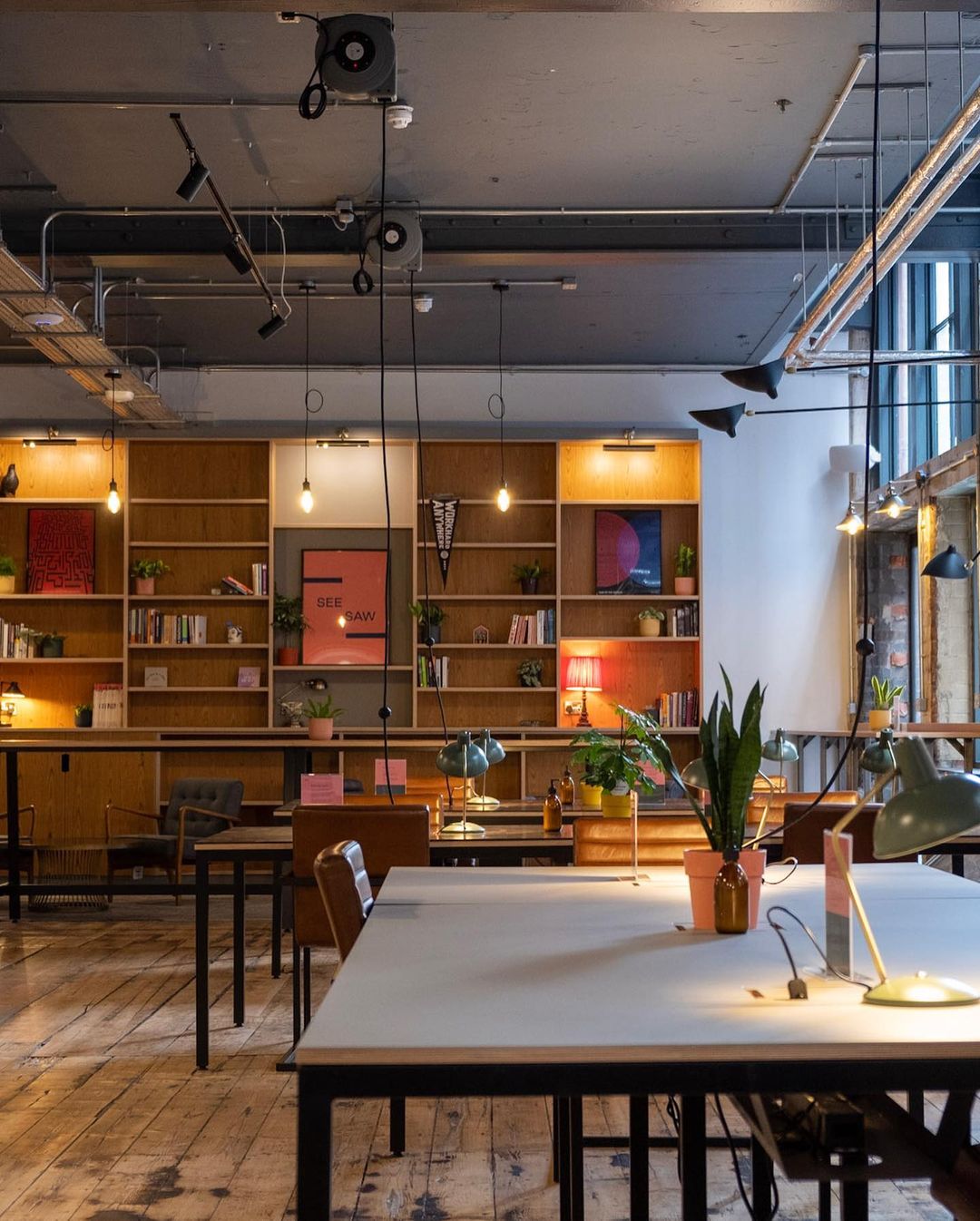
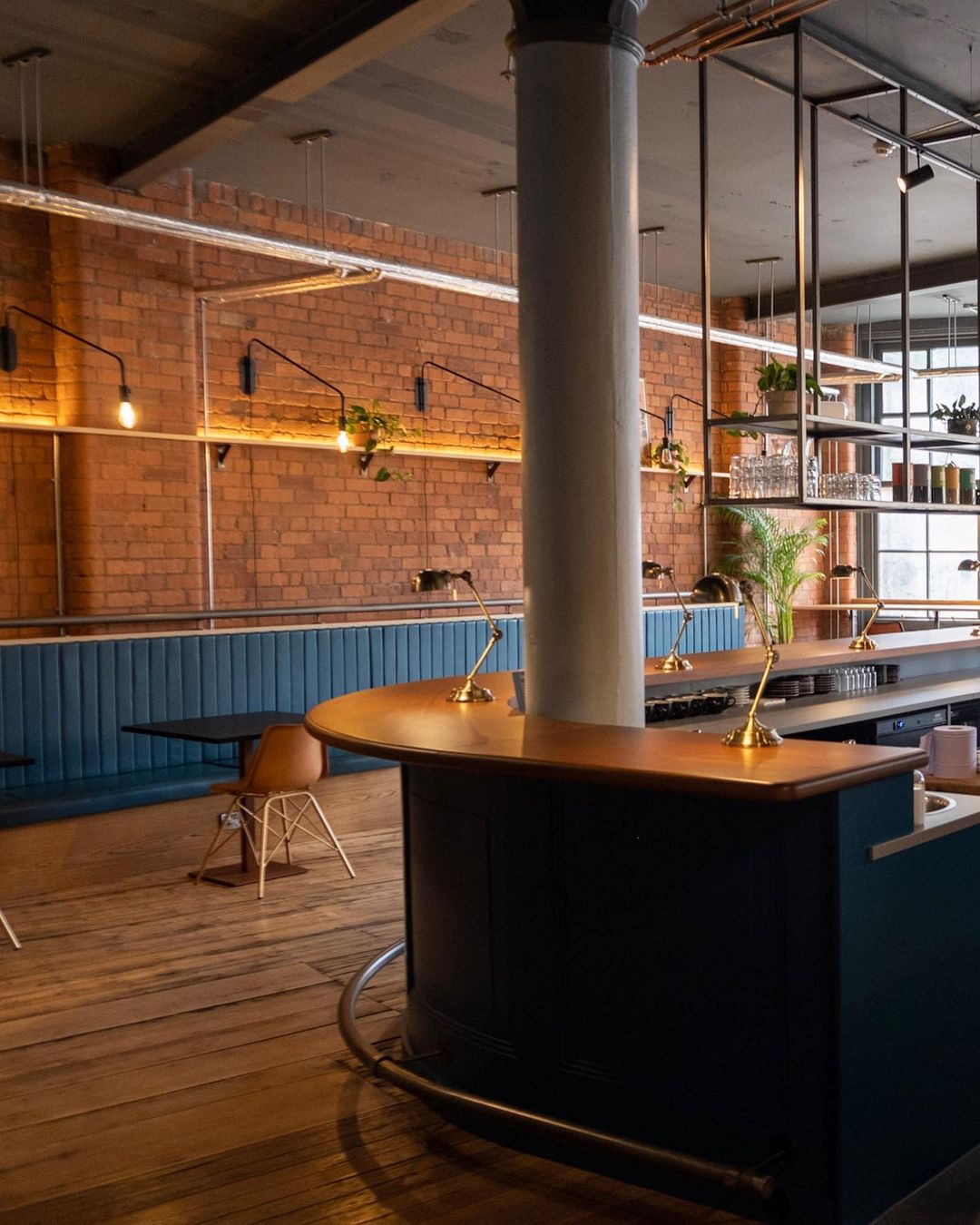
Inside the new cafe space inside SEESAW that Batard will be taking over later this month / Image: Adrian Brenner
But now, come the end of September, they’ll be taking up a new permanent residency inside SEESAW – a fresh coworking space that’s recently been opened by the team behind Takk in the Northern Quarter and Ancoats new ‘part-time’ wine bar and shop, Kerb.
Serving up the bakes they’ve become known for using flour freshly milled on-site, as well as a food menu focused on local produce and seasonality, they’ll be bringing back some all-time favourite bakes as well as introducing a new breakfast and lunch menu.
ADVERTISEMENT
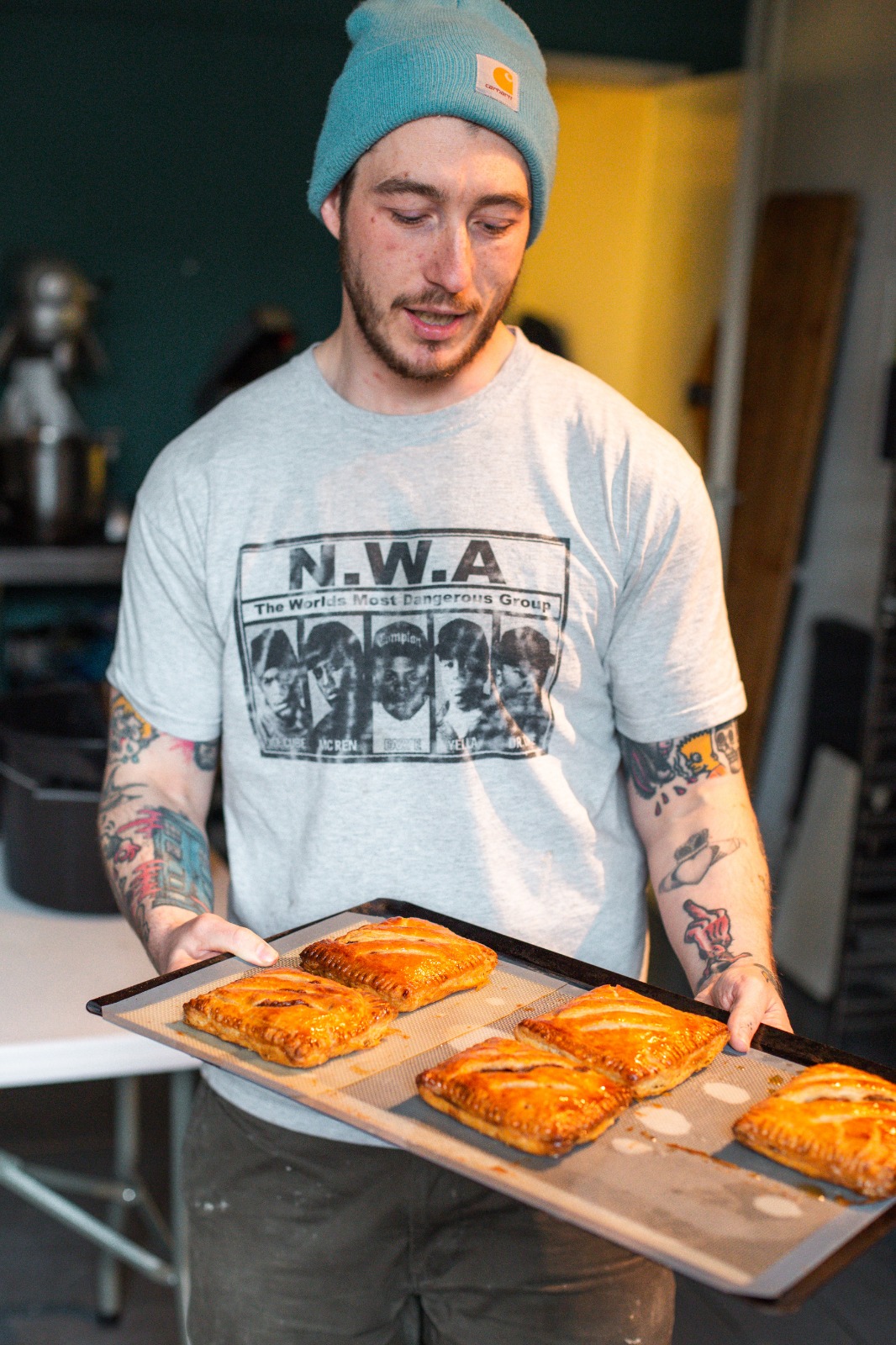
Fans of Batard’s notorious steak bakes will be pleased to hear these will be making a return, alongside some new dishes like a ‘fish butty’ comprised of house-made Hokkaido milk loaf, beer-battered haddock, tartar sauce and iceberg lettuce.
There are also some plans to add a selection of pies to the offering here further down the line.
ADVERTISEMENT
Baker Lewis Loughman pictured with a tray of his infamous steak bakes / Image: Adam Pester
The new menu will consist of breakfast and lunch items using the best produce Manchester has to offer – and each dish will be created using a product baked freshly on-site, with Batard showcasing their baking skills through creations like Hokkaido milk loaves, babka, and sourdough batards.
All menu ingredients will be sourced locally, with Batard working with independent suppliers including Littlewoods butchers, The Crafty Cheese Man, and Cinderwood (a new one-acre market garden in Cheshire focused on growing food for flavour, founded by organic grower Michael Fitzsimmons and Higher Ground chef Joseph Otway).
Coffee will be served by SEESAW’s baristas using beans from local roastery Swansong, with natural wine, local beer and cocktails to follow.
ADVERTISEMENT
Inside the new cafe space inside SEESAW that Batard will be taking over later this month / Image: Adrian Brenner
Speaking on the new opening plans, Philip Hannaway, Managing Director at SEESAW said:
“We’re really excited to welcome Batard into SEESAW. As a fellow startup they share our love of the creative and doing things differently. We couldn’t think of a better addition to our SEESAW cafe offer and we look forward to our members, as well as the public, enjoying what we have to offer between us.”
To keep up with new developments ahead of Batard’s opening, make sure to follow them on Instagram here.
You’ll find their new cafe inside SEESAW at 86 Princess St, Manchester M1 6NG. The opening date is still TBC.
Two teens arrested after stabbing of 14-year-old boy in Manchester city centre
Emily Sergeant
Two teenagers have been arrested following the stabbing of a 14-year-old boy in Manchester city centre over the weekend.
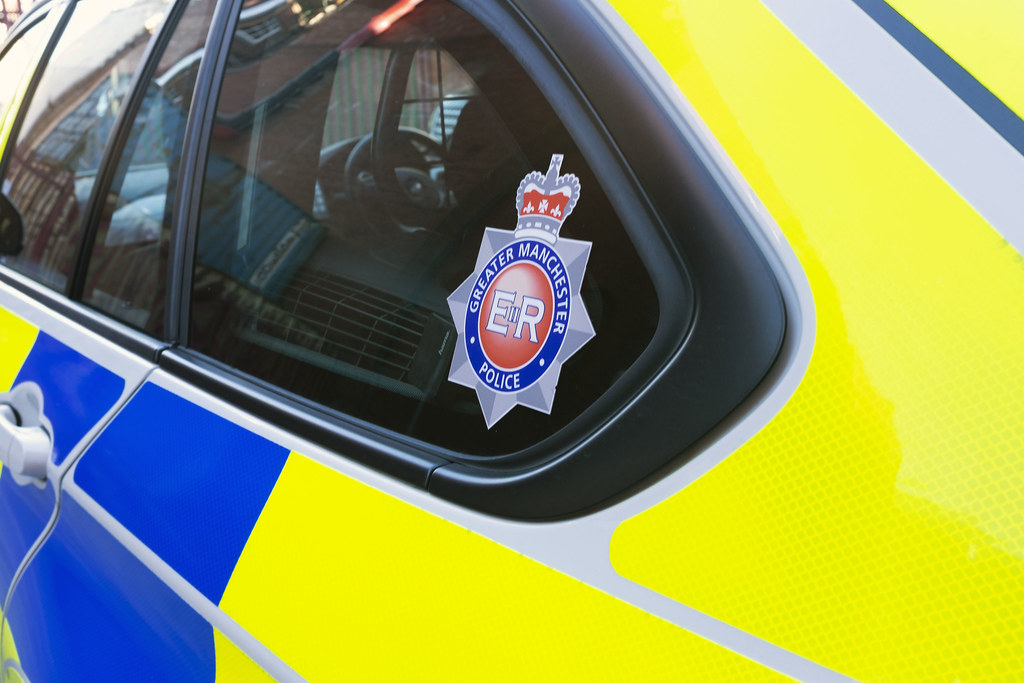
In case you need bringing up to speed first, at around 3:15pm this past Saturday afternoon (17 October 2026), officers from Greater Manchester Police (GMP) were called out to reports of a stabbing on the ninth floor of the Arndale carpark in Manchester city centre.
Emergency services attended the scene, and a 14-year-old boy was taken to hospital with injuries consistent with a stab wound.
Thankfully, the victim’s injuries are not believed to be life-threatening or life changing, but an investigation and enquiries are ongoing.
Police conceded that this will ‘understandably’ cause concern in the community, but has assured the public that they believe this to be an ‘isolated incident.
And now, it has been confirmed that two teenage boys, also aged 14, were arrested on Sunday night (18 October) on suspicion of grievous bodily harm, and tat this time, they are currently in custody for questioning.
“We’d like to thank the local community for their support during our investigation as well as the passersby who helped the victim following this incident,” commented Detective Inspector Sean McFadden, of GMP’s City of Manchester district.
“Your quick-thinking undoubtedly saved the victim from potentially life-threatening injuries.
“We appreciate that incidents of this nature can cause concern and we’d like to reassure the public that we understand this was an isolated incident and there is no wider threat to the community.
“Officers worked quickly and arrested two juveniles on Sunday, and they currently remain in custody for questioning.”
Anyone with information is asked to contact police on 101, quoting log 2050 of 17/10/2026, or via the LiveChat function. Alternatively, contact Crimestoppers anonymously on 0800 555 111.
Featured Image – GMP
News
UK Government announces £100 fines for ‘antisocial behaviour’ on public transport
Emily Sergeant
The Government has today announced plans to tackle antisocial behaviour on public transport.
In a bid to crackdown on loud music, littering, vaping, and other threatening behaviour on buses and trains, guidance was issued by the Government today for local authorities to prosecute and even issue fines of up to £100.
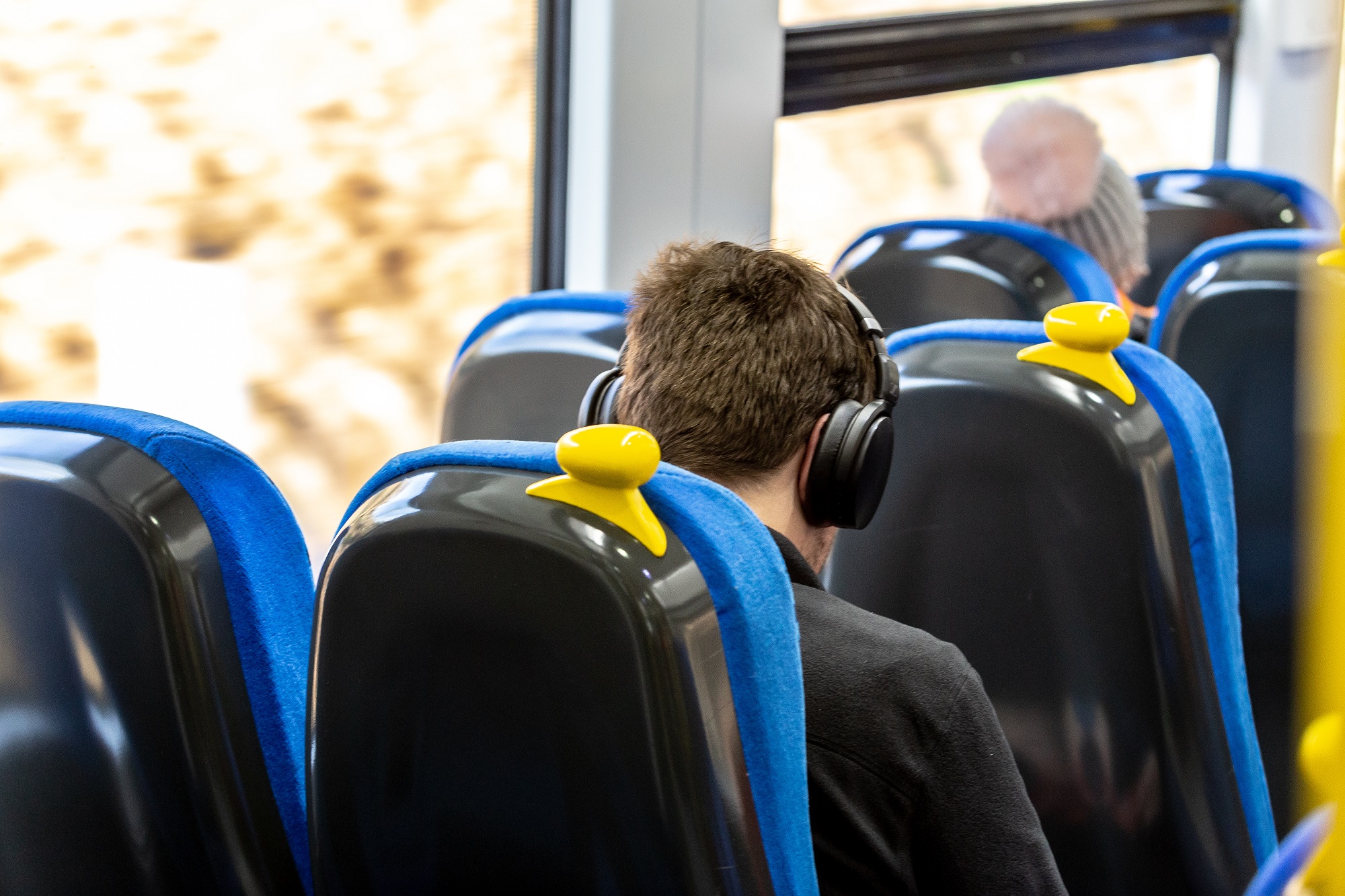
For many, playing audio out loud on public transport – also known as ‘loudcasting’ – has become one of modern life’s most irritating parts of the daily commute, but now, a new national campaign is aiming to encourage rail passengers, in particular, to ‘share the carriage, not the noise’ to improve the journey experience for all.
This will include reminders of the rules in place on the rail network and, if a passenger refuses to stop when asked by authorised rail staff, they can be removed from the train at the next station or face fines up to £1,000.
On buses, however, the powers for authorities were already made possible by the Bus Services Act 2025, meaning all local transport authorities in England are able to set and enforce their own rules.
Authorised officers – including transport safety officers and the police – will be responsible for enforcement, rather than bus drivers themselves, and they will be tasked with a three-step approach to deal with incidents. They will need to:
Engage with the person
Explain the rules and their impact on other passengers
Take enforcement action if they refuse to comply
“We’ve all been on the train when someone starts blasting music or videos from their phone,” commented Prime Minister Andy Burnham.
“It gets on your nerves and can quickly spoil the journey, so we’re launching a nationwide campaign reminding passengers to use headphones on trains. On top of that, we’re giving local leaders new powers to tackle loud music, vaping and littering on buses.
“It’s a simple thing, but one that will make journeys that little bit better for all of us.”
Ben Plowden, Chief Executive at the Campaign for Better Transport, added: “Antisocial behaviour is not just irritating, it can be a real deterrent to people using public transport – especially people with different accessibility requirements.
“If these new powers are properly and visibly enforced, they should help everyone feel safe and comfortable on public transport and enjoy the ride.”

 Georgina Pellant -
1st September 2021
Georgina Pellant -
1st September 2021