The latest data showing coronavirus (COVID-19) infection rates has been released and it’s revealed a rise in cases across nearly every Greater Manchester borough.
Figures from the last week, which were released by the government on Thursday afternoon, show that the infection rate in Oldham has risen the most sharply in the region, but rates are seen to be going up week-on-week in seven of the ten Greater Manchester boroughs.
The city of Manchester, Tameside, Salford, Trafford, Bolton and Stockport have also seen significant increases.
Oldham’s infection rate has now reached 67.9 per 100,000 people, after there were 161 positive cases in the week up until this Monday 3rd August, and which is said to be the biggest weekly total since 8th May. There has been more than 100 positive cases for COVID-19 in Oldham in the few days since the new measures were imposed across Greater Manchester and this figure is due to rise once late test results are added in the coming days.
In the city of Manchester, 183 cases were recorded in the week up to 3rd August, and whilst this is 28 cases more than the previous week, the rate has still fallen slightly since local lockdown measures came into effect.
ADVERTISEMENT
Infection rates in Tameside (26.5 – 67 new cases) and Salford (27.4 – 71 new cases) have also risen sharply over the last week and both now have a higher rate than Trafford (26.5), where the number of cases has fallen by 36 in the last week since the previous, with a recorded total of 63 new cases.
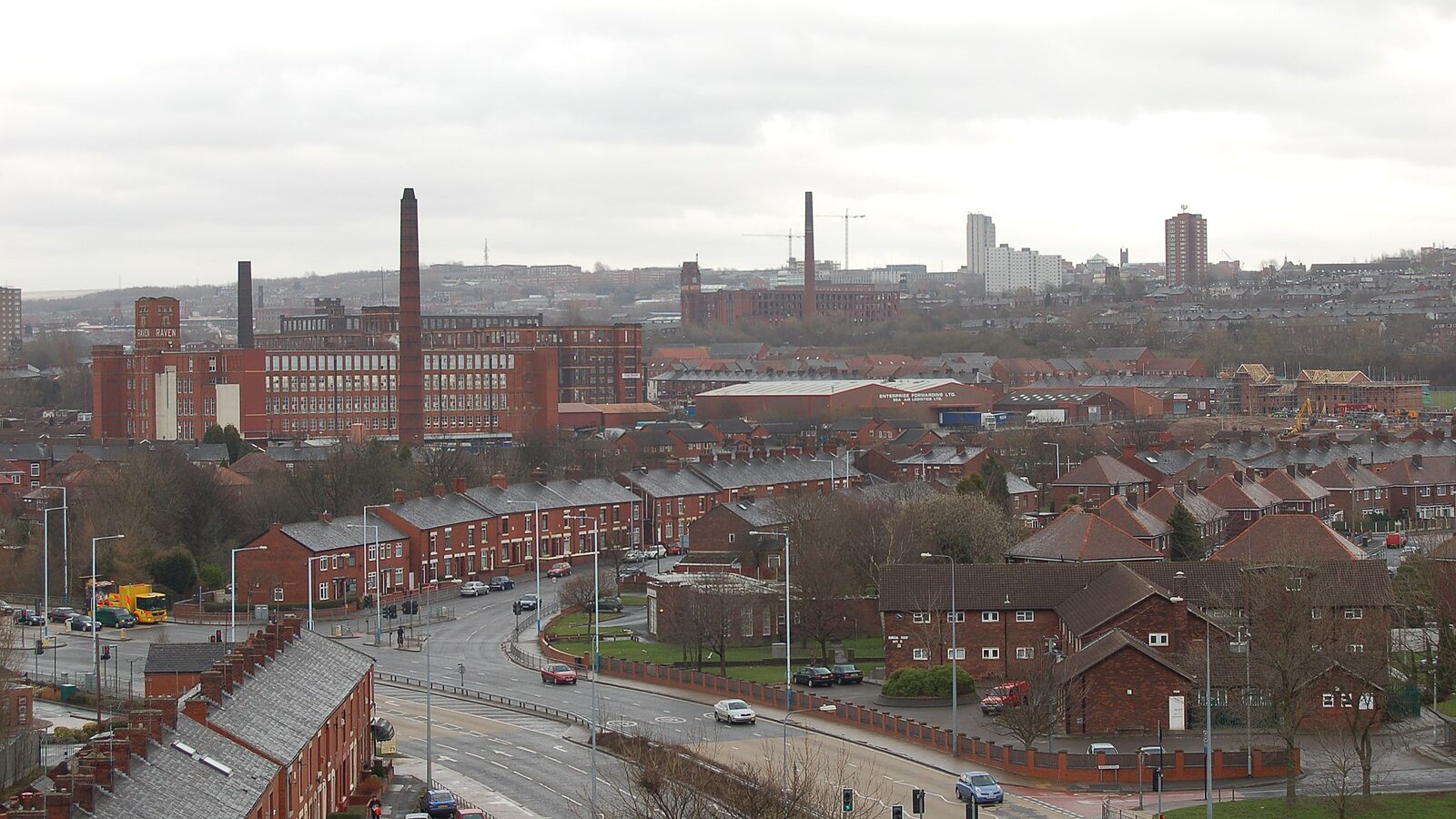
Wikimedia Commons
Stockport (25.6 – 75 new cases) and Bolton (24.4 – 70 new cases) have also seen infection rates increase in the last week.
ADVERTISEMENT
Dr Helen Lowey, Director of Public Health at Bolton Council, stated that she was “disappointed” to see figures rising in the borough, but that this increase was expected. She said: “We have increased the amount of testing that is taking place, so we would expect the number of cases to rise, [but] we continue to monitor the situation and to work with our residents and businesses.”
“Coronavirus has not gone away and we are still in the middle of a global pandemic [so] we must continue to stick to the new rules introduced for Bolton and other parts of the north of England.”
“We continue to monitor the local picture closely along with our partners in health and social care and Public Health England.”
ADVERTISEMENT
In Bury, infection rates are growing, but remain low overall, whilst in Wigan, there has been no noticeable rise over the last week making it the borough with the lowest rates of any area in Greater Manchester.
The latest figures show Oldham remains at alert level ‘red’, Manchester, Rochdale, Tameside, Salford, Trafford and Stockport are rated ‘amber’, and Bolton, Bury and Wigan are rated ‘green’.
⚠️ Local restrictions in Manchester ⚠️
Cases of coronavirus are going up in Manchester. You MUST follow Government issued guidance to protect yourself and others.
— Manchester City Council (@ManCityCouncil) July 31, 2020
This latest data comes the week after Health Secretary Matt Hancock made the announcement on the evening of Thursday 30th July that people in certain areas of Northern England – crucially including all 10 boroughs of Greater Manchester – would no long be permitted to congregate privately with others outside their household or support bubble due to a rise in coronavirus (COVID-19) cases across these regions.
Legislation to legally enforce these new restrictions was published by the government five days after the announcement and came into force on Wednesday 5th August.
You can check the latest infection rates across Greater Manchester in full here.
ADVERTISEMENT
To check the latest COVID-related death toll figures and information for your area, you can input your postcode via the Office for National Statistics (ONS) website here.
___
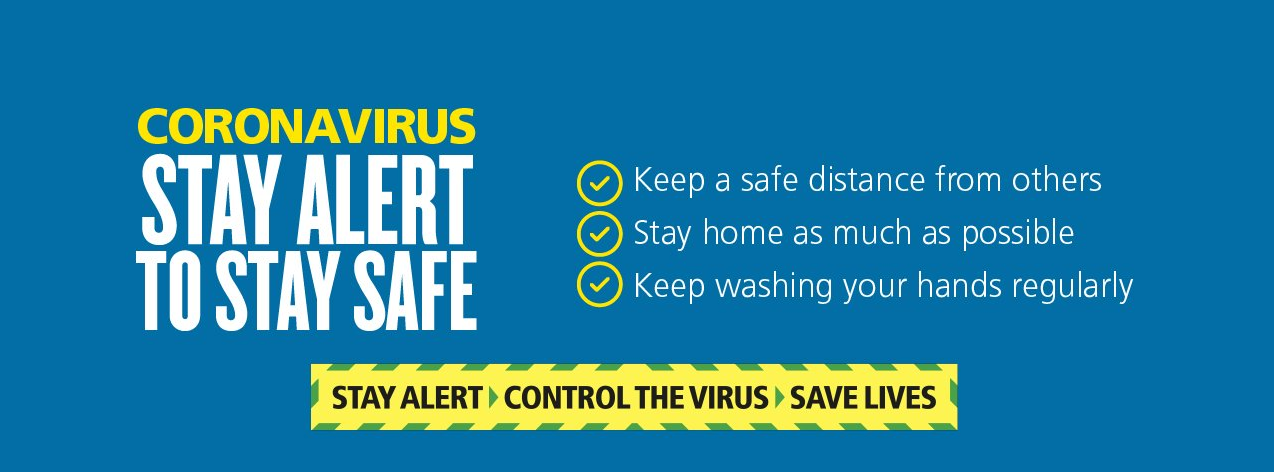
For further information and guidance amid the coronavirus (COVID-19) pandemic, do refer to official sources via gov.uk/coronavirus.
#StaySafeSaveLives
News
Met Office gives verdict on how Storm Boelo aftermath will affect Greater Manchester this week
Emily Sergeant
Storm Boelo is finally on his way out, and now the Met Office has given its verdict on what we can expect from the rest of the week.
In the aftermath of two successive storms, Storm Austen followed by Storm Boelo – the latter of which affected Greater Manchester – the UK is now able to begin recovering from the effects of the adverse weather.
But the Met Office has warned that, although there is no named storm, strong winds and heavy rain will continue to affect parts of the UK early this week, before high pressure brings calmer conditions.
Yellow national severe weather warnings are in place for parts of Scotland and western areas of the UK today (Tuesday 27 October), including areas of the North West, as gales and spells of rain bring the potential for ongoing disruption around the region, particularly on exposed coasts and higher ground.
“The continued winds could hamper recovery efforts in some places,” forecasters also unfortunately confirmed.
⚠️ Strong winds and heavy rain continue across parts of the UK early this week with a yellow weather warning in place, before high pressure brings calmer conditions for many from Wednesday ⛅
Read our news release to find out more 👇
https://t.co/EQU4vvaA3B https://t.co/hpvTd8v7EZ
As rest of the week pans out though, conditions will begin to settle down and showers are expected to become ‘less frequent’, while winds also ease for most, although gales could continue for a time in the far north.
Thursday is expected be ‘largely dry’ with lighter winds and variable cloud, with a touch of mist and fog likely across parts of England and Wales during the morning.
From Friday and into the weekend, light rain will team up to potentially affect northwestern areas of England, but for the most part, temperatures are expected to remain close to, or slightly above, average for the time of year.
“From Wednesday, high pressure will start to build which will ease the winds and bring a quieter and largely drier end to the week for many, although some rain is still possible in the North and West,” explained Met Office Deputy Chief Forecaster, Steven Keates.
“However, with wind warnings in place, those in warnings areas, particularly in northern Scotland and western high ground, continue to be exposed to strong winds and heavy rain before the more settled weather arrives.”
Featured Image – The Manc Group
News
Popular pumpkin patch attraction describes ‘catastrophic’ impact of Storm Boelo
Daisy Jackson
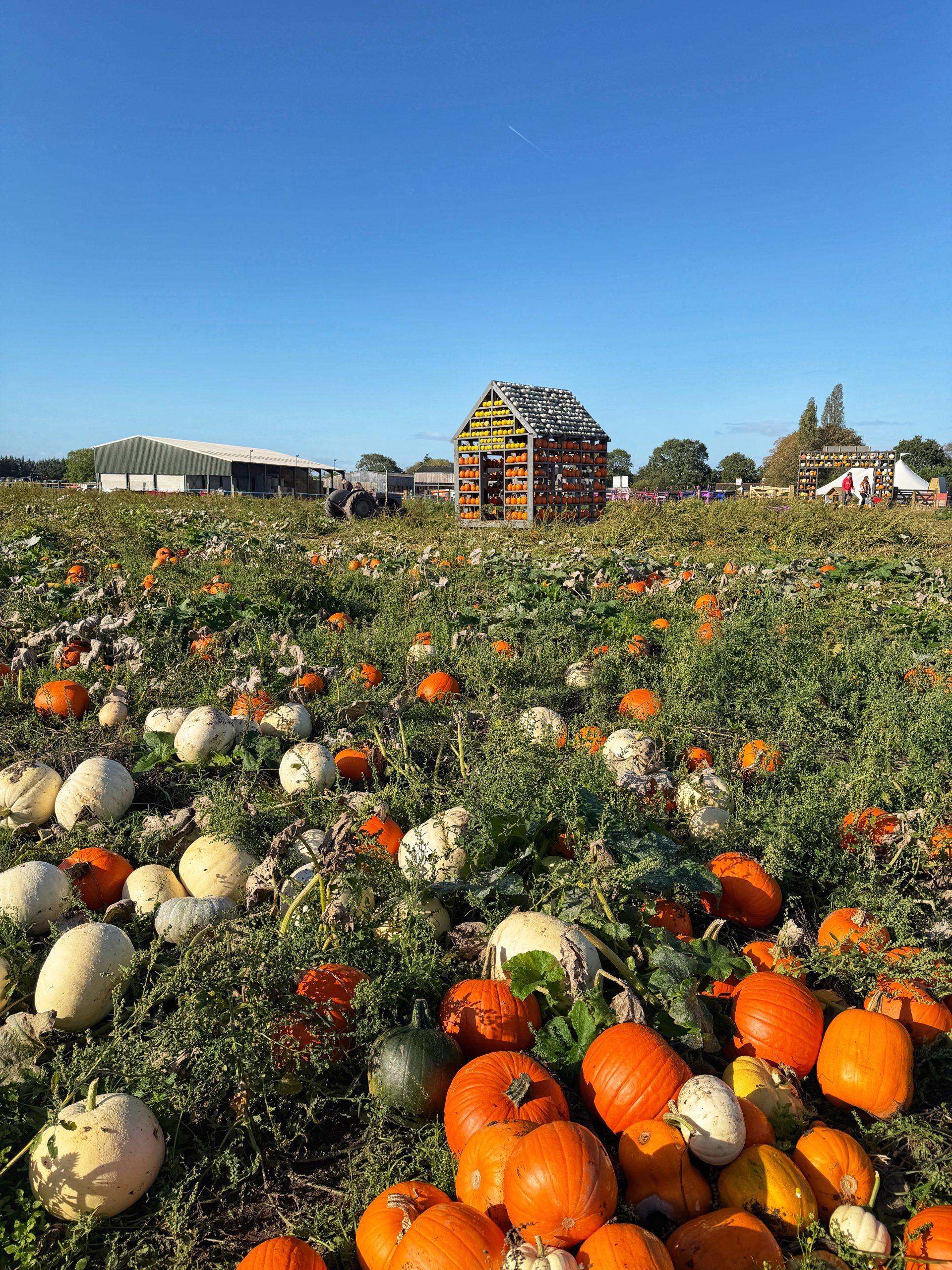
Bates Farm, one of the most popular pumpkin patch attractions in the North West, has shared its heartbreak after Storm Boelo forced its closure on the busiest day of the season.
The Warrington-based family farm said the financial impact has been ‘honestly catastrophic’, after they had to cancel all tickets for Sunday.
Sisters Ali and Fiona Wilshaw, who run the farm, said it was simply not safe to allow members of the public onto the farm in the storm, with ‘crazy’ gusts of wind.
They later shared a video that showed their marquee was badly damaged and many footpaths turned to deep mud.
The sisters said they were ‘heartbroken’ to have to close at such a busy time, but stressed to followers that ‘your safety and our integrity will always come first’.
On Saturday, as Storm Austen and Storm Boelo chased each other across the UK, several people shared videos of themselves getting battered by the weather at Bates Farm.
And it’s pretty clear from that why Ali and Fi decided to cancel all tickets and close for the day on Sunday.
They wrote: “We have put in so much love, energy and investment putting on this event at this scale. The cost to cancel and refund everyone today on our busiest day of the season is honestly catastrophic, but business aside, your safety and our integrity will always come first.
“To think last night we were running round Tesco trying to stock up on milk and now we are in the depths of recovering the site to go again tomorrow. All emails and enquiries are being responded to as quickly as possible and we are doing our best to open up more available slots next week.
“We are being tested like never before, but pulling together in true force. Huge shout out to the whole team and Farmer Fi the absolute queen in any crisis.
“Thank you all for your patience and especially thank you to those who have sent such kind words and support, we are so grateful to have customers like you.
“We will be back tomorrow to enjoy the remaining of this tough season, we are putting in so many provisions with wood chip paths, undercover seating and an indoor barn to make your visit as enjoyable as possible. Ali & Fi.”
Anyone who had tickets to visit Bates Farm on Sunday will be refunded, and can book in for another date.
Bates Farm has safely reopened its autumnal experience and pumpkin patch today.

 The Manc -
7th August 2020
The Manc -
7th August 2020