Manchester football fans are being warned of a rise in resale ticket scams ahead of the FA Cup final in a couple of weeks time.
History is repeating itself and tensions are building by the day, as Manchester United and Manchester City are facing each other in an all-Manchester final of the Emirates FA Cup at Wembley Stadium on Saturday 25 May.
And, to no surprise, it’s set to be a massive day for football fans in our football-obsessed city.
2023 was the first time the two Manchester clubs battled it out for the FA Cup title in the final in the 151-year-old football competition’s illustrious history, and it was victory for the Citizens, with the trophy was formed a crucial piece of their treble-winning season… but, in what seems to be a repeating turn of events, 2024 is the year of the re-match.
As you’d probably expect, once it was confirmed that United and City would face each other again in the FA Cup final this year, tickets for the match sold out instantly, and there’s only a handful of restricted view seats left now.
Despite Manchester City having even warned that any fans who are found to have resold their ticket will face a ban, there are, however, countless resale sites and individuals are flogging their seats online.
This is why the digital payment experts at takepayments are urging any fans hoping to travel from Manchester to London for the final to remain vigilant, and make sure they are armed with the knowledge and tips that’ll prevent them from falling for fraudulent ticket scams.
ADVERTISEMENT
“The FA Cup Final is one of the most highly-anticipated matches of the season and there is always huge demand for tickets,” explained Jodie Wilkinson, who is the Head of Strategic Partnerships at takepayments.
“Unfortunately this means ticket touts will be looking to sell seats at inflated prices, as well as conning fans out of their money with fraudulent tickets, or stealing their bank details using a fake resale site.”
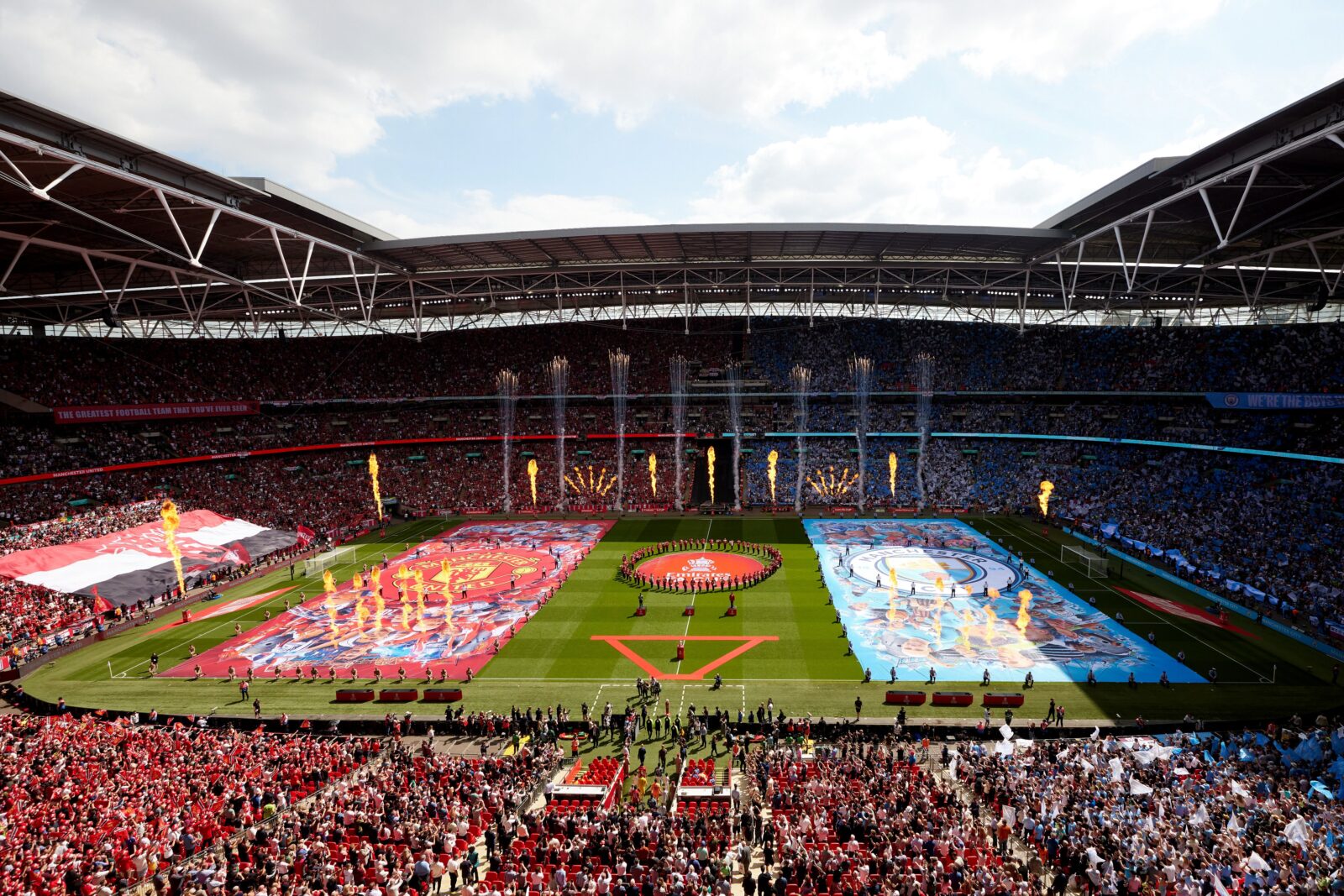
Manchester football fans have been warned of rise in resale ticket scams ahead of FA Cup final / Credit: The FA
She explained that while buying tickets by credit or debit card does cover fans under Section 75 and Chargeback Rules – which is where their card provider could help recover the cost of goods or services if they do not receive what they paid for – paying cash for a ticket doesn’t have the same protection if the ticket ends up being unauthorised.
ADVERTISEMENT
Research from Lloyds Bank ahead of the new football season last year revealed that the majority of football ticket scams tend to take place on social media platforms via bank transfers, but unfortunately, Jodie admitted that it can be “extremely difficult” to recover money lost from bank transfer scams, as in most cases, victims willingly transfer payment to a fraudster’s account.
“It’s important to only buy tickets from a secure ticket resale site and never send anyone you don’t know and have only spoken to on social media money,” Jodie concluded.
She also said that secure eCommerce websites will have “certain card payment security measures in place” to prevent people from getting scammed, and that fans should be aware of these security measures before making any payments.
Strong Customer Authentication (SCA), 3D Secure Authentication, and Secure Socket Layer (SSL) certifications, are some of the most common measures sites put in place.
More information on card payment security measures can be found on the takepayements website here.
ADVERTISEMENT
Manchester United and Manchester City will battle it out to be crowned champions in the final of the Emirates FA Cup on Saturday 25 May.
Kick-off is at 3pm, and the game action is to be shown live on both BBC One and ITV.
Featured Image – The FA
News
Manchester City ‘strongly condemn’ racist abuse towards first-team players at Everton
Danny Jones
Manchester City Football Club have released a statement following yet more troubling racist abuse in the Premier League this May bank holiday.
Pep Guardiola’s side faced Everton in a fixture that ended in a 3-3 draw, which could prove pivotal in their pursuit of leaders Arsenal.
Sadly, however, one of the main stories to be taken from the game once again revolves around abuse and discrimination.
Match officials were quickly made aware of racial remarks directed at winger Antoine Semenyo on the day, and, unfortunately, defender Marc Guehi has also been the subject of hateful messaging online in the aftermath of the result.
Sharing a short, but simple and emphatic statement, the club wrote: “Manchester City strongly condemns the racist abuse directed towards Antoine Semenyo at yesterday’s match.
“We welcome the swift action taken by Everton and the police to identify the individual responsible.
“We are also incredibly disappointed to hear that Marc Guéhi was subject to a series of vile racist social media posts last night.”
They go on to add that they will “continue to offer our full support to both Antoine and Marc and never accept discrimination of any kind in our game.”
Everton themselves have since confirmed that local authorities swiftly identified at least one individual alleged to be responsible for the unacceptable behaviour.
As mentioned in their own post, the culprit is said to have been a 71-year-old man who was quickly flagged by fans and stewards inside the Hill Dickinson Stadium.
While this may be the first incident reported at the Toffees’ new home ground, regrettably, it’s just the latest in a long line of similar cases raised not just in English football but the top flight, specifically.
It goes without saying that we’re sorry to hear that stuff like this is still happening, and we send our strength to all those who continue to be affected by this despicable treatment.
As ever, ‘the beautiful game’ is for everyone and racism has no place in society, let alone football – kick it out once and for all. In other news surrounding Man City, there’s also been some controversy surrounding their upcoming FA Youth Cup final.
Manchester ‘institution’ Topkapi Palace quietly closes Deansgate restaurant after 47 years
Danny Jones
After the best part of half a century, local institution Topkapi Palace looks to have quietly closed the doors to its Manchester restaurant.
Founded way back in 1969, Topkapi has been a mainstay of the Deansgate strip longer than most other venues in the area, but many have noticed that it hasn’t been open for a little while now.
After plenty of speculation online, it now appears to have shut down for the foreseeable future.
It remains to be seen whether or not this is a permanent culinary casualty, but judging by the paper signs now displayed in the windows, things don’t look promising for the Turkish grill.
As posted in the shopfront of the restaurant, an update from Wilson and Doe High Court Enforcement says: “Under the terms of the demised lease, we, as authorised agents on behalf of the landlord, have to this day re-entered the premises known as Topkapi Palace…”
It also warns that any attempts to enter the building will result in criminal or civil proceedings.
The statement goes on to read: “Acting as agents for the Involuntary Bailee, we give notice to any third party who asserts ownership of the Goods to which this notice relates:
The goods identified at Topkapi Palace (Part Ground Floor and Basement), 205, 206 and 209 Deansgate, Manchester, M3 3NW are being held at the Property.
The Goods are ready for collection immediately, and this is a notice of your obligation to take delivery of the Goods at a mutually convenient time to be agreed and arranged with the Involuntary Bailee’s agents
Unless the Goods are collected on or before 17:00 on 10 April 2026, the Involuntary Bailee or its agents will remove and dispose of the Goods. The period between now and the Deadline is sufficient to provide you with a reasonable opportunity to take delivery of the Goods.
If the Goods are disposed of, the Involuntary Bailee intends to retain its disposal costs from any sale proceeds.”
As you can see, multiple units are listed in the forfeiture notice, including the address assigned to their takeaway sister site located just around the corner on Bootle Street, although it’s still unclear whether or not this way will stay open.
Somewhat of an institution in its own right, plenty of Mancs will have visited the late-night street food spot even if they have never sat down for a meal in the Topkapi Palace itself.
Posting on the Manchester subreddit last week, one user wrote: “I noticed that Topkapi Palace on Deansgate had shut down, I was gutted!”; another went on to add: “Oh dear – I hadn’t realised this.
“I always enjoyed the food, but it was often quiet during the week more recently, and that end of Deansgate is now prime territory for expensive bars. I doubt the unit will stay empty very long.”
Topkapi’s apparent closure is just one of several in and around the city centre already this year, with several hospitality names having to cease trading due to rising energy bills, business rates, rent and various other reasons. Here’s hoping the sector regains a bit of stability sometime soon.