Manchester HIV Activists continue the fight to eradicate AIDS by 2030
Right here in Manchester, a community-led outreach program called ‘In Equal Parts’ is taking on HIV - aiming to eradicate the disease within ten years whilst ending the shame and stigma surrounding it.
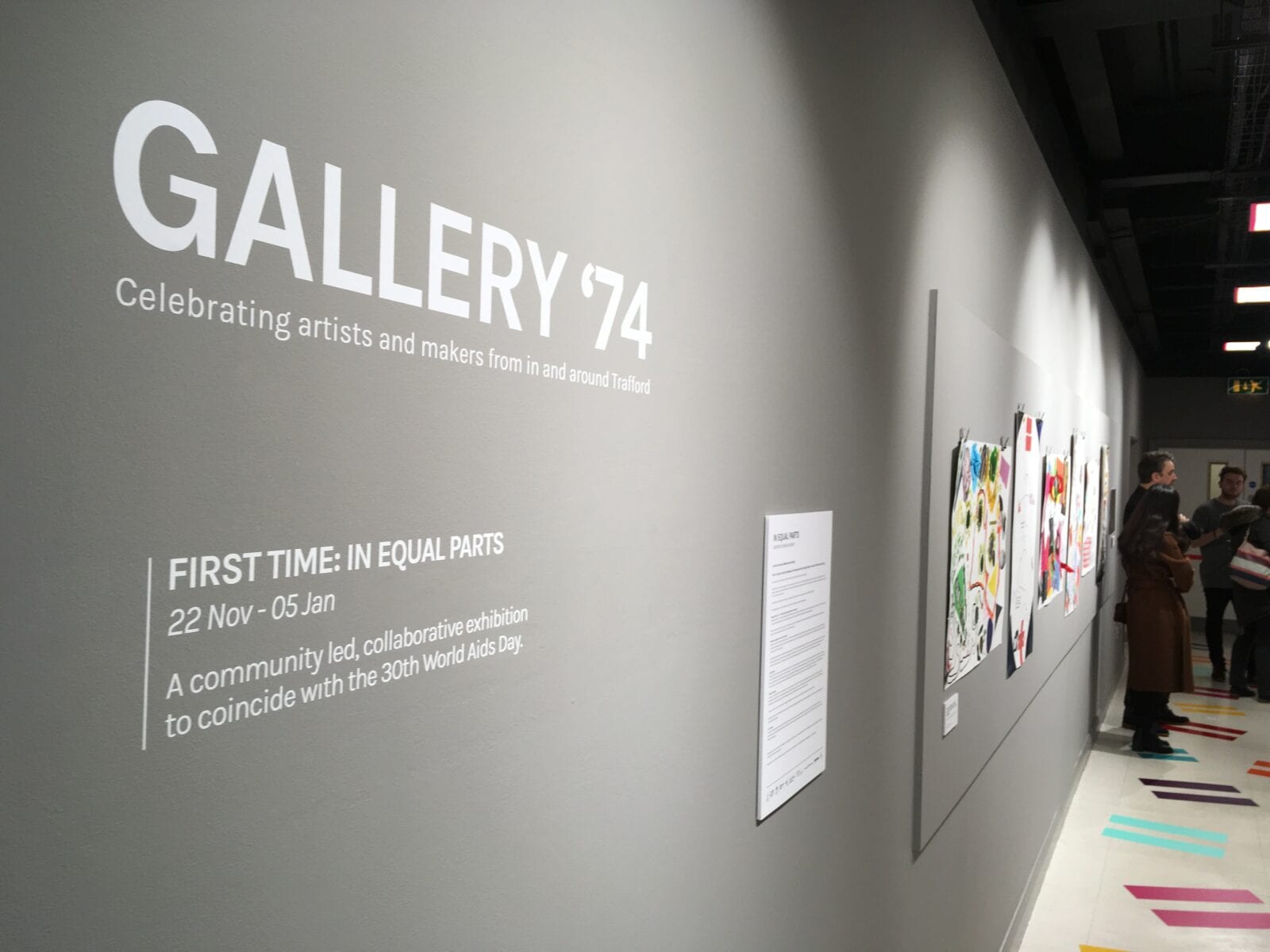
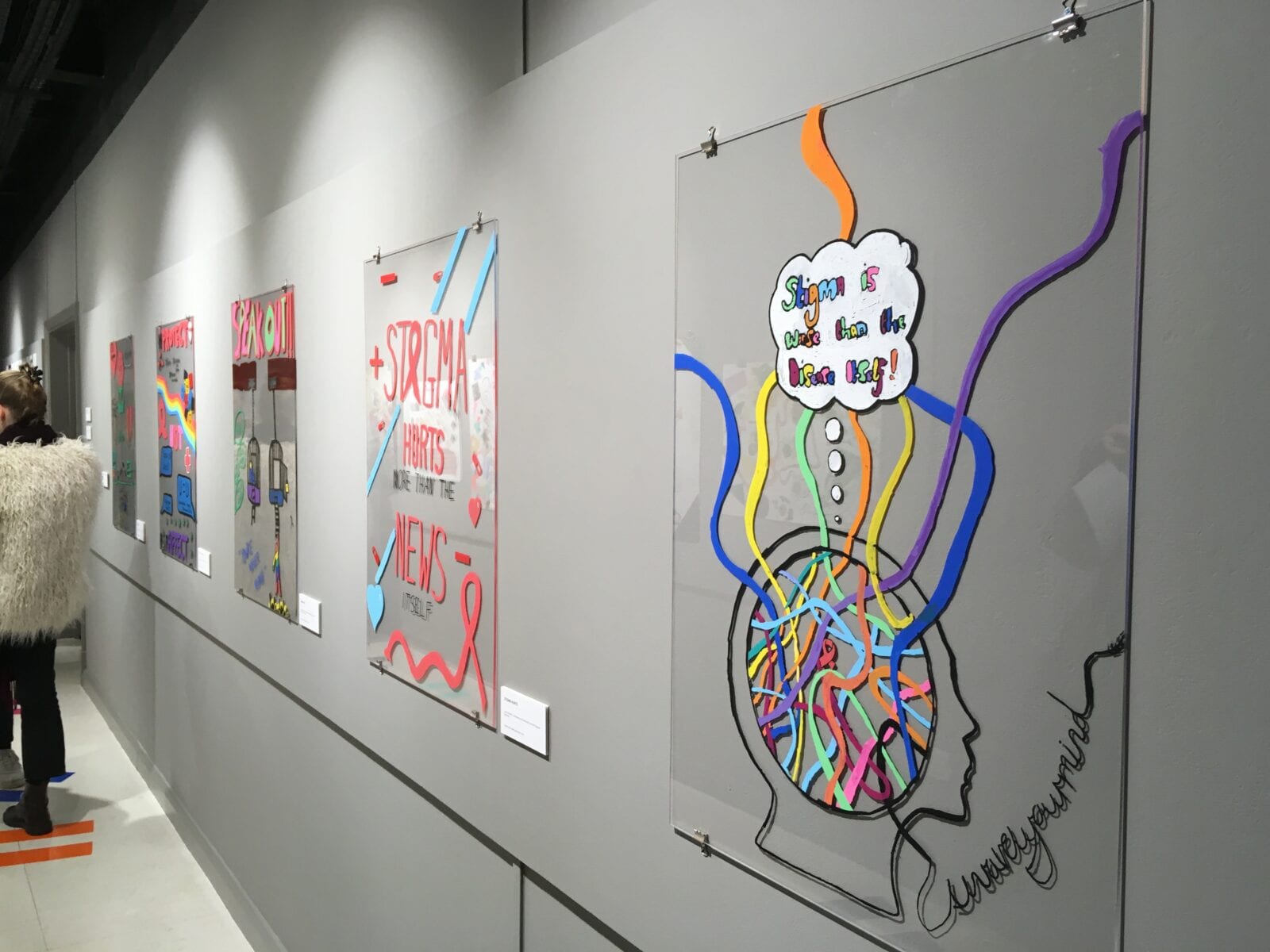
Community Exhibition on HIV presented alongside the original production of ‘First Time’
As scientists across the world have spent 2020 scrambling to find a vaccine for the virus putting life on pause – another group much closer to home have been fighting a battle against a very different beast.
Right here in Manchester, a community-led outreach program called ‘In Equal Parts’ is taking on HIV – aiming to eradicate the disease within ten years whilst ending the shame and stigma surrounding it.
This incredible project also has an incredible origins story. It all began with a play.
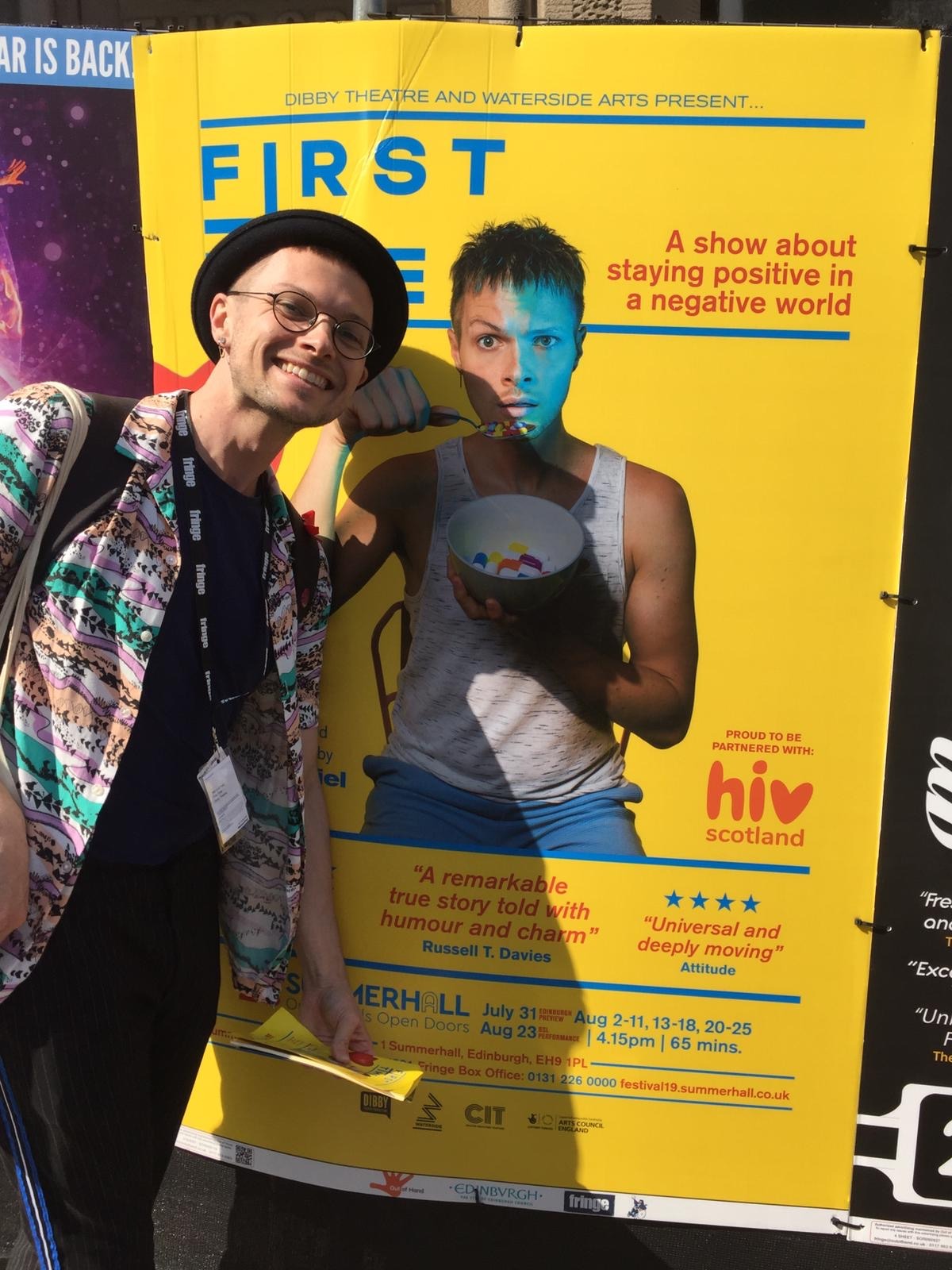
First Time was a performance written by the Mancunian creator of the project Nathaniel Hall (who describes himself as an ‘accidental activist’). Premiering in 2018 and appearing at the Edinburgh Fringe Festival, it documents the protagonist’s difficult journey with HIV, whilst also keeping the audience laughing.
After two successful sold out tours of First Time, the 2020 Autumn tour was cancelled due to coronavirus, which spurned Nathaniel to create and curate In Equal Parts instead.
ADVERTISEMENT
Nathaniel Hall at Edinburgh Fringe Festival
The goal of this project is to help with the global aim to end all new transmissions of AIDS worldwide by 2030, but also to open up a dialogue on a smaller scale about an issue that affects over 38million people.
According to Worldaidsday.org: “Each year in the UK over 4,450 people are diagnosed with HIV, people do not know the facts about how to protect themselves and others, and stigma and discrimination remain a reality for many people living with the condition.”
ADVERTISEMENT
‘In Equal Parts’ combines artists and non-artists, people with HIV and people without, and educates them on modern healthcare and prevention, destigmatize the virus and empower people to understand their role in ending all new transmissions by 2030.
In preparation for World Aids Day on the December 1, Nathaniel Hall will be leading the project alongside Yvonne Richards, Paul Fairweather and Mark Holder. All four have different relationships with the virus, and all are determined in their plight to bring awareness to the disease.
Nathaniel said: “To date, In Equal Parts has engaged over 5.5k people in creative workshops, talks, exhibitions, rapid HIV testing and fundraising parties – over 18k people have been engaged online.”
ADVERTISEMENT
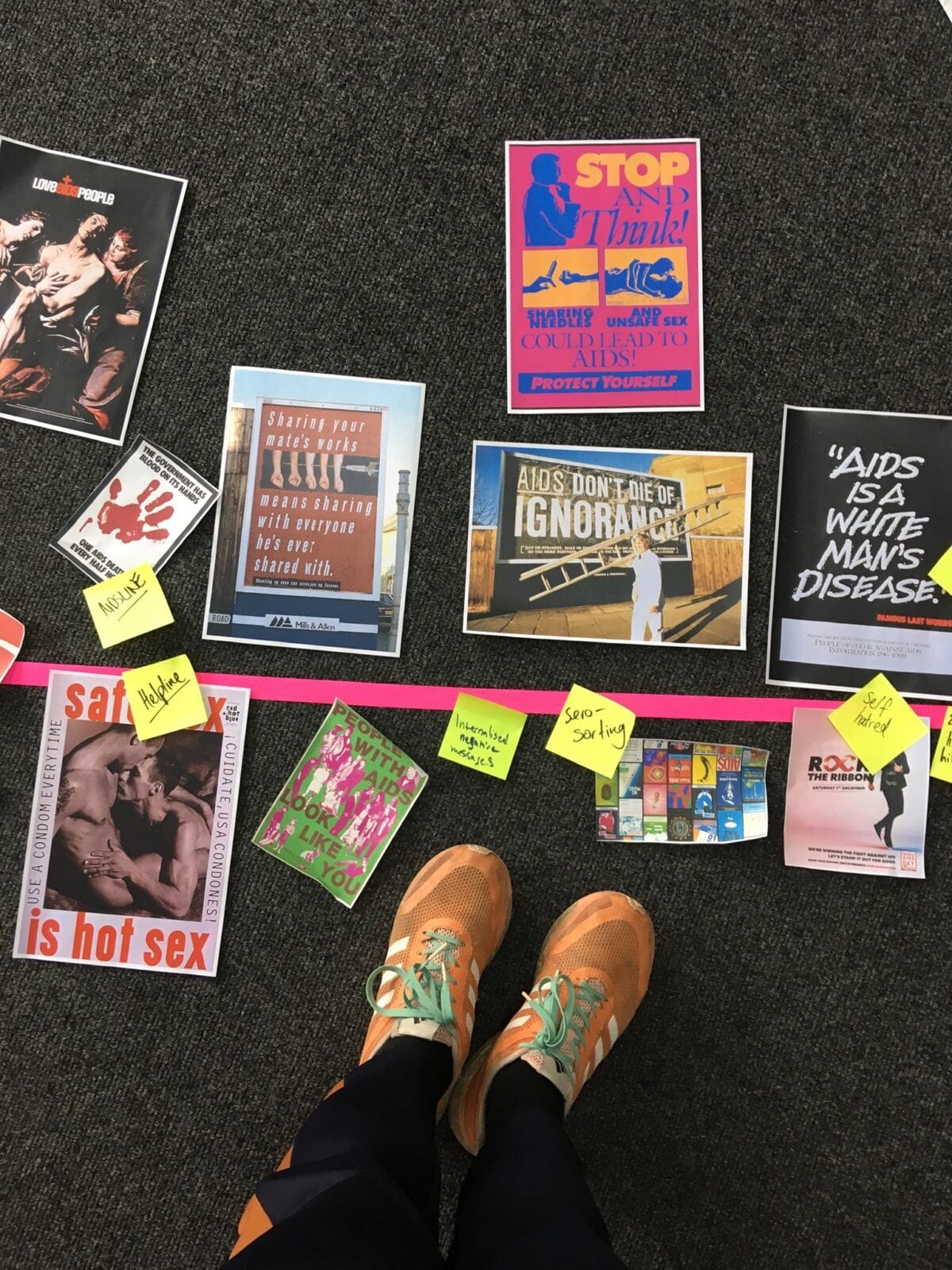
Education and Outreach Workshops, In Equal Parts
The project is working in partnership with George House Trust, Positive Steps North West, Contact and Waterside Arts.
At 8pm on World Aids Day, a digital event hosted by Contact in association with George House Trust and Superbia will join Nathaniel and Jordan Roberts in a creative discussion panel about HIV stigma and shame, with Positive Speakers from George House Trust.
The panel will be open to all questions surrounding the disease, and the event will be closed by the premier of Jordan Roberts’ brand new film: HIV + Me.
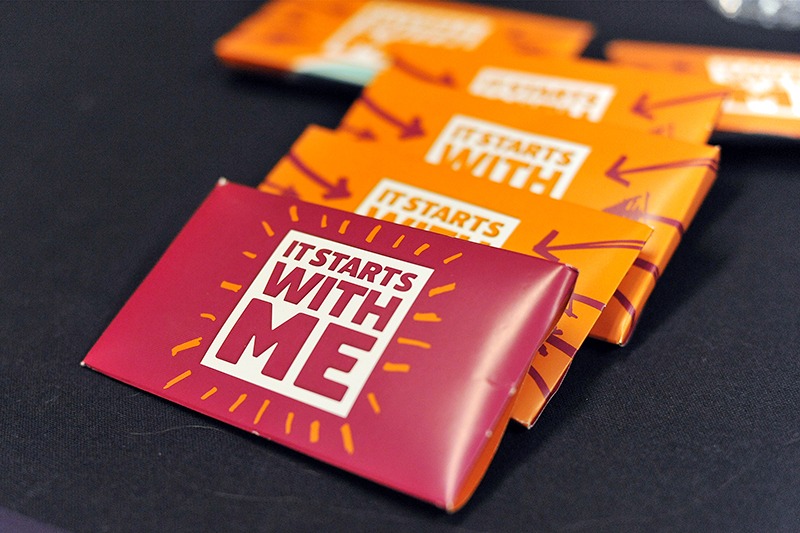
Free condoms are provided at theatre venues
Coming soon, HIV+Me will also showcase the lives of three people in Greater Manchester currently living with AIDS, through three short films.
The project has also created ACTUP+Live, a free virtual learning resource for local schools and community groups that will help to raise awareness of HIV in the younger generation, and explores how everyday creativity can inspire radical change.
ADVERTISEMENT
The activities continue into 2021, with events such as ‘a conversation with Russel T. Davies’, artist development workshops with Nathaniel Hall, and increased promotion of sortHIVorg.uk, which encourages access to HIV testing and PrEP.
Community Exhibition on HIV displayed alongside the ‘First Time’ production
Tickets for the first In Equal Parts digital event can be found here.
More information on the In Equal Parts outreach program can be found online.
News
Details released of Andy Burnham’s meetings with Manchester City owners while Mayor
Emily Sergeant
Details of Andy Burnham’s meetings with Manchester City owners during his tenure as Mayor of Greater Manchester have been released.
In case you need bringing up to speed on the situation a little first, Manchester City was found guilty back in September all of its charges related to the Premier League’s financial rules over a nine-season period, and on top of that, was also found guilty of the majority of charges in relation to its failure to co-operate with the League’s investigation.
According to the Premier League, the independent Commission found that Manchester City had arranged so-called ‘sham’ commercial deals with a number of its sponsors.
These were part of a disguised funding scheme – with those sponsors only required to pay a portion of the relevant sponsorship fees.
The remainder was then funded by Abu Dhabi United Group Investment & Development Ltd (ADUG), which owned the club.
The Commission also concluded, as quoted by the Premier League, that the club had ‘made concerted efforts to stop and frustrate the Premier League investigation’.
Within the past week or so, it has since come to light that now-Prime Minister Andy Burnham had dealings with Manchester City during his tenure as Greater Manchester Mayor, and Greater Manchester Combined Authority (GMCA) has now issued a public statement, giving details on the matter and what these ‘dealings’ entailed.
A spokesperson for GMCA confirmed that Burnham had a ‘formal meeting’ with Man City Chairman, Khaldoon Al Mubarak, back in October 2021.
The statement reads in full: “In October 2021, Andy Burnham, in his role as Mayor of Greater Manchester, had a formal meeting with Khaldoon Al Mubarak at the UK Government’s Global Investment Summit arranged by the Department for International Trade.
“In his capacity as Mayor, he was a guest of Manchester City FC at home matches on a small number of occasions, including attending Vincent Kompany’s testimonial match in September 2019, where he met the Chairman informally in the stands. These have been declared in the usual way.
“Also during his time as Mayor, representatives of Greater Manchester sporting clubs would routinely join business delegations as part of Mayoral international visits.
“This included representatives from Manchester United travelling to Austin and Dublin, Lancashire Cricket Club joining a delegation to India, and Manchester City FC staff supporting visits to China and Japan.”
Featured Image – Lauren Hurley / Number 10 Downing Street (Press Image via Flickr)
News
Multiple arrests made for ‘tragedy chanting’ and police officer assault as Man City defeated Liverpool
Emily Sergeant
Multiple people were arrested over the weekend as Manchester City defeated Liverpool in a Premier League clash.
Merseyside Police have confirmed that a total of 10 people were arrested during the policing operation at Liverpool’s home ground of Anfield as they hosted Manchester City on Sunday 11 October.
One man was arrested on suspicion of assaulting a police constable, five were on suspicion of tragedy chanting, one on suspicion of being drunk and disorderly, two for affray, and one on suspicion of throwing items onto the pitch.
Police are now appealing to the public, and are particularly looking to speak to witnesses of the assault of the officer.
At around 6:35pm, as fans left the stadium, a police officer sustained a ‘serious facial injury’ during the arrest of a man on Anfield Road, and was subsequently taken to hospital for treatment but is now recovering at home.
Investigating officers are now conducting enquiries, speaking to witnesses, and analysing CCTV and camera phone footage.
Chief Inspector Leanne Hobin said it’s ‘extremely disappointing’ that an officer has sustained a serious injury while carrying out their duty.
“I hope the arrests send a clear message and act as a deterrent to others,” Chief Inspector Hobin continued. “Anyone who engages in this abhorrent behaviour risks ending up in custody and getting a criminal record.
“Despite the actions of a few, the overwhelming majority of the 60,000 fans in attendance behaved well and I want to thank them for their co-operation.”
Manchester City ended up defeated Liverpool 3-0 during the Premier League clash at Anfield.

 Gemma Bradley -
30th November 2020
Gemma Bradley -
30th November 2020