Manchester is aiming to become one of the UK’s major cities to exempt its residents with terminal illnesses from paying council tax.
After Marie Curie’s recent ‘Dying in Poverty’ report found that around 42% of working age and 30% of pension-age residents in Manchester die while living in financial hardship, Manchester City Council has announced that it’ll be working together with the UK’s leading end of life charity to ensure that those with terminal illnesses become exempt from paying council tax.
The Council says addressing this ‘profoundly important issue’ is at the heart of a larger plan to support the most vulnerable residents in Manchester.
New proposals set out a plan for the Council to change its Discretionary Council Tax Policy (DCTP) to explicitly include a commitment to support people who have been diagnosed with a terminal illness.
To become exempt, clinicians will need to fill out a form to confirm that a person has a progressive disease, and consequently is expected to pass away within a 12-month period.
ADVERTISEMENT
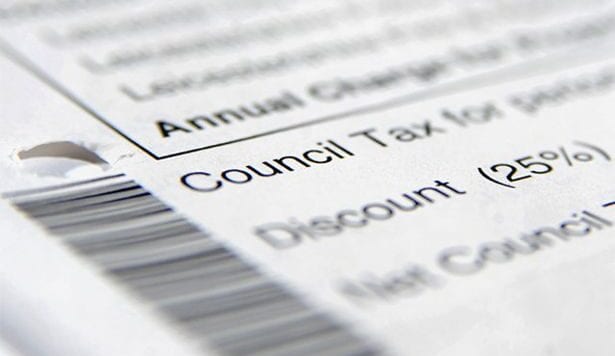
Manchester is working to make residents with terminal illnesses exempt from paying council tax / Credit: gov.uk
Using DCTP, the Council will then make up the difference of any shortfall in council tax, so that in any situation where a member of the household qualifies – whether an adult, child or non-dependant – the household will have nothing to pay.
The support will then apply to the household’s council tax bill until the date of the persons death.
ADVERTISEMENT
The Council will also be working to ensure that a ‘tell us once’ protocol is in place so that, in the event of a claimant’s passing, no undue burden will fall upon their family, and steps will also be in place to retain the discount for the remainder of the financial year to provide additional support for the passed person’s family.
Once delivered, it’s estimated that this scheme could support around 175 residents in Manchester – the majority of which would be of working age.
A new policy will ensure that people living will a terminal illness will no longer have to pay Council Tax. This is part of the Council’s wider aim to prevent people slipping into poverty, and support our city’s most vulnerable residents.
— Manchester City Council (@ManCityCouncil) June 25, 2025
“The moment when you or your family member gets the devastating news of terminal illness is heartbreaking,” commented Manchester City Council leader, Cllr Bev Craig, as the plans were announced this week.
ADVERTISEMENT
“The last thing you need to worry about is money and bills, but we know for too many people it takes up too much time and stress.
“Too many people are living in poverty in our city… and that’s why we are exempting people with a terminal illness from council tax, alongside a wider package of support with the cost of living, doing everything in our power to ensure families have one less thing to worry about during such a difficult time.
“We want to thank Marie Curie for their vital work, and as a Council want to do all we can to ease the burden at the end of someone’s life.”
Featured Image – Stephen Andrews (via Unsplash)
News
Government sets up taskforce to deliver ‘urgent action’ on maternity care in England
Emily Sergeant
A taskforce aiming to deliver ‘urgent action’ on maternity care in England has been set up by the Government.
The new Maternity and Neonatal taskforce – which is chaired by the Health and Social Care Secretary, Wes Streeting – will tackle ‘deep-rooted inequalities’ and deliver urgent action on the recommendations of the independent national investigation into maternity and neonatal services in England.
This means that women, babies, and families will receive safer and higher-quality care from the NHS in the long run.
According to the Government, the expert panel includes families, senior NHS leaders, royal colleges, campaigners, academics, and third sector representatives.
The Government has set up a taskforce to deliver ‘urgent action’ on maternity care / Credit: Jimmy Conover (via Unsplash)
As part of the selection process, the Government has been working closely with harmed and bereaved families to ensure their personal experiences were reflected, and those who have been chosen collectively have the clinical expertise, lived experience, and sector know-how to deliver the changes so desperately needed for families.
Starting next week, the Secretary of State will chair regular roundtables with the new taskforce – with the first priority to agree its Terms of Reference.
The taskforce will also address recent developments in maternity and neonatal care, including recommendations from the Thirlwall Inquiry, and the independent review into maternity services at Nottingham University Hospitals NHS Trust.
📢 National maternity and neonatal investigation to be launched
Too many families have suffered preventable harm.
The investigation will urgently look at services with specific issues and the entire maternity system, making sure each family receives safe and compassionate care. pic.twitter.com/J8XkwGM9dN
— Department of Health and Social Care (@DHSCgovuk) June 23, 2025
The taskforce will also be supported by a wider range of experts – as part of ‘expert reference groups’ – that the Government says will bring ‘a broader range’ of perspectives.
“Every woman and baby deserve safe, compassionate care during pregnancy and birth, and the very best start in life,” commented Duncan Burton, who is the Chief Nursing Officer for England.
“Although NHS maternity and neonatal teams work incredibly hard to support women and families every day, we know there is more we must urgently do to improve care and experience.
“I look forward to working with members of the taskforce to improve safety and deliver the best possible outcomes and experience for women, babies, families, and colleagues working in these services.”
Featured Image – Credit: Aditya Romansa (via Unsplash)
News
Manchester Piccadilly is closing AGAIN for more improvement works this weekend
Emily Sergeant
Manchester Piccadilly is set to close again for more improvement works this weekend.
In case you hadn’t heard, Manchester Piccadilly train station was closed for nine days back in mid-February while a ‘once-in-a-generation upgrade’ was carried out – with very few train services running in or out of the station in the process, and as you’d expect, widespread disruption caused for those travelling around the region.
But thankfully, after many journeys were impacted for those travelling to and from major destinations like Manchester Airport, and on the West Coast Mainline, the station was back up and running at the end of February, with passengers thanked for their patience in the meantime.
Network Rail invested £7.9m into the major upgrade, with the main points of action being to improve tracks, points, and signalling systems on the southern approach to Manchester Piccadilly station.
At the time it was announced that the station had reopened, passengers were alerted to further minor closures in the future, and one of those closures is set to take place this weekend.
🗓️ On 1 & 22 March, we’ll complete follow-up work following our £7.9m track upgrade at Manchester Piccadilly.
🛤️ Morning journeys will be disrupted on those days, with rail replacement buses in operation to keep you moving.
This Sunday (22 March), routine follow-up work will take place to secure the new railway foundation stone through a process called tamping, and this will impact trains until 1pm, so passengers are advised to check online ahead of time if planning to travel.
These upgrades are said to help deliver ‘smoother, more reliable’ journeys for passengers in the future, but during this time, trains from the south and east will not run into Manchester Piccadilly.
All station facilities at Manchester Piccadilly will remain open on the day, including the ticket office, Passenger Assist lounge, toilets, and retail outlets, and Metrolink trams will continue to stop at the station too.
Northern has confirmed that it will continue to run a reduced timetable on services to Liverpool Lime Street, Blackpool North, and Chester.