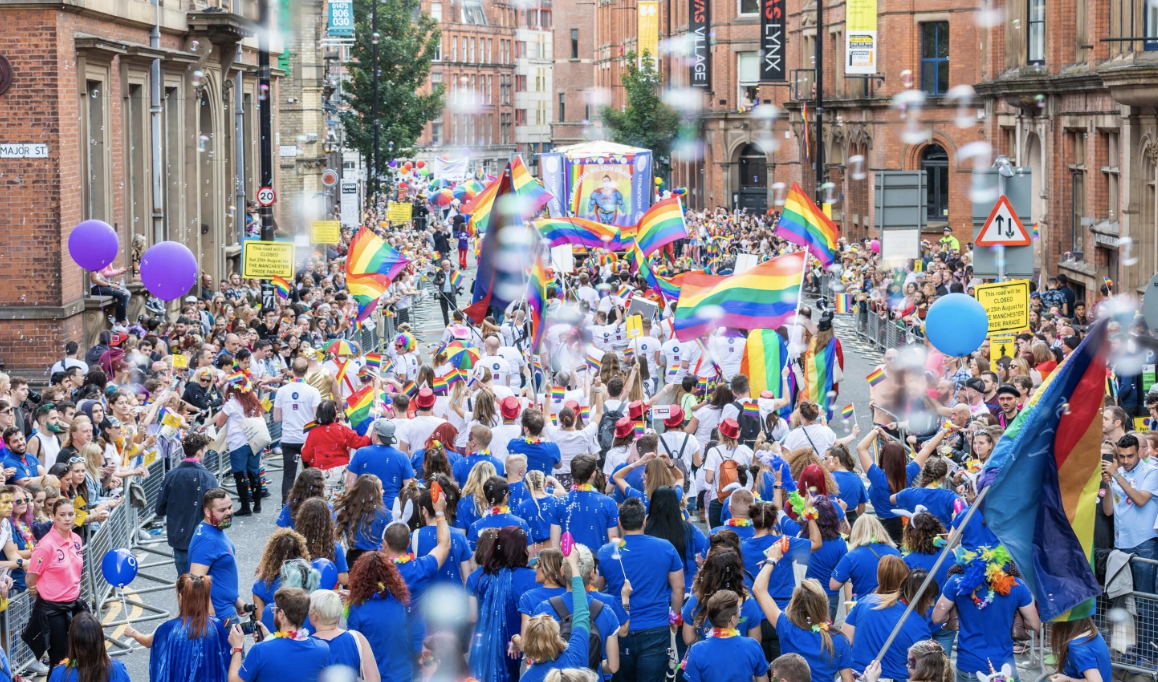
Manchester Pride is planning to go ahead in 2021, organisers have confirmed.
The LGBTQ+ festival – which historically takes over the city for a whole weekend every summer – had its 2020 edition cancelled due to the COVID-19 pandemic.
But following the government announcement that most COVID regulations could be lifted by June 21, Manchester Pride representatives said they are “doing everything they can” to ensure the event returns this summer.
The festival, held in partnership with Virgin Atlantic, is scheduled to take place in the Gay Village and surrounding areas – running for four days from August 27 – 30 (Friday to Monday).
The programme will include “all of the traditional elements”, albeit MCR Pride Live will have a 50% smaller capacity.
ADVERTISEMENT
Manchester Pride Festival 2021 will include:
THE GAY VILLAGE PARTY, 27 – 30 August 2021
MCR PRIDE LIVE, 28 – 29 August 2021
MANCHESTER PRIDE PARADE, 28 August 2021
THE CANDLELIT VIGIL, 30 August 2021
SUPERBIA WEEKEND, 28 – 29 August 2021
HUMAN RIGHTS FORUM, 29 August 2021
YOUTH PRIDE MCR, 29 August 2021
FAMILY PRIDE MCR, 28 August 2021
🌈MANCHESTER PRIDE FESTIVAL 2021!🌈
We’re delighted to announce our plans to host our world-class Manchester Pride Festival over the August Bank Holiday Weekend 2021.
Mark Fletcher, CEO of Manchester Pride, said the postponement of the festival in 2020 was “necessary but extremely hard”, and expressed his joy at being able to plan for a new edition.
ADVERTISEMENT
“Naturally there is some uncertainty over what will happen in the coming months but we have to plan now in order to be able to deliver a festival of this scale,” he admitted.
“We are confident that by reducing the capacity of MCR Pride Live we can deliver the event, as long as the government’s plans for vaccinations and reopening of events and hospitality remain on track. With the health and safety of everyone involved our key priority, we remain cautiously optimistic and have plans in place to respond to a number of potential scenarios.”
The CEO stated the team will attempt to make Pride a Covid-safe, live, and in-person event that sprawls across the city.
ADVERTISEMENT
“If this just isn’t possible then we will host an alternative, innovative, world class celebration that incorporates socially distanced events and digital elements to ensure that LGBTQ+ people in Greater Manchester can come together to celebrate and ensure that our campaign for greater LGBTQ+ equality continues at this vital time,” Fletcher added.
Tickets for all events, from Superbia Weekend to Youth Pride MCR, will be released over the coming months.
Tickets for 2020 events have been automatically rolled over to 2021.
National Lottery hunts for Tameside player who’s not claimed £1m winnings
Daisy Jackson
The hunt is on to find a National Lottery player in Tameside who’s won £1m – and not claimed it.
The missing millionaire won the huge prize on a Lotto ticket bought on Wednesday 1 July, somewhere in the Borough of Tameside.
But with just two months to go until the prize expires, the player has still not come forward to claim their winnings.
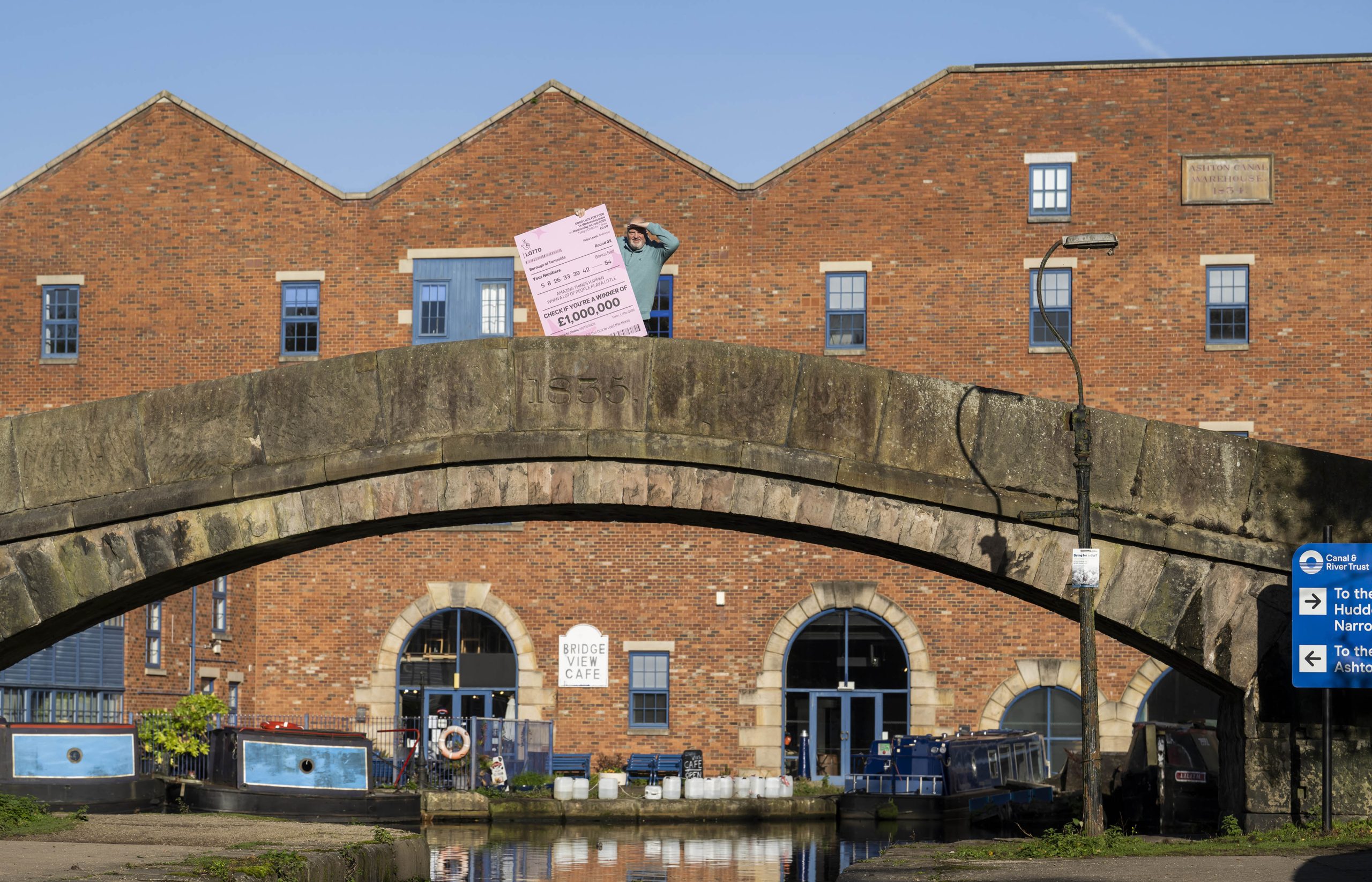
The winning numbers in were 5, 8, 26, 33, 39, 42 and the Bonus Ball was 54.
Now, the National Lottery is renewing its search for the millionaire, calling for the mystery winner to cash in their prize before it expires at midnight on 28 December.
National Lottery Senior Winners’ Advisor Andy Carter has been out in Tameside ‘hunting’ for the missing millionaire, visiting everywhere from Portland Basin to Hartshead Pike.
Andy said: “I’ve searched high and low across Tameside for our missing millionaire, but I’ve had no luck.
National Lottery hunts for Tameside player who’s not claimed £1m winnings. Credit: Anthony Devlin/Assignments/Press Association
“With just two months left to claim this £1 million prize, now is the time for anyone who bought a Lotto ticket in Tameside for the 1 July draw to have another look.
“The winning ticket could be tucked away somewhere completely ordinary, while its owner has absolutely no idea they are a millionaire.
“We’d love to find the person we’ve been looking for and turn this search into a celebration. So, if you bought a ticket in the area, dig it out, check those numbers and help us find Tameside’s missing millionaire. It could be you.”
With all National Lottery draws, players have 180 days from the day of the draw to claim their prize if they have the winning ticket. Anyone who has any queries or who believes they have the winning ticket for any of the National Lottery draws within the 180-day deadline should call the National Lottery Line on 0333 234 5050 or email [email protected].
Featured image: Supplied – Anthony Devlin/Assignments/Press Association
News
Public urged to call the police if they see this wanted man
Daisy Jackson
Cheshire Police are appealing for the public’s help in tracing a wanted man with links to Macclesfield and Alsager.
Joshua Wyatt, 34, is wanted on recall to prison, and officers are urging anyone who has seen him or knows of his whereabouts to come forward.
Wyatt is described as being 183cm (6ft) tall and of medium build, with a bald head and blue eyes.
Police believe he has links to both Macclesfield and Alsager.
Anyone who sees Wyatt or has information about where he may be is asked to contact Cheshire Police on 101 or report information via the force’s website.
Information should be provided quoting reference number 26000809013.

 The Manc -
26th February 2021
The Manc -
26th February 2021