Manchester Pride has announced that the company has entered the process of voluntary liquidation, after it emerged that several of this year’s performers had gone unpaid.
The hugely popular LGBTQ+ event, which spills from the Gay Village and into surrounding venues every August bank holiday weekend, said it has faced ‘rising costs, declining ticket sales, and an ambitious refresh of format’.
Manchester Pride said that all of these factors, among others, have led to the organisation being ‘no longer financially viable’ and its staff team will be made redundant.
“We, along with the team, have put our hearts and souls into the celebration and community activities over two decades and are very distressed at the position in which we find ourselves,” the Board of Trustees wrote.
Last week, it emerged that a number of artists who appeared at this year’s celebration had shared a letter that alleges they are still waiting for payment for their work at the festival.
ADVERTISEMENT
In a statement shared this afternoon, Manchester Pride added that they have been unsuccessfully seeking ‘financial opportunities’ to find a ‘positive solution’.
Manchester Pride wrote: “We had hoped to be able to find a way to continue, and, most importantly, to support our artists, contractors and partners.
ADVERTISEMENT
“Despite our best efforts, sadly, this has not proved to be possible. We are sincerely sorry for those who will now lose out financially from the current situation.”
Manchester Pride’s statement in full
It is with enormous sadness that we announce that Manchester Pride has started the legal process of voluntary liquidation.
A combination of rising costs, which are affecting the entire events and hospitality industries, declining ticket sales and an ambitious refresh of the format aimed to challenge these issues, along with an unsuccessful bid to host Euro Pride, has led to the organisation no longer being financially viable.
ADVERTISEMENT
We regret the delays in communicating the current situation; however, we were keen not to jeopardise financial opportunities while our discussions were ongoing. We were proactive and determined to identify solutions to the financial issues. We’ve been actively working with several partners, including legal and financial advisors, to do everything we could to find a positive solution. We had hoped to be able to find a way to continue, and, most importantly, to support our artists, contractors and partners. Despite our best efforts, sadly, this has not proved to be possible. We are sincerely sorry for those who will now lose out financially from the current situation.
The volunteer Board of Trustees are devastated at this situation and sad to share that our staff team will be made redundant. We, along with the team, have put our hearts and souls into the celebration and community activities over two decades and are very distressed at the position in which we find ourselves. We would like to sincerely offer our thanks to all of our staff, volunteers and supporters who have contributed so much to Manchester Pride over the years.
The organisation has achieved a great deal since its creation and, in particular, since the Covid pandemic. This includes:
● 237,000 visitors to the city
● £104.8m of economic impact
ADVERTISEMENT
● 148 grants being made to grass roots community groups
● Positive positioning of Manchester as an inclusive city
We hope and believe that this leaves a positive and lasting legacy for the Pride movement in Greater Manchester, and that it will continue long into the future. We will do everything we can to support this moving forward.
The Manchester Pride team have now handed over the details of suppliers and artists who are owed money to the liquidators who will be handling the affairs of the Charity and contacting everyone.
Stretford’s free neighourhood festival returns this weekend
Danny Jones
Stretford’s still fledgling and completely free all-day festival is BACK for 2026 and is happening this coming weekend.
So, if you didn’t have plans this Saturday, you do now.
Simply named StretFest, this is the third edition of the now annual celebration in one of Manchester’s fastest growing neighbourhoods – and an increasingly up-and-coming one at that.
Kicking off in the morning and running right into the wee small hours thanks to a healthy dose of varied daytime activities, evening events and de facto afterparties, there’s plenty on the cards.
🎉 It's the big one on Saturday! Stretfest is back & we're thrilled to have a fab selection of LIVE Music on from 3pm – 8pm for it!
We can't wait to greet loads of faces, old and new. #Stretford will be buzzing with activity so come on down & make a day of it ! 🍻 pic.twitter.com/16Rnn5w1qj
StretFest only started back in July 2024, but it has quickly grown into a cult favourite not only among locals living in and around the Trafford town, but also among plenty of people from all over Greater Manchester, with last year seeing more visitors than ever.
Based not just over at Stretford Mall but the surrounding parks, Public Hall, across the bridge and an area they dub ‘The Beach’, there are several distinct but equally vibrant hubs, all offering something different.
For instance, venues like Longford Tap, Head Bar and Stretford Canteen are all involved, as are the likes of the Library and Martin Luther Church, but also recently opened cafes like Swig and Cuppello’s, as well as many, many more.
To be honest, we’ll probably be popping over for all the food and drink alone.
And, of course, there’s going to be plenty of live music, DJ sets, other bits of entertainment, and all-around fun to be enjoyed; there’s even going to be everything from arts, crafts and workshops, to pirates and boat rides.
Getting underway from as early 9am – thanks to the likes of the regular Stretford parkrun crew teaming up with the festival, and Mr & Mrs hosting a coffee morning for their first birthday – there really is going to be something for everyone from start to finish.
You can see the full StretFest schedule or build your own personal day-into-night programme HERE.
As for what else is on the cards for the final few days of March (give or take a couple), you can find out what else is on in and around the ten boroughs down below.
Featured Images — Publicity pictures/Adrian Michael (supplied)/The Manc Group
News
Four Manchester museums and galleries shortlisted for the ‘Oscars of the museum world’
Danny Jones
It’s official: four museums and galleries in Manchester have been shortlisted for what this particular scene dubs as the ‘Oscar’ equivalent of annual awards.
All located right here in the city centre, the quartet of cultural institutions are all famous not only in their own specific fields here in the North West, but nationwide and, indeed, all over Europe and beyond.
That being said, having this fantastic four-piece all nominated for the 2026 Museums + Heritage Awards together in the same year is a testament to just how blessed the Greater Manchester region is in this department.
Sponsored by Altair Media Ltd, the places in question are the Science and Industry Museum, Manchester Art Gallery, as well as the National Football and Manchester Museum. Congratulations!
Credit: Publicity picture/Lee McLean/PA Media Assignments (supplied)
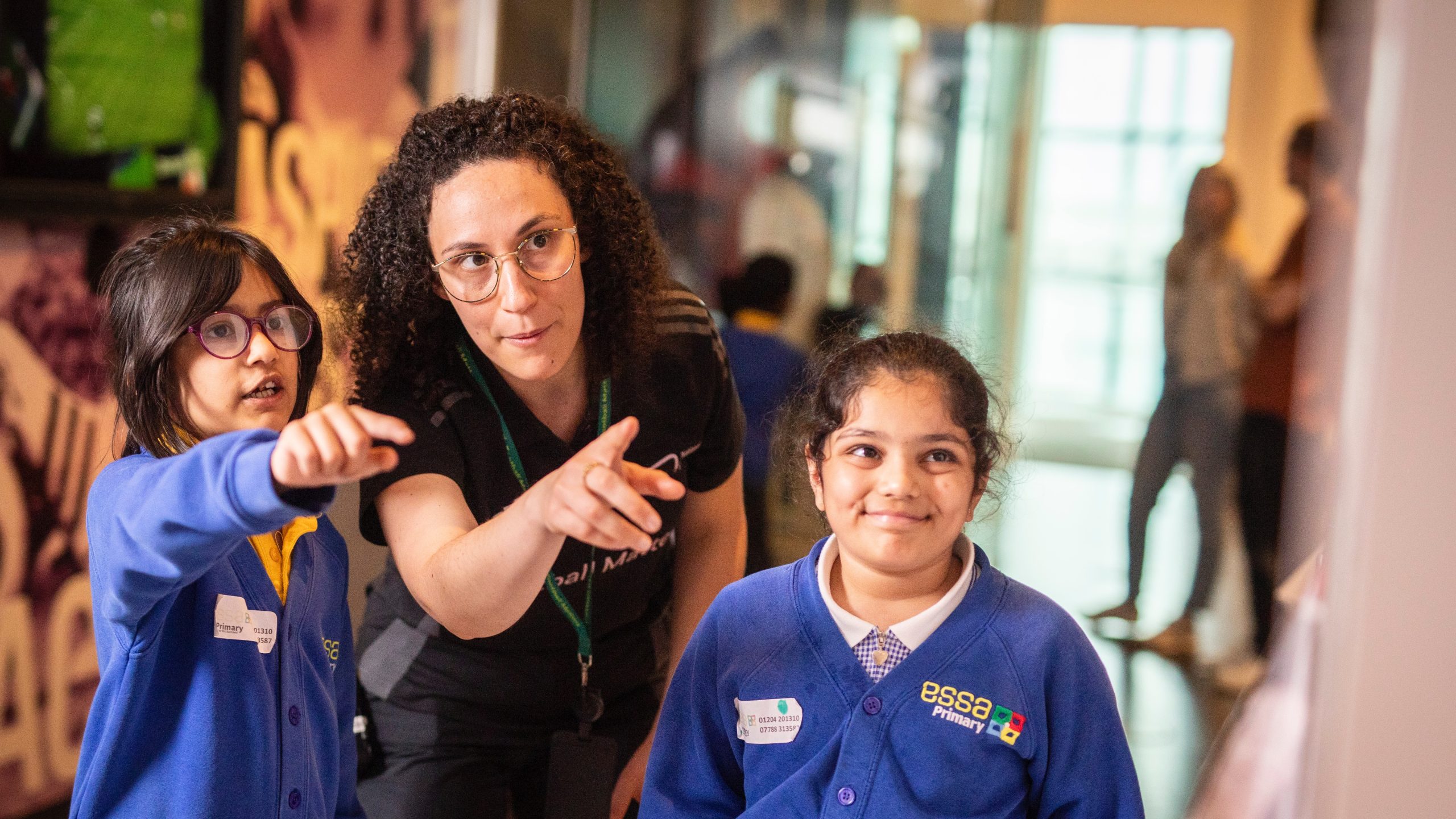
While the National Football Museum and Manchester Art Gallery have been nominated for group-wide accolades – the Visitor Welcome and Team of the Year awards, respectively – the other two have been selected for a pair of specific projects.
In the case of Science and Industry (SIM), they’ve been spotlighted for the highly anticipated opening of the new and improved ‘Power Hall’, finally relaunched this past October, along with the accompanying Andrew Law Gallery, which could win both Permanent Exhibition and/or Sustainable Project of the Year.
What a haul that would be.
As for Manchester Museum, their memorable world premiere of The Cat That Slept for a Thousand Years has been shortlisted for ‘Temporary or Touring Exhibition of the Year’.
Debuting back in July 2025, it wrapped up last September and has since moved over to the likes of the Wakefield Exchange in Yorkshire, where it’s still on display until Sunday, 12 April.
If you fancy a day trip to see a big, glowing and very cute cat, it’s well worth booking a day out to go and see it for yourself.
Shazia Butt, Manchester City Council‘s Executive Member for Culture, Corporate Property, Crime and Policing, said: “We’re very lucky in Manchester to have so many incredible, creative and world-class museums and galleries right here on our doorstep, providing inspiration, learning, energy and fun, as well as spaces to rest and reflect, free of charge every day of the week.
“We know that visiting museums and heritage sites is the most popular cultural pastime for our residents, with over 73% of people saying they loved to visit in a recent survey – and with the calibre of these amazing spaces and what they offer in the city, it’s not hard to understand why.
“It’s fantastic to see this backbone of our cultural offer in Manchester being recognised in this way up there amongst the very best of museums and galleries nationally and internationally.”
Once again, well done to all those involved in making these venues so amazing and well worthy of the already award-winning status, as this particular nomination is just the latest in a lasting lineage of recognition that all of these wonderful spaces have earned over decades. Long may it continue.
The awards ceremony itself will take place on Wednesday, 13 May at the Park Lane Hilton down in London; best of luck to those flying the Manc flag for us – not that they need it.

 Daisy Jackson -
22nd October 2025
Daisy Jackson -
22nd October 2025