Manchester Rum Festival is returning to the city this summer and bringing fifteen brand new rum brands with it for their festival debut.
In what is set to be the biggest festival to date, organisers will bring together a mix of local Greater Manchester brands and those from further afield for an afternoon full of cocktails, tasting sessions and samples.
Taking place in Manchester city centre this June, local rum distilleries Tameside and Decorrum will make their festival debuts alongside Tanduay – an exciting rum brand from the Philippines.
Other new brands set to take part this year include Beach House and Arcane, both from the sunny climes of Mauritius, Ron Aguere from the Canaries, Ron Colon from El Salvador and Santiago de Cuba.
They’ll be joined by festival stalwarts Salford Rum and Diablesse, both returning for 2022 with new expressions including Salford Honey Rum and Diablesse Coconut and Hibiscus Rum.
The 2022 festival will also feature an appearance from the Spirit of Manchester distillery and its One-Eyed Rebel rum brand, crafted right here in the city centre.
ADVERTISEMENT
Elsewhere, city centre tiki bar The Liars Club will be on hand mixing up some signature cocktails, with street food provided by British Virgin Island pop-up Nyammin’.
In total, the festival will welcome a whopping 40 different rum brands from around the globe.
ADVERTISEMENT
Read more:Where to find the best Easter foodie specials in Manchester 2022
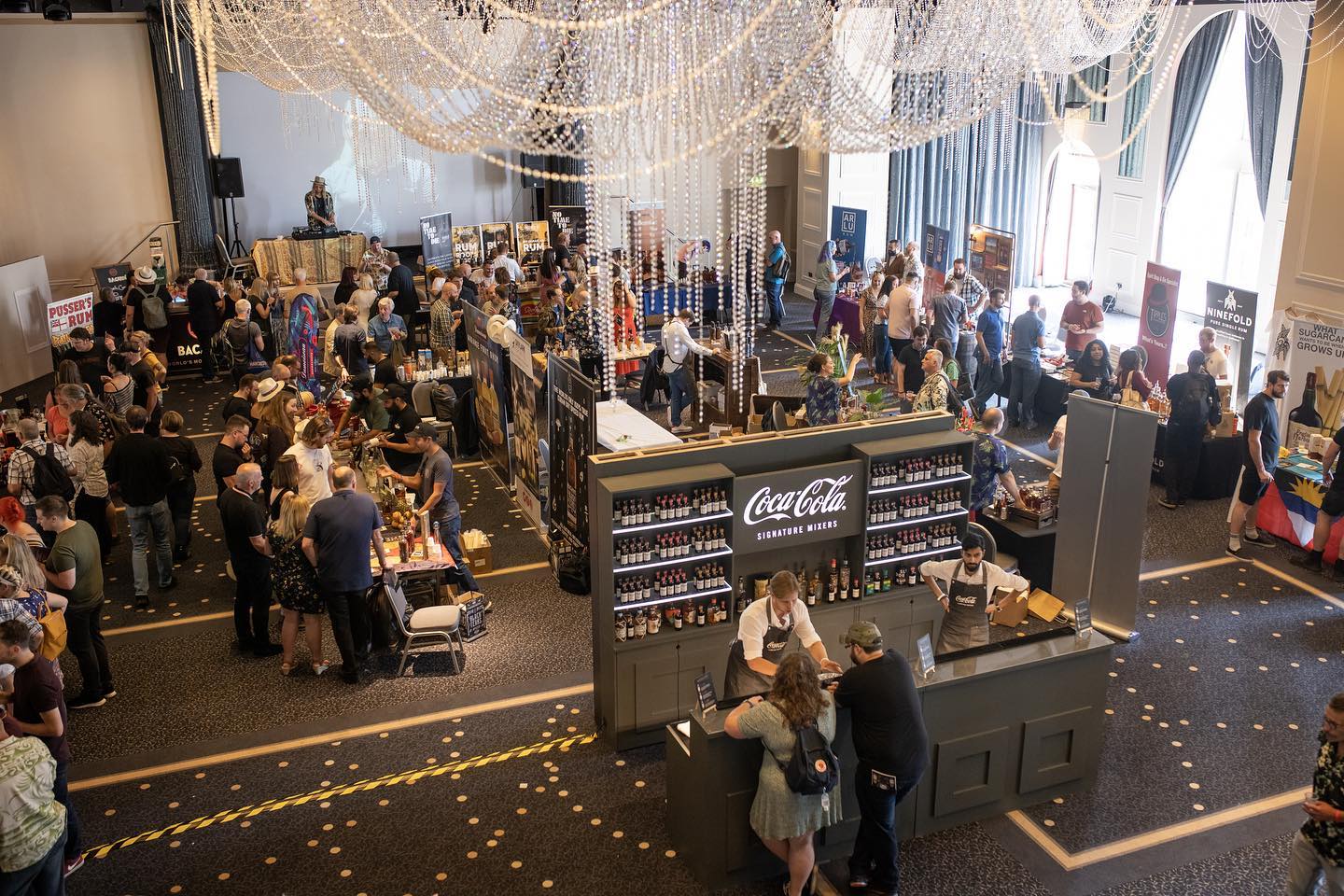
Image: Manchester Rum Festival
S[eaking on the upcoming event, Manchester Rum Festival’s founder, Dave Marsland, said: “This year’s festival is set to be more fantastic and fun than ever, with a host of new brands from far reaching corners of the earth which will be tasted alongside brands from local distilleries. It really is a one-of-a-kind event.
“This year, guests will be able to taste rums from over 40 producers overall, sample amazing cocktails by Liar’s Club, enjoy traditional music and entertainment by festival stalwart, DJ Dom and food by British Virgin Island cuisine legends Nyammin’, who will be cooking up a flavoursome storm from their pop-up stand.
ADVERTISEMENT
Manchester Rum Festival’s founder, Dave Marsland. / Image: Manchester Rum Festival
“The festival will feature expressions from single and multi-distillery producers to flavour-enhanced bottlings and will bring together rum producers, bartenders, enthusiasts and rum fans from all over the region and further afield. It’s set to be a real summer treat for the city and tickets are selling fast.”
Manchester Rum Festival will run from 12pm to 7pm on Saturday 18 June, 2022. Tickets for the day are for over 21’s only, priced at £25 and involves all available samples from the rum brands.
Drinks from the Liar’s Club cocktail bar and any street food are not included in the ticket price.
To find out more and book tickets, visit the Manchester Rum Festival website here.
Feature image – Manchester Rum Festival
News
Plans unveiled to deliver 50,000 council and ‘genuinely affordable’ homes in Greater Manchester
Emily Sergeant
Plans to deliver 50,000 council and ‘genuinely affordable’ homes in Greater Manchester have been unveiled.
By removing ‘blockers’ to development and transforming disused public land into new housing schemes, Greater Manchester Mayor Bev Craig has set out her plan to tackle the housing crisis and deliver ‘a new generation’ of homes – with 50,000 new ‘genuinely affordable’ homes to be available across the city region by 2039.
It’s expected that 10,000 of these homes will either be built, on site, or in the pipeline with planning permission ready to go by May 2028.
To meet the scale of this ambition and deliver the homes the region needs, Greater Manchester Combined Authority (GMCA) says it will need to ‘pull every lever at [its] disposal’, from remediating brownfield land, to bringing forward dormant sites in public ownership.
That’s why the Mayor will be asking Greater Manchester‘s public bodies to carry out a public land review and identify sites that could be brought forward to deliver homes.
GMCA has already used its Brownfield Housing Fund to support several schemes that are delivering thousands of affordable homes – including social rent homes – as part of the £2 billion Good Growth Fund.
If you’re unfamiliar, the Good Growth Fund is investing in a pipeline of projects to deliver new homes, regenerate town centres, create jobs, and build infrastructure to connect people and places.
“When I was Manchester City Council Leader, I built more council and social homes than Manchester had built in 25 years,” Bev Craig declared. “But we need to go further and faster in every bit of Greater Manchester.
“We will be leading by example when it comes to freeing up disused and dormant public land for development and I’m calling on other Government bodies to join us.
“I know first-hand the security that a Council house brings, and that’s why I am absolutely committed to delivering the Council and social homes that people here in Greater Manchester need, so everyone can have the foundation of a good life in our city region.”
Currently, land supply for 78,585 new homes of all tenures up to 2030 has been identified.
Greater Manchester is in line to receive an initial £1.8 billion from the Government’s Social and Affordable Homes Programme, and the Mayor will meet with Government in the coming weeks to set out joint plans to achieve these ambitions.
Featured Image – Benjamin Elliott (via Unsplash)
News
Government sets out multi-million-pound plan to move UK away from animal testing in science
Emily Sergeant
A £22m push to ramp up the UK’s move away from animal testing in science is set to bring together cutting-edge tech and research.
The latest figures show there were 2.54 million animal testing procedures in Great Britain in 2025, which is down 3.8% on 2024, but with a further update due to be released later this year, the Government is now moving to ‘capitalise’ on that momentum with funding to shift the nation onto alternative testing options.
A dedicated national research hub and nine new high-tech projects are planned to develop ‘better ways’ to test medicines on human biology rather than animals.
According to the Government, this means treatments for conditions like cancer and inflammatory bowel disease (IBD) could be developed ‘faster’ and ‘more precisely’ to not only help patients but crucially also move science away from traditional animal testing.
At the heart of the plans is a new Pre-clinical Translational Models Hub – based in Cambridge and backed by £20 million in Government funding, which will work to build and share models of human tissue, grown from NHS patients, to test new treatments.
The new hub will accelerate the development of testing on ‘organoids’ – tiny, simplified versions of a human gut, tumour or brain, using cells donated by patients.
From beating heart cells in a dish to AI that can predict how drugs move through the body, exciting alternatives to animal testing are transforming medical research.
We're investing £22m to help scientists develop the next generation of life-saving treatments. pic.twitter.com/1EWRQvwySa
— Dept. for Business, Innovation, Science and Trade (@biztradegovuk) August 12, 2026
Because these ‘organoids’ retain crucial features of a patient’s own biology, they will help researchers learn how a real person may respond to a drug and provide additional insights that can complement information that is currently obtained from animals.
Scientists will then be able to use these cutting-edge techniques in their own labs to work out which medicines are worth pursuing.
Overall, it’s hoped that the move will slash the time it takes to get ‘potentially life-changing’ treatments to market.
Alongside the funding for the new Hub, nine cutting-edge projects aimed at identifying new methods of animal-free scientific testing – from beating heart cells in a dish, to lab-grown human ear models, and AI that predicts how medicines move through the body – are being funded.
Sadly, many of these still rely on testing on dogs and monkeys, as it stands.
“This marks another significant step forward in the UK’s move away from animal testing in science and research,” commented Science Minister Chris McDonald.
“This is all about backing our world-leading researchers and innovators to improve lives, giving them the tools they need to deliver more effective treatments for horrendous diseases like cancer, while also preventing the need for animal testing wherever possible.
“It’s also a boost for our life sciences sector, fuelling opportunities for new investment and new jobs, and ensuring Britain is better off.”