A young woman from Manchester who was told she only had a short time to live is now cancer free after a UK-first transplant.
Bianca Perea, a 32-year-old trainee lawyer who lives in Wigan, was diagnosed with stage 4 bowel cancer – which is the most advanced kind – back in November 2021 when she was just 29, after only feeling a bit constipated and bloated, but otherwise having no other major symptoms.
After she was referred to her local hospital to have emergency bloods and a stool sample taken, followed by a colonoscopy and a biopsy, these investigations sadly revealed that she had bowel cancer, which had spread to all eight segments of her liver.
According to Cancer Research, only one in 10 people with advanced bowel cancer will survive for five years or more after their diagnosis.
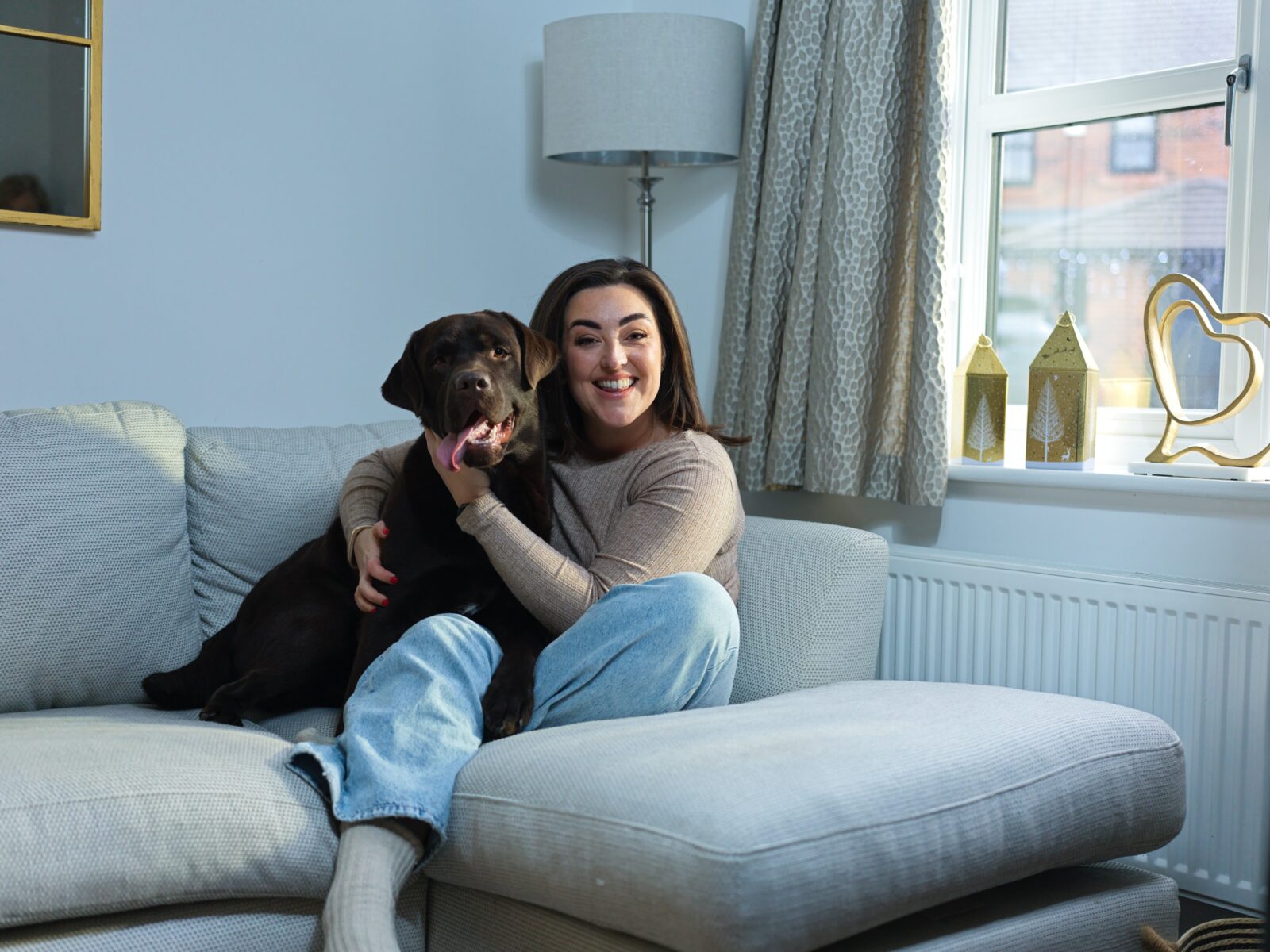
32-year-old Bianca Perea is the first person in the UK to have a liver transplant for advanced bowel cancer.
The transplant, along with her previous treatment – targeted therapy, chemotherapy and bowel surgery – means she is now cancer free.
But after becoming a patient at The Christie NHS Foundation Trust, a specialist cancer centre in Manchester, Bianca is now miraculously cancer free thanks to becoming the first person in the UK to have a liver transplant for advanced bowel cancer, along with other previous treatments included targeted therapy, chemotherapy, and surgery.
ADVERTISEMENT
Bianca was referred to The Christie’s local treatment centre in Wigan in early December 2021 where she had 37 rounds of a targeted drug called panitumumab, and chemotherapy over two and a half years.
According to The Christie, she had an “excellent response” to the treatment, with the tumour shrinking enough so that she could have an operation to remove the part of the bowel where it was.
ADVERTISEMENT
A Manchester woman is now cancer free after a groundbreaking UK-first transplant / Credit: The Christie NHS
However scans showed she still had tumours in her liver which couldn’t be operated on, and so she was then referred to Leeds Teaching Hospitals NHS Trust as she was found to be a suitable candidate for a transplant.
Before being added to the transplant list, Bianca had to be doing well on treatment for two years, and she hit this milestone in December 2023.
She was subsequently added to the list in February 2024, and had her operation this past summer.
ADVERTISEMENT
Bianca Perea, one of our patients, is the first person in the UK to have a liver transplant for advanced bowel cancer. She's now cancer free.
Despite all the odds, the surgery was successful, meaning she is now cancer free and the teams at Leeds and The Christie are “hopeful” that the cancer won’t return too.
“Within four weeks of going under the knife, I was able to drive and walk the family dogs, it was really quite incredible,” Bianca said.
“To go from being told I’d only have a short time to live to now being cancer free is the greatest gift. I’ve been given a second chance at life and I’m going to grab it with both hands. I am so grateful to the family who agreed to donate their loved one’s liver.”
Featured Image – The Christie NHS
News
NHS launches new AI and robot cancer detection pilot offering ‘glimpse into future’
Emily Sergeant
The NHS has launched a ‘trailblazing’ new AI and robot pilot to help spot cancers sooner.
Patients who are facing suspected lung cancer could get answers sooner under the new pilot that makes use of artificial intelligence (AI) and robotic technology to help doctors reach hard-to-detect cancers earlier, and all without with fewer tests too.
At the moment, patients are faced with weeks of repeat scans and procedures to come to a diagnosis.
But this could soon be replaced with a single, half-hour cancer biopsy – reducing prolonged uncertainty, and avoiding more invasive surgery.
According to the NHS, the new approach uses AI software to rapidly analyse lung scans and flag small lumps that are most likely to be cancerous, before a robotic camera is then used to guide biopsy tools through the airways with much greater precision than standard techniques.
A new NHS pilot using AI and robotic technology will help doctors reach hard-to-detect lung cancers earlier.
Weeks of scans and procedures could be replaced with a single biopsy, reducing uncertainty and avoiding more invasive surgery.
The robot can reach nodules as small as 6mm – which is around the size of a grain of rice – that are hidden deep in the lung and are often deemed too risky or difficult to access using existing methods, and once AI has highlighted higher-risk areas, doctors can then take a precise tissue sample, which is sent to specialist laboratories and reviewed by expert cancer teams to confirm or rule out cancer.
The NHS’s top cancer doctor hailed the pilot – which is currently being carried out at Guy’s and St Thomas’ NHS Foundation Trust – as ‘a glimpse of the future of cancer detection’.
“Waiting to find out if you might have cancer is incredibly stressful for patients and their families,” admitted Professor Peter Johnson, who is NHS England’s National Clinical Director for Cancer.
The NHS has launched a new AI and robot cancer detection pilot that’s offering a ‘glimpse into future’ / Credit: rawpixel
“Our lung cancer screening programme means that we are picking up more cancers at an early stage than ever, and by bringing AI and robotics together in this trailblazing NHS pilot, we’re bringing in the very latest technology to give clinicians a clearer look inside the lungs and support faster, more accurate biopsies.
“This is a glimpse of the future of cancer detection.
“Innovation like this is exactly how we can help diagnose more cancers faster, so treatment can be most effective, and why the NHS continues to lead the way in bringing new technology safely into frontline care.”
If successful, the pilot will help the NHS to generate evidence to develop a national commissioning policy for robotic bronchoscopy.
It will also support more consistent access to the technology across the NHS in future.
Featured Image – Tima Miroshnichenko (via Pexels)
News
Chester Zoo announces new spring date for its popular running event to help UK wildlife
Emily Sergeant
Chester Zoo has announced that its popular Run For Nature is back again this year, and this time, there’s a new spring edition.
The UK’s biggest charity zoo seen success with this event in the past few years, with thousands of runners signing up for one of the North West’s most unique athletic experiences and all funds raised going towards efforts to protect highly-endangered giraffes in Africa.
This year though, the much-loved event’s focus brings conservation ‘a little closer to home’ and will protect some of the UK’s most threatened species instead – with all funds helping to safeguard hedgehogs, kingfishers, otters, harvest mice, and more.
It comes as the UK is currently considered one of the most nature-depleted countries on Earth.
Participants will first get to wind through the zoo and enjoy glimpses of elephants, lemurs, and other incredible species along the way, before heading out into the picturesque Cheshire countryside.
Adults can choose from a 10K or 5K route, while younger runners are invited to take part in a one-mile ‘Zoom’ race, open to children aged four-15, which takes place entirely within the zoo’s incredible 130-acre grounds.
All runners will receive free entry to the zoo for the rest of the day as part of their registration, along with a 25% discount for friends and family who come along to show support.
Chester Zoo’s popular 10K charity run is returns with a new spring date / Credit: Chester Zoo
Lorraine Jubb, who is the Fundraising Lead at Chester Zoo, called the Run For Nature a ‘really special event’.
“In previous years, runners have already supported conservation efforts for Asian elephants, Eastern black rhinos and Northern giraffe,” she explained. This springtime though, we’re turning our attention much closer to home in the UK, and to the wildlife we share our gardens, parks and countryside with.
“With one in six species now at risk of extinction in the UK, every runner will be playing a vital role in helping us protect animals and supporting our growing nature recovery work across right across Cheshire.