Six ways that ‘Lockdown 2’ is different to the first
Despite the deja-vu, it's important to note that things are different this time around in a number of ways. Here're some of the ways in which Lockdown Two varies to the restrictions in March.
Exactly four months ago, everything was beginning to look so much better.
Some pupils had returned to schools. Non-essential shops had begun to reopen. Football had kicked off again. Even pubs and restaurants had resumed serving customers.
But after a flickeringly brief return to a life that somewhat resembled normality, national COVID cases have now spiralled out of control the point where England has been forced to go back into hiding.
The first one lasted over three months. This one is supposed to end in four weeks.
Whether we exit Lockdown 2 on time remains to be seen. But despite the deja-vu, it’s important to note that this lockdown is different in a number of ways.
When the first lockdown came into force in March, the rules on meeting others were very strict.
The government banned socialising in most circumstances, but over time, exceptions to the rule were introduced – such as ‘bubbles’.
The official guidance this time around is more relaxed. You can actually meet one other person outside your bubble provided you’re outdoors, and you can bring your children along with you.
ADVERTISEMENT
The government states: “You can exercise or visit outdoor public places with the people you live with; your support bubble or, when on your own, 1 person from another household. Children under 5, as well as disabled people dependent on round-the-clock care are not counted towards the limit on two people meeting outside.”
Schools, universities and colleges will remain open during Lockdown 2 – unlike back in March when all education facilities were swiftly shut.
The decision to keep schools open has not been without controversy, with many individuals, unions and even Greater Manchester Mayor Andy Burnham asking the government to reconsider and close these premises until December 2.
But as things stand, schools are set to remain operational throughout Lockdown 2 – with COVID safety rules in place and the use of masks in communal areas.
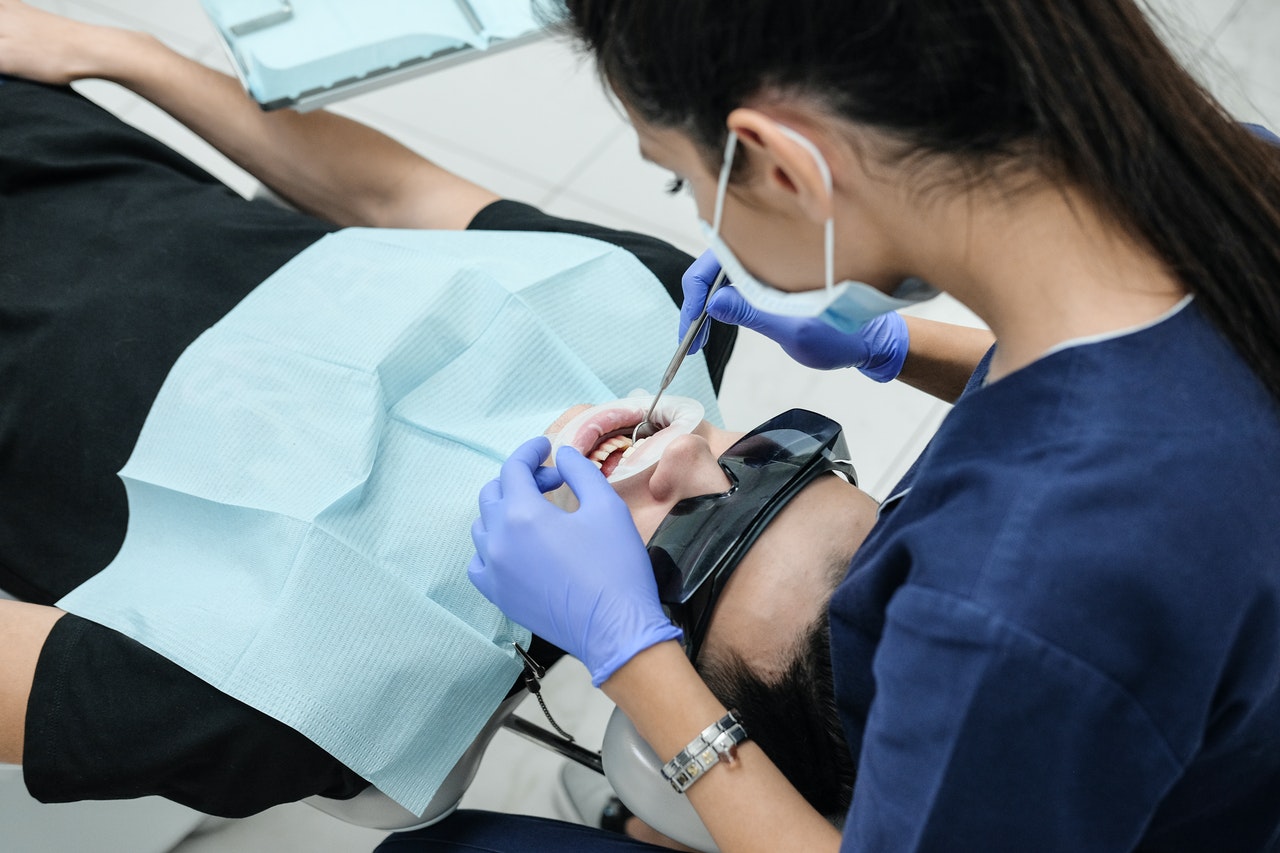
All checkups and scheduled visits to dentists, opticians and other health services were cancelled during the first lockdown – with only emergency appointments available.
This time, however, health facilities are staying open.
The government states: “The majority of public services will continue and you will be able to leave home to visit them. These include the NHS and medical services like GPs and dentists. We are supporting the NHS to safely carry out urgent and non-urgent services and it is vital anyone who thinks they need any kind of medical care comes forward and seeks help.”
The most vulnerable people in England were told to ‘shield’ during the last lockdown – staying away from public places as much as possible whilst receiving extra support at home.
However, the government has confirmed it will not be encouraging people to shield in the same way during Lockdown 2.
Instead, the most vulnerable are being told to exercise caution – and whilst they are still advised to avoid busy public places like shops, they can exercise and go to schools.
5. Travel rules are slightly different
Pixabay
The government is discouraging all but essential trips around Britain and abroad, but there are a few subtle differences this time around.
For starters, anyone already abroad is not being urged to return home immediately, but should contact their carrier to determine travel arrangements. A 14-day self-isolation period may be required upon arrival, depending on where they’re travelling from.
ADVERTISEMENT
The full list of travel exemptions this time around includes:
travelling to work where this cannot be done from home
travelling to education and for caring responsibilities
to visit those in your support bubble – or your childcare bubble for childcare
hospital, GP and other medical appointments or visits where you have had an accident or are concerned about your health
to buy goods or services from premises that are open, including essential retail
to spend time or exercise outdoors – this should be done locally wherever possible, but you can travel to do so if necessary (for example, to access an open space)
attending the care and exercise of a pet, or veterinary services
In spring, the government declared that nobody should be leaving their house on more than one occasion to exercise.
That’s not the case this time.
Indeed, people are being encouraged to exercise as often as they like – provided they maintain their distance from others when outdoors.
Learn more about the restrictions coming into force today here.
News
Trams to be suspended as tracks are replaced on a section of one of the world’s busiest light-rail routes
Emily Sergeant
Trams are set to be suspended this month as work to replace the tracks on a section of one of the busiest light-rail routes is carried out.
As the next phase of the ongoing £150m investment into Greater Manchester’s tram network gets under way this month, essential track replacement work is set to be be carried out in a bid to make the network ‘safer’ and ‘more resilient and reliable’ for years to come, and this includes a section of track which is considered to be one of the busiest light-rail routes in the world.
Transport for Greater Manchester (TfGM) has confirmed that it will replace around 1.6km of track – some parts of which are more than 30 years old – at Trafford Bar and Deansgate-Castlefield, as well as working on a separate section on the Eccles line at the same time.
The track between Trafford Bar and St Peter’s Square, in particular, is one of the busiest sections of light-rail in the world, as one tram passes through every 30 seconds for 20 hours a day, seven days a week.
As the nature of the work required where the Eccles and Altrincham lines meet at Cornbrook is considered to be so ‘complex’, it will be the first time a type of specialist lifting equipment has been used in the UK.
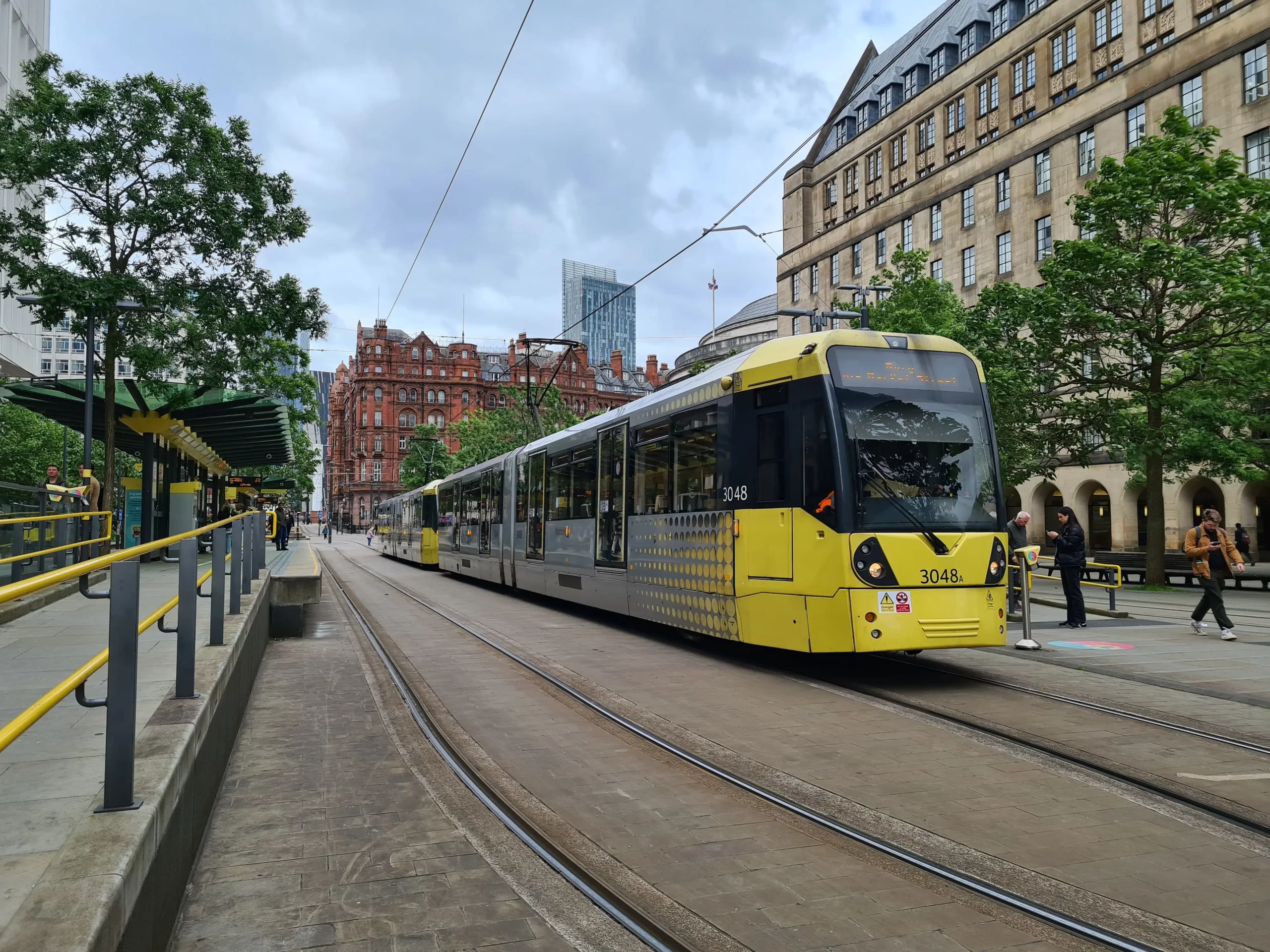
Tracks are set to be replaced on a section of one of the world’s busiest light-rail routes / Credit: The Manc Group | TfGM
More than 3,000 tonnes of new rail and 800 new concrete sleepers will be fitted as part of the scheme, with a team of 70 engineers working across three sites throughout the summer to get the work done as ‘quickly and efficiently’ as possible.
Once installed, the track will be carefully adjusted and tested to ensure it meets strict safety standards and trams travel smoothly and efficiently along it.
While the work is being done, no trams will run on the Eccles, Trafford Centre, and Altrincham lines.
Services on the East Didsbury and Manchester Airport lines will terminate at Firswood, while services on the Rochdale line will terminate at Exchange Square.
As is to be expected, there will be some disruption on the affected lines – with replacement buses due to run between each required stop, accompanied by special event bus services running for the cricket at Old Trafford on 26 and 31 July.
“The work at Trafford Bar and Deansgate-Castlefield is taking place on one of the busiest stretches of tram track in the country,” explained Ian Davies, who is the Network Director for Metrolink at TfGM. “Some sections are more than 30 years old, with 40-tonne trams running every 30 seconds at peak times – that level wear and tear takes its toll, which is why this work is so important.
“It’s one of the most complex parts of the network to access, requiring a carefully planned approach to carry out the work safely and efficiently.
“We’re sorry for the disruption. We know it can be annoying, and while these essential upgrades take place we will do everything we can to keep people moving.”
Normal services are due to resume from Monday 3 August, but until then, everything you need to know is on the Bee Network website here.
Featured Image – Janus Boye
News
Kings of Leon at Co-op Live Manchester – tickets, times, setlist and more for UK tour
Thomas Melia
American rock band Kings of Leon are making their way to Manchester for a second visit to Co-op Live as part of their current EU/UK arena tour.
Formed in 1999 by brothers Caleb, Nathan, Jared, plus their cousin Matthew Followill, the rock band has gone on to achieve nine top 40 singles and six UK number one albums.
The rockers have two singles in Spotify’s Billions Club, including their standout hit ‘Sex on Fire’, which has amassed over 2 billion streams and ‘Use Somebody’ with 1.2 billion – two tracks that helped skyrocket them from cult favourites here in Britain to global superstars.
This four-piece’s latest LP, Can We Please Have Fun, dropped mid-2024 and knowing how energetic crowds were at the previous Manc gig, it’s safe to say we’ve got this covered.
They even let us know the England score last time out (read our full review), too.
Gig guide – Kings of Leon at Co-op Live, Manchester
Kings of Leon UK tour dates
Fri 3 July – Glasgow, UK – Bellahouston Park
Sat 4 July – Manchester, UK – Co-op Live
Mon 6 July – Leeds, UK – First Direct Bank Arena
Are there any tickets left for Kings of Leon at Co-op Live?
If you’re wondering where you’ll ‘Find Me’ on Saturday 4 July, it is probably watching these four relatives play their two decades’ worth of hits at Co-op Live.
Don’t ‘Waste a Moment’ as there’s only a limited number of tickets left if you’re after catching a glimpse of Kings of Leon live – get yours HERE.
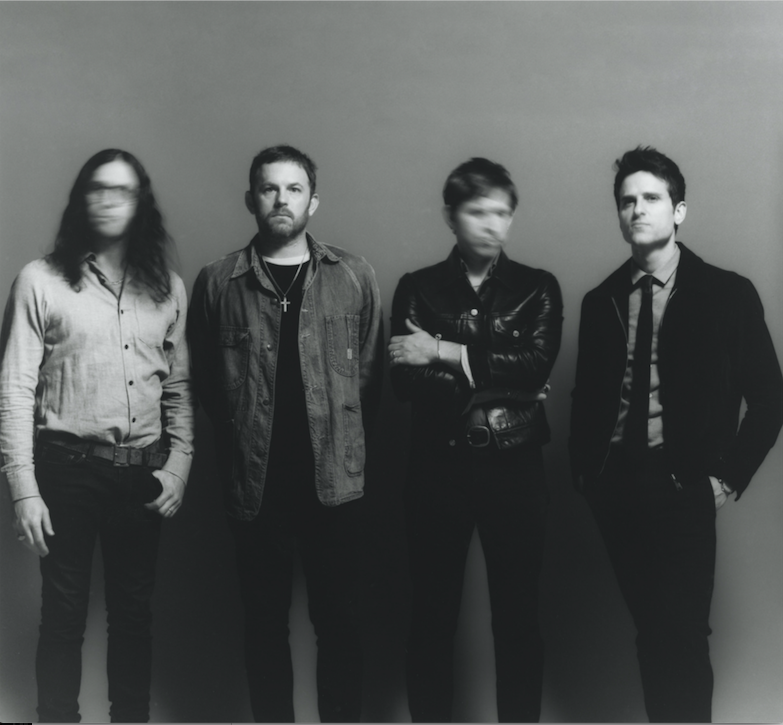
Kings of Leon are gearing up for their Manchester gig at Co-op Live this July (Credit: Press shot)
Kings of Leon setlist for 2026 UK tour
These American rockers have been performing all across Europe, switching up a couple of songs at each show; however, the hits below have featured at most of their appearances.
Slow Night, So Long
Waste a Moment
Find Me
On Call
Radioactive
The Bucket
Revelry
Manhattan
Use Somebody
Wait For M
Split Screen
Closer
Molly’s Chambers
Razz
MyParty
Supersoaker
Fans
Back Down South
Seen
Pyro
Black Thumbnail
To Space
Knocked Up
Sex on Fire
What are the stage times for Kings of Leon in Manchester?
Doors for Kings of Leon at Co-op Live in Manchester are set to open at 6pm with a kick-off time of 7pm from a huge indie rock band.
Supporting the US rockers is a band who have received comparisons to Kings of Leon, the loud-and-proud Scottish stars The Snuts, known for their tracks like ‘Glasgow’, ‘Elephants’ and ‘Maybe California’.
For those of you heading to Co-op Live, you’ll be glad to know it’s right next door to a rather famous big blue stadium and its integrated Metrolink stop.
Head along the light blue or orange lines directly to the Etihad Campus or Ashton-under-Lyne, and you can get off the tram literally spitting distance from the arena. You can find the full map HERE.
Trams run frequently on the Ashton-Eccles line to the Etihad stop, with services leaving every six minutes from the city centre and until 1am on Fridays and Saturdays.
Bus
You can find the full list of bus routes HERE, with the one in closest proximity to the venue being the 53 bus, which runs from Cheetham Hill through to Higher Crumpsall, Old Trafford and Pendleton, leaving just a two-minute walk to Co-op Live.
If you’re driving, there is limited parking available at the venue, but this must be pre-booked ahead of time, and there are designated drop-off areas.
The postcode is M11 3DU, and you can follow the signs towards the wider Etihad Campus as you get closer; directions to the adjacent drop-off points will also be signposted.
Keep in mind that congestion on the roads close to the stadium is expected to gather around two hours prior to any event, so if you are travelling on the road, these are the suggested times they provide on event day, though estimates will obviously vary:
Alan Turing Way (both directions): plan an additional 20 minutes into any journey by road.
Hyde Road (eastbound): expect an additional 15 minutes to be added to your journey.
Mancunian Way (westbound): plan for an extra 10 minutes of travel time.
There are also three park-and-ride facilities near Co-op Live, but be advised that the Velopark and Holt Town stops will be closed post-event to help safely manage crowds:
Ashton West (Ashton line) – 184 spaces and 11 disabled spaces
Ladywell (Ashton-Eccles line) – 332 spaces and 22 disabled spaces
Walk/cycle
Lastly, Co-op Live is only a half-hour stroll from Manchester Piccadilly, and you could even walk along the canal all the way to the front door if you fancy taking the scenic route.
Greater Manchester now also offers the option to hire bikes on the Beryl app, with riders able to locate, unlock, get to their destination and then safely lock up the bike all through an easy-to-use app. There are hire points just near the south-west corner of the Etihad Stadium on Ashton New Road.
For more information on all travel options, you can check out the enhanced journey planner.
Tickets for Kings of Leon’s UK tour dates are selling out fast. (Credit: Raph_PH via Wikimedia Commons)

 The Manc -
5th November 2020
The Manc -
5th November 2020