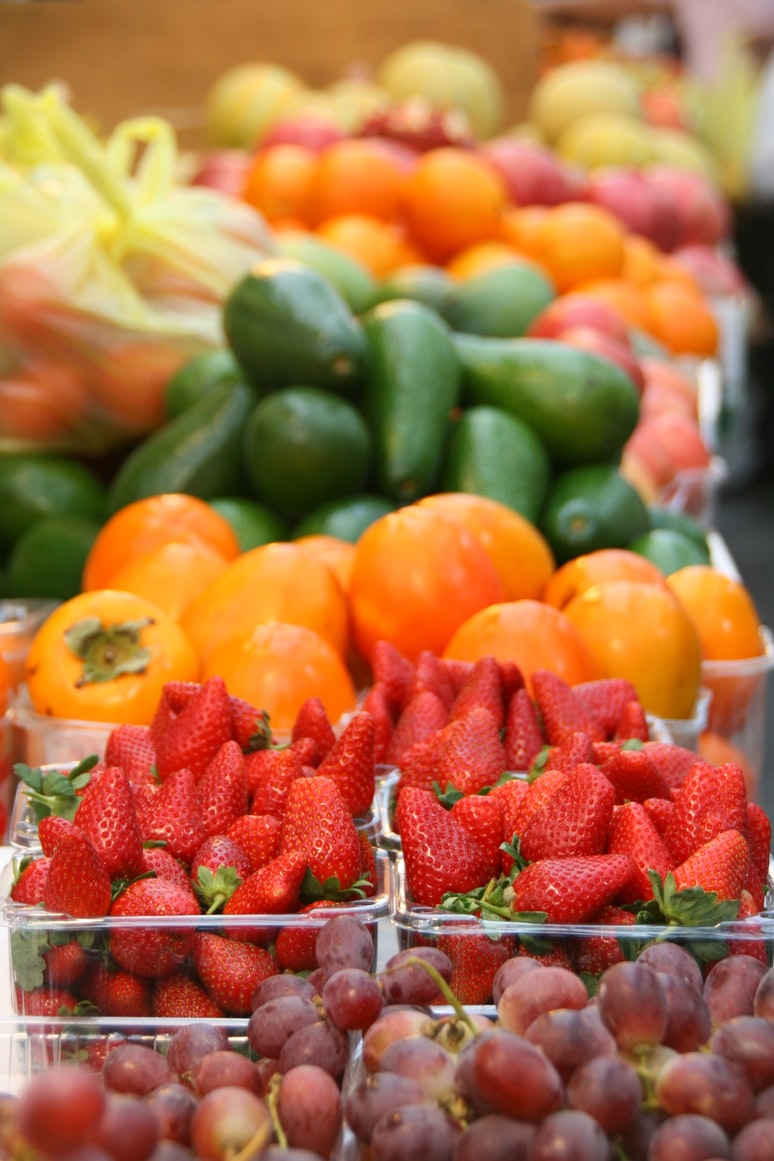
Supermarket retailers in the UK are being urged to stop selling all fruit and vegetables in plastic packaging.
A new report released by waste reduction charity WRAP (Waste & Resources Action Programme) after an 18-month study has recommended that supermarkets and grocery retailers remove best before dates and plastic packaging from all fresh fruit and vegetables to prevent 14 million shopping baskets worth of food from going to waste.
The charity did the study into five frequently-wasted food items – apples, bananas, broccoli, cucumber, and potatoes.
The items were stored in the original packaging and at different temperatures.
The charity found that selling the five items loose and removing best before dates could result in a combined yearly saving of around 100,000 tonnes of household food waste, which is more than 10,300 tonnes of plastic and 130,000 tonnes of CO2 equivalent.
ADVERTISEMENT
Supermarket retailers are being urged to stop selling all fruit and vegetables in plastic packaging / Credit: Unsplash ( Yuval Yehudar | Thomas Le)
WRAP said its findings debunk the idea that single-use plastic wrappers help prevent waste, admitting that they make “little to no difference to shelf life”, and said it has shared its recommendations with the UK’s largest food retailers.
Implementing them, however, it said was “likely to take time”.
ADVERTISEMENT
Speaking on the findings from the study, Marcus Gover – CEO at WRAP – explained: “This important research could be a game-changer in the fight against food waste and plastic pollution [as] we have demystified the relationship between wasted food, plastic packaging, date labels and food storage.
“We are all living with the reality of the climate emergency and the rising cost of living [so] this new clarity could not be more timely.
“We need retailers to step up and follow our recommendations so we can achieve real progress in tackling food waste and plastic pollution as this helps save the planet and us money at the same time – a real win-win.”
ADVERTISEMENT
WRAP said its findings debunk the idea that single-use plastic wrappers help prevent waste / Credit: Unsplash (Alexander Schimmeck)
WRAP conceded it would take time for things to change and it will now consult the Food Standards Agency, Defra, and the food industry to make loose produce in supermarkets a reality by 2025.
Food Standards Agency chairwoman, Susan Jebb, added that businesses should ensure the right date label is applied to their products to help consumers make informed choices and reduce the risk of food-borne illnesses, explaining: “A ‘best before’ date is about quality which means the food will be safe to eat after this date, even if it may not be at its best.
“Business should display ‘use by’ dates for food like meat products and ready to eat salads which could be unsafe if left for too long.
“Date labels are important – not only for cutting down on food waste, but for keeping us safe too.”
Featured Image – Unsplash
News
Six teenage boys arrested following stabbing of 13-year-old in Rochdale town centre
Emily Sergeant
Six teenage boys have been arrested following the stabbing of a 13-year-old in Rochdale town centre over the weekend.
Greater Manchester Police (GMP) explained that officers were called out to reports of a ‘serious assault’ near the Riverside Shopping Centre in central Rochdale on Saturday (29 August), and when they arrived on the scene, they found that a 13-year-old boy had been stabbed.
The young boy currently remains in hospital receiving treatment, while a police investigation into the incident is open and ongoing.
Two teenage boys were first arrested on suspicion of assault and possession of a bladed article on the same day the incident occurred (29 August), but have since been released on bail.
Officers then made four further arrests yesterday (31 August), again all teenage boys who were arrested on suspicion of assault and possession of a bladed article, with enquires ongoing.
A Section 60 and 60AA ‘stop and search’ authority was introduced in Rochdale town centre following the recent incidents in area and following reports of youths carrying weapons in the locality, and this has now been extended to 3pm today (Tuesday 1 September).
“This was a serious and sustained attack that could have had far more tragic consequences,” explained Detective Superintendent, Richard Hunt .”Our team of experienced detectives is working around the clock to understand exactly what happened, identify all those involved, and secure the strongest possible evidence.
“We will relentlessly pursue every lead available to us and will leave no stone unturned in bringing all those responsible before the courts.
“Community safety remains our absolute priority, and we are committed to ensuring those who seek to bring violence onto our streets are held fully accountable for their actions.”
Can you help? Anyone who witnessed the incident, was in the town centre at the time, or has any mobile phone, CCTV, or dashcam footage, is urged to come forward and speak to police on 101, quoting log 2750 of 29/08/2026, or using the LiveChat function on the GMP website.
Alternatively, you can contact Crimestoppers, anonymously, on 0800 555 111.
Featured Image – GMP
News
High School Musical at Lowry, Salford – a night spent reliving our childhood | Review
Amy Williams
What a night spent reliving our childhood.
Now, I don’t want to exaggerate or seem biased, considering this is one of my favourite film trilogies of all time, but this could be the best stage show I’ve seen in a long while.
We all know how High School Musical goes, right? Set at East High, we follow Troy and Gabriella (the star basketball player, and the geeky new girl) who meet over New Year, and then become ‘star-crossed lovers’ when back at school as they’re part of two different ‘cliques’.
The duo mess with the ‘Status Quo’ when they audition for the school musical. But will they stick to what they know? Or become stars of the stage? I’m sure you know the ending.
High School Musical is currently on stage at Lowry, Salford / Credit: Matt Crockett (Supplied)
From the costumes and the characters, to the memorable songs (there’s actually 52 songs in this production, including a mega mix at the end), they’ve kept right to the script of the films – and that’s exactly what we wanted to see.
Of course, the biggest throwback of them all is Kaycee Stroh – who originally featured as Martha Cox in the film trilogy – taking the role as Ms Darbus, and she was just as incredible as we expected her to be. And to see her do the iconic dance in the finale was unbelievable, 13-year-old Amy was screaming.
Also featuring Jason Donovan as Coach Bolton, Tobias Turley as Troy, Leonor Correia as Gabriella, Caitlin Tipping Sharpay, and Luke Bayer as Ryan, it was a proper impressive cast all round.
It’s a night to properly relive your mid-00s childhood / Credit: Matt Crockett (Supplied)
There was crowd interaction right from the off, as they taught the crowd a cheerleading routine to be included later in the show, plus for the finale, they had the lyrics on the big screen too so everyone could sing-along.
If we could go and see this show every single night, we would – it is absolutely brilliant.

 Emily Sergeant -
24th February 2022
Emily Sergeant -
24th February 2022