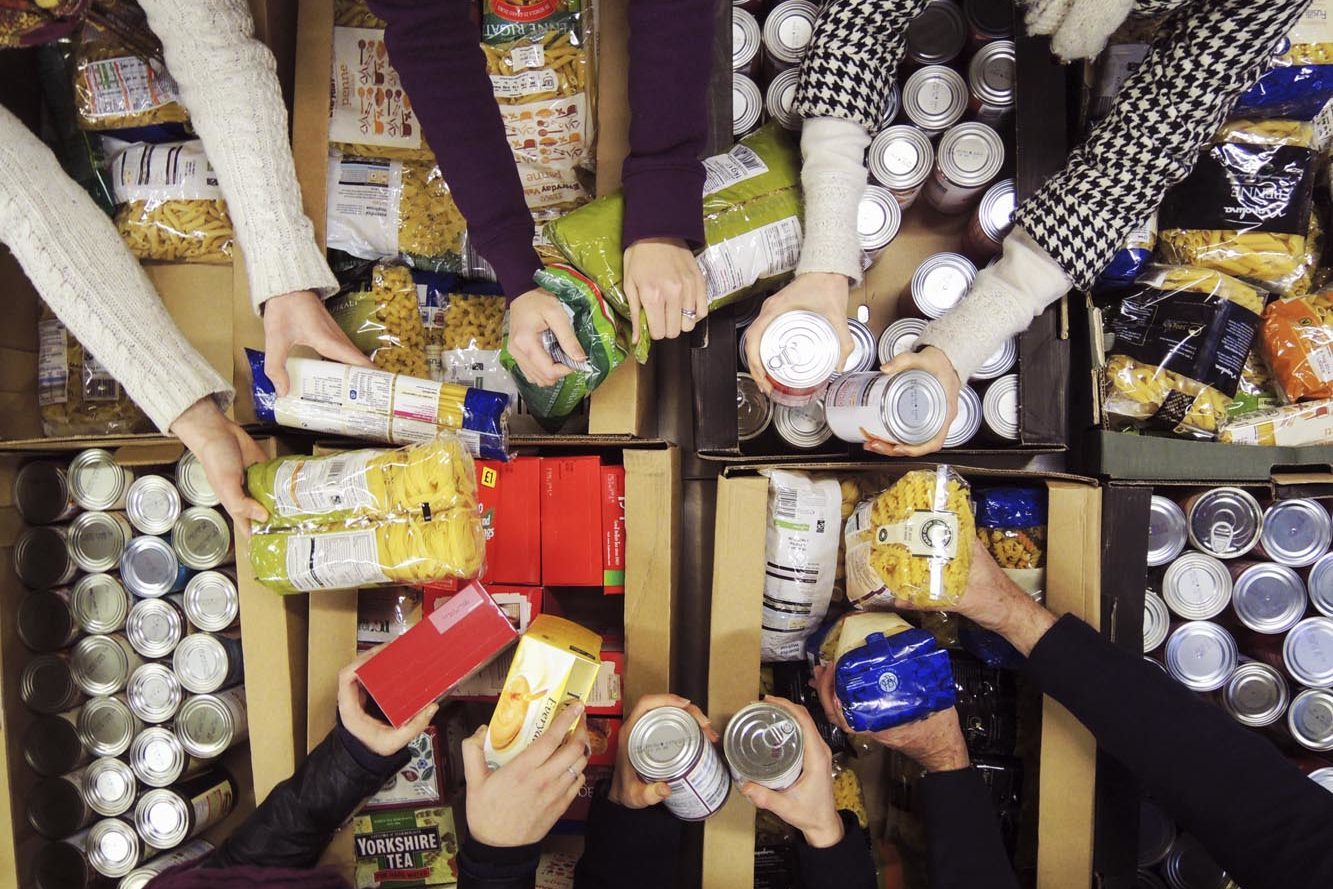
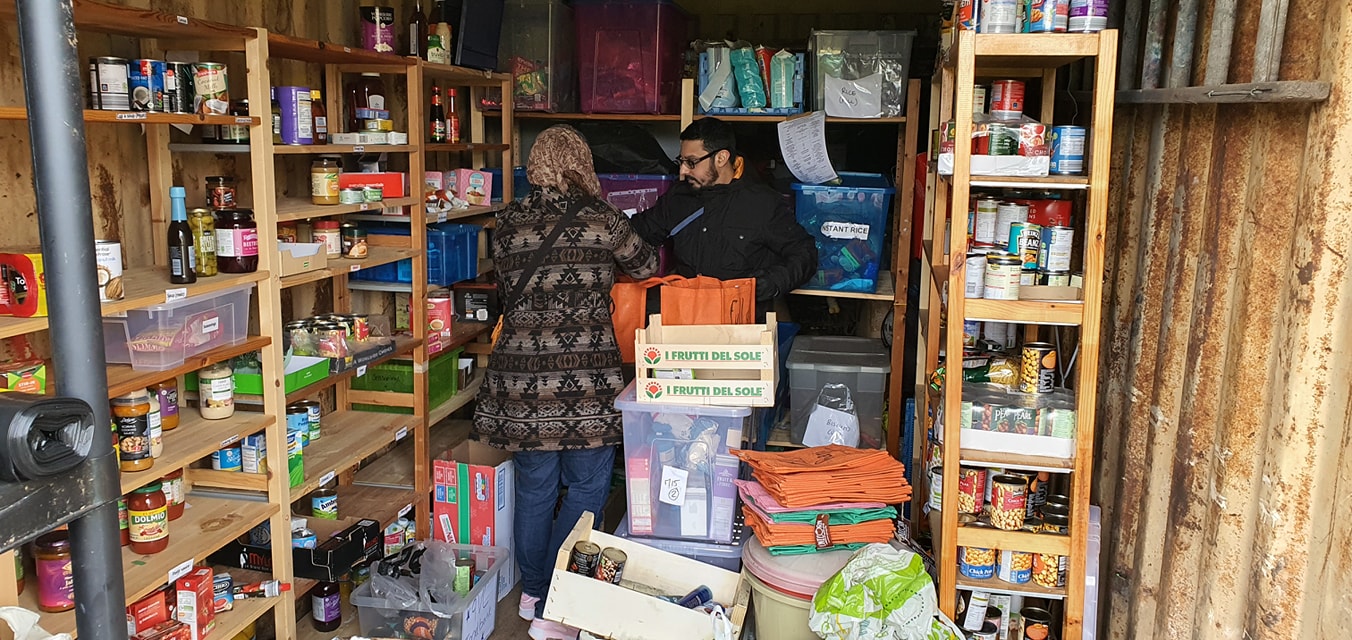
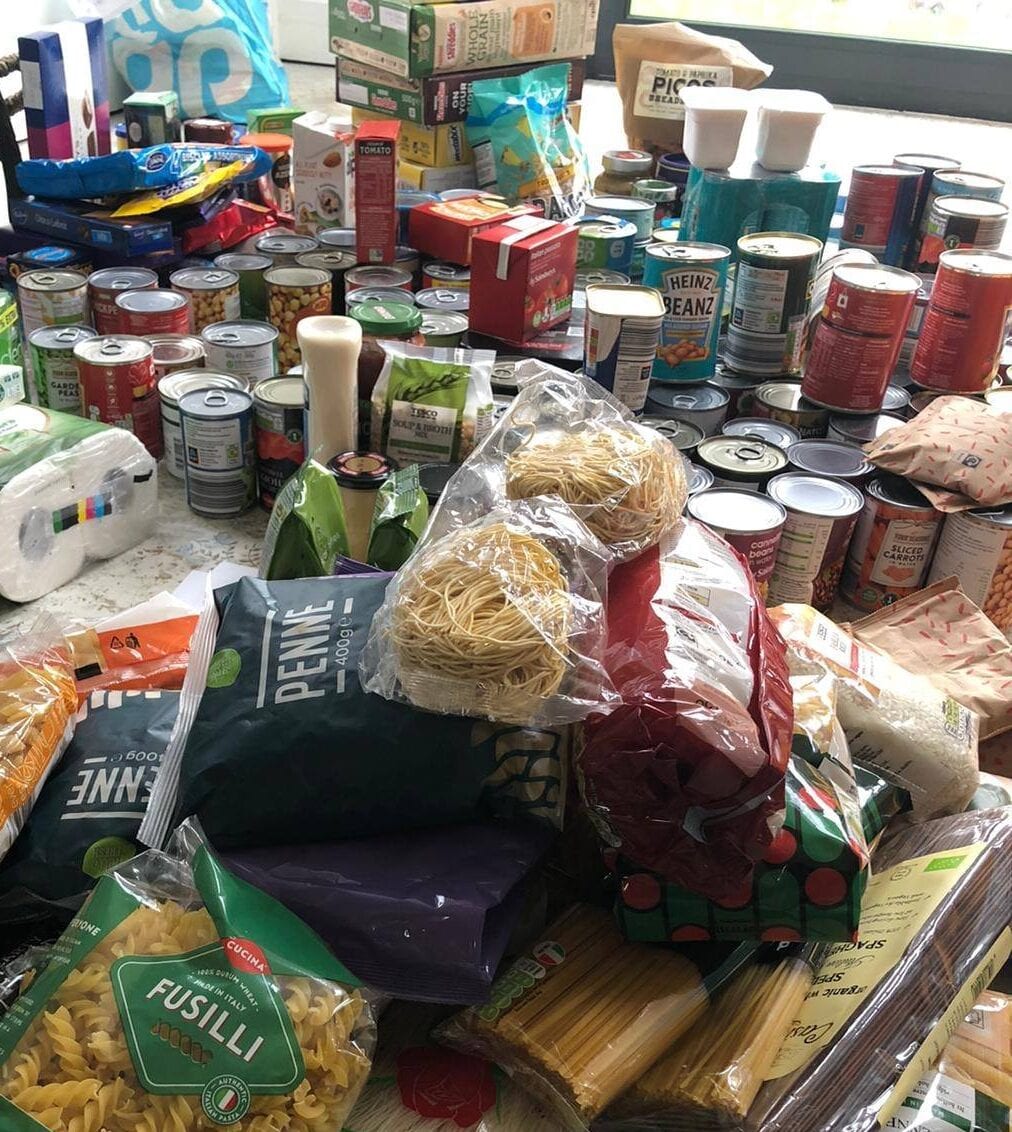
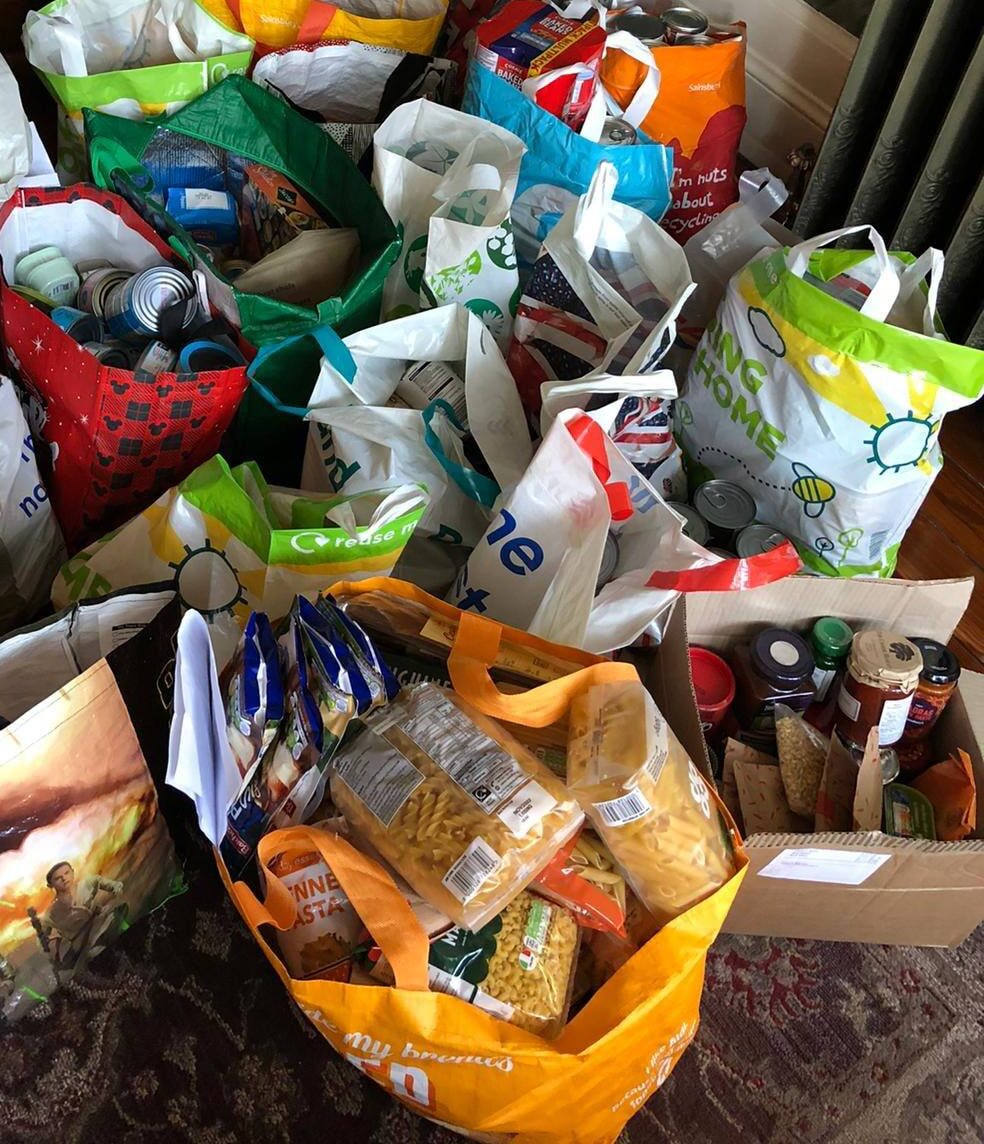
The North West relies on foodbanks more than anywhere else in the UK
Local charities and organisations are now warning that foodbank usage in the region could "spiral out of control" without sufficient government support.
A number of local charities and organisations are warning that foodbank usage in the North West could “spiral out of control” as it’s revealed that the region tops the list for demand.
The stark warnings come as the number of families with children needing support from foodbanks continues to rise across the North West – with the region claiming four of the areas with the highest number of children living in poverty – and after statistics released by leading foodbank charity The Trussell Trust revealed that it gave out more food parcels within the region than anywhere else in the UK in 2020.
The warnings also come as predictions claim that more than five million children will be living in deprivation by the end of 2021.
On top of that, according to a report by the Food Foundation, 2.3 million children live in households that have experienced food insecurity in the past sixth months, and 4.7 million adults across the UK now experience food insecurity, which is higher than the levels before the coronavirus (COVID-19) pandemic hit.
Today we launch a report revealing how the pandemic’s effect on household food insecurity remains at crisis levels⚠️
— The Food Foundation (@Food_Foundation) March 1, 2021
As of March 2021, there are currently 105 foodbanks active across the North West.
ADVERTISEMENT
This latter figure does not however include food parcels that are provided by schools, local authorities or other independent providers, which is why more and more Greater Manchester charities and initiatives say they are having to step in to help families in need and are now calling on the government to introduce a National Poverty Strategy to provide support before the situation “spirals out of control”.
He told ITV Granada: “We urgently need some increases in the support people get through the Benefit System, we’ve got to retain the £20 Universal Credit uplift that was introduced at the start of the pandemic, but that’s just the very first step.
“We need to see increases in Child Benefit and other payments that are targeted at children in families so that all children in this country can live a life that is free from poverty.”
Manzoor Ali – who founded the Chorlton-based foodbank provider Barakah Food Aid over 11 years ago – told ITV Granada of how he has heard tragic stories of young children in the Greater Manchester area having to lick sugar from kitchen tops to stave off hunger.
ADVERTISEMENT
He said: “I could go on for ages, but one that springs to mind is delivering a food parcel and you check in with the kids sometimes ask how are you doing? Is everything ok? And she responded by saying I am really grateful that you came because she saw her younger brother licking sugar off the kitchen tops, it’s stuff like that, I can’t even explain.
“These people in power make out like they care about the country right now the way I look at it, they care more about money than the people.”
Mr Ali’s latter comments particularly hit home when it’s referenced that all the way back in 2001, the then-Labour Government pledged to eradicate child poverty by 2020, but now 20 years later, several charities in the region say things are much worse than they were when the pledge was made.
In response to the rising numbers of families relying on foodbanks across the region and throughout the UK, the government says it has targeted its support to families “most in need” by raising the living wage and boosting welfare support.
It added £23 million has been allocated to North West councils through the COVID Winter Grant Scheme to help pay for food and essential bills.
A government spokesperson said: “We are committed to making sure every child gets the best start in life.
“This is central to our steadfast determination to level up opportunity across the country. That’s why we’ve targeted our support to families most in need by raising the living wage and we have boosted welfare support by billions.
“Additionally, we have launched the COVID Winter Grant Scheme to help children and families stay warm and well fed during the coldest months and £23 million has already been allocated to councils throughout the North West to help pay for food and essential bills.”
___
You can find a list of active foodbanks in the region currently accepting and offering support – as in January 2017 by Greater Manchester Poverty Action (GMPA) – via the Greater Together Manchester website here.
ADVERTISEMENT
Due to the ongoing coronavirus (COVID-19) pandemic GMPA encourages those in need of support to contact food providers direct.
This is regarded as the best way to find out more about the services they are currently offering.
News
Police reinvest record £18m seized from criminals back into Greater Manchester’s communities
Emily Sergeant
A record £18 million seized from criminals within the past year has now been reinvested back into Greater Manchester’s communities.
Greater Manchester Police‘s (GMP) confirmed that its dedicated Economic Crime Team recovered a whopping £18,150,322.56, to be precise, from criminals in the past year alone, and it’s cash that will be now be reinvested as part of the successful Asset Recovery Incentivisation Scheme (ARIS) back into communities across Greater Manchester.
This is a record figure for the police service.
Throughout the past year, GMP says it has conducted more than 850 Proceeds of Crime (POCA) hearings.
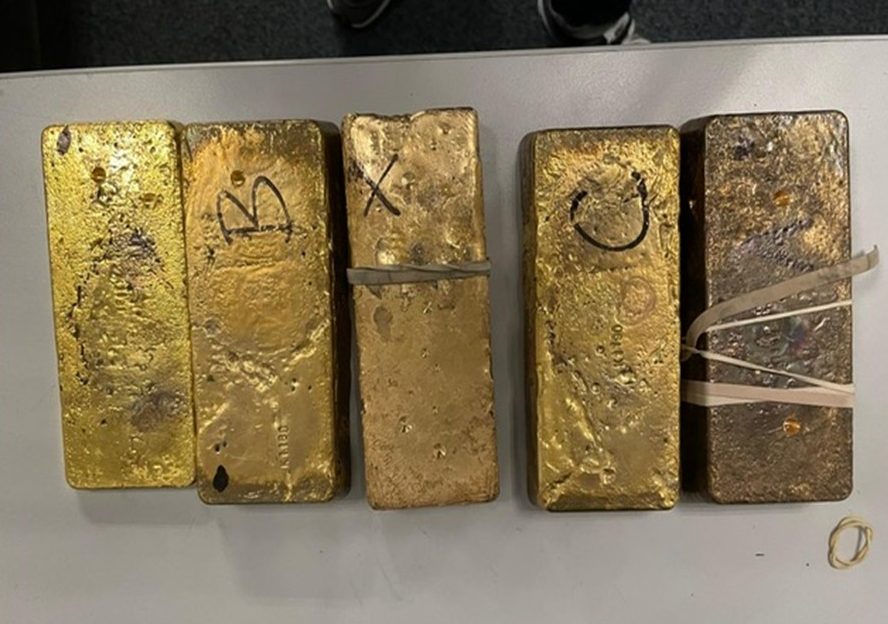
As a result of these hearings, police have recovered millions from convicted drug dealers, fraudsters, crime gangs, and money launderers, as well as recovering a ‘significant’ amount of gold.
Police have reinvested record £18m seized from criminals back into Greater Manchester’s communities / Credit: GMP
You may remember that, back in May last year, officers working at Manchester Airport stopped a man found to be carrying five gold bars weighing more than 15kg in his hand luggage as he prepared to fly abroad.
Following this seizure, GMP was then granted in February its largest-ever forfeiture order for gold bars – valued at £1.8m.
Some of the other seizures and forfeitures over the past year include just over £135,000 from a suspect after his car was stopped on the M62 in November 2025, and another £138,144 was recovered from a man after he pleaded guilty to being concerned in the supply of class A drugs.
GMP was granted its largest-ever forfeiture order for gold bars – valued at £1.8m / Credit: GMP
“The work of our Economic and Cyber Crime Unit in the last 12 months to recover over £18 million in criminal assets has been nothing short of outstanding,” commented Assistant Chief Constable Rick Jackson, who is GMP’s lead for crime.
“This record figure reflects the hard work and dedication of our officers and staff to investigate, solve crime and bring offenders to justice.
“As we move into a new financial year, we will continue to maintain an ambitious and innovative approach while adapting and developing with partners to target criminal assets and embrace technology to remain a step ahead of changing criminal activity.
“Through using the ARIS process, this criminal money can be reinvested back into local communities for the benefit of the public we serve.
“This work reflects GMP’s continued drive to deliver an outstanding service to our Greater Manchester communities while building public trust and confidence in the service we deliver.”
Featured Image – GMP
News
Dispute over Manichester now ‘resolved’, say Mounfield family
Danny Jones
The family of the late, great Manchester musician, Gary ‘Mani’ Mounfield, have said that the drama surrounding the highly-anticipated tribute festival in his name, Manichester, has now thankfully been settled.
Now the focus can once again return to remembering him as best as possible.
Following plenty of talk about the project following his passing late last year, a live music festival honouring Mani was finally confirmed in March, and the reaction following the event’s announcement has been unsurprisingly phenomenal.
Well, at least for the most part, as there was also some confusion over whether or not Manichester was still a charitable effort as advertised, with son Gene Mounfield disputing claims online. Fortunately, it all seems to have been put to bed now.
On behalf of the boys, and as their legal guardian, I want to thank everyone for the kind messages and concern for their wellbeing. There was a misunderstanding regarding the upcoming Manichester tribute concert, but we’re pleased to share that everything has now been resolved. pic.twitter.com/j8jEMrFzsD
Being organised by Madchester.com and locally-founded fashion label, GIOGOI, the debut edition was said to have the total blessing of Mani’s family, including his brother, Greg Mounfield.
It was also said that the funds raised by the show would be going to the legendary Stone Roses and Primal Scream bassists’ twins, George and Gene, but the latter recently argued that “nothing” was going to either him or his brother and that the news was “dropped” the plans just a fortnight prior.
Gene also said that “if it was a charity gig it would be at Co-op [Live] or Heaton Park, and it would be done by SJM [Concerts]”: a Manchester-based promoters and events company.
All of this was also wrapped up in ever more paper talk and sensationalism, as some were reporting that Noel and Liam Gallagher, as well as other members of Oasis, would be surprising fans as the still yet to be revealed ‘major headliner’.
These rumours have since been quashed, as has whatever miscommunication caused the misunderstanding between the parties concerned, and we are now back to simply looking forward to seeing an already stacked lineup here in the city centre this May.
Damon Minchella of Ocean Colour Scene (a fellow bassist who also tours with Richard Ashcroft) is helping organise and will also be performing on the night itself. As for the surviving Mounfields, they went on to add in an accompanying Instagram post: “We would also like to express our gratitude to PH.
“It means a great deal to all of us that so many people loved Mani enough to give their time and energy to honour his memory in this way. We are genuinely touched by the support.
“It has been an incredibly difficult few years for the boys and for our whole family. We hope this event will bring some much‑needed joy and create new, positive memories for everyone who cared about him.
“With love and thanks – The Family”
It goes without saying that we can’t wait for this city and Greater Manchester as a whole to honour a Manc icon and are looking forward to another year celebrating the thing that never fails to bring us all together: music.

 The Manc -
3rd March 2021
The Manc -
3rd March 2021