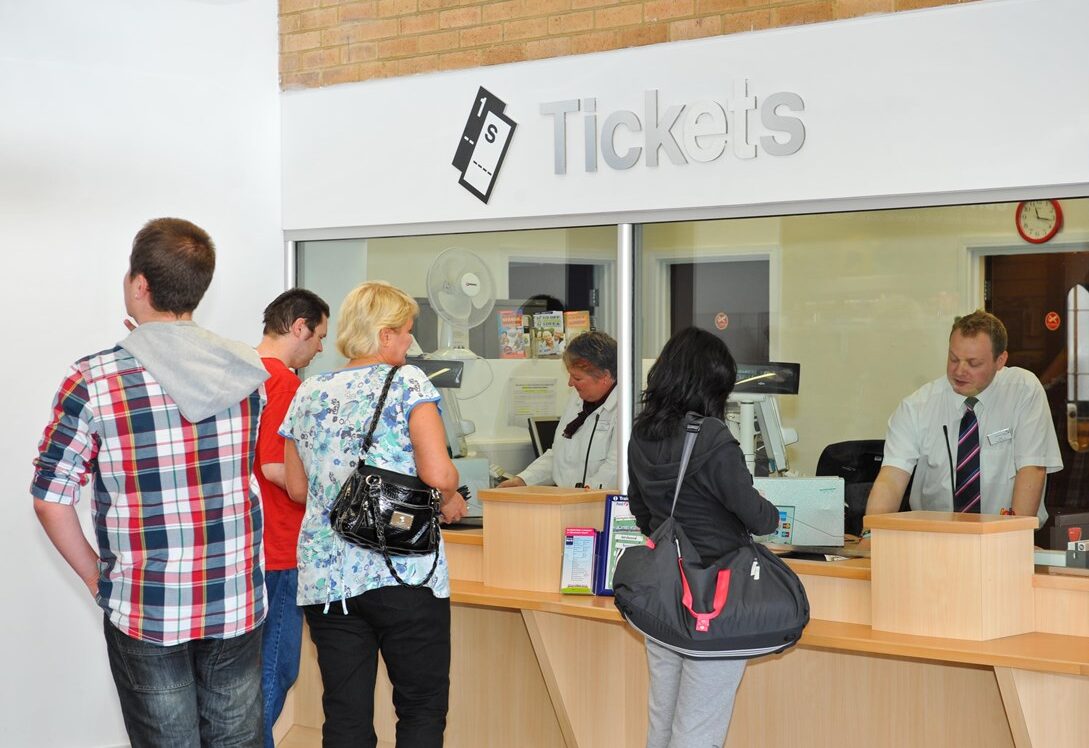
Ticket offices could eventually be closed at nearly every train station in England as part of new proposals unveiled today.
It’s believed that around three out of five stations currently have a staffed ticket office, but the Rail Delivery Group (RDG) is looking to change that moving forward, and has today unveiled plans to “bring station staff closer to customers” by moving them out of ticket offices and onto platforms and concourses instead.
The industry body has launched a 21-day public consultation, and is now asking passengers for their thoughts on the proposals.
The railway is proposing changes to how our staff help customers.
Our proposals mean staff on hand to give face to face help with a much wider range of needs, from journey planning, to finding the right ticket and helping those with accessibility needs.
— Rail Delivery Group (@RailDeliveryGrp) July 5, 2023
According to the RDG, the proposals would help to bring stations “up to date from the mid-90s”, which is when the rules on how to sell tickets were last reviewed, as this was “long before the invention of the smartphone” and back when an estimated 82% of all sales were from ticket offices, compared to just 12% on average today.
Bringing staff out from ticket offices would apparently allow the rail industry to “respond to that generational shift in customer behaviour” just like other similar industries and organisations have, the RDG says.
ADVERTISEMENT
The changes would also mean a more “visible and accessible staff presence overall” in stations during staffed hours.
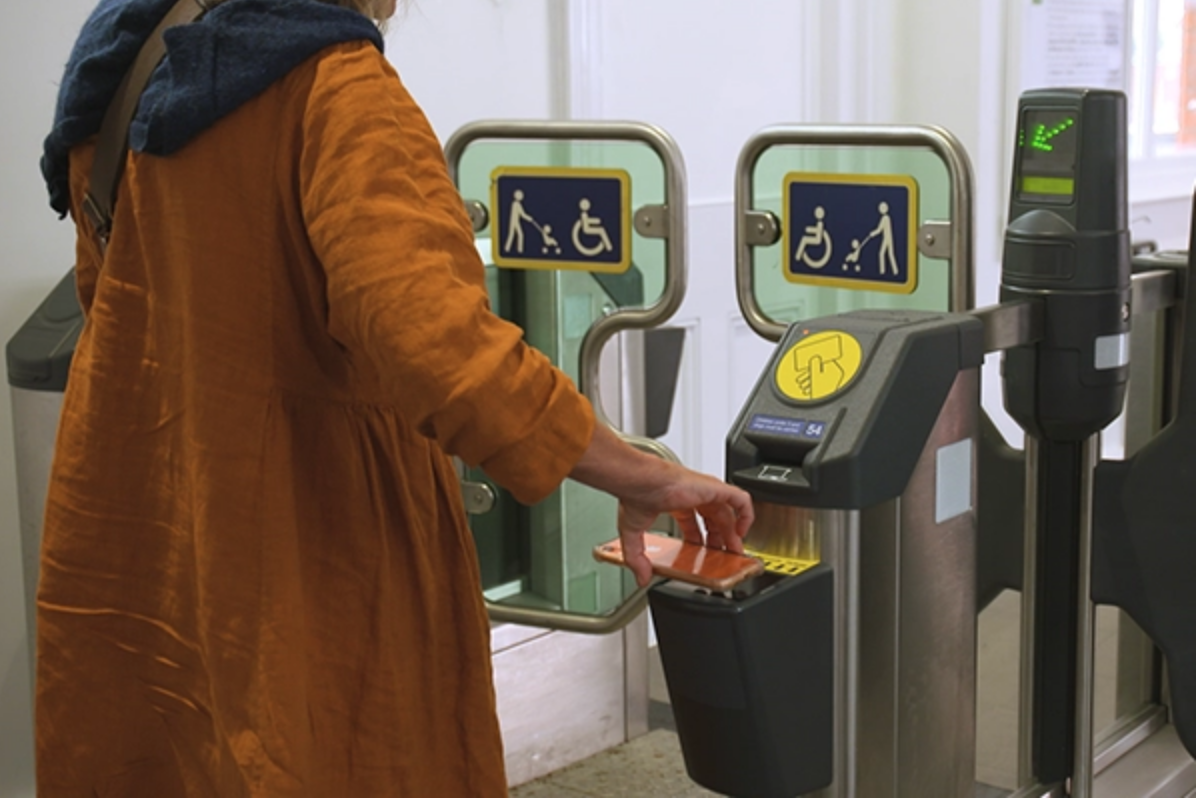
Ticket offices could be closed at ‘nearly every’ train station in England / Credit: RDG
The proposed new “multi-skilled customer help roles” – which the RDG says are already in place at many stations nationwide – would apparently help to support better face-to-face interactions, and would mean previous ticket office staff are then able to help more customers across “a whole range of needs”.
ADVERTISEMENT
Ticket office facilities will remain open at the stations and interchanges considered by the RDG to be the “busiest”, but aside from this, the rest would be closed.
If the proposed changes are accepted, the RDG says closures would be “phased in gradually”.
Customers queuing at a local train station ticket office / Credit: RDG
In response to the RDG’s proposals unveiled today, Transport for the North (TfN) has raised a couple of concerns – with a spokesperson commenting acknowledging that while it “understands the way people buy tickets is changing” and that there “needs to be reform”, this should, however, be done in a “holistic” way that considers the needs of all station users and local communities.
ADVERTISEMENT
“We are concerned that the focus on ticket office staffing in isolation of wider investment could lead to disadvantaging certain passengers and communities,” the TfN spokesperson continued.
“We will be working with our partners on a robust response to the consultation using local evidence and knowledge.”
Featured Image – Network Rail
News
Police seize convoy of supercars after reports of dangerous driving on M62 near Rochdale
Emily Sergeant
A convoy of supercars has been seized by police following reports of dangerous driving on the M66 and M62 near Rochdale.
On Wednesday, Greater Manchester Police (GMP) says its dedicated Roads Policing Unit (RPU) were made aware that a group of individuals driving high-powered vehicles – such as Lamborghinis and Mercedes G-Wagons – were ‘driving dangerously’ at speed, weaving across lanes, wheel spinning, and slowing down to speeds of around 17mph on the motorway.
After finding the convoy of vehicles on the M62, police were able to stop two of Lamborghinis as they were coming off the motorway.
Officers then used specialist tactics to bring the remaining vehicles to a stop in Rochdale.
As a result of police intervention, GMP was able to seize five Lamborghinis and a Mercedes G-Wagon under Section 59 of the Police Reform Act 2002, and on top of this, the drivers of the offending vehicles were prosecuted for a number of driving offences.
Police have seized a convoy of supercars after reports of dangerous driving on the M62 near Rochdale / Credit: GMP | Wikimedia Commons
Chief Inspector Danny Kabal, from GMP’s Transport Policing and Crime command, said the force takes road safety ‘very seriously’.
“We will not tolerate careless, inconsiderate, anti-social or dangerous driving on our roads,” he began.
“Recent changes to Section 59 of the Police Reform Act now enables us to seize vehicles without having to issue a warning first. As we intensify our road safety operations and enforcement campaigns, we will use this legislative change as part of our daily business.
“People who think it is acceptable to use our roads as a racetrack need to pay attention to this result and take it as a warning – they will have their vehicles seized and they will be prosecuted, and where proportionate to do so, they will also be arrested.”
Featured Image – GMP
News
New £60m fund launched to fill potholes across Greater Manchester
Emily Sergeant
A new £60 million Pothole Fund has been created to repair more of the city region’s roads and pavements.
The fund – which has been set up by new Mayor Bev Craig, and is to be spent across every borough in Greater Manchester – is set to be a ‘major boost’ to efforts to tackle the pothole problem, as it will be enough to repair and maintain over a million square metres, or around 125 kilometres, of road across the wider region.
Around 2.5 billion trips are made on Greater Manchester‘s roads every year – not only by motorists, but also by buses, trams, cyclists, and pedestrians. So the fund will be used to help keep the highways network ‘safe and reliable’.
The fund will enable transport teams to repair hotspots where surfaces are in poor condition, as well as resurface roads and pavements to prevent them from deteriorating in the first place.
A new £60m fund has been launched to fill potholes across Greater Manchester / Credit: TfGM
Cold and wet winters, more traffic, and heavier vehicles using the roads are just some of the contributing factors to the pothole problem, which is why the fund is being introduced before autumn and winter properly arrives.
The amount each of the 10 boroughs will receive is based on an agreed funding formula, with the allocations being:
Bolton: £6,552,000
Bury: £4,374,000
Manchester: £8,155,000
Oldham: £5,258,000
Rochdale: £5,243,000
Salford: £5,388,000
Stockport: £6,820,000
Tameside: £4,980,000
Trafford: £4,992,000
Wigan: £8,241,000
The extra cash comes from the region’s transport budget, with leaders agreeing to reallocate funding towards highways maintenance, and it fulfils a commitment Bev made in her Mayoral Manifesto to repair more roads and make sure pavements are safe.
“Keeping our roads and pavements safe and well maintained is essential for a growing city region like Greater Manchester,” explained Mayor Bev Craig.
“That’s why I promised to create this new Pothole Fund that will benefit drivers and everyone who uses our roads to get around. Properly maintaining our roads will save motorists money on costly repairs, and by preventing potholes forming in the first place, councils won’t have to spend as much money on emergency road repairs.
“This issue came up repeatedly on the doorstep during my election campaign so I’m pleased that I can do something about it so quickly, building on the significant work already planned by councils across Greater Manchester.”