Drinks in the UK are set to become more expensive thanks to a new government system that will tax alcoholic drinks based on their strength.
The new system has been created with the intention of encouraging people to drink less but has received fierce criticism from hospitality groups who fear it will both fuel inflation and damage an already fragile industry.
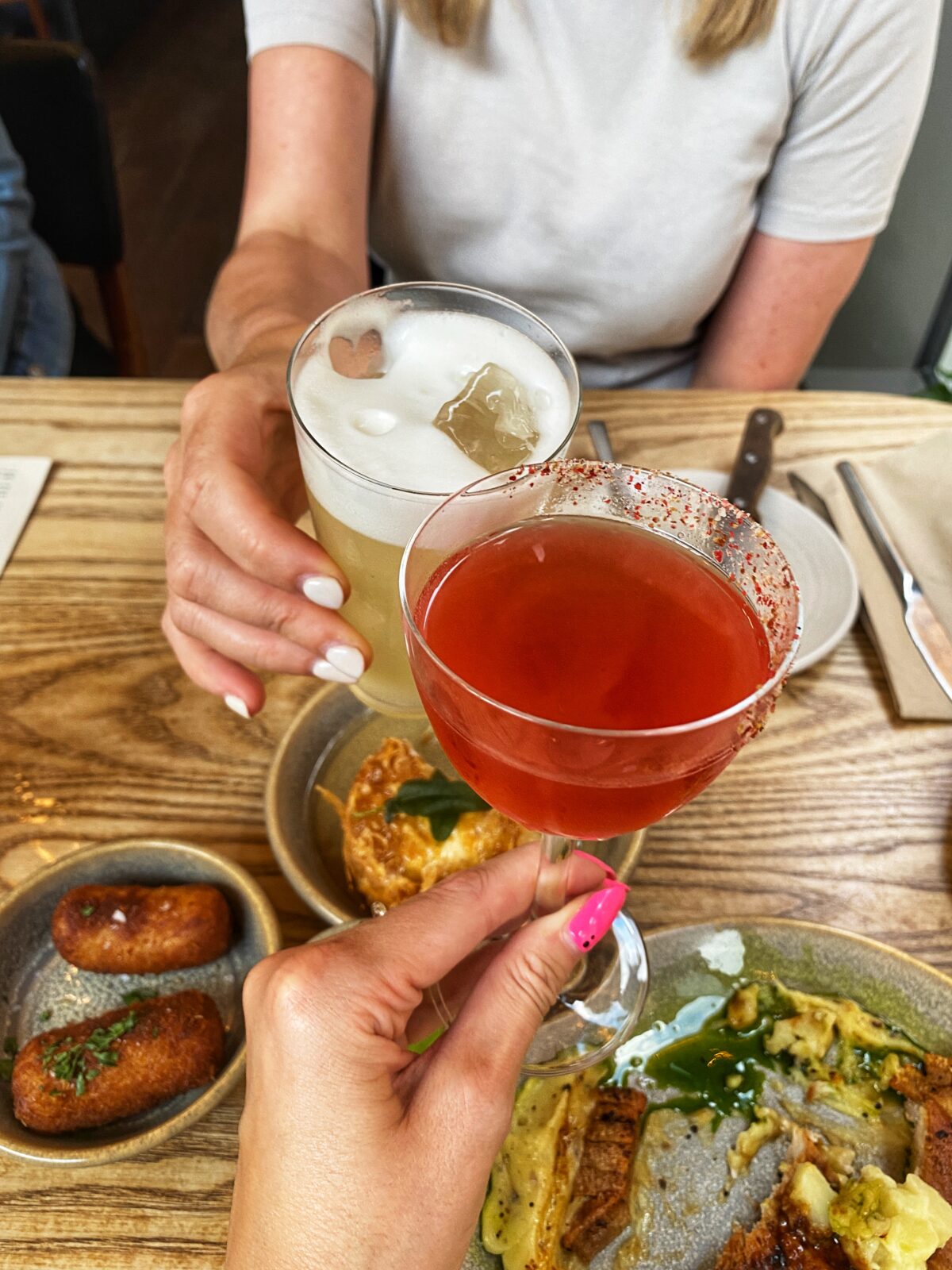
The policy means that going forward wine in the UK will become more expensive as well as spirit mixers and cocktails, whilst champagne, sparkling wine and some low alcohol beer will become cheaper as a result.
Its introduction, however, comes at a time when the UK is experiencing record inflation in food and drink, with prices having hit a 45-year high of 19.2% in March 2023.
Current inflation on alcohol and tobacco products, meanwhile, was at 9.2 percent in June.
ADVERTISEMENT
However, despite criticism, the government has pressed ahead with the tax measure – with the Prime Minister hailing Brexit for making it all possible as he made a photocall at a Richmond brewery on Tuesday.
Rishi Sunak called the overhaul “the most radical simplification of alcohol duties for over 140 years” and was insistent that hard-up businesses and consumers will benefit from the change.
ADVERTISEMENT
The Prime Minister decided to break the news with a pint-pulling photo opportunity in a Richmond pub.
However, whilst Mr Sunak didn’t appear to have clocked the irony of the image it was soon pointed out to him by a heckler inside.
As he posed at Wensleydale brewery with a pint of Black Dub stout, an onlooker called out: “Prime minister, oh the irony that you’re raising alcohol duty on the day that you’re pulling a pint.”
ADVERTISEMENT
The announcement about price hikes on Tuesday coincided with the end of the freeze on alcohol duty, first announced by Chancellor Jeremy Hunt in March. As a result, alcohol prices are now set to increase with inflation at 10.1%.
The new tax measures mean that a bottle of wine will increase by 44p, but combined with VAT will mean consumers are paying an extra 53p per bottle.
The tax on gin and vodka bottles, meanwhile, will go up by around 90p, whilst duty on 18% cream sherry will go up by more than £1 and bottles of port are set to rise by more than £1.50.
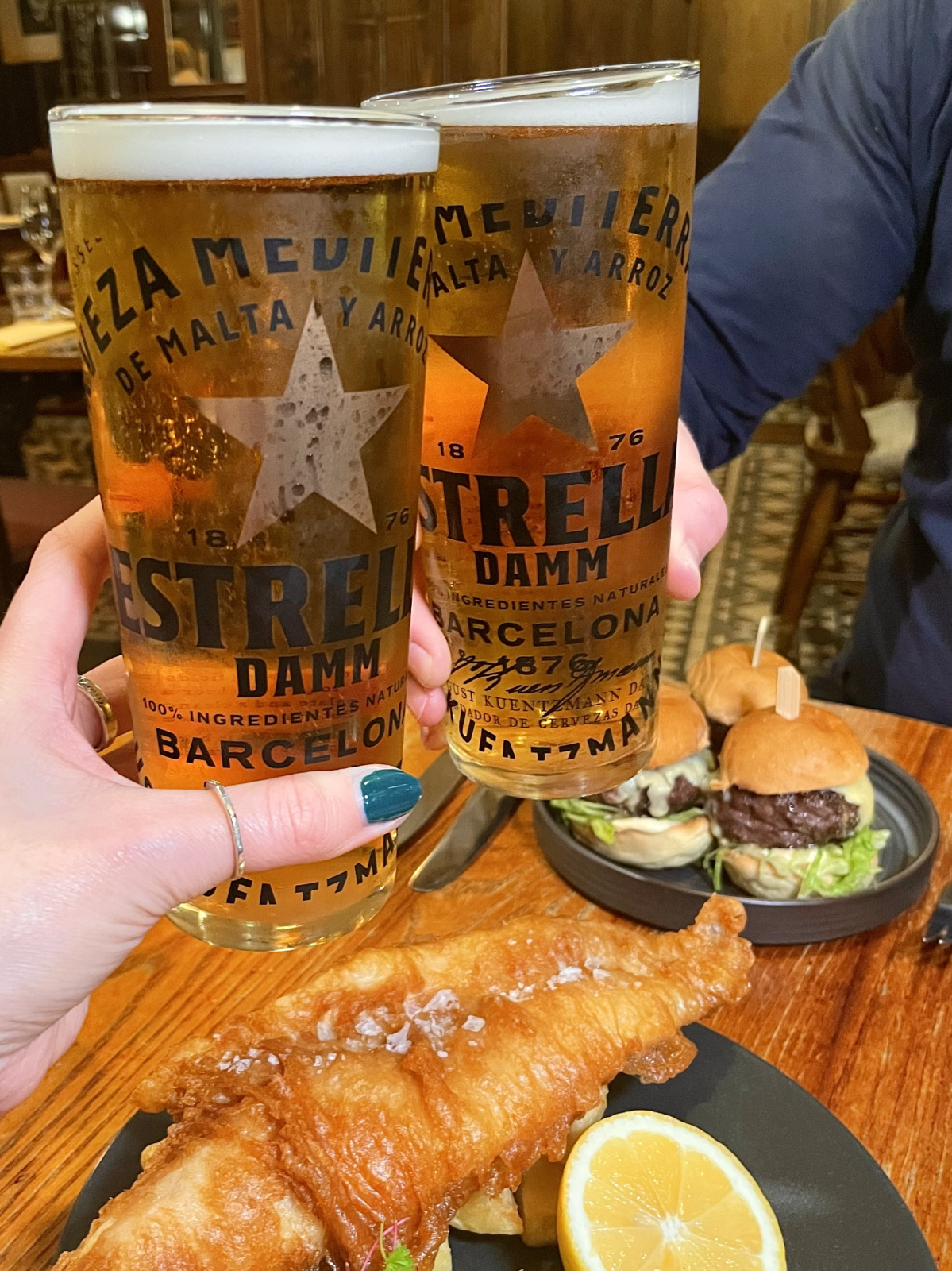
At first glance, it appears there is some good news for beer drinkers who will see the duty cut by 11p a pint.
However, according to the British Beer and Pub Association (BBPA), because brewers will be required to pay 10.1% more tax on bottles and cans from 1 August their prices could rise to reflect this increase – as that new tax will make up around 30% of the cost of a 500ml bottle.
ADVERTISEMENT
Image: The Manc Eats
The BBPA also said that the tax increase on packaged beer will add an extra £225 million of costs per year across the industry.
For Scotch Whisky, the cost is set to rise even more with Scotch Whisky Association director of strategy Graeme Littlejohn revealing the tax burden on an average bottle will rise to 75%.
He also said the move will leave distillers at a competitive disadvantage, stressing that “pubs and other on-trade businesses are about far more than beer and cider.”
Calling the 10.1% duty increase a ‘hammer blow for distillers and consumers’, he explained: “At a time when inflation has only just started to creep downwards, this tax increase will continue to fuel inflation and make it more difficult for the Scotch Whisky industry to invest in growth and job creation in Scotland and across the UK supply chain.
“Rather than choosing to back an industry which the UK government promised to support through the tax system, the government has chosen to impose the largest duty increase in almost half a century, increasing the cost of every bottle of Scotch Whisky sold in the UK by almost a pound and taking the tax burden on the average priced bottle to 75%.
“In a further blow, distillers will now face a further competitive disadvantage in pubs, restaurants and bars by being unfairly excluded from tax breaks available to beer and cider.
“Pubs and other on-trade businesses are about far more than beer and cider.”
The prime minister said: “I want to support the drinks and hospitality industries that are helping to grow the economy, and the consumers who enjoy the end result.
“Not only will today’s changes mean that that the price of your pint in the pub is protected, but it will also benefit thousands of businesses across the country.
“We have taken advantage of Brexit to simplify the duty system, to reduce the price of a pint, and to back British pubs.”
Featured image – The Manc Eats
News
SIR Kevin Sinfield among list of local names officially recognised in the King’s Birthday Honours 2026
Danny Jones
While many individuals were already public knowledge, we’re made up to hear that SIR Kevin Sinfield has now finally received his long-overdue knighthood, and he’s not the only recognisable local and/or beloved famous face to have been recognised in the King’s Birthday Honours list for 2026.
There are so many worthy names on the list, but it goes without saying that the ‘Sir Kev’ campaign is one that countless have been flying the flag for rather high over the past few years.
Sinfield, 45, is not only a rugby league and England legend, but he has warmed hearts across the country and beyond through his superhuman ‘7 in 7’ ultramarathon efforts on behalf of the Motor Neurone Disease Association (MNDA) in recent times, all in memory of his old teammate and best friend: the late, great Rob Burrow.
Following his 2014 MBE, OBE in 2021, and CBE in ’23, we struggle to think of anyone more deserving of the accolade than the Oldham native, to be honest; here he is talking about the great privilege earlier this month:
Hero, legend, inspiration – these words don’t even begin to cut it.
That being said, he’s not the only ex-sportsman with a crucial Greater Manchester connection to have been honoured this year, as former Scotland international and Manchester United player Lou Macari (who still has a chippy in his name right near the ground) has also been made an MBE.
While Sinfield was recognised for services to sport and charity, 77-year-old Macari has been awarded the accolade for his work helping the homeless across not just the North West but all over the country.
Setting up the Macari Foundation back in 2016 and creating vital shelters, fundraising and support schemes – not to mention being involved in various other adjacent charitable initiatives such as the now annual Old Trafford Stadium Sleepout – it’s a cause he’s backed for more than a decade now.
Put quite simply, he’s helped change people’s lives for the better and save them full-stop.
Speaking to BBC Breakfast on Monday, 15 June, the Stoke-on-Trent-based, legendary Celtic centre-forward and retired Red was visibly humbled by what could arguably now be his most treasured medal.
Lou Macari has been recognised for his decade-long commitment to a homeless charity in Stoke-on-Trent by being made an MBE in the King's Birthday Honours.
As for other names this year, several Lionesses were also featured as part of the list for 2026, including Euros winners Chloe Kelly and Alessia Russo, both of whom also previously played for Manchester City and Man United, respectively.
Fellow WSL stars Michelle Agyemang, Jess Carter, Hannah Hampton and Lauren James also joined the duo, along with a quintet of other national team players that given MBEs as part of King Charles III’s New Year’s Honours List, with the prior official ceremony taking place last month.
One of those names, most notably for Mancs, was Tyldesley’s very own Ella Toone, another MUWFC star who has also shone under England Women’s manager Sarina Wiegman.
You can find the full Birthday Honours List right HERE.
New Natural History GCSE to be introduced in ‘landmark moment’ for education
Emily Sergeant
A new Natural History GCSE is set to be introduced to the curriculum in the UK in what is being described as a ‘landmark moment’ for education.
Young people will soon be able to grow the knowledge and skills they need for future careers shaped by science, technology and environmental change, as the new Natural History GCSE is now one step closer to being taught in classrooms.
The new qualification will see students study three core areas – habitats and wildlife in the UK, human influence on the natural world, and the study of climate change, biodiversity loss and conservation.
It will also include time outside of the classroom for fieldwork, giving students an opportunity to, quite literally, get their hands dirty and apply their knowledge and skills by studying real habitats in their local area.
The introduction of the Natural History GCSE comes as jobs in sustainable sectors and so-called ‘green careers’ continue to rise in demand, according to the Government – with around 900 UK businesses in nature-related sectors raising £2.8 billion in 2025, supporting 21,000 jobs in total.
A new Natural History GCSE is set to be introduced in the UK in what is a ‘landmark moment’ for education / Credit: Department of Education (Supplied)
Now, with plans to introduce the new subject, a 12-week consultation has been launched to seek views from pupils, parents, teachers, and the green industry on the proposed subject content.
What we do know, however, is that at the heart of the new GCSE is a ‘deep understanding’ of UK habitats and wildlife pupils will find around them.
By learning to use scientific models – such as taxonomic keys and food webs – the GCSE will ask students to understand how habitats form, and how changes on Earth affect forms of wildlife differently, while also learning how the UK’s landscape has changed over time, giving young people the historical context to make sense of changes that are happening today.
The subject content will also examine human influences on the natural world, such as urbanisation, fishing and deforestation, as well as conservation approaches, while exploring how everyday actions – from wildlife-friendly gardens to reduced mowing of roadside verges – can support biodiversity.
“As we move into a world where careers are being increasingly shaped by science, technology and environmental change, it’s crucial young people have the skills for the jobs of tomorrow,” commented Education Secretary, Bridget Phillipson.
“This new GCSE will help students build a strong understanding of the natural world, alongside the knowledge, skills and hands-on experience to access careers in some of the UK’s fastest growing sectors.
“With extensive fieldwork built in, the GCSE will also get young people out and about exploring local parks, rivers and more – a critical part of childhood as more and more of our worlds are taken up by screens.”