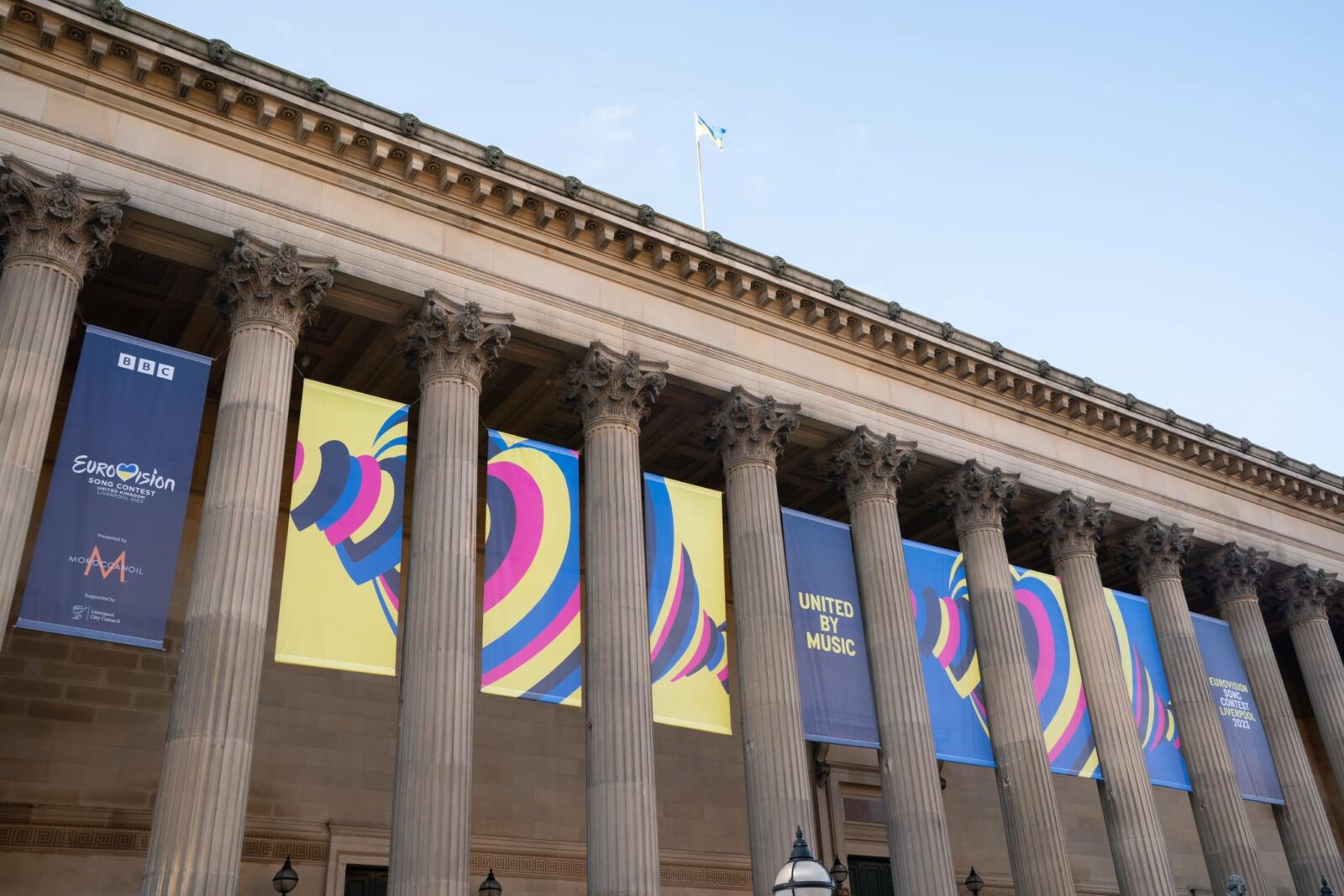
The BBC has announced that tickets to the 2023 Eurovision Song Contest officially go on sale to the public today.
With the UK set to host the 2023 edition of the world’s biggest song competition on behalf of 2022 winners Ukraine, fans from across the globe will descend on Liverpool on Saturday 13 May – and for those keen to watch one of the live shows in person, tickets go on sale today.
Eurovision fans who want to try their chances at securing tickets to either one of the Semi Finals or the Grand Final itself will need to be poised and ready.
Big #Eurovision2023 news! Tickets will be on sale from midday GMT on Tuesday 7th March 🎉
It’s not just the televised shows that fans can grab tickets for either, as there’s a total of nine live shows at the this year’s Contest – which is being staged at the Liverpool Arena from Monday 8 May, until the main event on Saturday 13 May.
There’ll be an Afternoon Preview Show and an Evening Preview Show for both of the two Semi Final events and the Grand Final, all before the Live TV Shows are then recorded at 8pm that evening, and studio audiences are to head on down and sing to their heart’s content at each one.
ADVERTISEMENT
Fancy having a crack at securing tickets then? Here’s everything you need to know.
Official artwork for the Eurovision Song Contest 2023 / Credit: Eurovision Song Contest
What time do tickets go on sale? And how much do they cost?
Tickets to the Eurovision Song Contest 2023 go on sale at 12pm (GMT) on Tuesday 7 March.
ADVERTISEMENT
Tickets are priced from £30 to £290 for each of the Semi Final shows, and from £80 to £380 for the Grand Final shows – all depending on the seats and packages.
How many tickets can I buy?
You can only buy tickets for one show at a time.
For the three live televised shows, customers can purchase a maximum of four tickets in one order, but for the six preview shows, you can buy a maximum of six tickets.
ADVERTISEMENT
This year’s Contest is being held in the North West city of Liverpool / Credit: Eurovision Song Contest
What’s the differences between each show?
The Afternoon Preview Show – usually referred to as the ‘Family Show’ – is a full run-through of that day’s Live TV Show, and serves as one final rehearsal for the artists and crew, and as the name suggests, it’s much more convenient for those who wish to bring younger Eurovision fans.
The Evening Preview Show – often referred to as the ‘Jury Show’ – is also a full run-through of that day’s Live TV Show when it comes to the Semi Finals, but in the case of the Grand Final, it’s when the international juries cast their votes for the participants.
And then the Live TV Show is exactly what it says on the tin.
Where do I buy tickets?
Tickets will only be available to purchase from Ticketmaster, regardless of the country you’re booking from, and you can only purchase tickets for one show at a time.
You must have a Ticketmaster account to purchase tickets, and fans are encouraged to create their account in advance of Tuesday 7 March.
ADVERTISEMENT
Kalush Orchestra of Ukraine as they were crowned winners of last year’s Contest / Credit: Eurovision Song Contest
How tricky will it be to get tickets? What’s my best shot at securing them?
As it probably goes without saying, demand for tickets is expected to be high, but as fans who have travelled to a Contest before will tell you, traditionally, it can be easier to secure tickets for the Preview Shows than one of the Live TV Shows.
“Preview Shows have all of the content and performances of the broadcast shows, but leave you free to watch the Live TV Show as it was intended… on the television,” Eurovision says.
The Government has already announced earlier this year that 3,000 tickets will be made available for those Ukrainians who have been forced from their homes and are living in the UK – meaning they can attend one of the Live Shows and help mark the Ukrainian group Kalush Orchestra’s victory at last year’s Contest.
Featured Image – Eurovision Song Contest
Trending
Tickets officially go on sale for rare 70mm IMAX screenings of Dune: Part Three in Manchester
Emily Sergeant
Tickets have now officially gone on sale for rare 70mm IMAX screenings of Dune: Part Three in Manchester.
Arriving on screens from 18 December and gearing up to be one of the most anticipated films of the year, Dune: Part Three – which is the third and final instalment in director Denis Villeneuve’s Dune franchise – will be screening in IMAX 70mm at Vue Manchester Printworks, one of only three venues to show it in this format nationwide.
There are only 40 other venues across the globe showing the film in IMAX 70mm, and Manchester is the only city outside of London to screen the blockbuster this way too.
Based on the novels of Frank Herbert and set nearly two decades after the previous film, Dune: Part Three features an ensemble cast of all-star names led by Timothée Chalamet and Zendaya.
Alongside them will be Jason Momoa, Florence Pugh, Anya Taylor-Joy, Rebecca Ferguson, Robert Pattinson, Charlotte Rampling, Javier Bardem, and Josh Brolin.
After seats for a special early screening of the film in IMAX sold out in less than 30 minutes last month, the IMAX 70mm showings – which officially went live today (20 October) – are expected to be snapped up fast by film fans in Manchester.
“A decade in the making, Denis Villeneuve’s epic Dune trilogy is reaching its dramatic conclusion this December,” explained Dean Cross, who is the Senior Screen Content Manager at Vue.
“As the only venue outside of London to be screening Dune: Part Three in IMAX 70mm, it’s a privilege for us to offer this unique way to experience the film.”
Dune: Part Three is coming to Vue Manchester Printworks on 18 December, and you can book your tickets here.
Featured Image – Warner Bros.
Trending
Free pints and live craft experiences coming to a Manchester pub for one night only
Daisy Jackson
A pop-up pub takeover is opening its doors in Manchester, where you can get your hands on a free pint as well as some amazing craft experiences.
The Uncommon Inn is being operated by premium Italian lager brand Poretti, who want to help us Brits break out of our daily routines.
Matt & Phreds on Tib Street will welcome The Uncommon Inn on Thursday 22 October, from 4pm to 8pm, giving visitors the chance to discover unusual creative skills and watch artisans at work, with a free pint in hand.
It comes after research commissioned by Poretti found that 61% of UK adults feel they are living on autopilot, while a quarter have not tried a new creative pursuit in five years or more.
Free pints and live craft experiences are coming to a Manchester pub for one night only / Credit: Supplied
The study also found that adults have an average of just 90 minutes of genuine personal time each day, with 58% spending that time watching television and 35% scrolling through social media.
Exhaustion and financial constraints came out as the main barriers preventing people from trying new things.
The Uncommon Inn has been designed to offer an alternative, bringing together a collective of specialist makers to showcase their skills in a familiar pub setting.
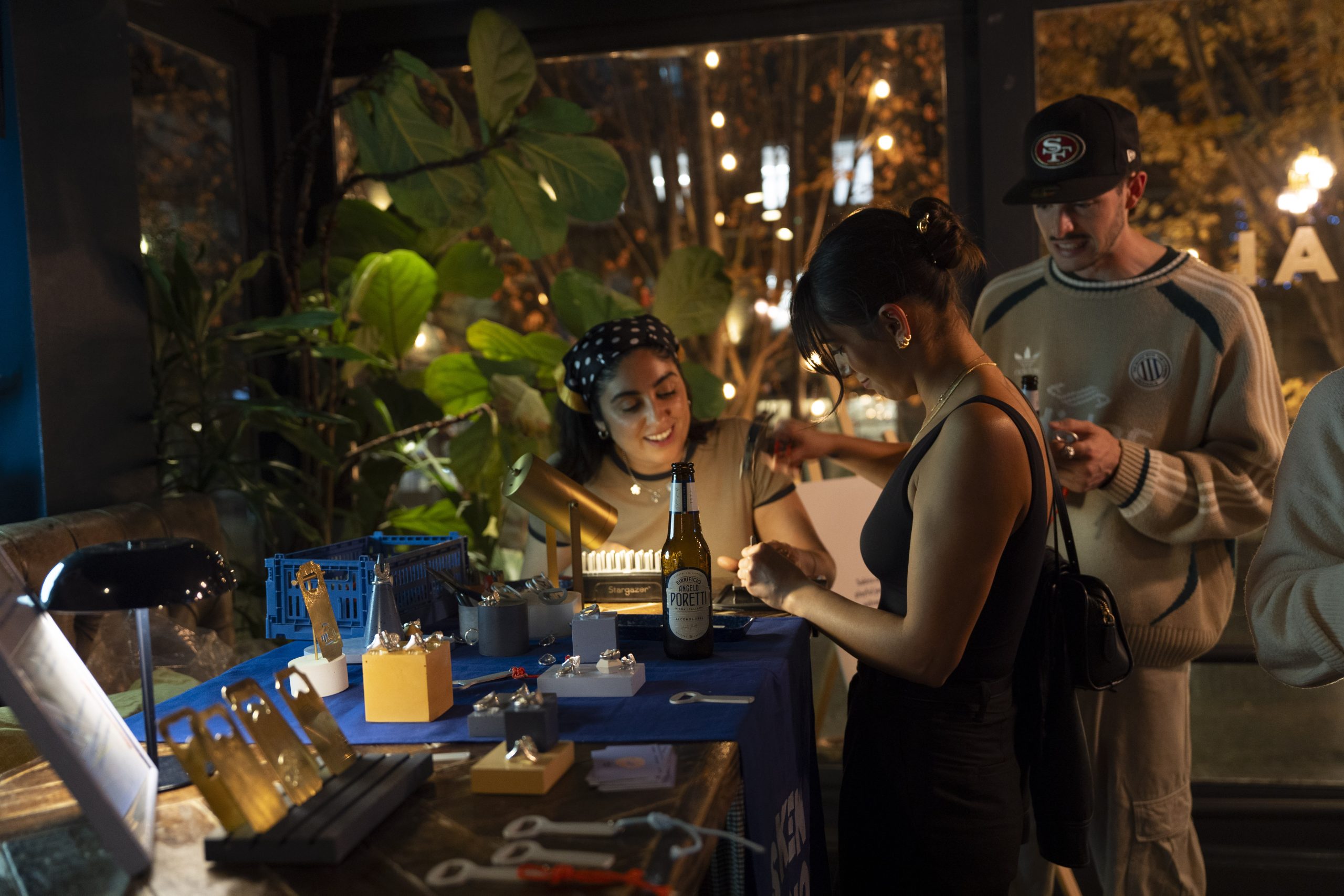
Visitors to the Manchester event can watch Giulio Miglietta embroidering personalised beer mats, using a vintage Singer sewing machine dating back to the early 1900s, alongside live hand-engraving and bespoke jewellery-style crafting using recycled silver.
The Uncommon Inn is being operated by premium Italian lager brand Poretti / Credit: Supplied
Other demonstrations include 3D body-casting by sculptor Ami of Angelcasts and personalised, hand-engraved glassware from Leigh Calligraphy. Sabira of Sken Studios will also demonstrate how recycled silver can be turned into bespoke bottle openers.
Guests will be able to enjoy complimentary pints of Poretti while watching the makers at work.
Caitlin Maley, Senior Brand Manager at Poretti, said: “Modern life moves at an overwhelming pace, and it’s all too easy to fall into autopilot mode where routine replaces curiosity.
“We believe in celebrating intentional craft, rare skills, and authentic human connection – values that are at the core of our brewing heritage.
“We created The Uncommon Inn to turn an ordinary pub visit into an inspiring journey. By bringing together our Masters of Crafts, from chainstitch embroiderers to live engravers and musicians, we’re inviting pubgoers to slow down, pick up a new skill, and enjoy a pint crafted with genuine passion.”
The Uncommon Inn is at Matt & Phreds in Manchester on Thursday 22 October, from 4pm until 8pm.

 Emily Sergeant -
7th March 2023
Emily Sergeant -
7th March 2023