Government ministers have conceded that “Christmas cannot be normal” this year amid the coronavirus (COVID-19) pandemic, but what does this mean?
Just how different will the festive season be for the UK public?
Prime Minister Boris Johnson yesterday set out the government’s COVID Winter Plan – which includes the new “tougher” three tier system – in an address to MPs in the House of Commons, and is today expected to be providing further information on the proposed ‘Christmas break’.
This is predicted to include how many households will be able to bubble together at Christmas, and how long the break in restrictions will last.
At present, no official confirmations have been made, although government ministers are reportedly believed to be working on plans for three households and a five-day break – from Christmas Eve to 28th December – subject to agreement from the Scottish, Welsh and Northern Irish governments.
ADVERTISEMENT
Health Secretary Matt Hancock confirmed these intentions yesterday.
He told Sky News yesterday that the government will “confirm it when we have that agreement across the four nations”, and added: “We’ve agreed in principle that there should be a set of rules that applies across the board that is balanced, that allows a little bit more freedom, but is still safe.”
ADVERTISEMENT
Touching on the subject of Christmas in his address to MPs in the House of Commons yesterday, Mr Johnson said: “I can’t say that Christmas will be normal this year, but in a period of adversity, time spent with loved ones is even more precious for people of all faiths and none.
“We all want some kind of Christmas, we need it [and] we certainly feel we deserve it.
“But what we don’t want is to throw caution to the winds and allow the virus to flare up again, forcing us all back into lockdown in January.
ADVERTISEMENT
S”o to allow families to come together, while minimising the risk, we are working with the Devolved Administrations on a special, time-limited Christmas dispensation, embracing the whole of the United Kingdom, and reflecting the ties of kinship across our islands.
“But this virus is obviously not going to grant us a Christmas truce, it doesn’t know it’s Christmas and families will need to make a careful judgement about the risk of visiting elderly relatives.”
"Tis the season to be jolly, but it's also the season to be jolly careful."
Prime Minister Boris Johnson says "Christmas this year will be different" as he sets out the government's #COVID19 winter plan.
He also provided an insight into how rapid testing will aim to enable families to come together over the festive period. He said: “By the end of the year, this will allow every care home resident to have two visitors, who can be tested twice a week.
“Care workers looking after people in their own homes will be offered weekly tests from today, and from next month, weekly tests will also be available to staff in prisons, food manufacturing, and those delivering and administering COVID vaccines.
“We are also using testing to help schools and universities stay open, and testing will enable students to know they can go home safely for Christmas and indeed back from home to university.”
ADVERTISEMENT
Mr Johnson closed out his address yesterday stating: “2020 has been in many ways a tragic year when so many have lost loved ones and faced financial ruin. This will be still a hard Winter, Christmas cannot be normal, and there is a long road to Spring, but we have turned a corner,
“And the escape route is in sight.
“We must hold out against the virus until testing and vaccines come to our rescue and reduce the need for restrictions.
“Everyone can help speed up the arrival of that moment by continuing to follow the rules, getting tested and self-isolating when instructed, remembering hands, face and space, and pulling together for one final push to the Spring, when we have every reason to hope and believe that the achievements of our scientists will finally lift the shadow of the virus.”
The COVID Winter Plan can be accessed in full here.
ADVERTISEMENT
___
For the latest information, guidance and support during the coronavirus (COVID-19) pandemic in the UK, please do refer to official sources at gov.uk/coronavirus.
#HandsFaceSpace
Trending
Two North West cities named among the ‘noisiest’ in the UK – including Manchester
Emily Sergeant
A new analysis has revealed a list of the noisiest cities in the UK, and two Greater Manchester locations are in the top five.
From blaring sirens and car horns, to house parties, barking dogs, and loud neighbours, escaping the noise of a city can feel almost impossible – even in your own home.
No matter whether you live in the hustle and bustle, or you’re out in the sleepier suburbs, noise can keep you up at night, disturb your peace, and lead to frustration. But just how loud are Greater Manchester’s cities compared to the rest of the UK? In a bid to get to the bottom of it, Alpine Hearing Protection has done some research to compile a top 10 list.
And both Salford and Manchester have found themselves not just within the top 10, but within the top five… and to make matters worse, Salford has actually claimed the number one spot.
The reason Salford has found itself at the top of the list, according to the research, is because it sits at the intersection of several major transport and urban hubs, with major motorways running through or around the city including the M60, M61, and M62.
Major rail routes also run through the city – including via Salford Crescent – which sees 16 million passengers every year, and also leads to Manchester Airport.
Top 10 noisiest cities in the UK
Salford
Portsmouth
Manchester
Southampton
London
Leeds
Stoke-on-Trent
Wakefield
Newcastle upon Tyne
Bradford
Parts of Salford are also very built-up, making pockets of the city noisy – especially in the concentrated centre where traffic, construction, nightlife and commercial activity get loud.
And of course, like any growing city, construction noises have been noted as ‘particularly bothersome’ for residents where major developments are springing up.
Manchester is third on the list of noisiest cities, due to many of the same reasons as Salford.
But the difference being that Mancunians are noted as one of the many reasons why the city is so loud – with residents making 5,301 noise complaints across Manchester between January 2024 and January 2025, and Hulme identified the loudest area with 304 complaints.
As well all know, Manchester is also home to many universities, which brings an active nightlife scene to the region, especially in the city centre, and in recent FOI data, it was revealed that the University of Manchester saw 2,049 noise complaints in the last five years.
Motorists warned of common winter driving habit that could land them with annoying fines
Emily Sergeant
With the temperatures drastically dropping now as we head into winter, motorists are being warned against a common driving habit.
On a wintry morning when the windscreens are frozen and your hands are equally as frozen too, it’s pretty common for drivers to start the engine, turn the heater right up, and remain stationary for several minutes to warm the car up before setting off on their journey… but did you know that doing this could see you, inadvertently, fall foul of the law?
That’s right – as ridiculous as it sounds, leaving your car engine running ‘unnecessarily’ while parked on a public road is illegal.
And to make matters worse, the rules on ‘engine idling’, as it’s known, apply regardless of whether the driver is using the heating, waiting for someone, or simply sitting in the vehicle.
Known as a stationary idling offence, Rule 123 of the Highway Code states that drivers must not leave a vehicle’s engine running unnecessarily while it is stationary on a public road, and according to the rule, a fixed penalty of up to £80 can be issued, right there and then.
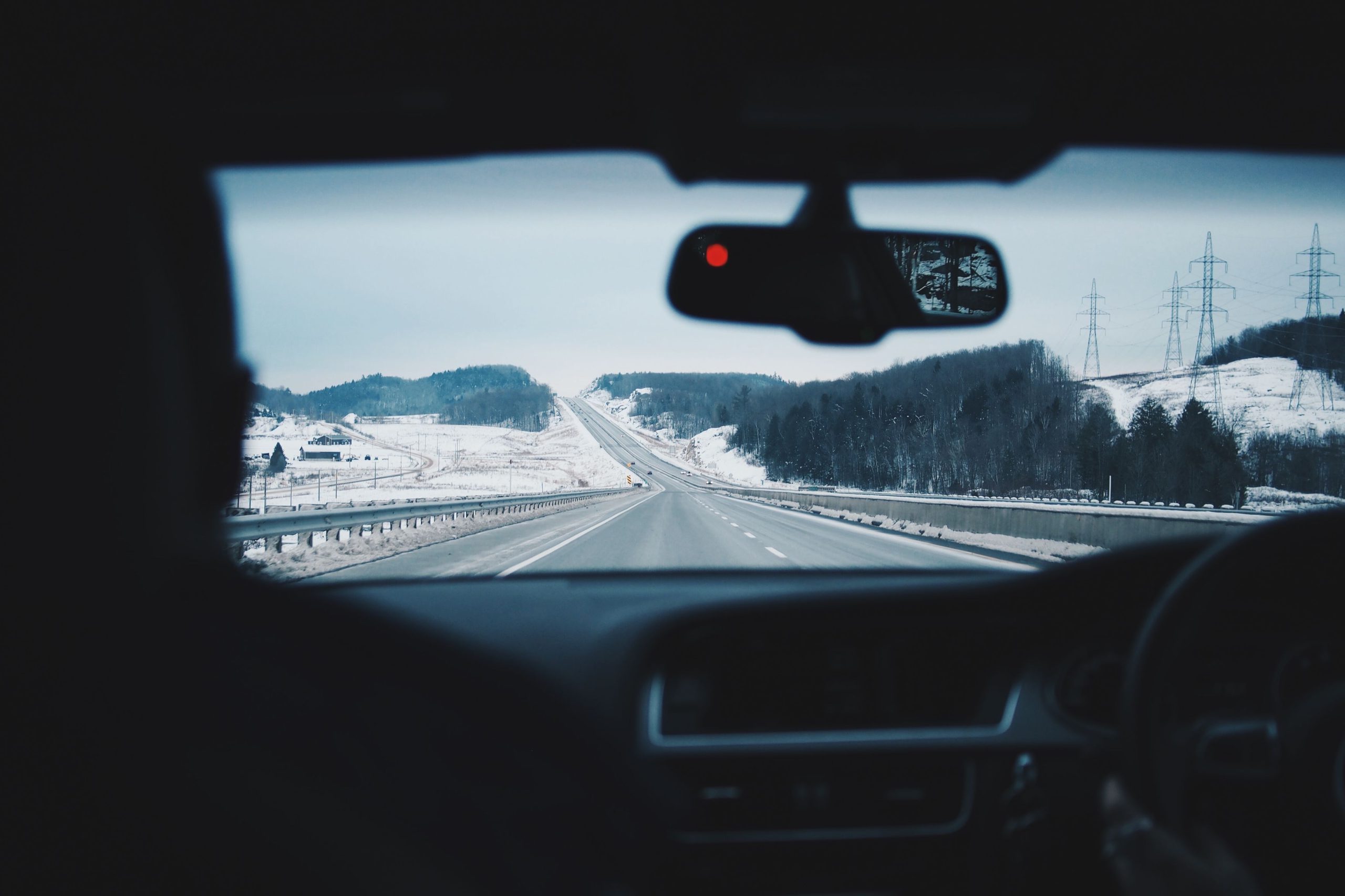
Motorists are being warned of a common winter driving habit that could land them with annoying fines / Credit: PickPik | Wikimedia Commons
Fines will only be handed out if a motorist is stopped by a police officer who asks them to switch the engine off, and they fail to comply.
“However tempting it might be to sit in a vehicle with the engine running and the heater on to warm up, we strongly advice against it,” commented RAC senior policy officer Rod Dennis.
“As well as polluting the air and wasting fuel, drivers who leave their engines idling unnecessarily on a public road also risk an on-the-spot fine of £80. On cold mornings, the best approach is to clear any ice or snow properly and ensure windows are fully de-misted before setting off, then get on your way and let the car warm you up.”
There are some exceptions to the rule, however, as keeping the engine running is permitted in certain circumstances.
This includes when a vehicle is stationary because of traffic conditions, when the engine needs to run so a mechanical fault can be investigated, or if certain work is being carried out on the side of the road.

 The Manc -
24th November 2020