The official opening date of Manchester‘s New York-inspired ‘sky park’ at Castlefield Viaduct has now finally been confirmed.
After the National Trust announced its ambitious vision to create an urban green space in the heart of the city centre by tackling the challenge of “greening” the Grade II-listed Castlefield Viaduct and celebrate the history of this well-known landmark, it has now been revealed that visitors will be able to enjoy the park from next weekend.
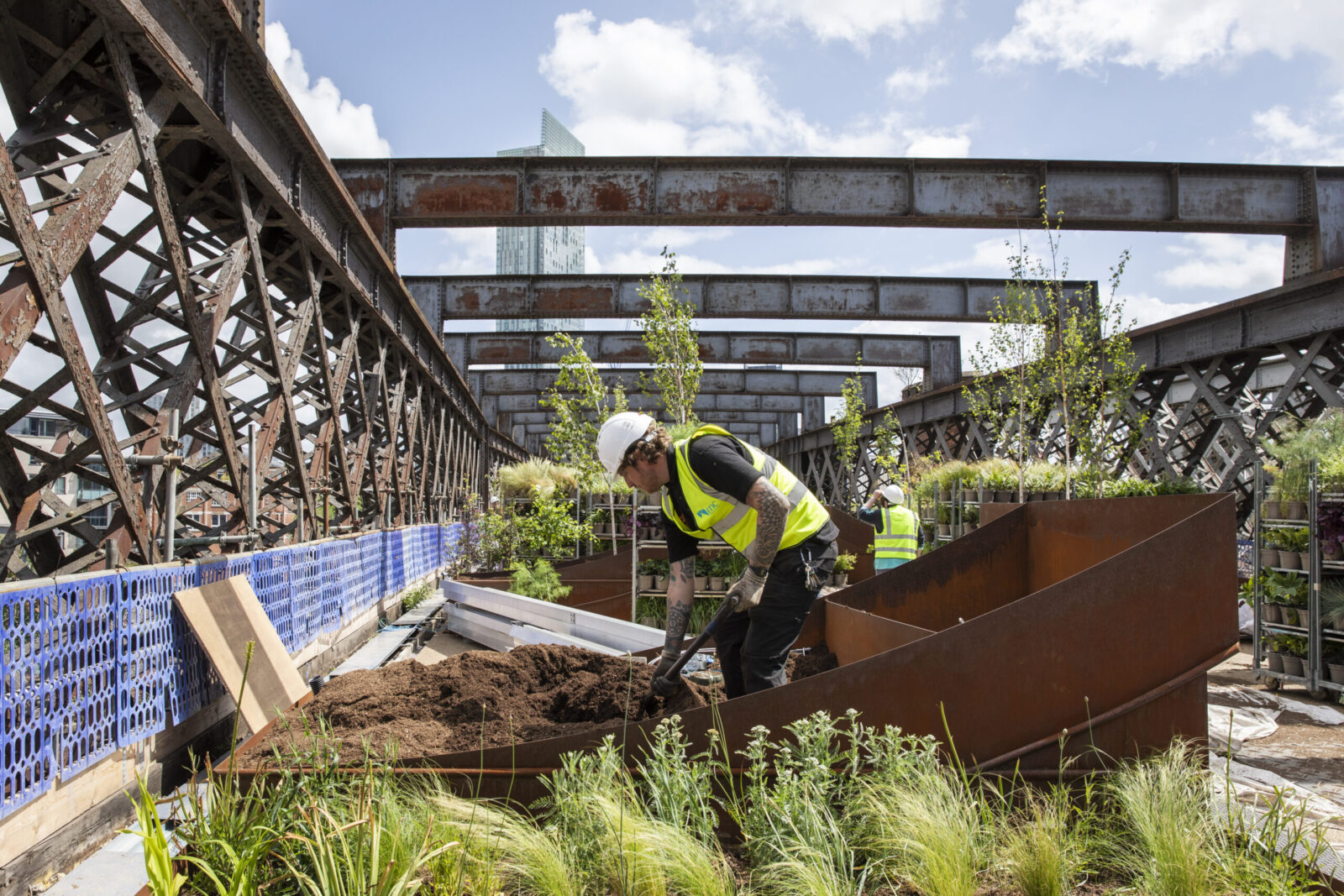
Construction company MC Construction, Twelve Architects, and four local partners have been working with gardening specialists and apprentices at the National Trust to create the new park – with thousands of plants, shrubs, and trees having been planted over the past five months.
Now, less than half a year after work began to transform the giant 330-metre steel viaduct into an elevated park, the finishing touches are being made.
The temporary urban park at Castlefield Viaduct will open to the public on Saturday 30 July.

ADVERTISEMENT
Artist impression images of what Castlefield Viaduct will look like once it opens to the public in summer 2022 / Credit: Twelve Architects & MC Construction (via National Trust)
The park will be or the next 12 months, with green spaces stretching across the elevation, and during this time, visitors will have the opportunity to explore part of the structure and find out more about the viaduct’s heritage, the city’s long relationship with plants and trees, and learn urban gardening tips.
You’ll also get to experience a variety of planting displays as you walk along the viaduct while enjoying the elevated setting above the historic cobbled streets, according to the National Trust, and see the park “develop, evolve, and respond” with the changing seasons.
The plans for Castlefield Viaduct are part of the National Trust’s work to “increase access” for everyone to nature, history and beauty in, around, and near urban areas.
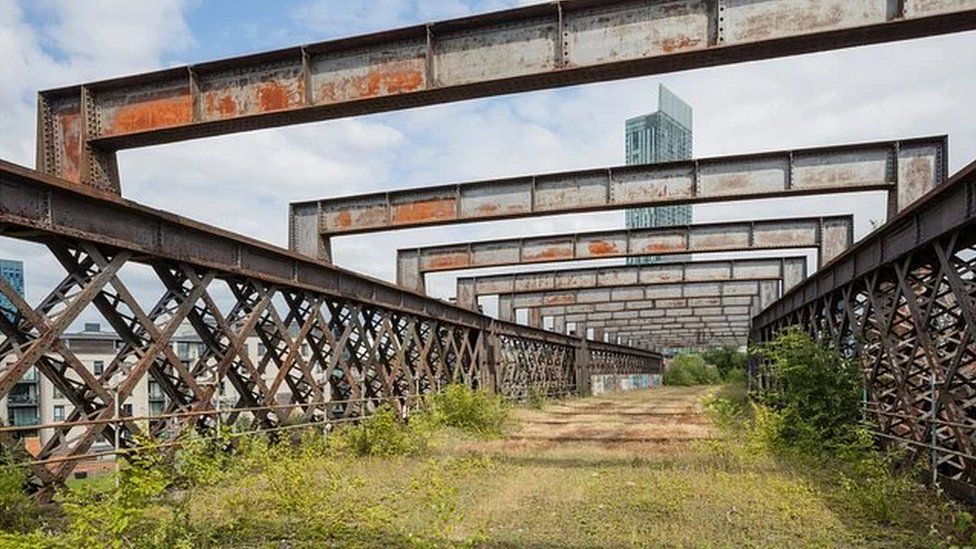
The Castlefield Viaduct dates back to 1892 and was built by Heenan and Froude – the same engineers who worked on Blackpool Tower – but the site closed in the late 1960s, and before the National Trust took over and began to add over 3,000 plants, shrubs, trees, and more, it had sadly been left derelict.
ADVERTISEMENT
Castlefield Viaduct before work began to transform the derelict site / Credit: National TrustPlanting underway on Castlefield Viaduct / Credit: Annapurna Mellor (via National Trust)
The industrial heritage of Castlefield has been reflected through all elements of the design of the park.
The National Trust says the design of the planters at the new park gives “a subtle nod” to the industrial architecture of the viaduct, and mirrors the curve of the railway tracks that once transported goods across the structure to the Great Northern Warehouse.
A section of the viaduct has also been left untouched to “provide a sense of how nature has reclaimed the space” since the site closed.
Speaking ahead of the park officially opening to the public next Saturday, Andy Jasper – National Head of Gardens & Parklands at the National Trust – said: “Creating a garden on an industrial heritage structure such as this is new territory for us and we have created a test bed that represents how the park in the sky might be, if the people of Manchester want it.
“With more than 3,000 individual plants planted in completely peat free growing media over the past couple of months, we’ve been literally trialling new planting techniques as we go – working with limited growing depths and thinking about how these plants will deal with the more challenging conditions of being 17 metres in the air.
ADVERTISEMENT
“I cannot wait to see what people say, and I am intrigued to see how the plant life will take in its new surroundings.”
A green oasis from industrial foundations, new life is being breathed into Castlefield viaduct: https://t.co/Eu9xBfIBuO
Once carrying heavy traffic into the heart of Manchester, it’s now set to be transformed into an elevated park that celebrates the city’s heritage. pic.twitter.com/ftjYraNaa4
Duncan Laird – Head of Urban Places at the National Trust – added: “This has been an intensely busy few months as we prepared to open the doors of the pilot project, and we are incredibly excited to finally be able to open this space for people to visit for the first time in over 50 years.
“As the trees and plants start to bed in and grow it will slowly begin to match the vision for this space, and we will be keenly listening to visitor feedback that we will use to shape the ongoing evolution of the viaduct.
“We’re at the start of the journey – not the end.”
100 people a day will be able to visit the Castlefield Viaduct from Saturday 30 July.
Entry onto the structure will be free, but a booking system will be in place to help manage numbers, and as part of the experience, visitors will be able to join guided walks – with plans to host various community events, workshops, and consultations in the pipeline.
Featured Image – Howard Bristol (via National Trust)
Trending
Festival-goers urged to stop taking wheelie bins full of booze
Daisy Jackson
Festival-goers have been warned not to take wheelie bins full of alcohol to festivals with them this summer.
The warning has come ahead of this year’s Download Festival, which takes place next month and kicks off the summer’s biggest run of festival dates.
But a major train operator has said there have been incidents in the past of passengers trying to travel to festivals with wheelie bins and luggage trolleys.
Passengers have had to be reminded that wheelie bins are not permitted on board, and they should instead only carry as much luggage as they can comfortably carry.
The warning comes from East Midlands Railway, one of the key services that will whisk people to Download Festival between 10 and 14 June.
Customers returning from the festival are also encouraged to use boot-cleaning brushes provided at stations to help remove mud before boarding trains.
Philippa Cresswell, customer experience director at East Midlands Railway, said: “We’re encouraging customers to travel light.
“Last year, some festive goers tried to board services with wheelie bins or festival trolleys full of beer. While it might seem like a great idea for getting your supplies to the festival, it just isn’t safe or possible to bring them onboard train services.”
Festival-goers urged to stop taking wheelie bins full of booze
EMR has also warned customers to plan journeys in advance, with engineering work taking place at various locations on the Midland Main Line, near where Download Festival takes place.
She continued: “We’re advising customers travelling to Download Festival to plan their journeys in advance and be aware that essential engineering work will affect services across the weekend.
“As a result, some services will be reduced or amended, and passengers should check before they travel and allow extra time.”
The full list of 125 ‘everyday essentials’ you’ll soon be able to get for cheaper in the UK
Emily Sergeant
Crisps, biscuits, avocado, and chewing gum are just a few of the items that are soon set to be available for cheaper in the UK.
First announced by Chancellor Rachel Reeves last week, the Government has now published a list of more than 100 of key items that are set to see targeted cuts to tariffs, alongside uprating mileage rates for the first time in 15 years and reducing VAT.
It covers a wide range of ‘everyday essentials’ – from fresh fruit and vegetables, oil and baked goods, to chocolate, sauces, and soft drinks.
“The war in Iran isn’t our war, but one we will need to respond to,” Chancellor Reeves commented.
“My priority is keeping prices down for households and businesses. That’s why we’re freezing fuel duty, increasing the mileage rate for the first time in 15 years and slashed VAT temporarily this summer to help reduce the cost of days out.”
Full list of 125 ‘everyday essentials’
Garlic
Gherkins
Aubergines
Sweet peppers
Other peppers (capsicum/pimenta)
Olives (fresh/chilled)
Olives (for oil production)
Olives (frozen)
Plantains (fresh and dried)
Bananas (fresh and dried)
Limes
Citrus fruits (various)
Avocados
Fresh figs
Dried figs
Other fresh fruits
Frozen fruits
Dried apricots
Dried apples
Dried peaches/nectarines
Dried pears
Dried papaya
Mixed dried fruit
Mixed nuts
Mixed fruit and nuts
Green tea
Buckwheat
Fonio
Quinoa
Olive oil (extra virgin)
Olive oil (virgin)
Olive oil (other)
Margarine
Mixed fats and oils
Vegetable oils
Chewing gum
Liquorice products
White chocolate
Marzipan and pastes
Throat pastilles
Sugar confectionery
Boiled sweets
Toffees and caramels
Sugar tablets
Cocoa paste
Cocoa powder
Chocolate (bulk and retail)
Chocolate bars
Chocolate with fruit, nuts or cereal
Chocolate spreads
Chocolate drink preparations
Couscous
Crispbread
Gingerbread
Biscuits
Waffles and wafers
Rusks
Toasted bread products
Bread
Pizzas and quiches
Pickled peppers
Prepared vegetables
Crisps
Processed potatoes
Baked beans
Preserved beans
Preserved vegetables
Preserved tropical fruit
Candied fruit
Jams and marmalades
Preserved citrus fruits
Mixed preserved fruit and nuts
Tomato ketchup
Tomato sauces
Soups and broths
Non-alcoholic beverages
Plant-based drinks
Crisps and fresh fruit are two of the items set to see targeted tariff cuts / Credit: Esperanza Doronila | Jonas Kakaroto (via Unsplash)
The Government says these cuts support the action it has already taken to reduce the cost of living – including freezing prescription charges, protecting motorists from fuel duty increases, and raising the minimum wage.
The list of everyday essentials set to see targeted cuts to tariffs comes after the Great British Summer Savings initiative was announced last week.
This means that, from 25 June through to 1 September 2026, a temporary reduced rate of VAT – down from 20% to 5% – will be introduced on children’s meals in restaurants and family leisure activities over the summer period.