It’s that time of year once again – the Met Office has officially revealed the list of storm names for 2022/23.
This is the eighth year in a row that storms have been named.
The Met Office explains that storms are given a name to help raise awareness, help provide “consistent and authoritative messaging”, and inform the public of the risks of upcoming adverse weather conditions – and this year, have been named in partnership with the Met Éireann from Ireland and KNMI from The Netherlands.
They will be named when a system is forecast to cause ‘medium’ or ‘high’ impacts in the UK, Ireland or the Netherlands, the Met Office adds.
Impacts from rain and snow will also be considered in the naming process.
ADVERTISEMENT
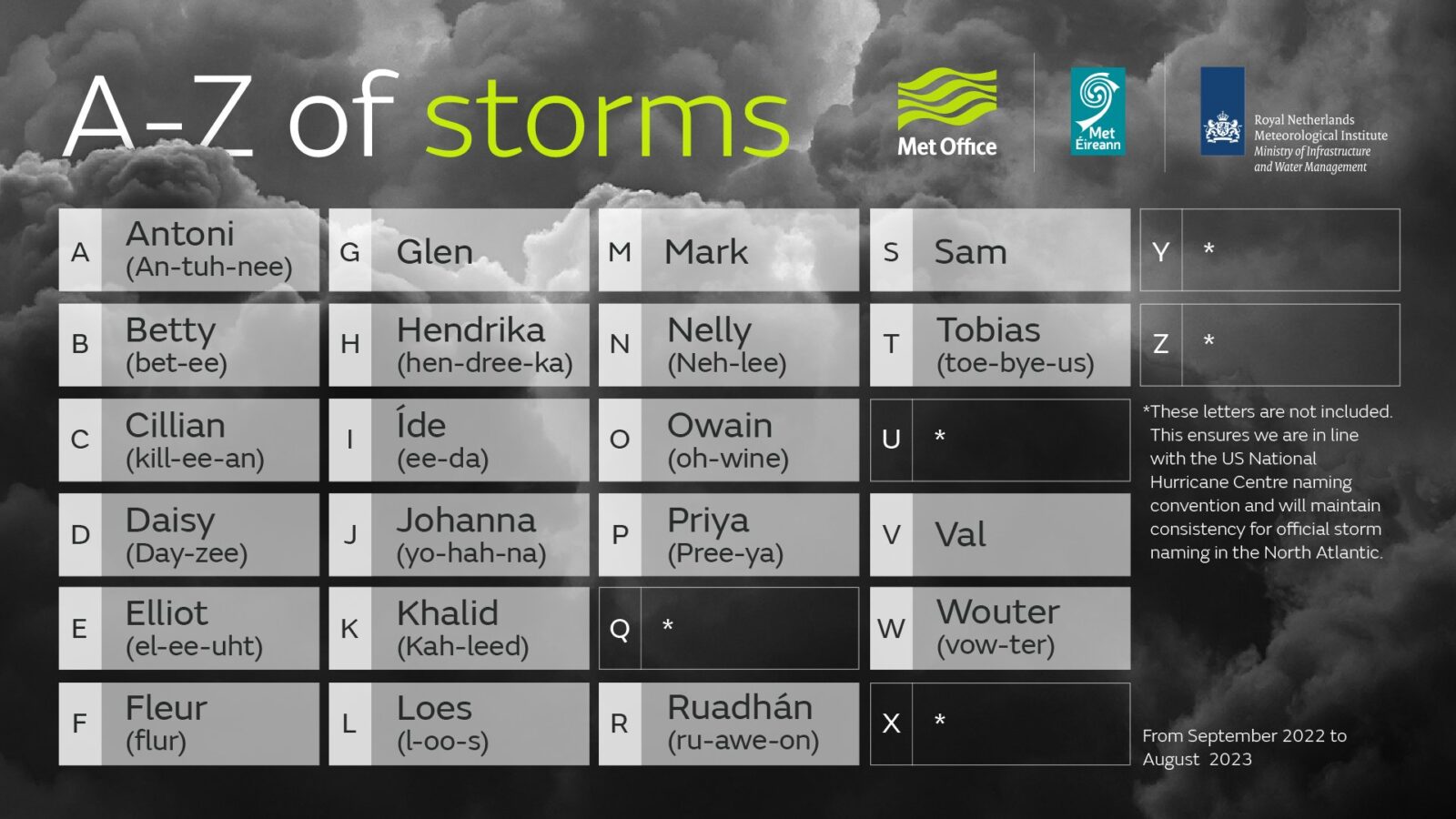
This season’s storm names are Antoni, Betty, Cillian, Daisy, Elliot, Fleur, Glen, Hendrika, Ide, Johanna, Khalid, Loes, Mark, Nelly, Owain, Priya, Ruadhan, Sam, Tobias, Val, and Wouter.
Here is the new list of storm names for 2022-23 with @MetEireann and @KNMI
Do you know someone whose name is on the list?
Antoni Betty Cillian Daisy Elliot Fleur Glen Hendrika Íde Johanna Khalid Loes Mark Nelly Owain Priya Ruadhán Sam Tobias Val Wouter#NameOurStorms
The Met Office’s names in the list have come from submissions from the public, with Daisy, Glen, Khalid and Owain some of those submitted, while Betty came out on top as the winner of a public vote on Met Office Twitter – with over 12,000 votes cast to select the name for the letter B.
KNMI’s selected names – including Antoni, Hendrika, Johanna and Loes – are named after influential Dutch scientists.
Met Éireann’s submissions include Cillian, Fleur, Íde, and Nelly.
ADVERTISEMENT
Storm names 2022/23 as revealed by the Met Office / Credit: Met Office
“We know from seven years of doing this that naming storms works,” explained Will Lang, Head of Situational Awareness at the Met Office – who leads responses in times of severe weather.
“Last year, Storms Arwen and Eunice brought some severe impacts to the UK.
“We know that naming storms helps to raise awareness and give the public the information they need to stay safe in times of severe weather, and recent impactful storms demonstrated our ongoing need to communicate severe weather in a clear way to help the public protect themselves.
“Naming storms is just one way that we know helps to raise awareness of severe weather and provides clarity for the public when they need it most.”
Drinks prices revealed as Manchester Airport’s first-ever Wetherspoons pub opens inside T2
Emily Sergeant
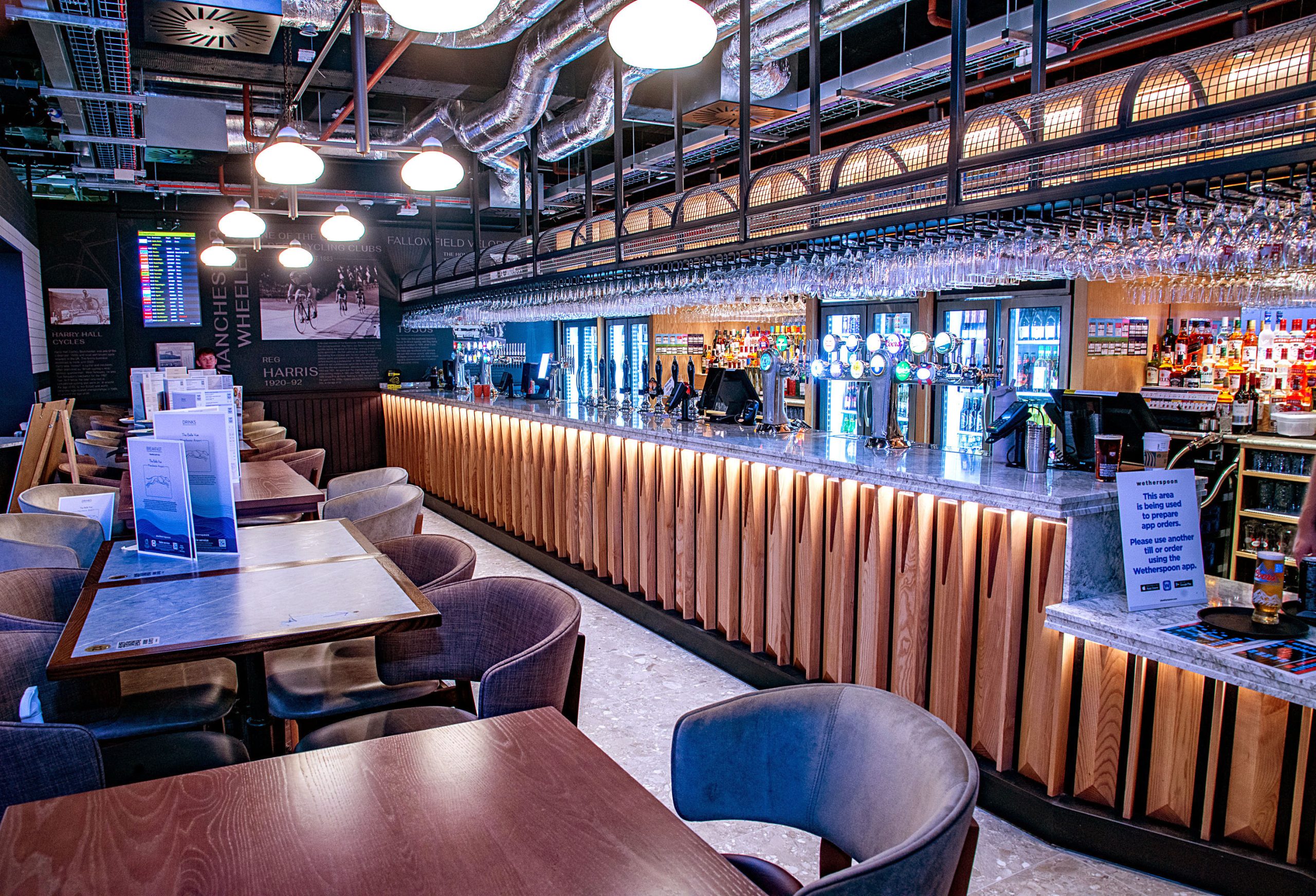
It’s official… Manchester Airport’s first-ever JD Wetherspoon pub has officially opened its doors inside Terminal 2.
The 300-seater pub – which welcomed its first customers earlier this week – is named The Belle Vue after Manchester’s historic showground.
Throughout the pub, you’ll spot design features that nod to the city’s sporting heritage – including vintage event posters and memorabilia, a ‘locker wall’ hosting trophies and other sporting exhibits, and a cricket-themed design in the carpets and bar panels.
Creating around 150 jobs in the process, The Belle Vue is the final planned new eatery to open in the airport’s redeveloped Terminal 2, marking one of the final steps in the super-terminal’s decade-long, £1.5bn transformation.
Manchester Airport’s first-ever Wetherspoons pub has opened inside Terminal 2 / Credit: Supplied
According to the MEN, pints are priced from £6.20 for Carling and Coors lager, £6.45 for Budweiser, £6.60 for Guinness, and £6.70 for Poretti and 1664 Biere.
Prosecco is £9.20 for 175ml glass and £37.10 for the full bottle, while spirts and mixers are £6.80 for singles and £10.20 for doubles.
There’s also the classic Wetherspoons tea and coffee machines, where you can refill as many times as you like for just £3.60.
“It’s a proud moment to see the final new retail unit opening in our new-look Terminal 2,” commented Richard Jackson, who is the Retail Director at Manchester Airport.
“To be rounding off this 10-year programme by adding such an iconic name as Wetherspoon to the terminal is particularly special and we know that it will prove extremely popular with passengers. We think they’ll love the nods to Manchester’s heritage in the décor and design – and of course the name.”
The Belle Vue will be open from the first flight to the final flight each day, and food will be served from opening until 10pm.
Featured Image – Supplied
Trending
Iconic Manc movie 24 Hour Party People is set to return to cinemas for its anniversary
Emily Sergeant
One of Manchester’s most iconic movies is set to return to the big screen next month.
Remastered in 4K and returning to UK cinemas to mark 24 years since its original release, Michael Winterbottom’s 2002 biographical comedy drama film, 24 Hour Party People, tells the story of Manchester‘s popular music community from 1976 to 1992 – specifically about Factory Records‘ founder Tony Wilson.
The film begins with the punk rock era of the late 1970s, before moving through the 1980s into the rave and DJ culture, and of course, the ‘Madchester‘ scene of the late 1980s and early 1990s.
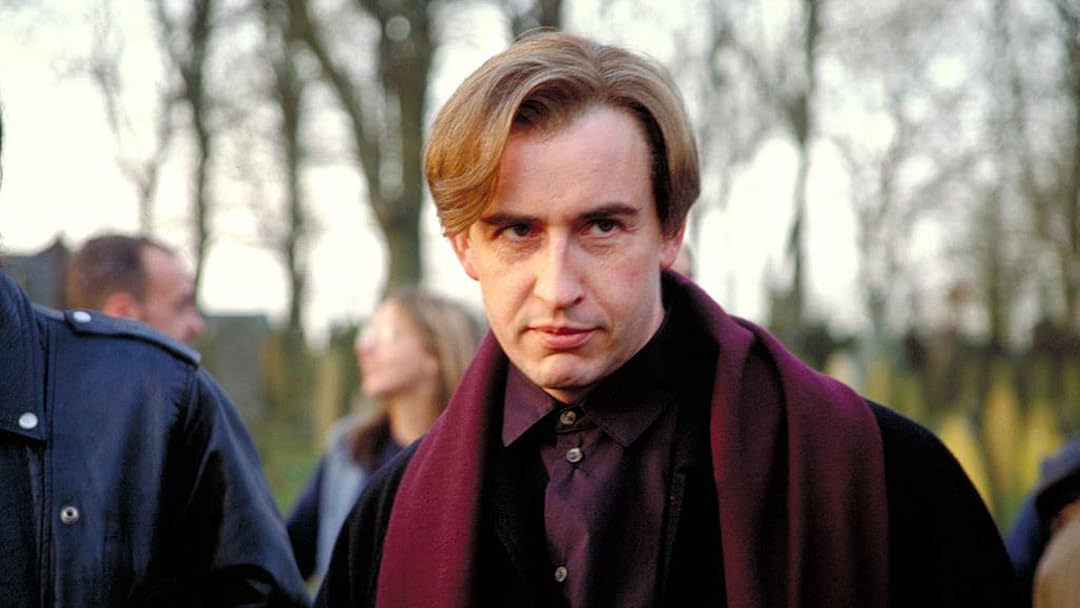
The narrative largely follows the career of Tony Wilson, played by Middleton-born actor Steve Coogan, while also covering the careers of the major Factory Records artists – especially Joy Division and New Order, as well as A Certain Ratio, The Durutti Column, and Happy Mondays.
If you haven’t seen 24 Hour Party People before, it’s a dramatisation based on a combination of real events, rumours, and urban legends, as the film is sure to make clear.
Coogan is joined by a cast by a mixture of big names and, at the time, rising stars like Paddy Considine, Shirley Henderson, Lennie James, John Simm, Ralf Little, Andy Serkis, Sean Harris, John Thomson, and even Peter Kay, alongside cameos from other figures connected to the Manchester music scene.
Before it returns to cinemas, the film will first open music and media festival/conference, Beyond The Music, at MediaCity in Salford on 6 October.
The screening at the festival will also be followed by a Q&A with Coogan, Winterbottom, and producer Andrew Eaton.
24 Hour Party People will then be re-released in UK cinemas from 9 October, and you can check your local cinema for screening times and book tickets online now.

 Emily Sergeant -
1st September 2022
Emily Sergeant -
1st September 2022