There’s nothing like starting your morning with a fresh cup of coffee and for some of us, it’s the only way to start the day on the right foot.
Without that first cup, we just wouldn’t function – does this ring true for you?
Iced coffee and cold brew blends are somewhat of a newly-popular phenomenon though, hence making them not everyone’s preference, but as temperatures are set to soar this week across the UK, even reaching highs of 30 degrees in some places, there really couldn’t be a more appropriate chance to try cold coffee out for size.
If you fancy getting on board with that, then we’ve found a homemade cold brew coffee maker on Amazon and it’s perfect for a refreshing start to summer mornings.
ADVERTISEMENT
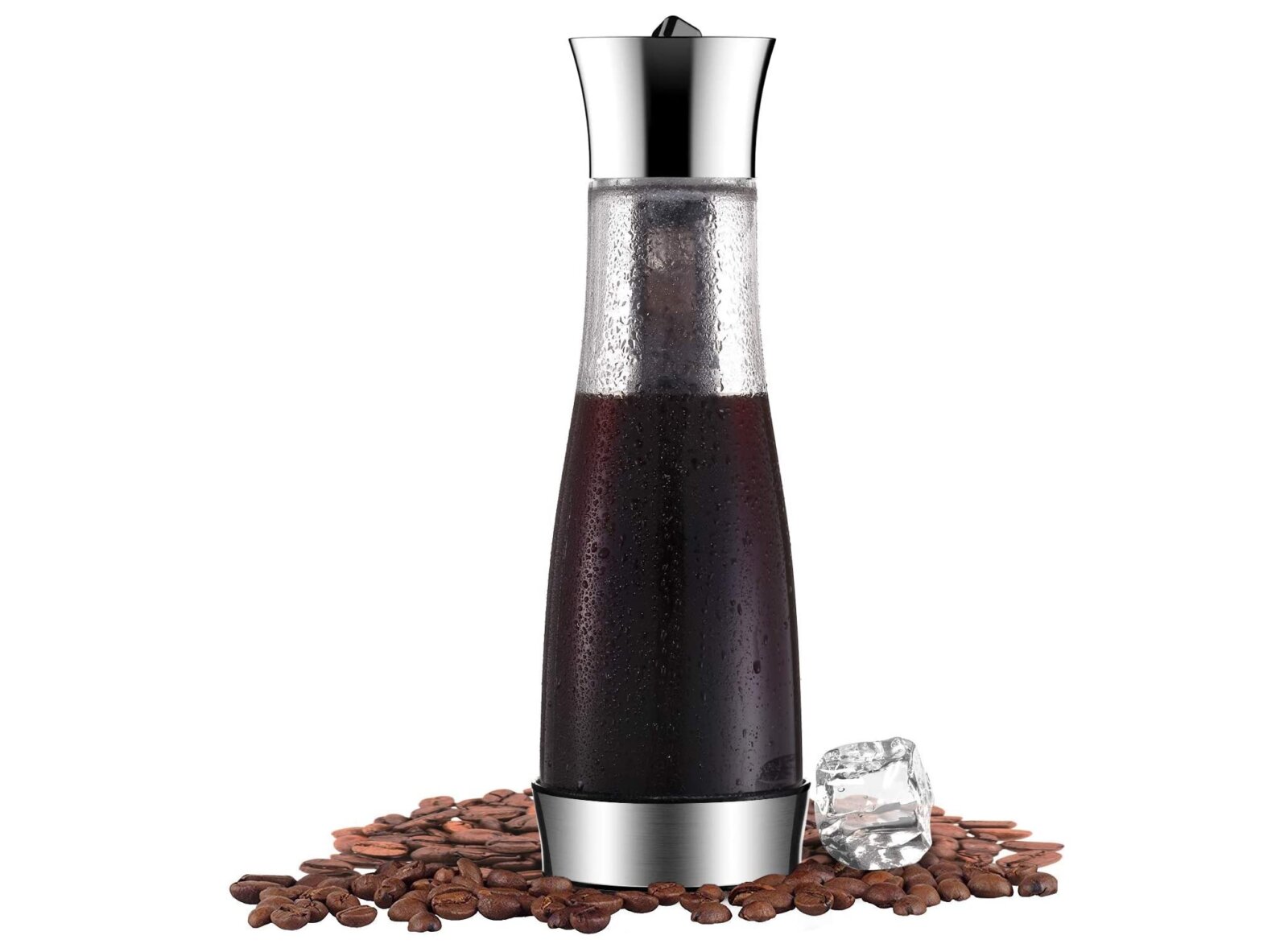
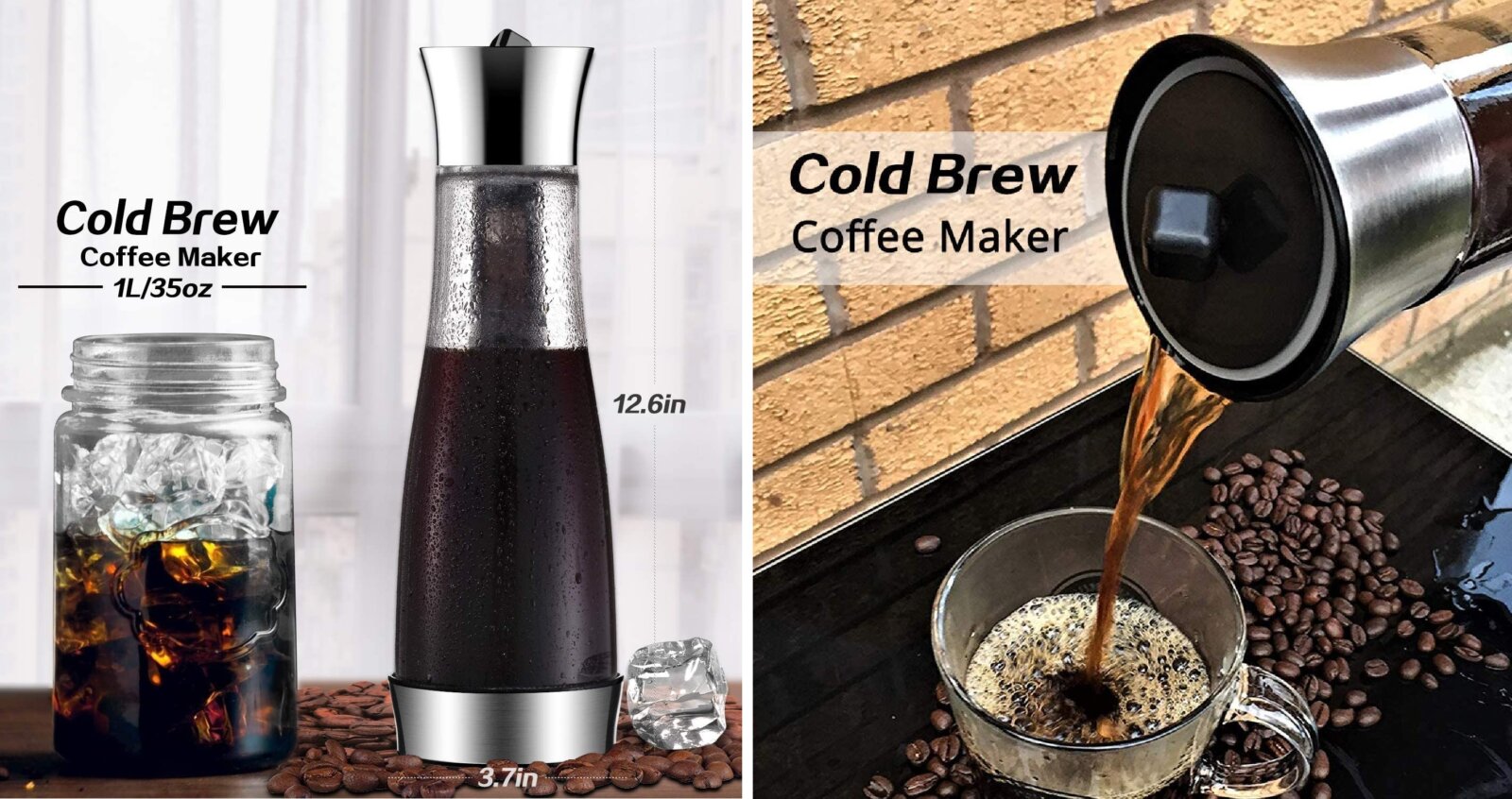
The Elegant Life Cold Brew Coffee Maker is impeccably designed and incredibly versatile.
Amazon / Elegant Life
It has a sleek round-shaped carafe, handle and spout to help you pour coffee easily and reduce accidental spills.
ADVERTISEMENT
According to the product description on Amazon, it’s really easy to brew the perfect cup by “scooping 14 to 16 tablespoons of your favourite coarsely-ground coffee beans into the filter, filling with water and putting it in fridge for 12-24 hours”.
It has a stainless steal filter, which is “the best choice for coffee brewing” as it “can avoid blocking and excess oil residue”, a silicon sealing design to “keep your cold brew coffee fresh for weeks” and an “airtight lid [to] avoid losing flavor or freshness”.
It doesn’t just have to be for cold brew coffee though.
ADVERTISEMENT
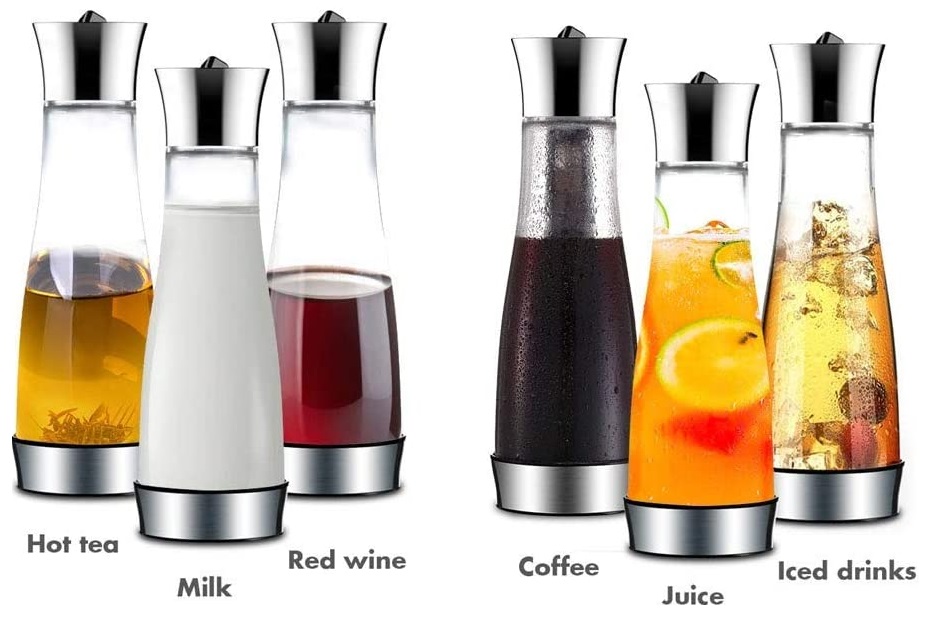
As mentioned, it’s an extremely versatile product and is perfect for preparing and serving all sorts of cold drinks such as water, milk, iced tea, coffee, lemonade, juice and wine or anything else that suits your imagination.
It also has a 1L / 35oz volume capacity, so it’s ideal for serving family or entertaining guests.
Amazon / Elegant Life
It’s retailing on Amazon at £13.99 + postage/packaging and has a multitude of positive reviews from plenty of satisfied customers, so if you’ve been wondering whether it’s worth the buy or not, have a read of a few of those to help make you’re mind up.
It’s also eligible for Amazon Prime delivery perks too for those subscribed to the service.
If you’re happily in the cold coffee fan club, or you’re up for giving it a try, then you can get the Elegant Life Cold Brew Coffee Makerfrom Amazon here.
Trending
Drinks prices revealed as Manchester Airport’s first-ever Wetherspoons pub opens inside T2
Emily Sergeant
It’s official… Manchester Airport’s first-ever JD Wetherspoon pub has officially opened its doors inside Terminal 2.
The 300-seater pub – which welcomed its first customers earlier this week – is named The Belle Vue after Manchester’s historic showground.
Throughout the pub, you’ll spot design features that nod to the city’s sporting heritage – including vintage event posters and memorabilia, a ‘locker wall’ hosting trophies and other sporting exhibits, and a cricket-themed design in the carpets and bar panels.
Creating around 150 jobs in the process, The Belle Vue is the final planned new eatery to open in the airport’s redeveloped Terminal 2, marking one of the final steps in the super-terminal’s decade-long, £1.5bn transformation.
Manchester Airport’s first-ever Wetherspoons pub has opened inside Terminal 2 / Credit: Supplied
According to the MEN, pints are priced from £6.20 for Carling and Coors lager, £6.45 for Budweiser, £6.60 for Guinness, and £6.70 for Poretti and 1664 Biere.
Prosecco is £9.20 for 175ml glass and £37.10 for the full bottle, while spirts and mixers are £6.80 for singles and £10.20 for doubles.
There’s also the classic Wetherspoons tea and coffee machines, where you can refill as many times as you like for just £3.60.
“It’s a proud moment to see the final new retail unit opening in our new-look Terminal 2,” commented Richard Jackson, who is the Retail Director at Manchester Airport.
“To be rounding off this 10-year programme by adding such an iconic name as Wetherspoon to the terminal is particularly special and we know that it will prove extremely popular with passengers. We think they’ll love the nods to Manchester’s heritage in the décor and design – and of course the name.”
The Belle Vue will be open from the first flight to the final flight each day, and food will be served from opening until 10pm.
Featured Image – Supplied
Trending
Iconic Manc movie 24 Hour Party People is set to return to cinemas for its anniversary
Emily Sergeant
One of Manchester’s most iconic movies is set to return to the big screen next month.
Remastered in 4K and returning to UK cinemas to mark 24 years since its original release, Michael Winterbottom’s 2002 biographical comedy drama film, 24 Hour Party People, tells the story of Manchester‘s popular music community from 1976 to 1992 – specifically about Factory Records‘ founder Tony Wilson.
The film begins with the punk rock era of the late 1970s, before moving through the 1980s into the rave and DJ culture, and of course, the ‘Madchester‘ scene of the late 1980s and early 1990s.
The narrative largely follows the career of Tony Wilson, played by Middleton-born actor Steve Coogan, while also covering the careers of the major Factory Records artists – especially Joy Division and New Order, as well as A Certain Ratio, The Durutti Column, and Happy Mondays.
If you haven’t seen 24 Hour Party People before, it’s a dramatisation based on a combination of real events, rumours, and urban legends, as the film is sure to make clear.
Coogan is joined by a cast by a mixture of big names and, at the time, rising stars like Paddy Considine, Shirley Henderson, Lennie James, John Simm, Ralf Little, Andy Serkis, Sean Harris, John Thomson, and even Peter Kay, alongside cameos from other figures connected to the Manchester music scene.
Before it returns to cinemas, the film will first open music and media festival/conference, Beyond The Music, at MediaCity in Salford on 6 October.
The screening at the festival will also be followed by a Q&A with Coogan, Winterbottom, and producer Andrew Eaton.
24 Hour Party People will then be re-released in UK cinemas from 9 October, and you can check your local cinema for screening times and book tickets online now.

 Emily Sergeant -
23rd June 2020
Emily Sergeant -
23rd June 2020