Dog owners in the wider Greater Manchester region are being urged to keep vigilant after a beloved pet has sadly died from Alabama Rot.
Otherwise known as Cutaneous and Renal Glomerular Vasculopathy (CRGV), Alabama Rot is a disease that affects dogs by damaging the blood vessels in the skin and kidneys. This can cause small blood clots to form – resulting in blockages that may lead to tissue damage and visible ulceration in the skin.
When the kidney is affected, it can also lead to severe organ dysfunction, eventual kidney failure – and in a significant number of instances, death.
While the cause of Alabama Rot currently remains unknown, symptoms of the disease in dogs include unexplained redness, sores or swelling of the skin and vomiting, reduced appetite, and tiredness caused by kidney failure.
Alabama Rot has been a serious cause of concern for dog owners in Greater Manchester and the North West in previous years – and now it appears to have reared its ugly head once again over the border in Cheshire.
ADVERTISEMENT
Rebecca Fox and her husband James have decided to share their tragic experience with Alabama Rot – which happened while they were on holiday in the Delamere Forest with their dogs back in May – with Cheshire Live to raise awareness of the deadly disease.
After being on holiday for a week, the couple noticed that their Cocker Spaniel Millie was frantically licking her paw, limping and reluctant to put her weight on it, so they decided to get some antiseptic spray to see if that would help, but by the Sunday, Millie became “very lethargic”.
ADVERTISEMENT
They initially put that down to her being tired after an increase in activity level with being on holiday, but it soon became apparent that something more serious was wrong.
Rebecca told Cheshire Live: “We were predominantly in Delamere Forest because that is where we were staying and we walked round and in the forest.
“It was a very wet week and it was awful weather, so it was very muddy everywhere.
ADVERTISEMENT
“We had been there for a week, and so the next Friday we were all in the log cabin and Millie started frantically licking her front paw, so we thought it had got a bit infected [as] she was limping and holding it up as well by that point.
“It came on really suddenly.”
Rebecca and James Fox were on holiday with their dogs in the Delamere Forest / Credit: Google Maps
Rebecca said the Cocker Spaniel seemed uncharacteristically quiet on the way home and decided to take her to their local vets to treat the infected paw.
They were initially given an antiseptic bathing treatment for the paw, before Millie’s condition began to deteriorate further.
“Initially they sent us away saying it was a paw infection and gave us some antiseptic bathing stuff to put on her,” Rebecca continued.
ADVERTISEMENT
“By the Tuesday afternoon, she started being sick and that continued all day [and] then she couldn’t move much and couldn’t keep her limbs still, so we took her back at midnight and she stayed at our local vets all night.
“They rang us on the Wednesday to say her kidney numbers were rising dramatically [and] that they were failing basically.”
Despite the best efforts of the vets, Millie started to deteriorate further. The couple made the difficult and devastating decision that the “kindest thing” was to have Millie put down, with her sadly dying on 28 May.
Rebecca continued: “She was only six-years-old, a happy active spaniel [and] it was just how it took her. From finding the paw, to her dying was just seven days and she was a well and happy dog.
“This is why we want to raise awareness of this disease, because of how quickly it takes dogs when it gets hold of their kidneys.”
ADVERTISEMENT
Heard of #AlabamaRot in dogs? Little is known about it, but we suggest washing off mud after walks and speaking to a vet if you're worried.
Symptoms include: 🐶 Skin lesions (open sores or ulcers), esp. on legs 🐶 Signs of acute kidney injury (drinking more, vomiting, lethargy) pic.twitter.com/gHcFEvRxhK
— RSPCA (England & Wales) (@RSPCA_official) March 27, 2018
Following the loss of their beloved pet, Rebecca and James have now set up a JustGiving page to not only raise awareness, but also to raise funds for research into the cause of the little-known but deadly disease.
The couple has warned dog owners that if they see their pet with an unexplained sore, to take them to the vet as soon as possible.
“We want to help other people recognise the signs,” Rebecca said.
“The disease at the minute is not very well-researched; they don’t have a lot about it at the moment unfortunately.
“We don’t want people to go through what we went through.”
ADVERTISEMENT
___
You can make a donation to Rebecca and James’ fight to find a cure for Alabama Rot via the JustGiving page here.
More information on Alabama Rot can be found via the RSPCA website here.
Featured Image – Rebecca Fox / Cheshire Live
UK News
Elbow get behind campaign to save Jodrell Bank from closure
Danny Jones
Manc band Elbow are among the latest to get behind the campaign to save Jodrell Bank Observatory from closing permanently.
The Greater Manchester natives famously played a sold-out gig at the important scientific and cultural landmark for a very special live album recording well over a decade ago, and know all too well the site’s national and, indeed, global heritage.
Choosing the Observatory and the rare chance to perform a show in the shadow of the world-renowned James Lovell Telescope, it probably remains one of their most significant standalone UK date ever.
With that in mind, the local lads have been left just as worried by the news of its impending closure as everyone else, and have therefore issued a fresh appeal to help keep it open.
Posting a timely statement on social media, the group wrote: “Jodrell Bank has long been close to elbow’s heart. In 2012, the band played beneath the Lovell Telescope for one of the most memorable shows in our history.
“The recent news that funding for the e-MERLIN radio telescope network is set to end in 2028 puts the future of the scientific work at Jodrell Bank under serious threat. It is a remarkable place, with an extraordinary history, and one that continues to play an important role in science, culture and education.”
In addition to reliving clips and images from the historic live set all the years later, they also pointed people towards their ‘elbow – Live at Jodrell Bank‘ album documentary, which has now been made available online for the very first time as part of wider efforts to raise awareness around the cause.
Directing people to key online resources shared by the institution and astrophysics centre itself following their unfortunate update late last month, the push to not only find the funding but sustain support for the facility continues to ramp up throughout the world of science, arts and industry.
For anyone who somehow missed the news – 2028 being the current deadline handed down as per budget cuts across the sector – concerned parties here in the North West and all over the country have since started petitioning to save Jodrell Bank Observatory from shutting down for good.
In addition to being described as a “huge blow” to the field by the Royal Astronomical Society (RAS), some have even gone so far as to describe the decision as a form of “vandalism” when it comes to research and British culture as a whole.
Having also served as the host venue for the annual bluedot Festival since 2016, the multi-genre science and arts celebration could soon be forced to find a new home.
The battle is far from over yet, and the community has time to rescue Jodrell Bank Observatory from its fate, but it will take lots of money and more notable public figures to make it happen.
Once again, you can do your bit by signing the petition mentioned above right HERE.
Featured Images — Emma Farrer (via Wikimedia Commons)/The Manc Group
UK News
A rare piglet born at Chester Zoo could help save an entire species from extinction
Danny Jones
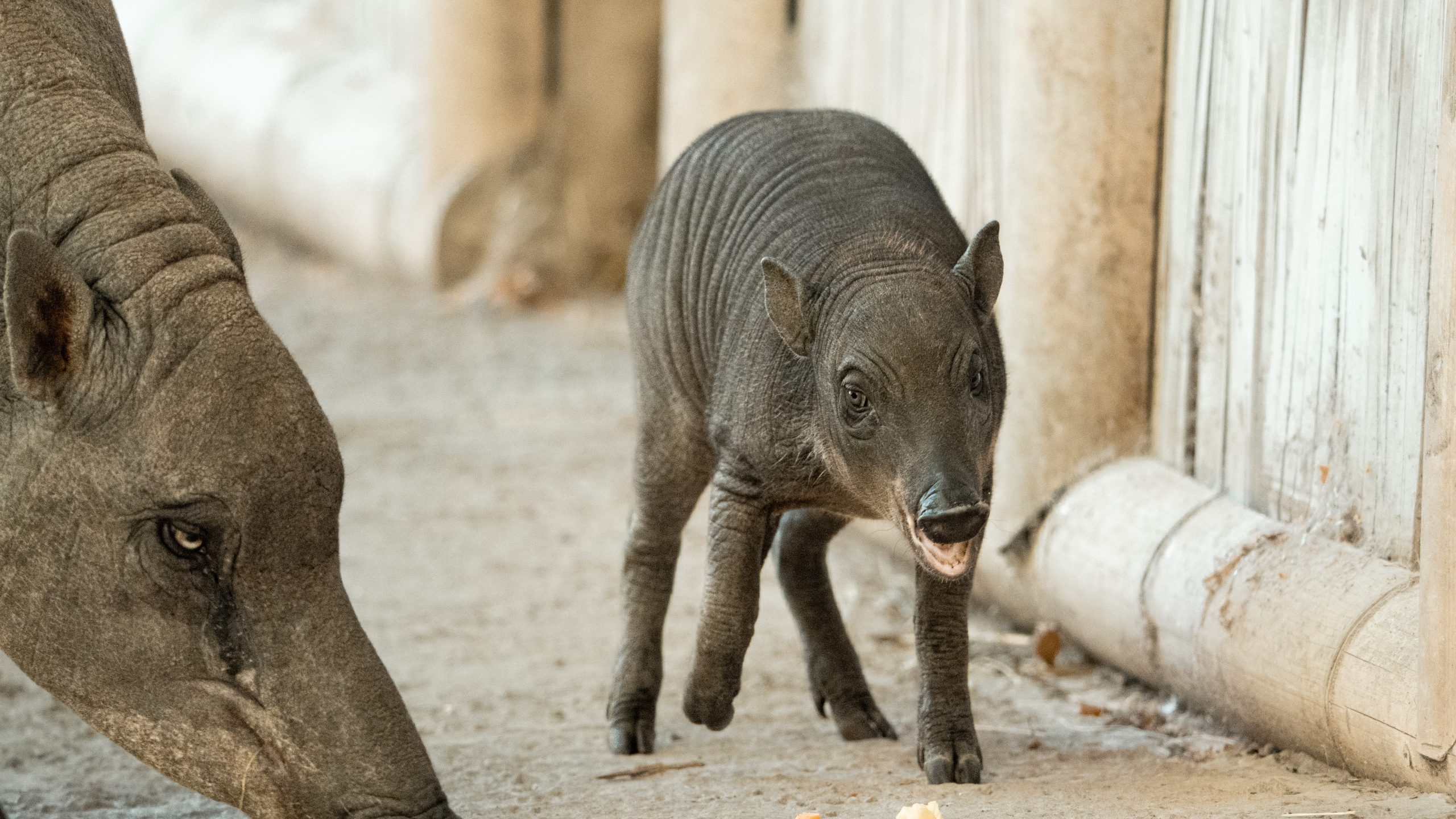
A very cute and rare new arrival at Chester Zoo could potentially save the animal’s future, and she might just be one of the cutest little piglets we’ve ever seen.
Say hello to Rana.
A tiny ‘babirusa’ – also sometimes referred to as the ‘pig-deer’ – Rana is an indigenous species found on just four small Indonesian islands, and one which is sadly on the verge of extinction, according to the International Union for the Conservation of Nature.
Part of the threat to the population is due to African Swine Fever (not to be confused with swine flu), which reached these islands around half a decade ago and could see these precious little pigs considered ‘critically endangered’ very soon. But Chester Zoo are working hard to prevent this outcome.
Born this summer, Rana is the baby of mother babirusa Matano, who was herself born at Chester Zoo over a decade ago.
Fast forward 11 years, and she has descendants living in zoos all across Europe, as well as a whole new generation of children here in the UK.
However, she is the first one born in some time, with this particular phylum only ever birthing one or two kids at a time as opposed to a litter like most other pigs.
Described as being like grapefruit “only with legs”, she may be small for now, but she’s growing fast and carries the weight of big hopes and expectations for the rest of her kind.
Chester Zoo conservationists are currently working with partners to protect wild babirusa populations through Action Indonesia‘s Global Species Management Plans.
Helping design camera-trapping projects to monitor babirusas on Sulawesi, and working with other organisations to locate and protect surviving numbers, the aim is to share conservation breeding expertise, with results so far having bred at least 17 babirusas towards national cooperative targets.
For context, only on two occasions were babirusas photographed in the wild during the entirety of 2023-24, hence why efforts have been ramped up even further over the past year or so.
Amy Humphreys, a conservationist at the zoo who is working with Action Indonesia, the country’s government and other groups to combat their decline and rescue this species, says we are in “a race against time” to save these omnivorous, ‘charismatic’ and intelligent pigs.
She goes on to add that “babirusas are important to island ecosystems as they drop seeds as they forage, helping forest regeneration, and they are a key indicator species for overall environmental health, but their situation is bleak.
“We risk losing a truly unique species, one that’s an important part of Indonesia’s cultural and natural heritage and one of the oldest pig species still living […] Rana’s arrival is worth celebrating; her birth is a chance to shine a light on babirusas and show people why they deserve protection.”
It’s uplifting and inspiring stories like this that constantly remind us why we’re fortunate we are to have the award-winning zoo and conservation centre in our region; and if you were wondering whether we’ll be booking a trip soon just in hopes of seeing little Rana running around, you’d be absolutely right.

 Emily Sergeant -
14th June 2021
Emily Sergeant -
14th June 2021